
Why sportswear jobs need better screen tension
Sportswear is one of the hardest garment jobs because the fabric stretches, the prints often carry fine detail, and the order sizes can shift quickly from 20 shirts to 2 000 pieces. If the screen loses tension halfway through a run, you start seeing blurred edges, uneven deposits and registration drift on names, numbers and logos. For printers in Cape Town, Johannesburg, Durban, Pretoria and Gqeberha, that means wasted ink, wasted time and a lot of reprints.
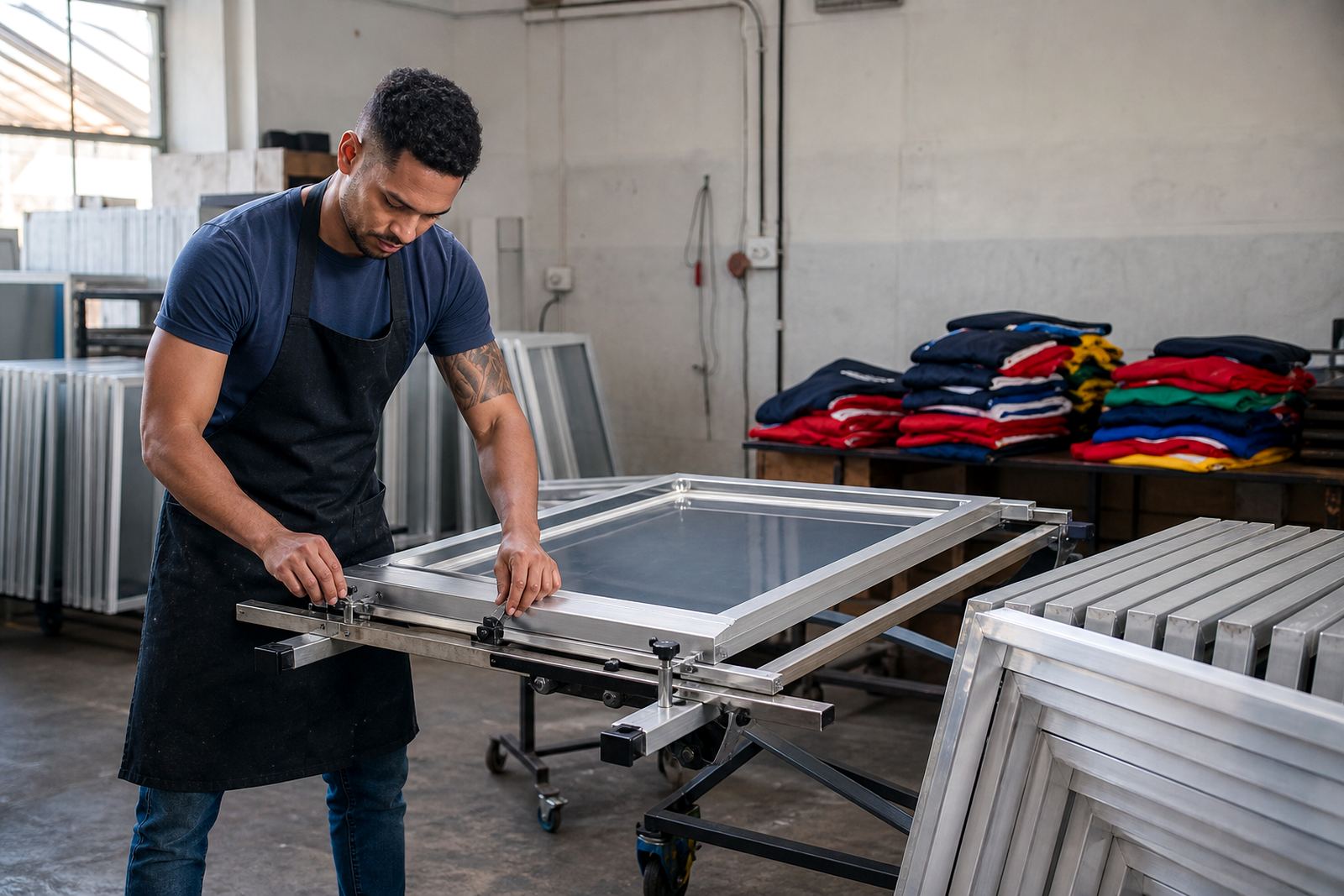
ScreenFrame supplies aluminium frames and stretching work for this kind of production. Aluminium helps keep the frame straight under repeated use, and consistent mesh tension gives cleaner edge definition on poly-cotton, polyester and performance fabrics. In a humid coastal workshop, or during a load-shedding day when equipment sits idle for a few hours, a well-made frame keeps its shape better than a tired frame that has already been overheated and handled too many times.
Typical setup for activewear and teamwear printing
A sportswear printer usually needs a tighter, more controlled setup than a casual T-shirt line. You are dealing with lighter garments, synthetic fibres and small print areas on chests, sleeves, backs and numbering panels. A practical screen room for this work normally includes a mix of standard print frames and narrower frames for short runs and spot jobs.
- Aluminium frames for fine detail on logos, names and sponsor marks
- Stretching for meshes suited to plastisol, water-based or discharge type inks
- Dedicated screens for numbers, sizes and repeat sponsor artwork
- Frames reserved for high-opacity white underbases on dark kit
- Clear labelling by mesh count, job type and print area
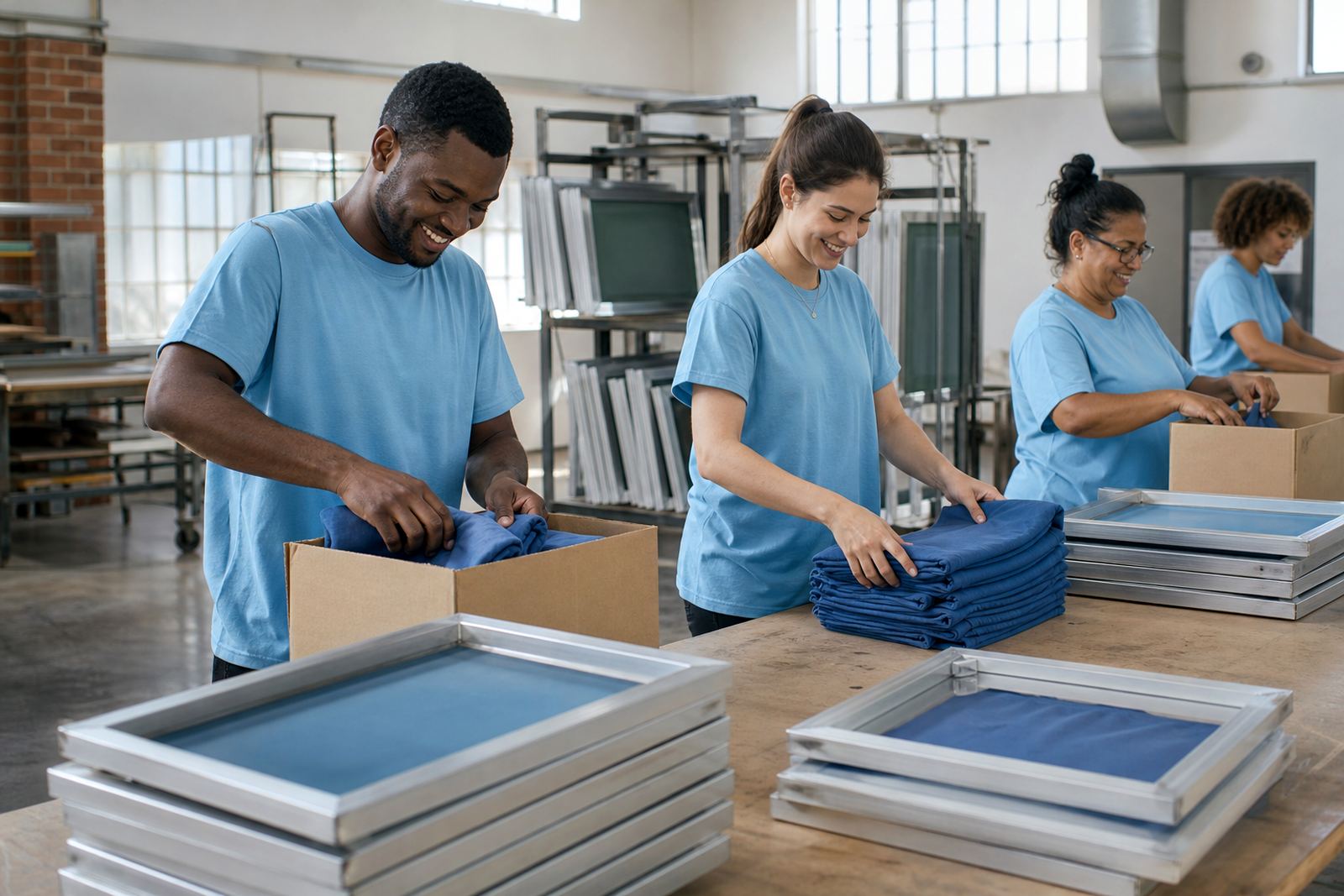
For teams that print supporter shirts, school sportswear or club kit, it helps to keep a few frames set aside for repeat work. That way you are not stripping and rebuilding screens every week. Our workshop in Maitland supports both new screen stretching and restretching existing frames, so a printer can keep the useful frame and replace the mesh when needed.
Planning the screen room for fast garment turnaround
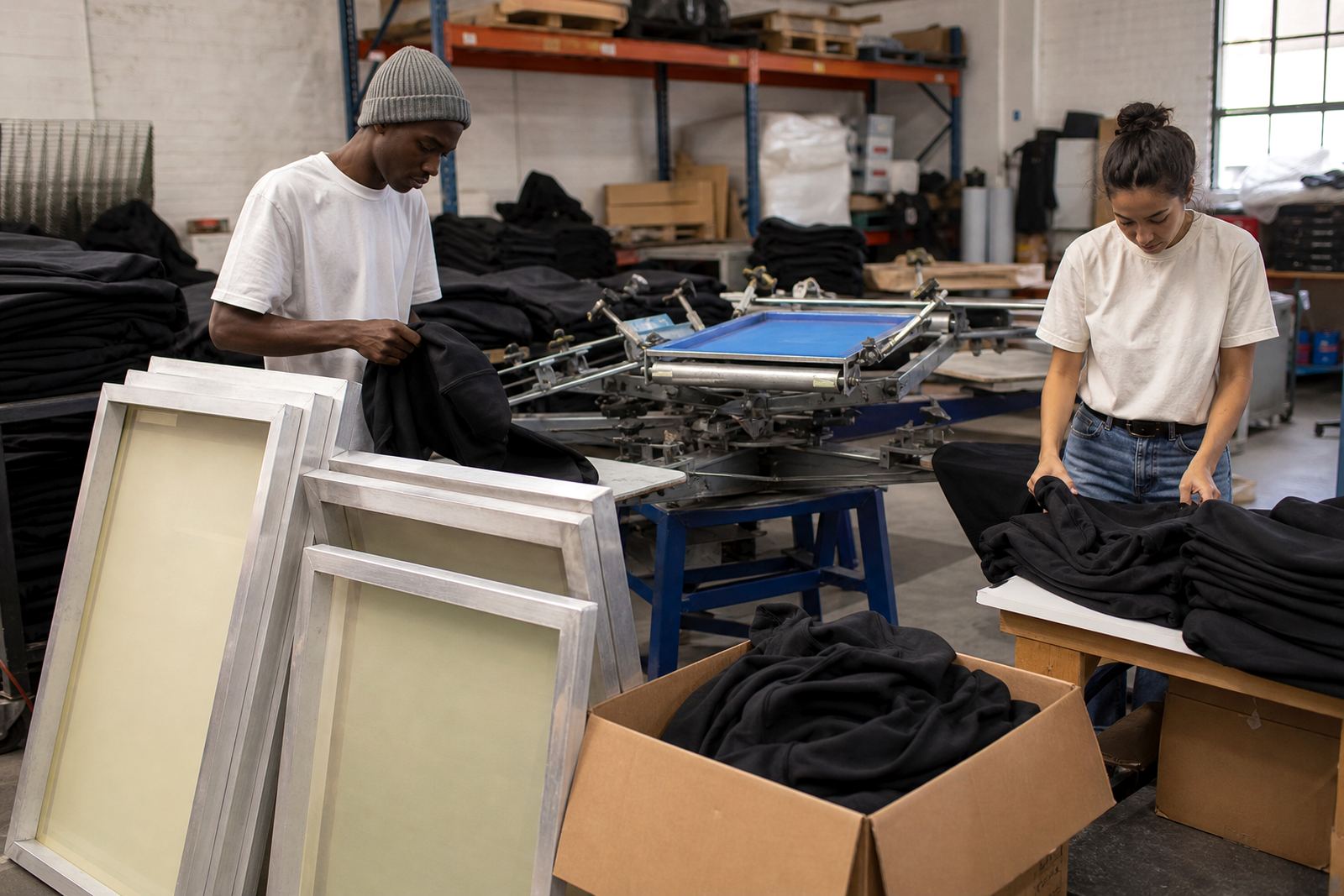
Sportswear jobs move quickly, and the screen room should match that pace. A good layout allows prepress, stretching, screen cleaning and storage to happen without people crossing paths too much. If your space is tight, plan for a one-way flow from dirty screens to cleaned frames to stretched screens. It keeps adhesive dust, mesh offcuts and wet wash-up from mixing in the same area.
Where possible, store finished frames away from direct sun and open doors. Coastal air in places like Durban and Gqeberha can affect workshop conditions, and moisture can slow down drying and make adhesive work less reliable if the room is not managed properly. It is also worth planning around municipal water restrictions and waste rules, because screen wash-up and reclaim water need to be handled sensibly. A clean, organised room saves more money than most printers think.
- Keep a separate rack for urgent jobs that must go out same day
- Label frames by garment type, for example activewear, supporter shirt, training top
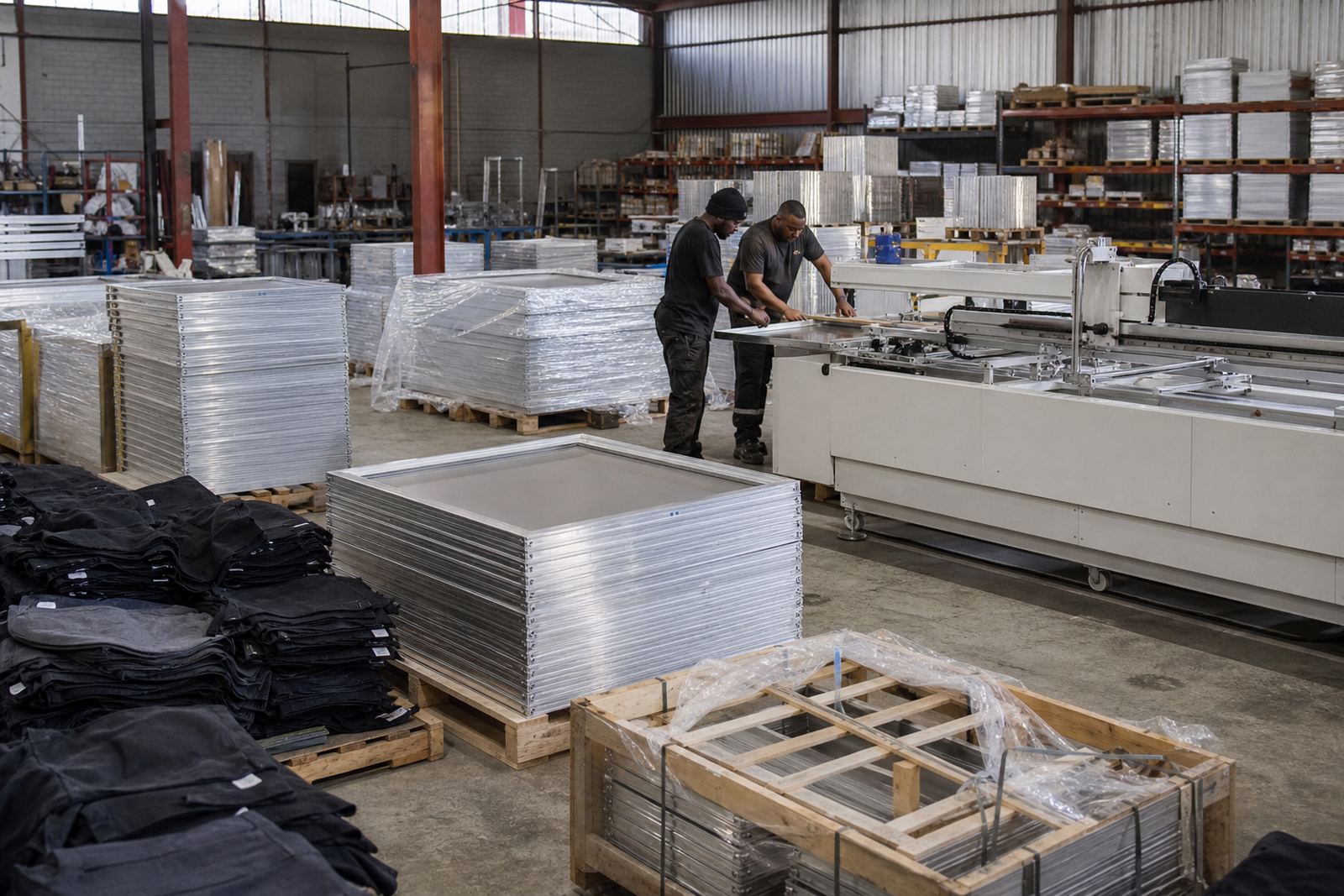
- Leave enough aisle space for bulky delivery bins and screen carts
- Place the cleaning area near drainage, but not where overspray can reach finished frames
Common mistakes that cost sportswear printers money
One common mistake is using a frame that has lost tension and then trying to compensate with more squeegee pressure. That usually creates more problems than it solves. Another is choosing mesh that is too open for a fine logo on stretch fabric, which can flood the print and make the edges look soft. On the other hand, using an overly fine mesh for heavy white prints on dark jerseys can starve the image and force extra passes.
It is also easy to overlook screen care when the workshop is busy. Screens left with old ink, sharp cleaning chemicals or warped frames will not stretch well later. Some printers only notice the issue when a sponsor logo lands off-centre on 300 shirts. At that point the fix is no longer cheap.
- Do not reuse a damaged frame just because it still looks straight
- Do not store wet screens in a warm closed room for long periods
- Do not mix mesh counts if the job needs consistent print thickness
- Do not skip tension checks before a large repeat order
Our team can inspect frames, remove old mesh, clean the frame, apply adhesive and restretch to suit the job. That helps printers keep output steady, especially when they are balancing short promotional runs with larger club orders.
Budget ranges for sportswear screen work in Rand
Budgets vary by frame size, mesh choice, order volume and whether you are replacing mesh or starting from scratch. For small sportswear printers, a few well-made frames can keep things moving. For shops handling school kit, corporate golf shirts and club orders, it makes sense to invest in a broader set of ready screens so changeovers happen faster.
As a rough working range, smaller stretch and restretch jobs may sit in the low hundreds of Rand per screen, while larger custom frames and bulk screen orders can move into the thousands depending on specifications. If you are building a sportswear setup from the ground up, many printers budget for a starter set of frames first, then add more as repeat work grows. That approach is often safer than buying every size at once and tying up cash flow.
Urgent turnarounds do cost more, especially when a team needs screens back before a weekend fixture or before a launch event. If you are in Johannesburg or Pretoria and need delivery timing planned around production, it helps to book early so the frames arrive before press day rather than after it.
How ScreenFrame supports printers across South Africa
ScreenFrame works from Maitland in Cape Town and supports garment printers in Cape Town, Johannesburg, Durban, Pretoria and Gqeberha. We also handle Bellville collections and a Paarl supply route, which helps when jobs need a practical handover rather than a long wait. The team is led by Mandla Petersen, with Ayesha Daniels managing production, Sibusiso Mthembu handling stretching, Bianca Jacobs on sales, Ruan van Wyk supervising the workshop, and Lindokuhle Dlamini coordinating logistics.
For sportswear printers, the best results usually come from a simple process: tell us what garments you print, what mesh counts you use, how many screens you need, and how quickly you need them back. From there we can assist with new screen stretching, restretch existing frames, mesh removal, frame cleaning, tension checks and pickup and return. If your order pattern changes through the season, from school sport to club finals to supporter wear, we can help you keep the screen room ready without carrying excess stock.