
Built for high-volume print rooms that cannot afford downtime
Contract printers work differently from a single-brand shop. One week you may be running 40 hoodie jobs for resellers, the next week a mix of one-colour tees, tote bags and limited-run promo work. That means your frames are not just tools, they are part of your production flow. If a frame is out of square, the mesh is loose, or the stencil area is too small for the next order, the whole schedule slips.
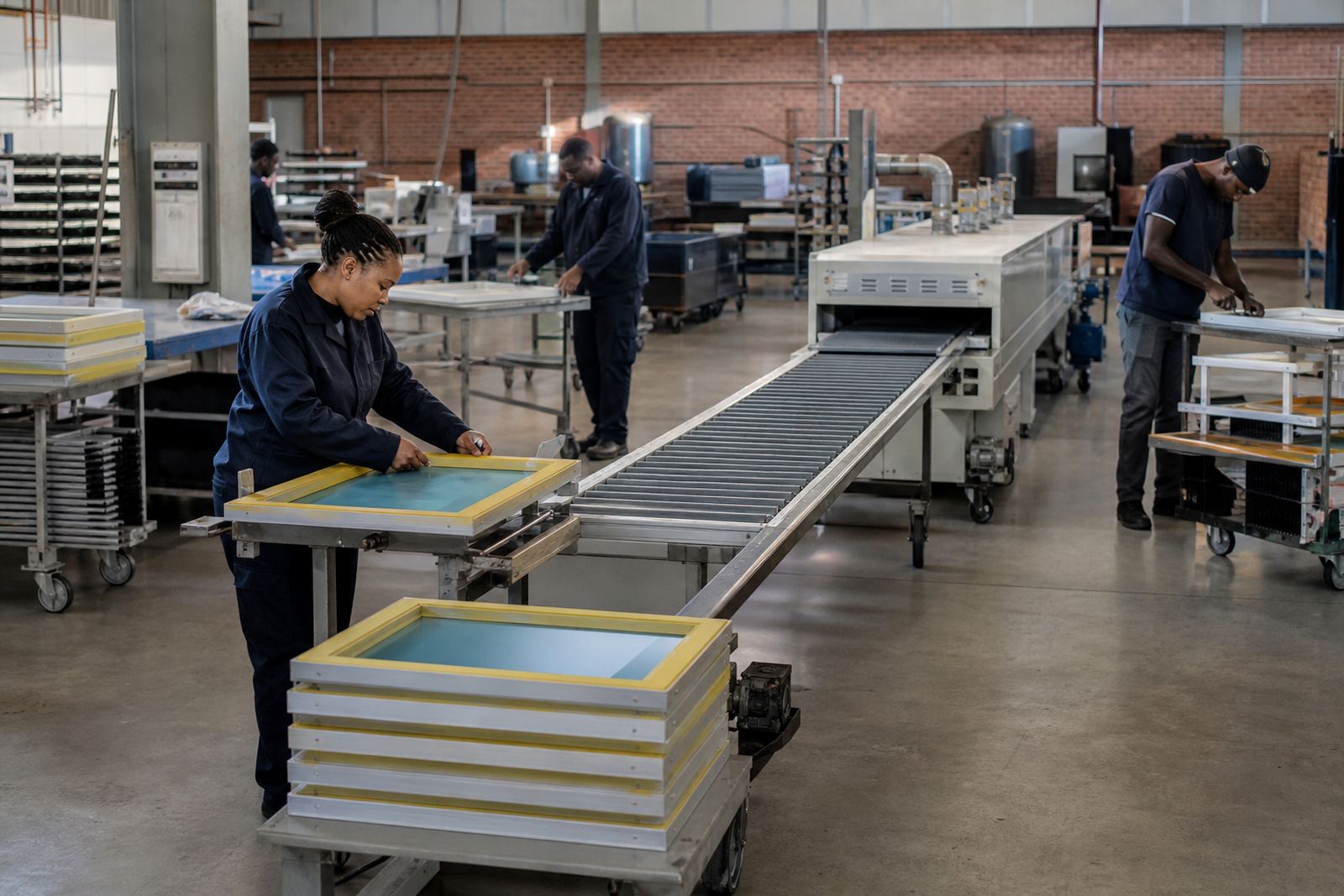
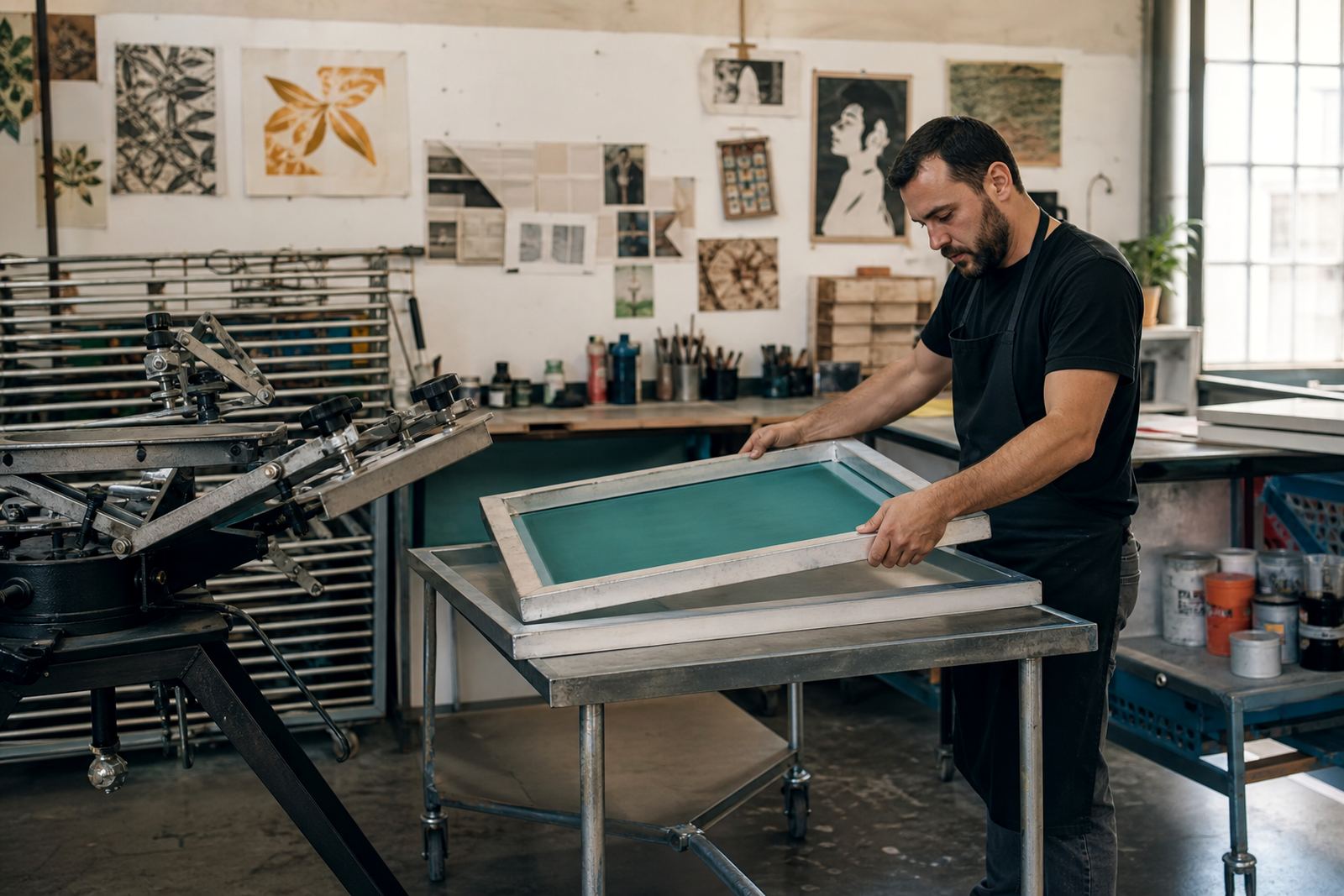
ScreenFrame supports print shops that need dependable frame supply and stretching work in steady volumes. Our Maitland workshop handles new screen stretching, restretching existing frames, mesh removal, frame cleaning, adhesive application, tension checks and inspections. For contract printers, the value is simple: fewer failed screens, fewer reworks, and less time spent chasing replacement gear at short notice.
We also understand the pressure of load-shedding, coastal humidity, and tight courier windows. In Cape Town and along the coast, mesh tension can drift if screens are stored badly or handled before the adhesive has set properly. In Gauteng, dust and workshop heat can affect prep and storage. Small issues become expensive when you are printing for resellers who expect quick turnaround and consistent results.
Typical equipment set for trade printers serving multiple resellers
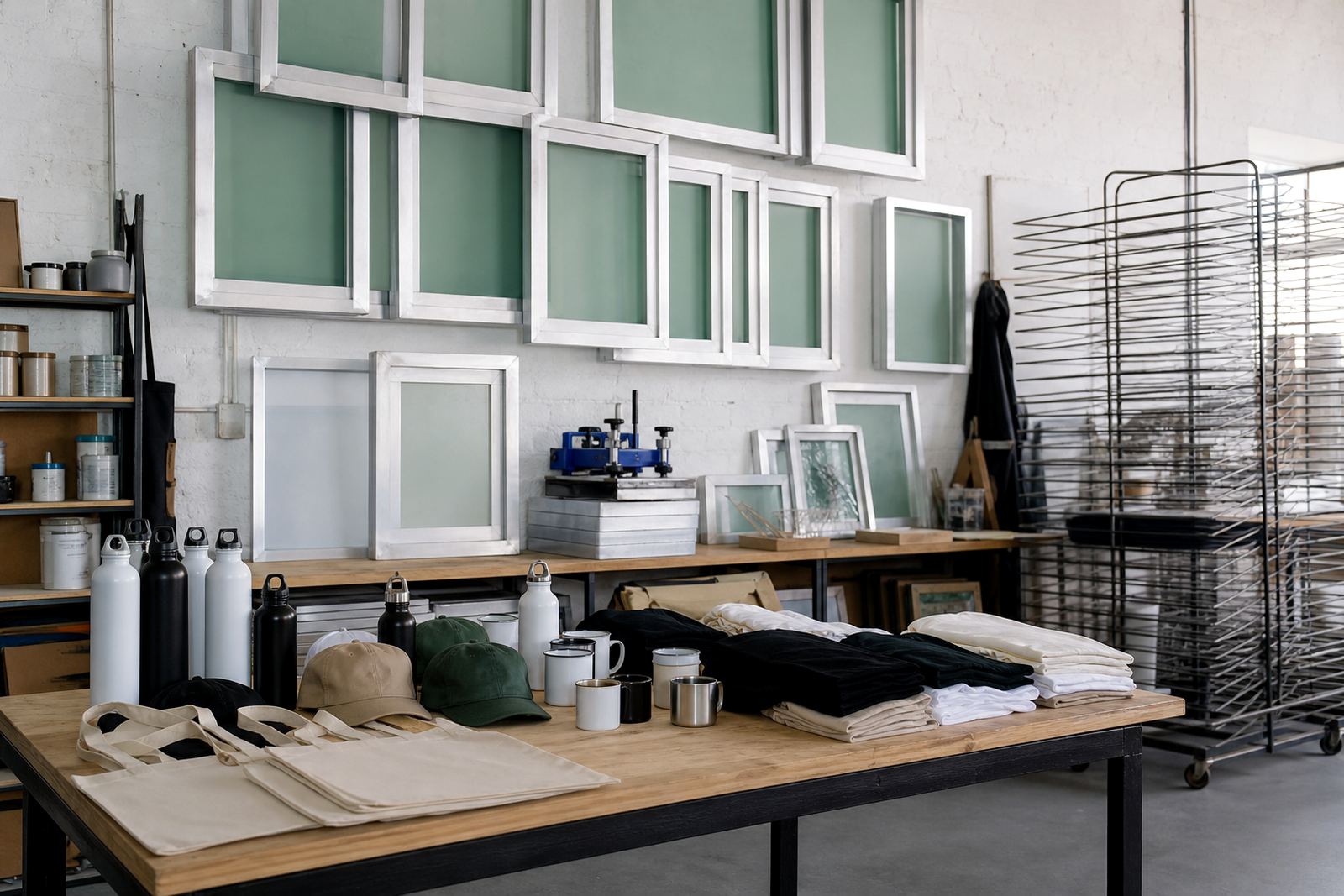
A contract print room usually needs a wider mix of frame sizes than a small retail setup. Most shops keep multiple counts of the same size so they can rotate jobs without waiting for cleaning and re-stretching. If you are printing garments for several clients at once, standardising your frame range makes artwork setup easier and reduces mistakes on press.
- Aluminium frames in common garment sizes for 1 colour to multi-colour jobs
- Extra frames for rush work so one job can dry while the next is prepared
- Frames for different mesh counts, depending on ink type and artwork detail
- Spare frames for sampling, reprints and failed screens
- Clean, labelled storage racks to separate active, washed and ready-to-use screens
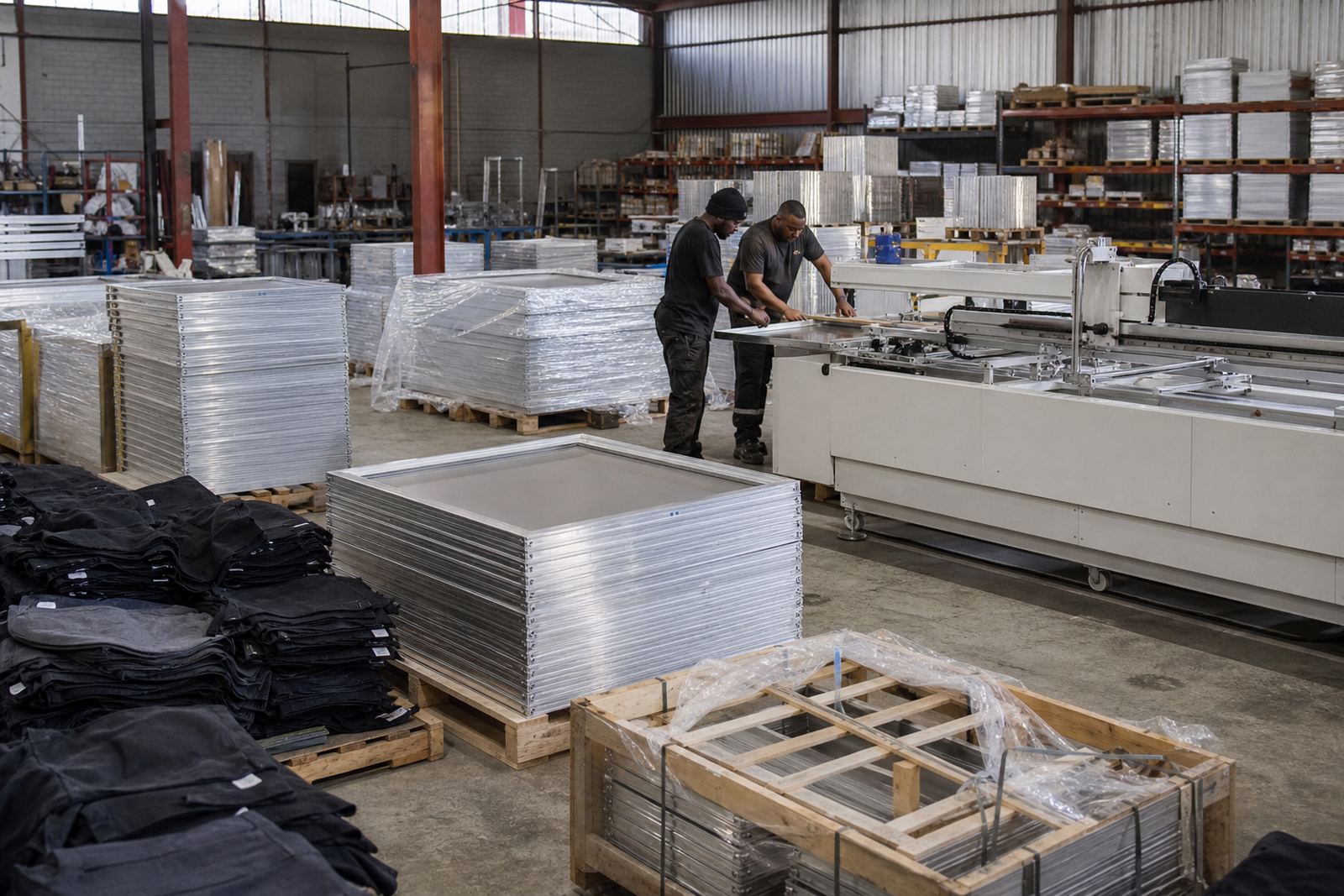
For most trade printers, the best mix is not just about buying more frames. It is about having the right sizes in the right quantity. A shop doing 3 to 6 jobs a day might keep 15 to 30 working screens in rotation. Larger operations in Johannesburg or Pretoria may need more, especially when they are collecting from resellers and running daily dispatches to multiple outlets.
Planning your screen layout so production stays predictable
Good planning starts with job patterns. Look at your last 3 months of orders and note which frame sizes came up most often. If most of your repeat work is A4 chest prints, pocket logos, and back prints, then your core frame set should support those placements first. Do not overspend on odd sizes that sit unused for weeks.
A practical layout helps in a busy workshop. Keep one area for incoming jobs, one for stretching and inspection, and one for finished screens ready to print. In Maitland, where space is often at a premium, that separation can make the difference between a smooth shift and a cluttered one. Even a simple wall rack and a marked drying zone can help a lot.
If your team handles several resellers, set a clear labelling system by client, artwork, mesh count and job date. This cuts down on misfit screens and saves time when a repeat order comes back months later. It is also worth planning for urgent turnarounds. A few extra frames in rotation can keep a rush job moving while the rest of the screens are in cleaning or re-stretching.
Common mistakes that cost contract printers money
One of the biggest mistakes is stretching too few frames and expecting them to cover every job. That usually leads to overused screens, poor mesh recovery, and delays when the same frame is needed twice in one day. Another common problem is ignoring frame condition until the mesh starts failing. A bent corner or worn adhesive edge can ruin tension without warning.
Some shops also try to save by using the wrong frame for the job. A frame that is too small for the artwork leads to awkward registration and wasted emulsion area. On the other hand, overbuying specialised sizes can tie up cash that should go into ink, dryers or squeegees. The goal is balance, not stockpiling.
- Do not reuse damaged frames without an inspection
- Do not store screens in damp corners or against open workshop walls
- Do not mix old and new screens without checking tension first
- Do not assume a frame that worked last month is still ready today
- Do not leave dirty mesh sitting for days before cleaning
Small errors become expensive when you are servicing several resellers at once. One weak screen can throw off a full batch and push the job into overtime, which is hard to recover when delivery deadlines are already tight.
Budget ranges for screen supply and stretching in Rand
Budgets vary depending on frame size, mesh count, quantity and whether you are ordering new stretching or restretching existing frames. Contract print shops usually work better with planned batches than one-off purchases, because that reduces admin and helps keep the print room supplied evenly. For many trade clients, the smartest approach is to budget monthly rather than only when a problem appears.
As a rough guide, smaller batch support can start from a few hundred Rand per screen for basic work, while larger aluminium frames and higher-volume orders can move into the higher hundreds or more per unit depending on the specification. Custom sizes, rush work and pickup or return handling can add to the total. If you are stretching multiple screens for a national reseller run, it is usually better to request a quote for the full batch instead of pricing each frame one by one.
It also helps to budget for replacements, not just repairs. Frames that have been cleaned and restretched several times may still look usable, but if they no longer hold even tension the print quality will suffer. A planned replacement cycle keeps your output more predictable and avoids the false economy of squeezing one more round out of a tired screen.
How ScreenFrame supports contract printers across South Africa
From our Maitland workshop, we support print shops in Cape Town and across the country through supply routes and deliveries to Johannesburg, Durban, Pretoria and Gqeberha. We also assist Bellville collections and the Paarl supply route for nearby trade clients. That mix is useful for contract printers who need regular support without losing time to unnecessary travel.
Our team handles the practical side of screen preparation and movement so your shop can stay on press. Mandla Petersen leads the business, with Ayesha Daniels overseeing production, Sibusiso Mthembu on stretching, Ruan van Wyk supervising the workshop, Bianca Jacobs handling sales, and Lindokuhle Dlamini coordinating logistics. If your business runs multiple resale accounts, that kind of steady coordination matters as much as the frame itself.
Clients reach us through the enquiry form on our contact page. If you need new stretching, restretching, cleaning or a bulk order for a production run, it helps to share your frame sizes, quantity and turnaround needs upfront. That way we can plan the batch properly and avoid last-minute surprises.