

2008: the first frames from Maitland
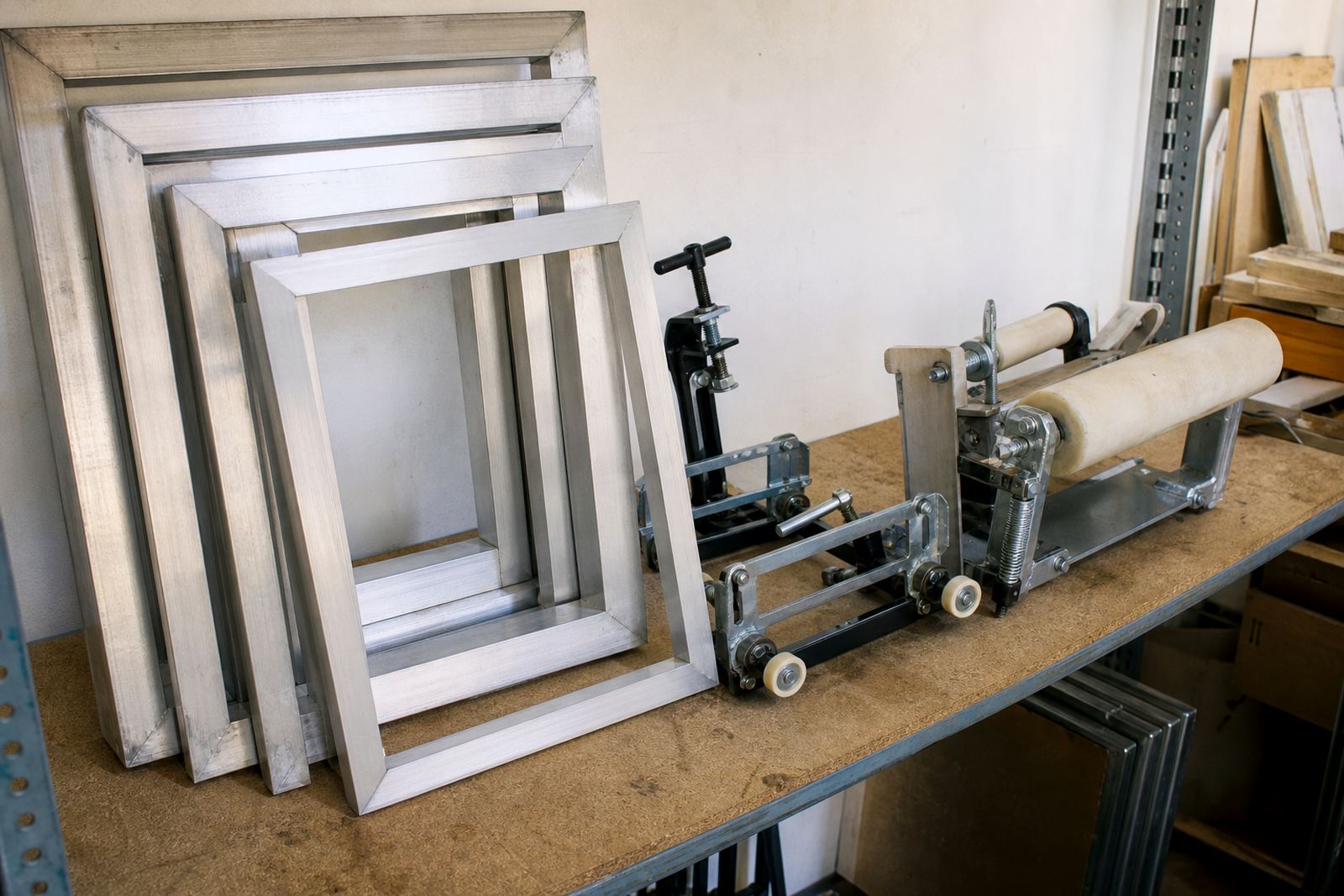
ScreenFrame began trading in 2008 from Maitland, where the focus was on making and preparing aluminium screen-printing frames for local garment printers. At the start, the work was hands-on and careful. Every frame had to be square, clean and ready for repeat use, because printers in Cape Town needed gear that could stand up to busy weeks, coastal humidity and regular washing down after production.
The early years were about building trust one order at a time. Many customers came in with worn frames that needed a proper second life, and the workshop team learned quickly that good stretching is not only about the mesh. It is about the frame condition, adhesive application, tension consistency and making sure the finished screen fits the printing setup without trouble.
2010 to 2013: turning a small workshop into a reliable supply point
By 2010, ScreenFrame had settled into a steady rhythm. The business was serving more clothing printers, small brands and hobbyists who wanted screens that were ready for work, not just materials on a shelf. This period brought more repeat business and more requests for custom sizes, which meant the workshop had to grow its systems as well as its output.
In 2012 and 2013, the team expanded its support work beyond new screen stretching. Requests for restretching existing frames, mesh removal and frame cleaning became more common, especially from printers who wanted to keep older stock in use instead of replacing everything. That practical approach helped many customers control costs when supplies were tight and lead times mattered.
- New screen stretching for standard and custom sizes
- Restretching of existing aluminium frames
- Mesh removal and adhesive preparation
- Frame inspections and tension checks before dispatch
2014 to 2017: building quality control into the process
As orders increased, ScreenFrame put more focus on consistency. In these years the workshop refined its checks so each screen could be assessed before it left Maitland. That meant checking the frame condition, the stretch quality and the edges for clean finish. It also meant looking out for small faults early, because a frame that fails on press can delay an entire print run.
During this time, the business also started handling larger and more regular batches for printers working across Cape Town and the wider Western Cape. Bulk screen orders became part of the daily work. So did urgent turnarounds for customers who had orders due the next morning and needed a quick fix without losing quality. It was busy, but the team stayed focused on practical work that printers could rely on.
One important part of this period was the way the workshop treated every order with the same care, whether it was a single hobby screen or a full batch for a production house. That approach helped build ScreenFrame’s name as a company that answers the phone, does the work and gets the job done without fuss.
2018 to 2020: expanding beyond Cape Town
From 2018 onward, ScreenFrame’s reach widened well beyond Maitland. More customers from Johannesburg, Durban, Pretoria and Gqeberha began placing orders and asking for delivery support, which shifted the business from a local supplier to a national one. The workshop had to plan better for packing, transport timing and screen protection during transit, especially when frames were being sent long distances.
This was also the period when pickup and return work became more important. Many customers wanted a simple process: book the job, send the frames, receive the stretched screens back and get back to printing. Bellville collections and the Paarl supply route became useful for nearby clients, while deliveries to the major metros helped keep production moving for customers outside the Western Cape.
- Maitland Workshop for production and finishing
- Cape Town Supply for local printers and small studios
- Johannesburg Deliveries for inland orders
- Durban Deliveries and Pretoria Deliveries for national coverage
- Gqeberha Deliveries for Eastern Cape printers
- Bellville Collections and Paarl Supply Route for regional convenience
2021 to 2023: stronger systems, steadier service
In the years after 2020, the business had to work smarter. Load-shedding affected workshop scheduling across the country, so planning around power cuts became part of day to day operations. ScreenFrame kept its production flow steady by adjusting turnaround times, managing batches carefully and keeping communication practical and direct. Customers needed honest lead times, not vague promises.
During this stage, the team also placed more value on screen care advice. Printers often asked how to keep screens clean, how to manage adhesive buildup and when to check tension before a print run. By sharing this advice, ScreenFrame helped customers get more life out of their frames and reduce avoidable downtime. That support mattered just as much as the physical product, especially for smaller workshops operating on tight schedules.
By 2023, the business had a clearer structure, with each team member contributing to a specific part of the process. Mandla Petersen guided the company as Managing Director, while the production and logistics teams kept stretching, dispatch and customer support working together. It was a proper team effort, and it showed in the steadier service customers received.
2024 to today: a South African screen supplier with local know-how
Today, ScreenFrame continues to operate from Maitland, Cape Town, serving garment printers across South Africa with aluminium screen-printing frames and stretching services built for practical use. The business still does the same core work it started with, but on a larger scale and with more refined processes. Whether a customer needs a new custom size, a restretch on an old frame or a bulk order for regular production, the workshop is set up to handle it.
The current team brings different skills to the table. Ayesha Daniels oversees production, Sibusiso Mthembu handles screen stretching, Bianca Jacobs assists customers with orders, Ruan van Wyk supervises the workshop and Lindokuhle Dlamini manages logistics. Together with Mandla Petersen, they keep the service grounded in what South African printers need: good workmanship, clear timelines and delivery options that actually work.
From its first year of trading to today, the story of ScreenFrame has stayed practical. Build the frames properly, stretch them well, keep to the schedule and support the people who print for a living. That is still the standard, and it is why the business remains a trusted choice for printers in Cape Town and beyond.