
When a campus order needs to move quickly
Campus clothing projects usually start small and then grow quickly. One week it is 30 society tees for orientation, the next it is 200 hoodies for a fundraiser and a batch of staff shirts for a campus event. That mix calls for screen frames that hold tension well, stay square and can be reused for repeat prints without constant rework.
For teams working from a student room, shared print lab or a small off-campus workshop in Maitland, the main challenge is not just printing, it is keeping the screens ready for the next run. Aluminium frames are a practical choice because they are light, easy to handle and less likely to warp in Cape Town’s coastal humidity than low-grade alternatives. When load-shedding interrupts a session, a good frame setup also helps you pick up where you left off without losing registration or mesh tension.
- Society merch for clubs, residences and sports teams
- Fundraiser apparel for charities and student events
- Orientation shirts, campus fair tees and volunteer uniforms
- Repeat orders that need the same print again next term
Typical screen set-up for student merch runs
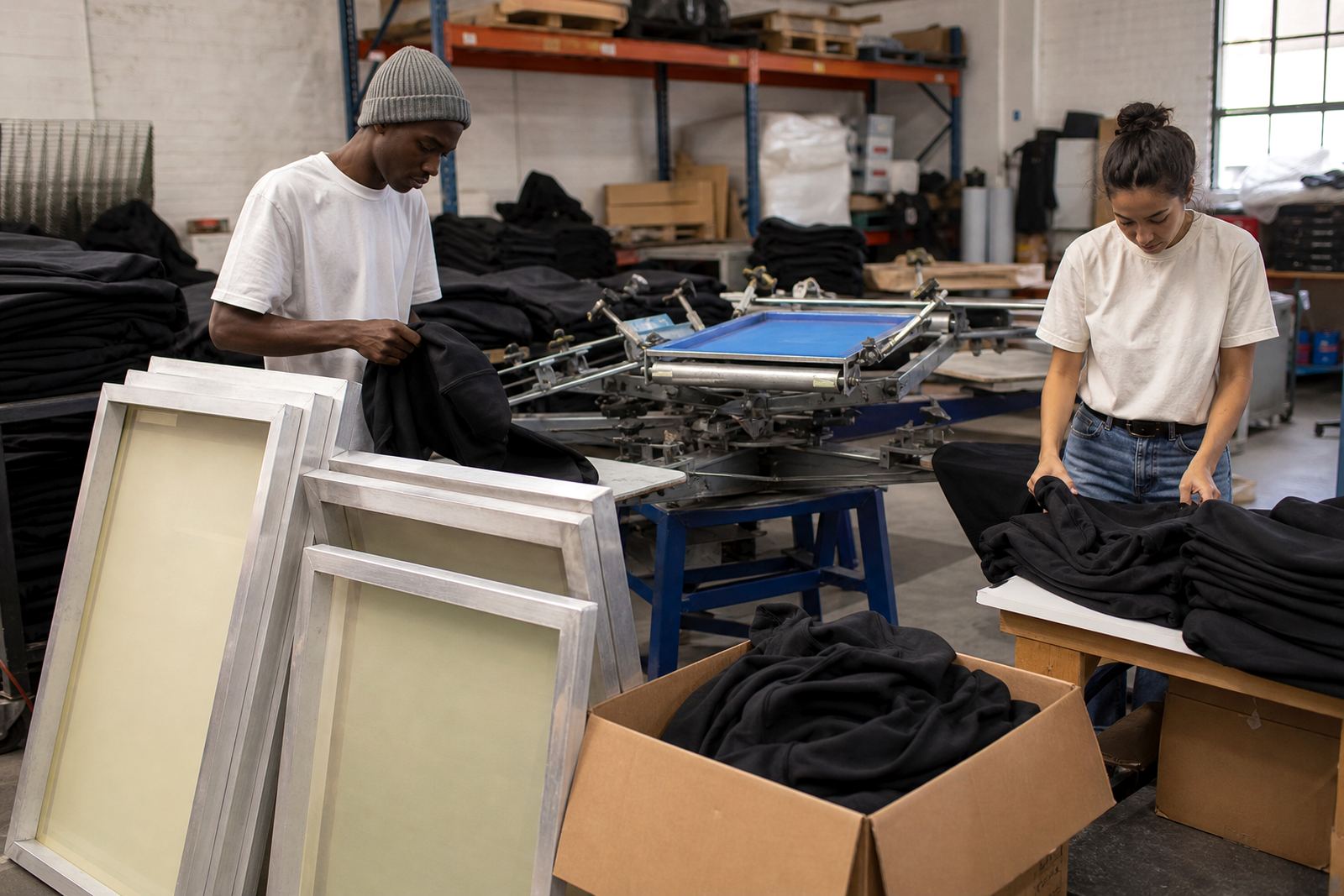
Most campus teams do not need a large industrial line. They need a practical set-up that handles a few artwork colours, washes out cleanly and gives even pressure on cotton tees, polycotton hoodies and tote bags. For this kind of work, the screen set usually starts with a handful of standard sizes, then one or two custom frames for larger front prints or sleeve logos.
A sensible starting point is three to six screens for a small merch project, with extra frames if you are doing multiple colours or printing back and front on the same day. If the order is for a fundraiser with mixed sizes, keep one screen for the main chest print, one for a smaller left chest mark and one for numbers or names. That keeps the work organised and avoids last minute changes in the print room.
- Standard aluminium frames for everyday tees and hoodies
- Custom size stretching for oversized artwork or full back prints
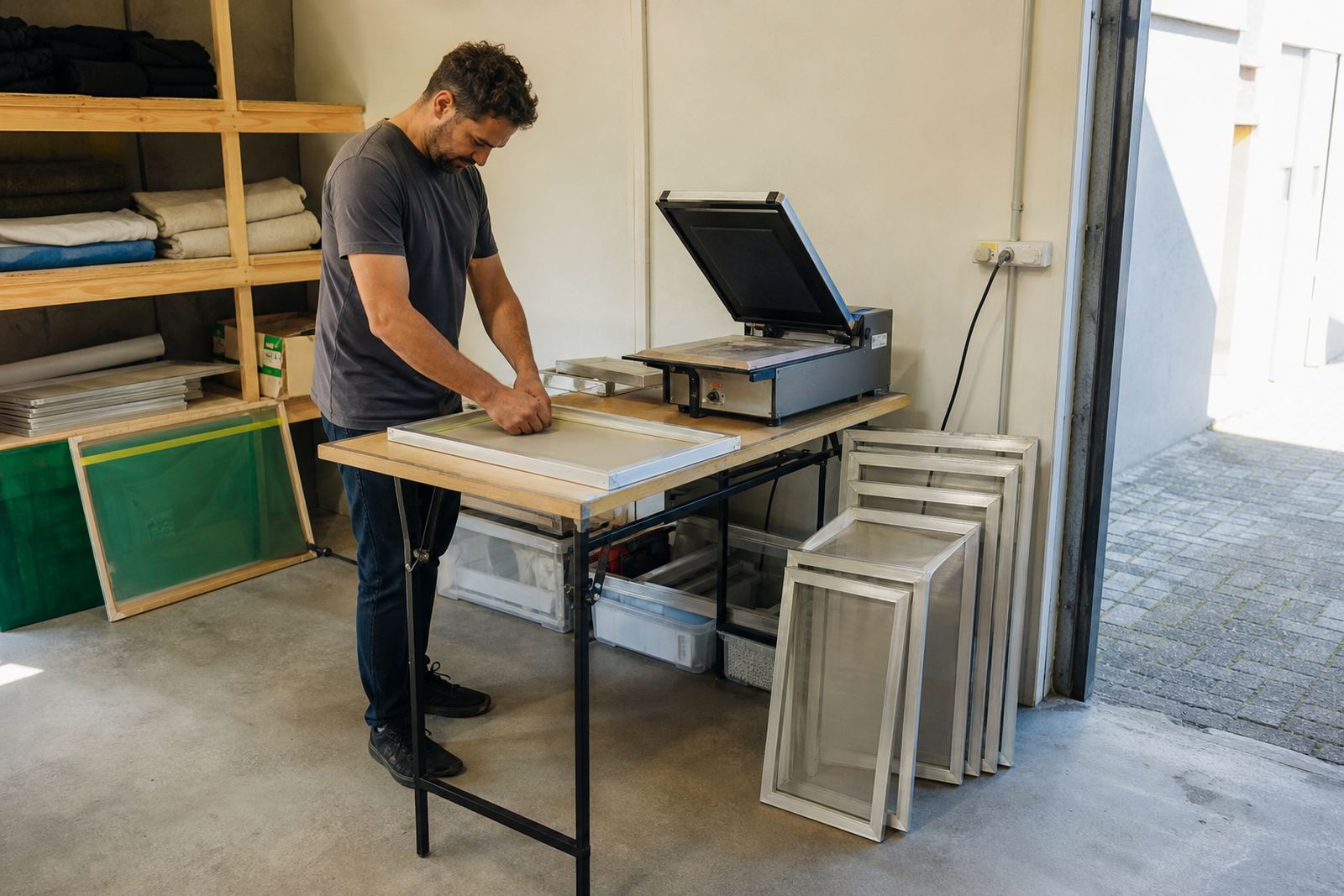
- Mesh removal and cleaning for screens you want to reuse
- Tension checks before an order so the print stays even
Planning the layout before the first print
Campus merch often looks simple on paper, but the print layout can become messy if the order is not planned early. A student event order might include unisex tees, ladies cuts, hoodies and tote bags all in the same artwork. Before stretching screens, decide where the print sits on each garment and which sizes need separate placements. That avoids wasted ink and uneven results.
In Cape Town, Johannesburg or Durban, printers often work around tight collection windows from societies and admin offices. To keep things moving, label each screen by garment type and print position. If you are printing for a society market stall, plan for quick changes between colours and keep your frames in a dry area, not leaned against a wall where moisture can affect the mesh. Small details like this save time and money, especially when orders are split across several deliveries.
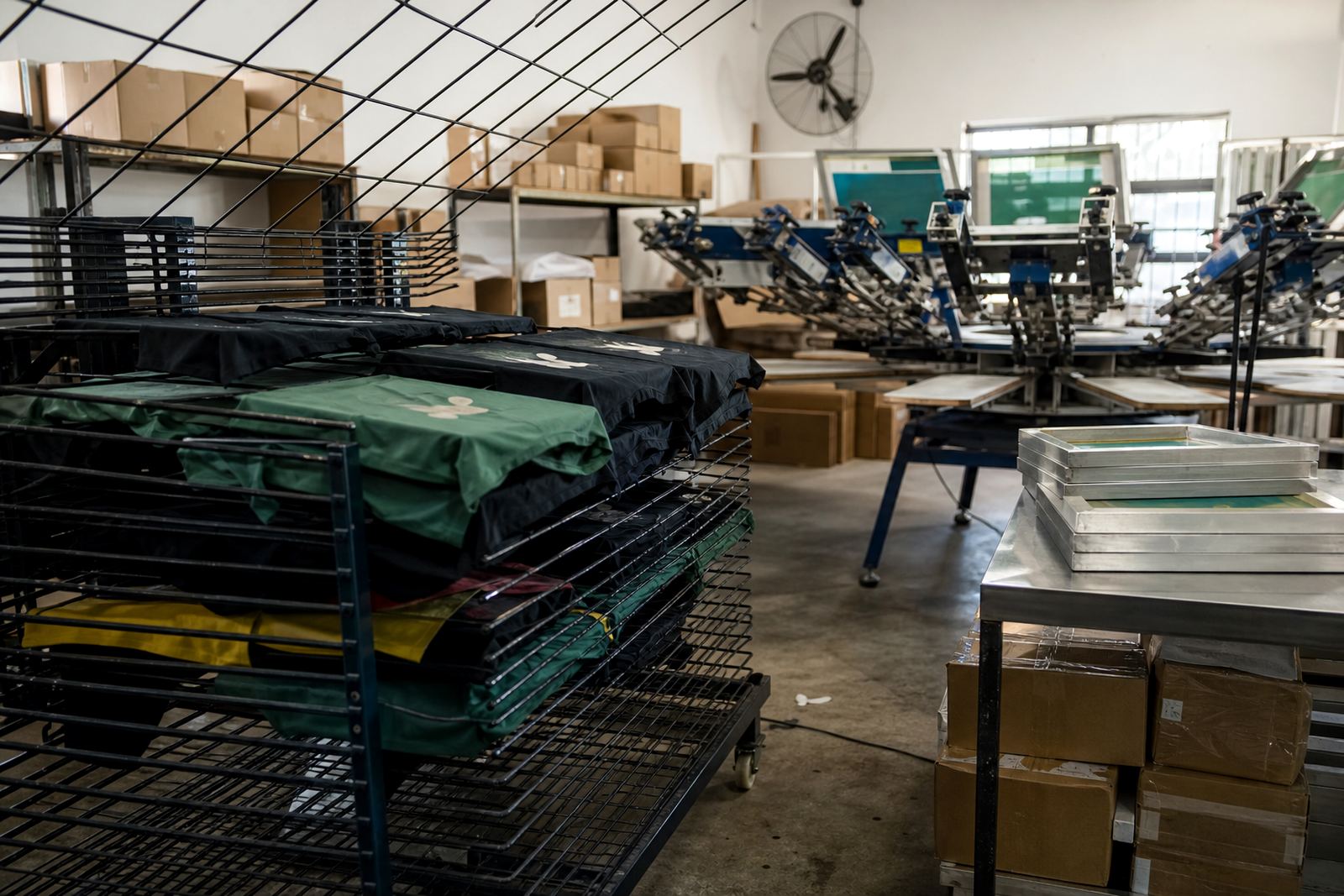
Our team also sees a lot of campus groups underestimating how much room is needed for the drying and curing stage. Even if the print area is small, the screens need a clean place to rest. If you are working from Bellville, Paarl or the Cape Town side of the metro, make space for stacking frames flat and safe, not on a chair or against a door.
Common mistakes that push up the cost
The most expensive campus orders are not always the biggest ones. They are the ones where a screen is stretched poorly, the artwork changes at the last minute, or a frame is cleaned badly and becomes unusable too soon. A good frame and proper stretching help reduce those problems, but planning still matters.
Here are the issues we see most often with student merch projects:
- Choosing one screen for too many artwork colours, then running out of time between prints
- Using a loose or uneven mesh that gives blurred edges on fine text
- Forgetting that hoodie seams and pockets affect print placement
- Leaving screens in damp storage near the coast, which can shorten screen life
- Ordering too few frames and then rushing urgent turnarounds at extra cost
For fundraiser apparel, there is also the problem of late approvals. If a society committee only signs off the final artwork the night before collection, the whole run gets squeezed. That is where reusable aluminium frames help because they can be prepared faster and checked again before production. It keeps the job practical, not stressful.
Budget ranges for campus orders in Rand
Budgets for campus merch vary a lot depending on quantity, number of colours and whether you need new stretches or work on existing frames. For small student runs, it is usually better to begin with a few solid frames and add more later, rather than buying too much gear at once. That keeps cash flow manageable, especially for societies waiting on approval from a campus office or fundraiser committee.
As a rough guide, a small screen set for a simple campus run might start from around R1 500 to R4 500 for a few frames and basic stretching work. Mid-sized orders with custom sizes, repeat screens and extra prep can sit between R5 000 and R12 000. Larger campus campaigns with many garments, urgent turnarounds and multiple screen sizes can go beyond that, depending on the spec and the quantity. If you are printing for more than one campus or doing deliveries to Johannesburg, Pretoria, Durban or Gqeberha, factor in logistics as well.
We work with teams that need clear numbers before they commit, so it helps to know the likely run size, garment type and how many prints are repeated across the order. A clean quote is easier when the artwork is final and the screen count is known.
How ScreenFrame supports campus teams across South Africa
ScreenFrame works from Maitland in Cape Town and supports campus merch teams across South Africa with new screen stretching, restretching existing frames, frame cleaning and screen care advice. Whether the order is for a student society in Cape Town, a varsity event in Pretoria, a charity run in Gqeberha or a residence project in Durban, the aim is the same: screens that are ready, square and fit for the job.
We also handle pickup and return where arranged, plus bulk screen orders and urgent turnarounds when a committee is under pressure. For campuses that need to manage several projects at once, it helps to have one supplier who understands how student deadlines work. The team can coordinate from the workshop, the supply side or delivery routes, so you are not left guessing where the order is.
If your campus team is planning a merch run, the best first step is simple: finalise the garment list, count the print positions and send through the artwork details via the enquiry form on the contact page. From there, we can advise on the right frame sizes, mesh prep and the number of screens needed for the job.