
When sample room work needs fast changeovers
Sample room teams are usually working against a buyer meeting, a factory handover, or a client approval that cannot slip. One day the team is printing a small chest logo on a medium shirt, the next day it is a back print, sleeve hit, or a full-size mock-up on a different garment. That means the frame set has to stay flexible, with enough repeatable sizing to keep artwork registration steady while still allowing quick swaps between jobs.
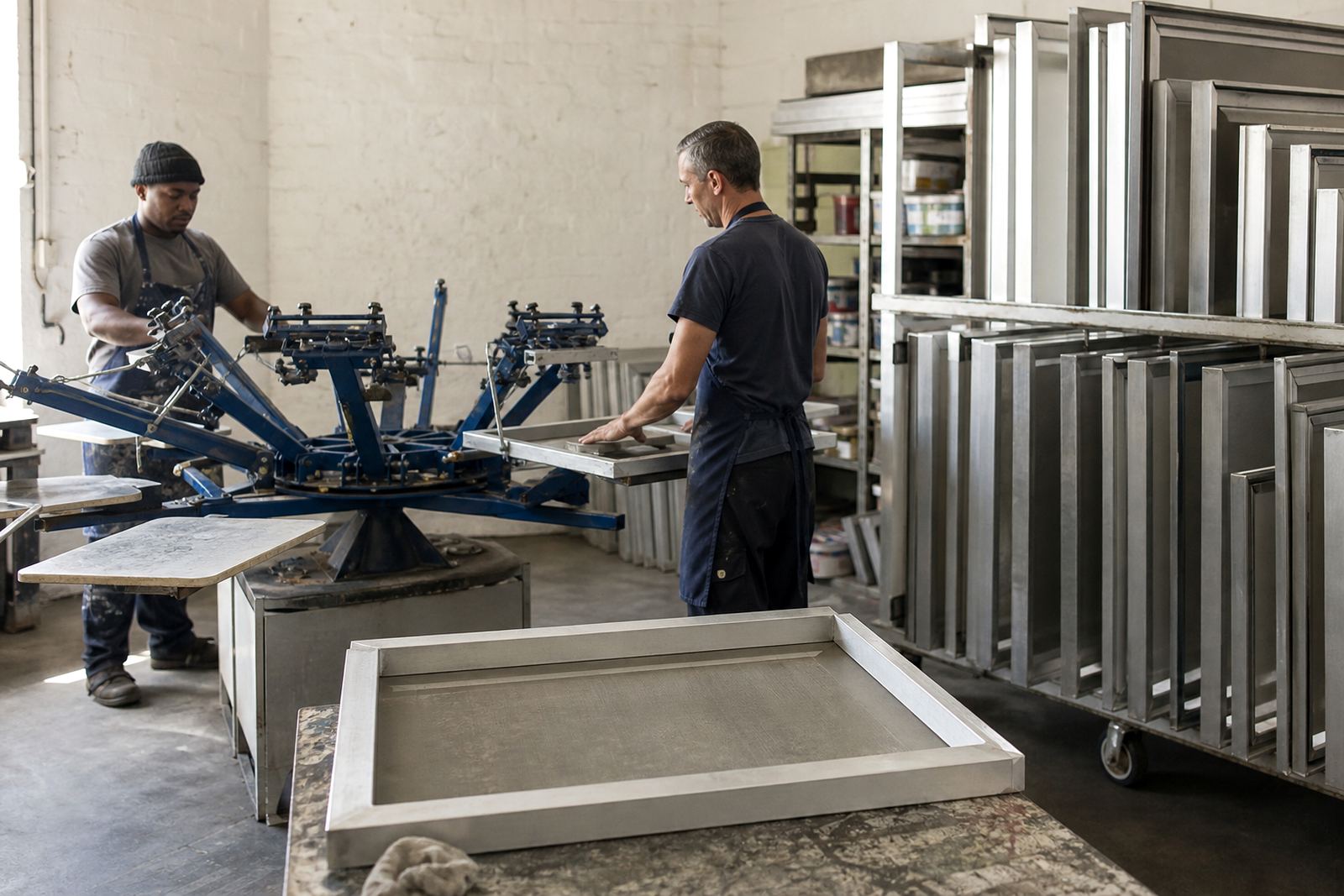
In these rooms, the main issue is not just print quality. It is consistency. A sample approval that is off by 3 mm can send a garment back for revision, and that costs time, ink, labour and courier fees. Our aluminium screen-printing frames are used by teams who need clean tension, straight edges, and screens that can be restretched or cleaned for the next run without fighting warped wood or loose corners.
- Good for garment mock-ups and approval samples
- Useful where artwork changes often across a week
- Helps keep tension steady for finer detail and halftones
Typical frame set for development tables
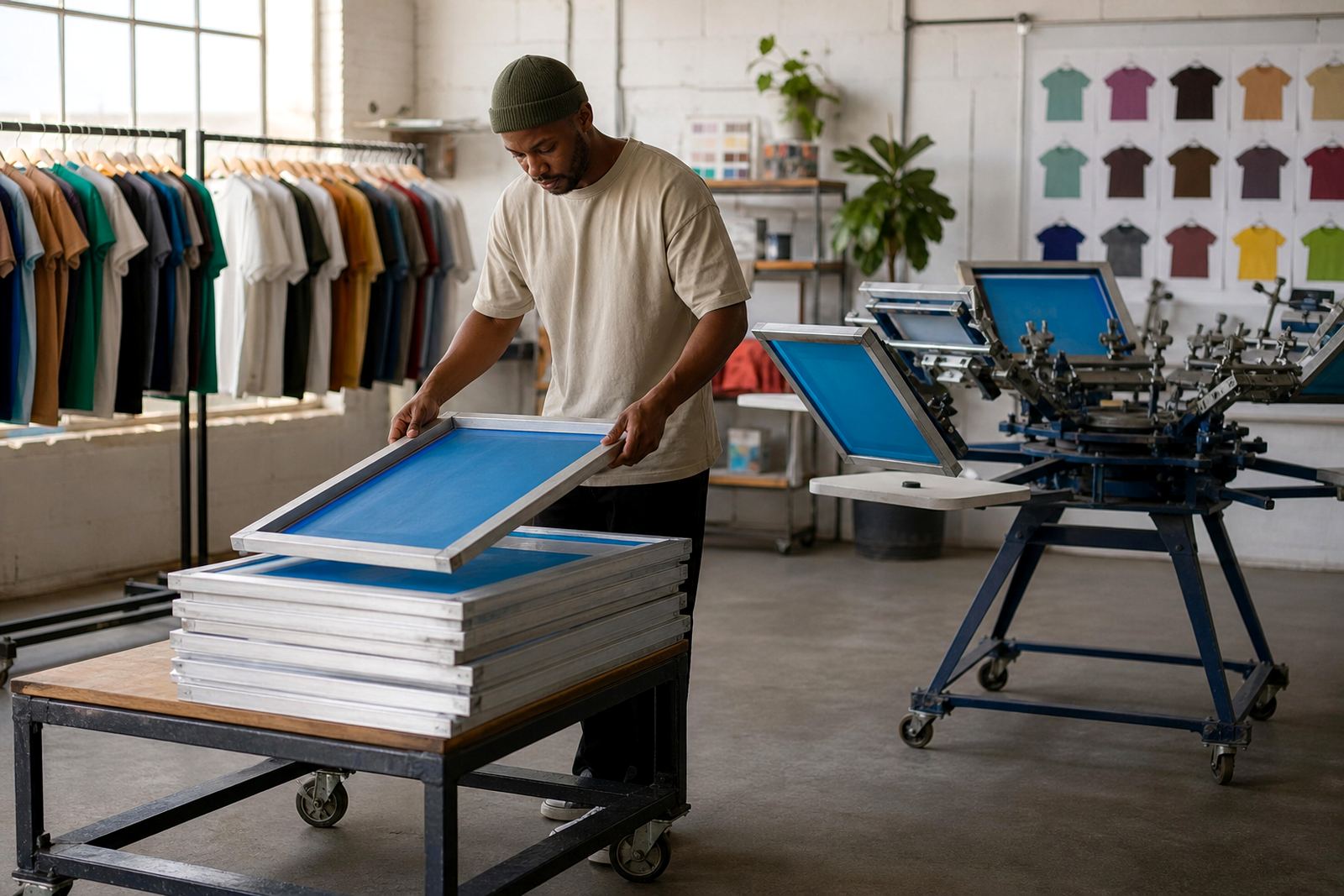
A sample room rarely needs one single frame size. It usually needs a small working set that covers common artwork sizes and garment placements. For most teams, the practical approach is to keep a mix of narrow, medium, and larger frames so the screen can match the job instead of forcing the job to fit the screen. That makes set-up easier, especially when the same department handles both client approvals and internal pre-production.
Common sets often include frames for pocket prints, left chest logos, A4 style artwork, and larger back placements. If your sample room also tests heavier prints or multiple colours, it helps to keep dedicated screens for each colour and artwork type. This avoids repeated mesh removal and re-stretching when the schedule is tight. In humid coastal conditions, especially around Cape Town and Durban, a stable aluminium frame also gives better day-to-day handling than materials that can move with moisture.
- Small frames for chest, sleeve, and label placement tests
- Medium frames for A4 and standard artwork approvals
- Large frames for back prints and full mock-up work
- Separate screens for repeat colours where possible
For teams based in Maitland or collecting via Bellville, a planned frame mix can save several hours over a month. If your department is printing in batches before load-shedding windows, having the right frame already stretched and checked makes the session more productive and less stressful.
Layout planning that keeps approvals moving
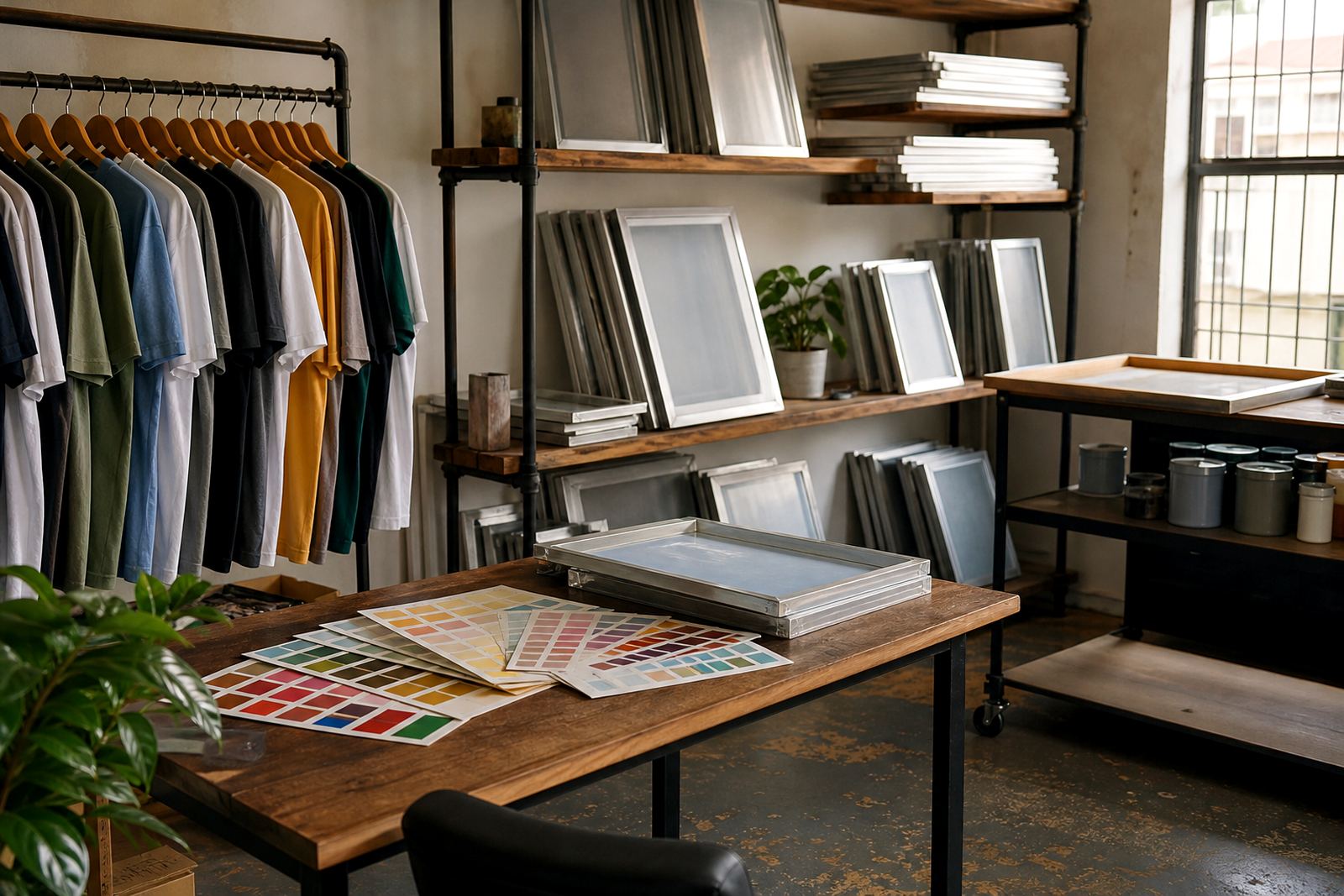
A sample room works best when the bench layout is simple and repeatable. Keep the frames close to the point of use, with a fixed area for receiving garments, another for exposure or stencil prep, and a clear printing space that is not crowded by finished samples. If the room is changing screens often, label each frame by size and use, then keep a log of mesh type, artwork family, and last inspection date. It sounds basic, but it saves errors when three people are sharing the same space.
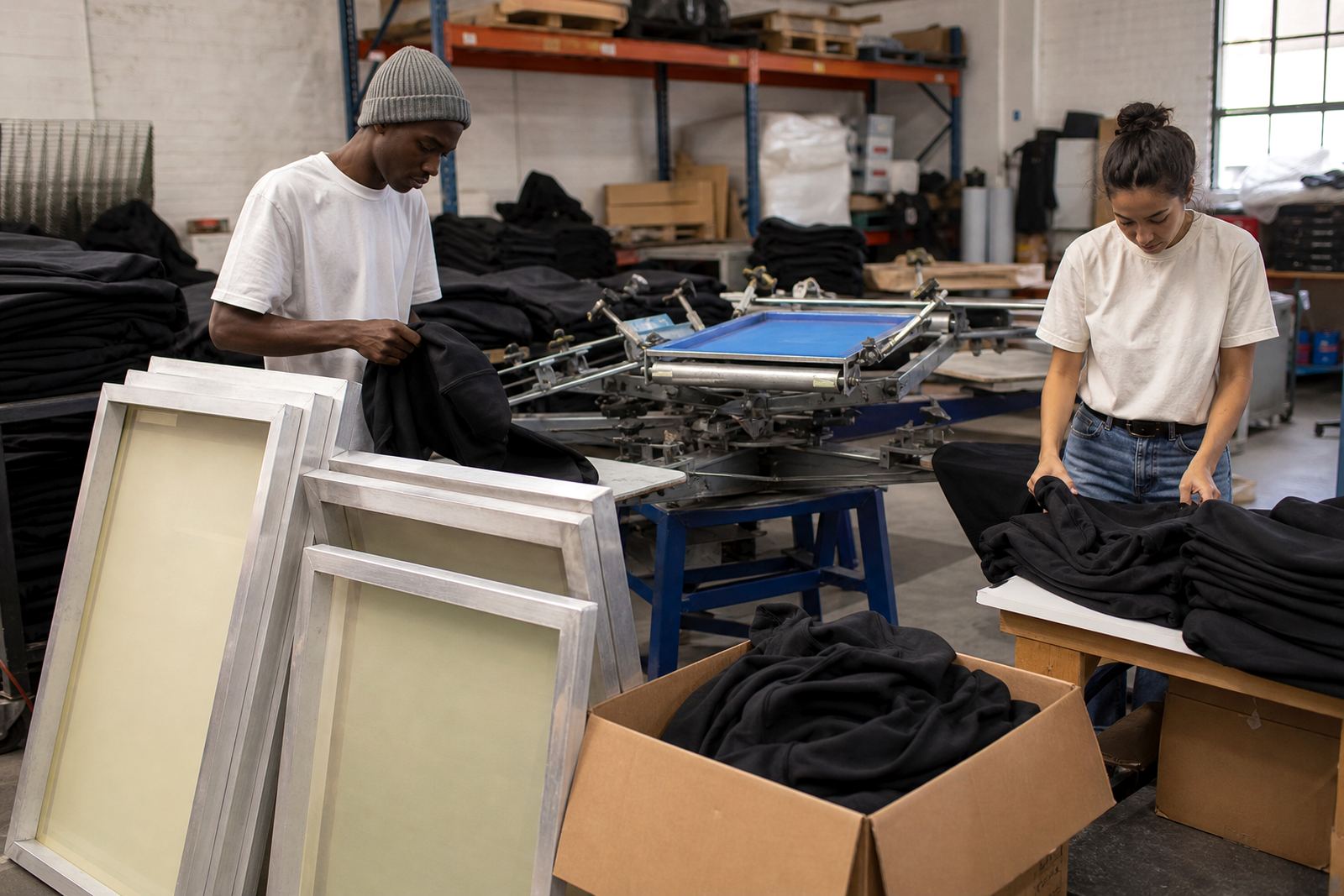
We also recommend planning around the type of garments being sampled. Light knits, heavy hoodies, and textured fabric behave differently under the squeegee. If your approval samples must match production later on, the screen set should reflect the final garment type as closely as possible. That is where custom size stretching can help, because the screen can be made to suit the actual print area instead of a rough guess.
- Keep a fixed place for each frame size
- Separate sample approval screens from test screens
- Mark mesh type, artwork reference, and date clearly
- Match frame size to the final garment panel where possible
In Maitland workshops and production rooms across Johannesburg, Pretoria, Gqeberha and Durban, teams often work under tight municipal and courier schedules. A tidy system makes pickups, returns and urgent turnarounds much easier to manage.
Common mistakes sample rooms make
One of the biggest mistakes is trying to use one old frame for every approval. That usually leads to poor tension, blurred edges, and extra touch-ups on the sample garment. Another common issue is not checking the frame before the artwork goes on. A bent corner, loose mesh, or old adhesive can change the print enough to cause a rejection from the client.
Another problem is overloading the room with too many frame sizes that are not actually used. That wastes storage and makes it harder to find the right screen quickly. The best set-up is a balanced one, with a core group of sizes that suit the team’s usual job mix. If you are restretching existing frames, do a proper inspection first so the frame shell is still worth reusing. If not, you may be paying for labour twice.
- Using worn frames for approval work
- Skipping tension checks before a deadline
- Keeping too many unused sizes in storage
- Reusing frames without cleaning off old adhesive
It is also worth watching how screens are handled after washing. In a busy sample room, a rushed dry-down can leave residue or moisture that affects the next stencil. A little process control saves a lot of rework, and that is true whether your team is in Bellville, Paarl or on a delivery route to Pretoria.
Budget ranges for sample room frame sets
Budget depends on frame size, quantity, mesh choice, and whether you need new stretching or restretching of existing frames. For smaller sample room orders, teams often start with a few key sizes and build the set over time. A modest starter group can begin from about R1 500 to R3 500, depending on the number of frames and the work involved. A more complete sample room set with mixed sizes, inspections, and prepared screens can sit between R4 000 and R12 000. Larger bulk screen orders or urgent turnaround work will usually be quoted to suit the job.
If you are replacing old stock, restretching existing frames can be a cost-saving route, especially when the aluminium shell is still sound. That can suit development departments that need several screens but do not want to buy everything new at once. For teams ordering regularly, bulk screen orders can lower the per-screen cost and keep the room supplied for the month ahead.
- Starter sample set: about R1 500 to R3 500
- Mixed working set: about R4 000 to R12 000
- Restretching can reduce replacement costs
- Bulk orders usually suit regular sample rooms best
We work from Maitland, Cape Town and support collections, deliveries and supply routes across South Africa. If your sample room needs a few exact sizes or a planned monthly supply, the enquiry form on our contact page is the best way to start.
Why sample room teams choose ScreenFrame
Sample room teams need suppliers who understand that small delays become big delays very quickly. ScreenFrame focuses on aluminium frames, stretching, cleaning, adhesive application, tension checks, and urgent turnarounds for garment printers who need reliable screens and practical support. Our work suits professional printers and smaller development teams alike, from a single approval department to multi-site operations managing several branches.
Because our base is in Maitland, Cape Town, we are set up for local workshop work and nationwide support. Our team includes Mandla Petersen, Ayesha Daniels, Sibusiso Mthembu, Bianca Jacobs, Ruan van Wyk and Lindokuhle Dlamini, so sample room orders are handled with proper coordination from the first enquiry through to pickup or delivery. If you need screen care advice as well, we can help your team keep frames serviceable for longer and reduce avoidable replacements. Good screening is not complicated, but it does need a steady hand and a clear plan.
- New screen stretching for fresh sample room sets
- Restretch existing frames when the shell is still usable
- Pickup and return options for busy departments
- Urgent turnarounds for approval deadlines