
Why fashion label studios need dependable frames
When a label is printing branded tees, hoodies, caps or tote bags, the screen has to do more than carry ink. It must stay true from the first pull to the last, whether the job is 24 pieces for a launch or 600 pieces for a retail restock. In Maitland, Cape Town, we work with studios that need consistent mesh tension, clean edges and frames that can handle frequent wash-up without warping.
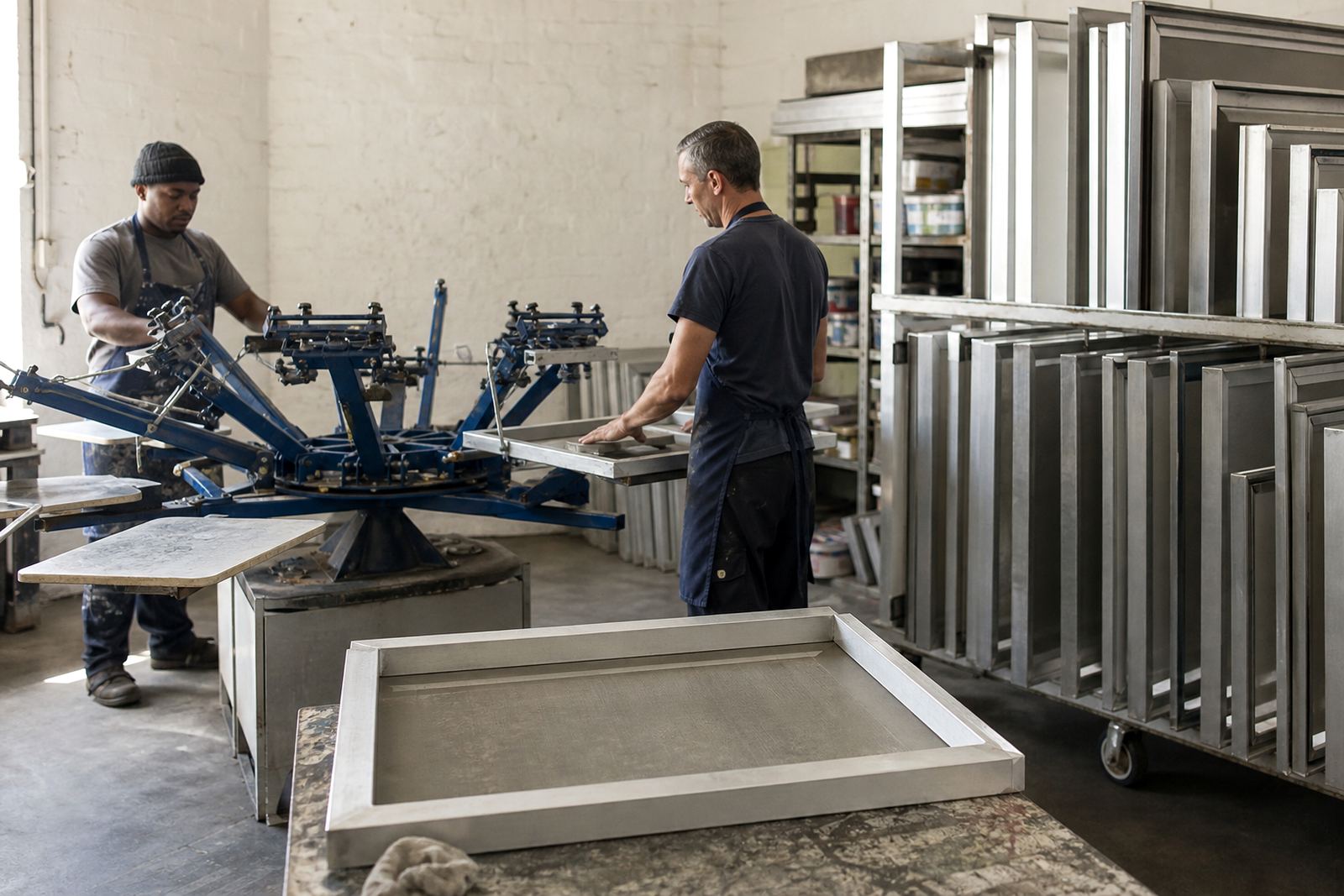
Aluminium frames are a good fit for this kind of work because they are light, easy to move around the workshop and less affected by coastal humidity than timber. For Cape Town printers and those sending work from Johannesburg, Durban, Pretoria or Gqeberha, the benefit is simple: fewer stoppages, cleaner prints and less waste on spoiled garments.
Typical setup for short runs and repeat orders
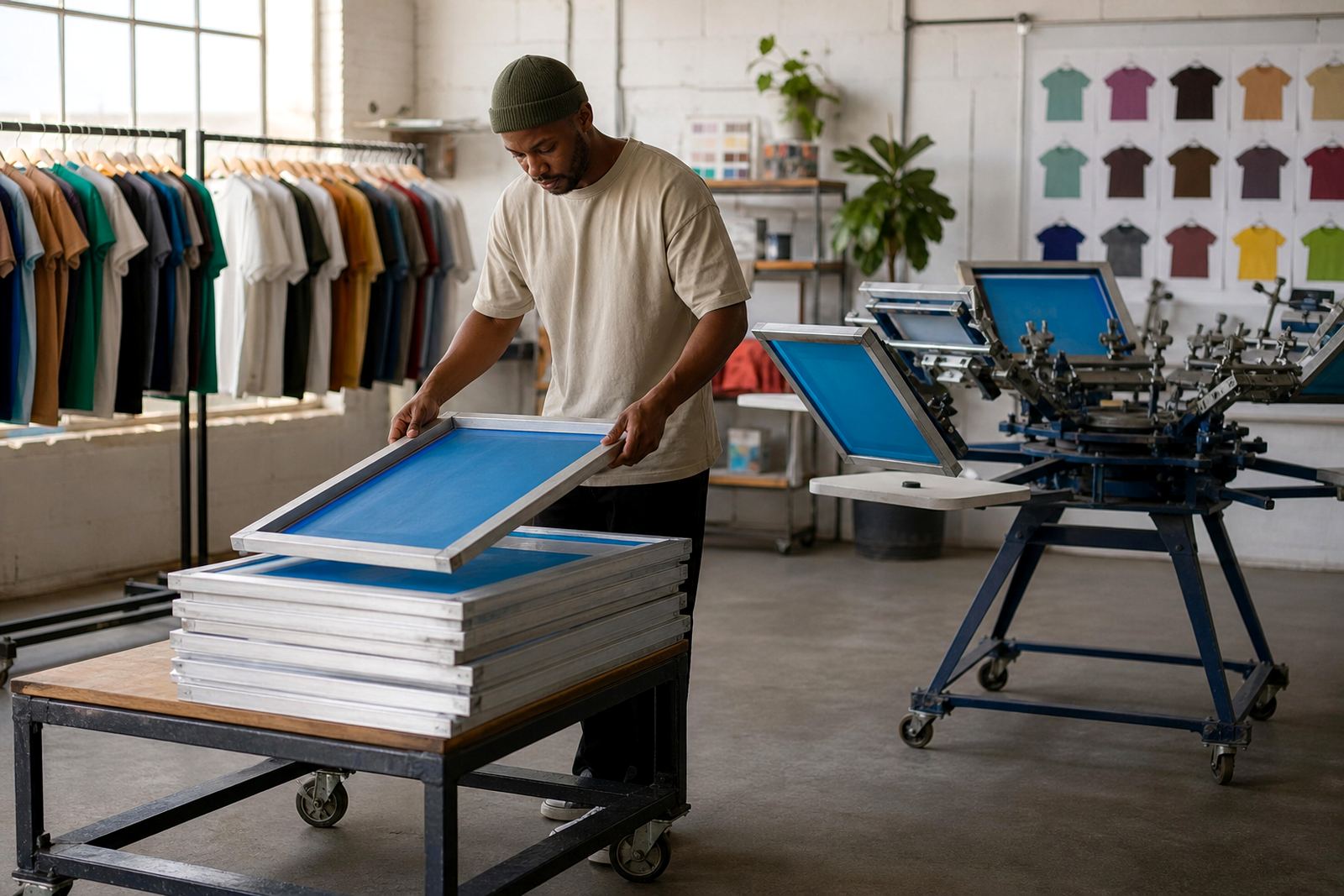
Fashion label studios often run a mixed setup. You may have one screen for a small chest print, another for a back print and a separate screen for labels, neck prints or sleeve branding. A practical set usually includes mesh counts matched to the ink and artwork, plus enough screens to keep the press moving while artwork is changed over.
- Aluminium frames in common garment print sizes and custom sizes
- Multiple mesh counts for block colour, fine detail and halftones
- Stretched screens for one-colour and multi-colour jobs
- Spare frames for repeat runs and emergency reprints
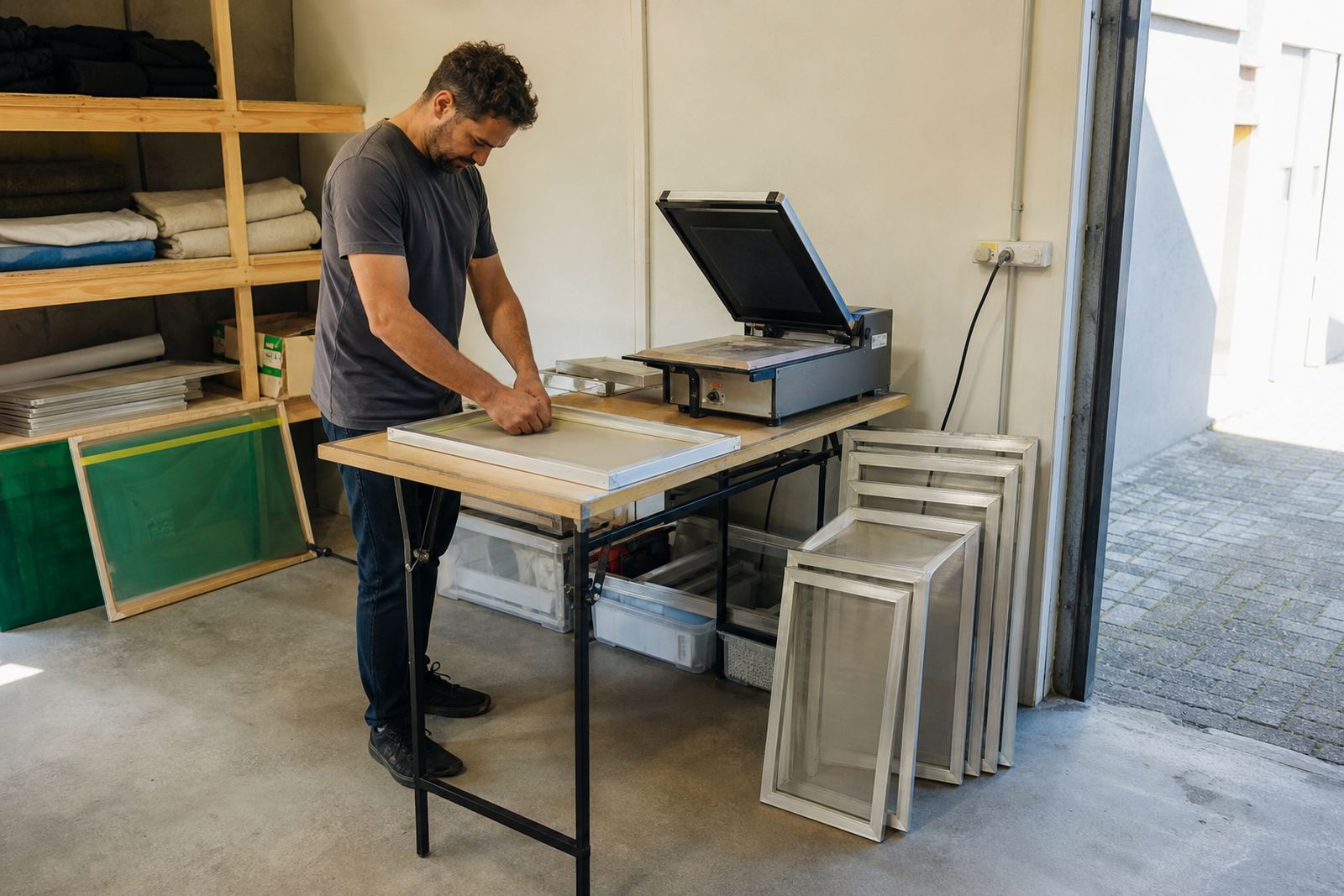
- Clean-up space for mesh removal, adhesive application and frame washing
For labels doing short fashion drops, the goal is to reduce hand-off time between jobs. A well planned screen set lets you keep a stable workflow even when you are testing new artwork or printing small batches for different stockists.
Layout planning that saves time in the workshop
A small studio can lose a lot of time if screens are stored badly or if the same frame size is used for every artwork just to keep things simple. It is worth planning the layout around your most common garment sizes and your usual print placement. Chest prints, oversized back graphics and woven label replacements all need different screen dimensions and mesh tension.
Keep frequently used screens close to the press and separate fresh screens from washed returns. If you are working in Durban or Gqeberha where humidity can affect drying time, allow a bit more space for drying and curing before the screen goes back into service. A clean rack system and clear labelling will save you from mixing up repeat orders.
- Measure artwork with the garment size in mind, not only the design size
- Allow enough border around the image area for clamps and tape
- Keep repeat-run screens marked by client, colour and date
- Plan for pickup and return if your team works across multiple sites
Common mistakes that slow down fashion production
One of the biggest mistakes is using an old screen for a new order without checking the tension first. A screen can look fine but still print unevenly, especially after heavy use or cleaning. Another common issue is choosing the wrong mesh count for a design that needs crisp lines or soft hand feel. The result is ink build-up, poor detail and garments that need rework.
We also see teams skipping frame inspection before a rush order. Small cracks, loose corners or adhesive failures can turn a same-day job into a delay. If you are producing branded apparel for launches or seasonal drops, it pays to check each frame before the run starts, not after the first failed print.
- Using a mesh count that is too coarse for fine artwork
- Overstretching screens until they lose consistency
- Ignoring frame cleaning between jobs
- Leaving screens in damp storage after wash-up
- Ordering too few screens for multi-colour work
Budget ranges for fashion label studios
For budgeting, it helps to think in three layers. Entry level studios may only need a small set of stretched frames for short runs and sample work, while growing labels need a larger stock of repeat-use screens and spares. In many cases, a practical starter range for a fashion label can begin around R2 500 to R6 000 for a basic screen set, depending on size and mesh needs.
Mid-range operations that print weekly for stores, pop-ups or online orders often budget R8 000 to R20 000 or more for a fuller screen bank. That can include custom sizes, urgent turnarounds and backup frames for seasonal peaks. If you are running a bigger production room or multiple garment lines, it is sensible to allow extra for restretching and replacement screens through the year. A cheap frame that fails mid run usually costs more in wasted garments than it saves.
How ScreenFrame supports South African label production
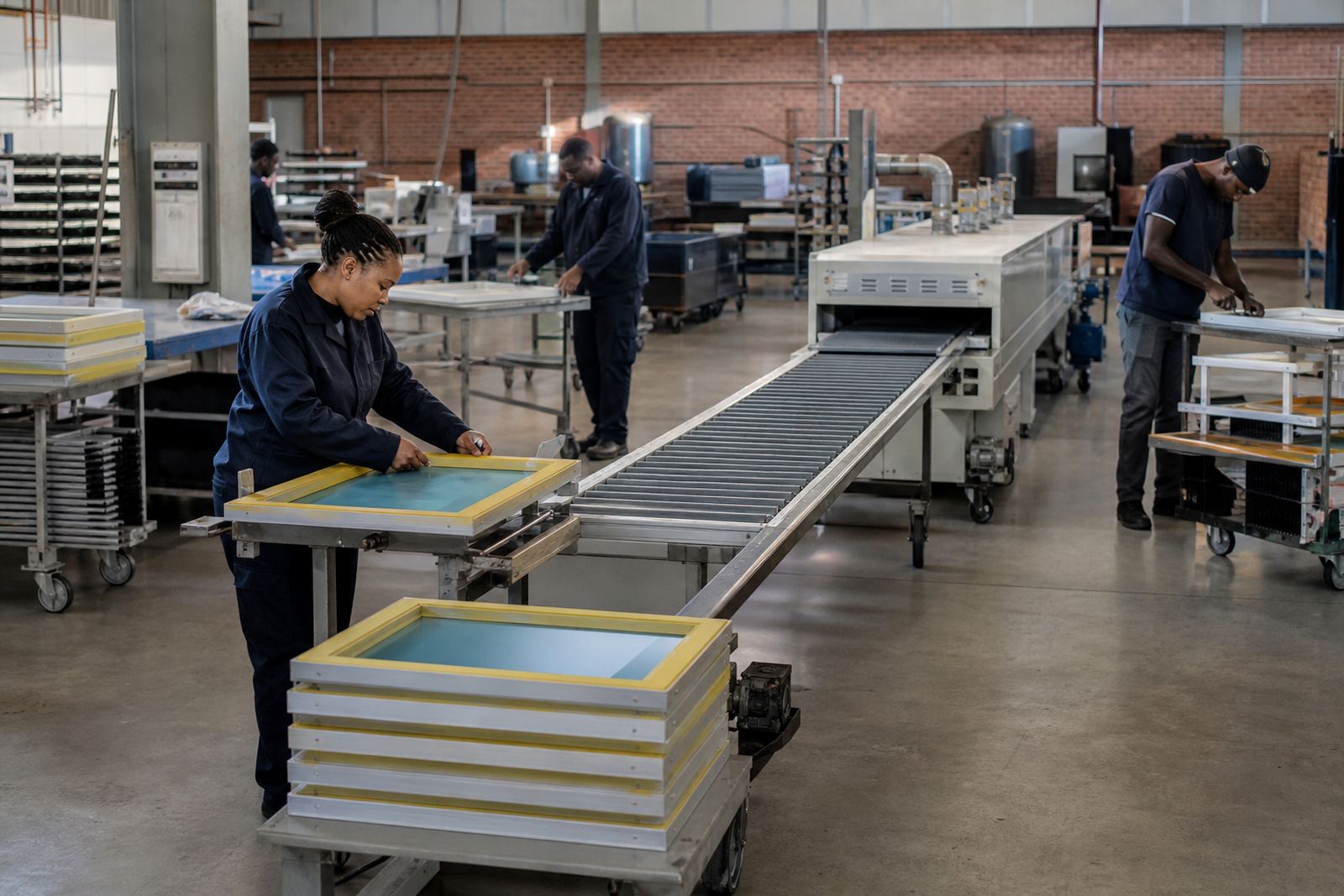
ScreenFrame makes aluminium screen-printing frames and stretches screens for garment printers across South Africa from our Maitland workshop. Fashion labels can use our services for new screen stretching, restretch existing frames, mesh removal, frame cleaning, tension checks, frame inspections and custom size stretching. We also handle bulk screen orders, urgent turnarounds, pickup and return, plus screen care advice for studios that want better life from every frame.
Our team includes Mandla Petersen, Ayesha Daniels, Sibusiso Mthembu, Bianca Jacobs, Ruan van Wyk and Lindokuhle Dlamini, so jobs are handled by people who understand workshop pressure and delivery timing. Whether your label is based in Cape Town or you need deliveries to Johannesburg, Durban, Pretoria or Gqeberha, we keep the process practical and predictable. If your studio is ready for more consistent print runs, the right screen set makes a real difference.