
Getting Your First Print Room Working
If you are starting out in garments, the first production headache is usually not the press, it is the screens. A small shop in Maitland, Bellville or elsewhere needs frames that hold tension well, clean up properly and keep their shape after repeated use. That matters when you are doing short runs for schools, events, spaza wear, staff uniforms or small brand drops.
We help new printers set up with aluminium screen-printing frames sized for the work they are actually taking on. If you are printing one colour tees, hoodies or tote bags, you do not need a complicated system. You need frames that match your artwork sizes, your press, and the space you have for drying, reclaiming and storage.
- Choose frame sizes around your main artwork, not the biggest job you hope to get.
- Keep a clear flow from screen prep to exposure to print to washout.
- Leave room for drying screens in a warm, dust-free corner.
- Plan for load-shedding days with enough time to clean and store screens properly.
Typical Starter Equipment And Screen Counts
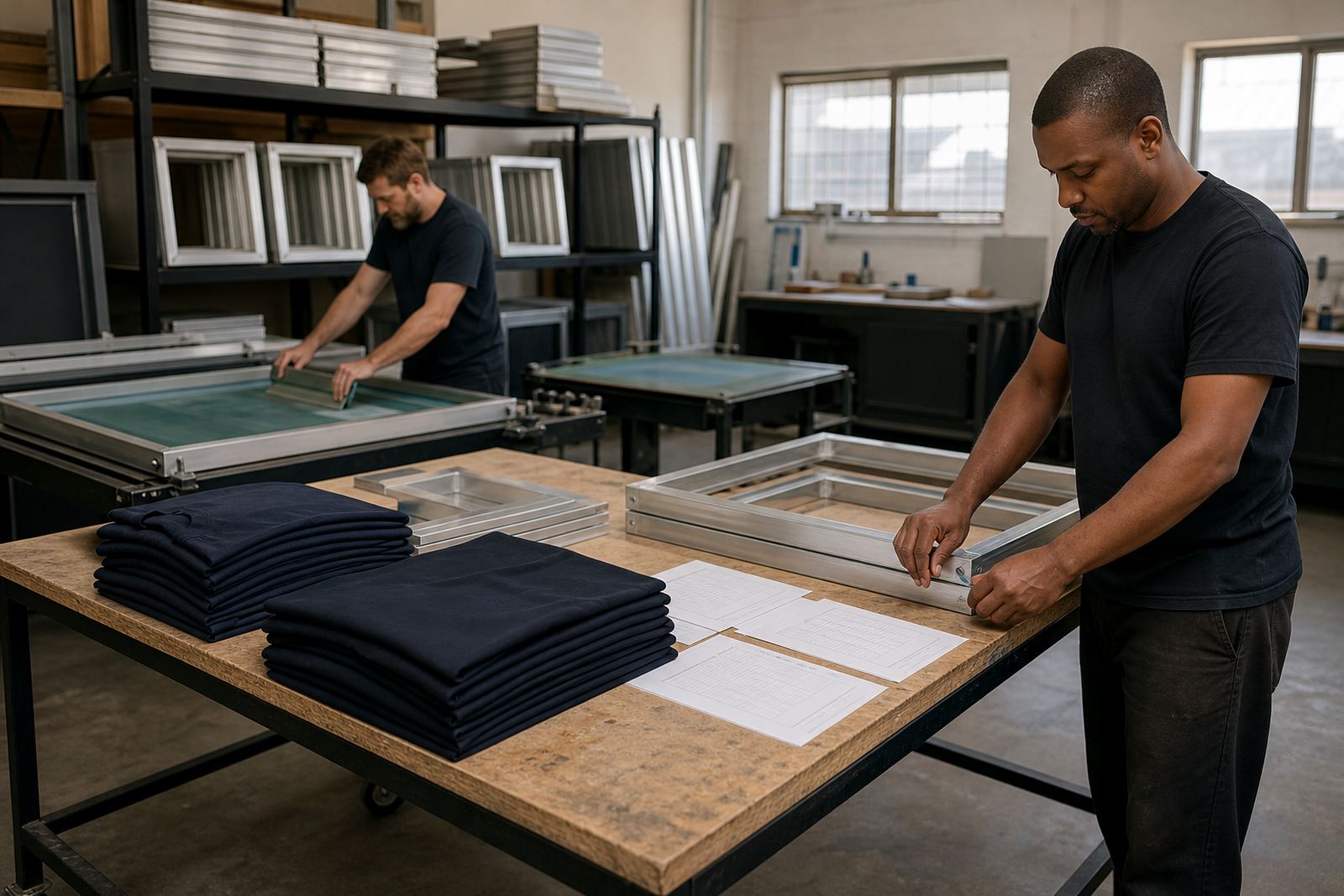
A new garment printer usually starts with a small press, a heat source, basic exposure gear, squeegees and a stack of well-stretched screens. For a lean setup, 6 to 12 screens can cover the early months if you are working in short runs and keeping artwork simple. If you are taking on more stock, 12 to 20 screens gives you better flexibility when multiple jobs land in the same week.
For most startups, the frame mix should include a few standard sizes and one or two larger frames for oversized prints or art that needs more breathing space. Our team can stretch new mesh, restretch existing frames and inspect them before you start printing, so you do not waste ink and time on weak screens.
- Small range: 6 to 8 frames for one or two press setups.
- Growing range: 10 to 16 frames for mixed jobs and repeat orders.
- Busy startup: 18 plus screens if you are printing daily and handling multiple garments sizes.
Layout Planning For A Small Workshop
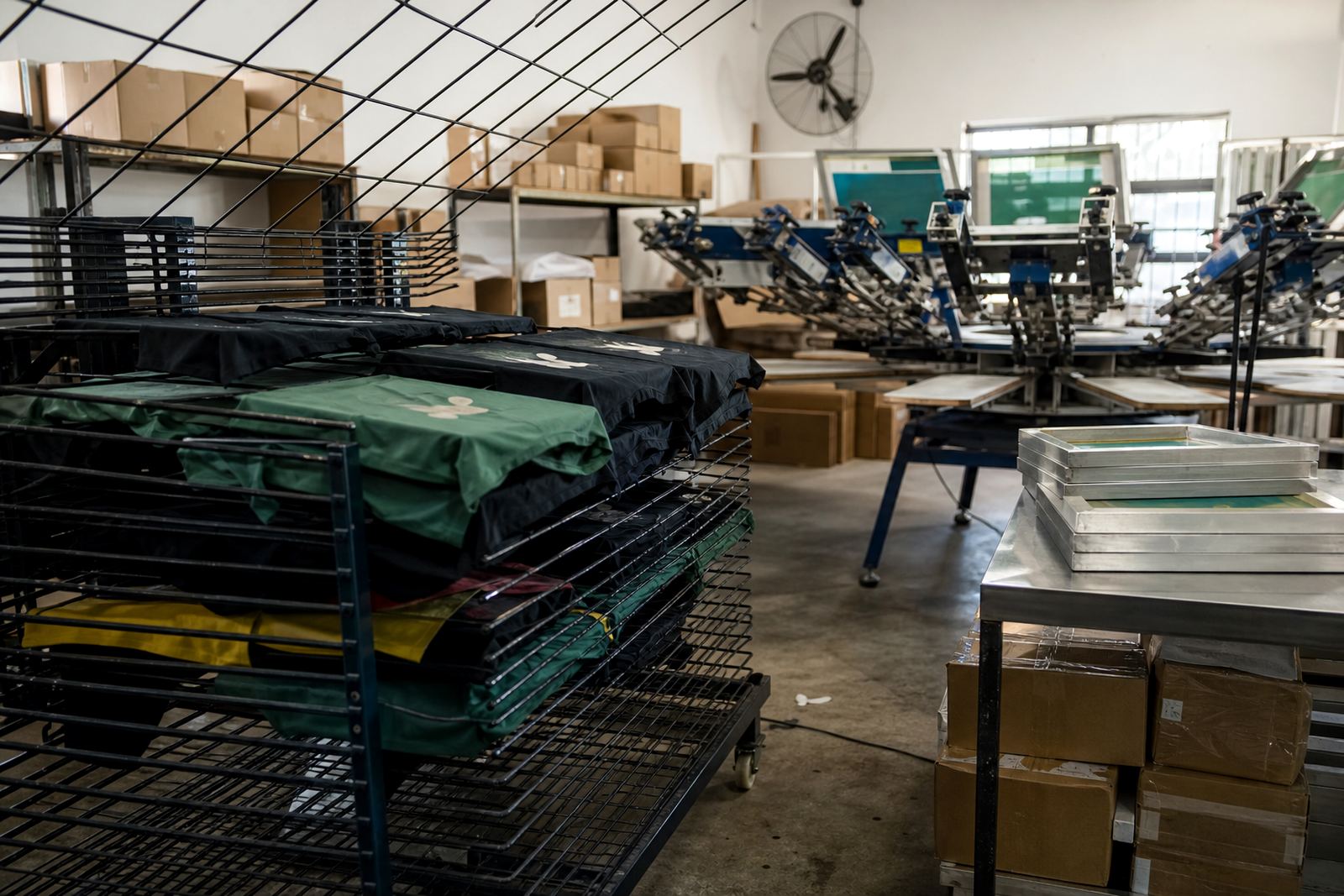
Good layout saves more money than most new owners expect. In Cape Town workshops, space is often tight, so the first rule is to keep wet processes away from finished stock. Put your washout and cleaning area where overspray will not reach exposed screens, garments or cardboard packaging. In humid areas near the coast, screens should dry fully before storage so mesh stays stable and adhesive bonds hold properly.
We often advise first-time printers to separate the room into four simple zones: screen prep, drying, printing and packing. If you are in Johannesburg or Pretoria, dust control matters. If you are in Durban or Gqeberha, moisture and coastal air can affect storage and frame condition. A little planning now prevents warped screens, lifted emulsion and messy prints later.
- Keep chemicals and adhesive in one marked cabinet.
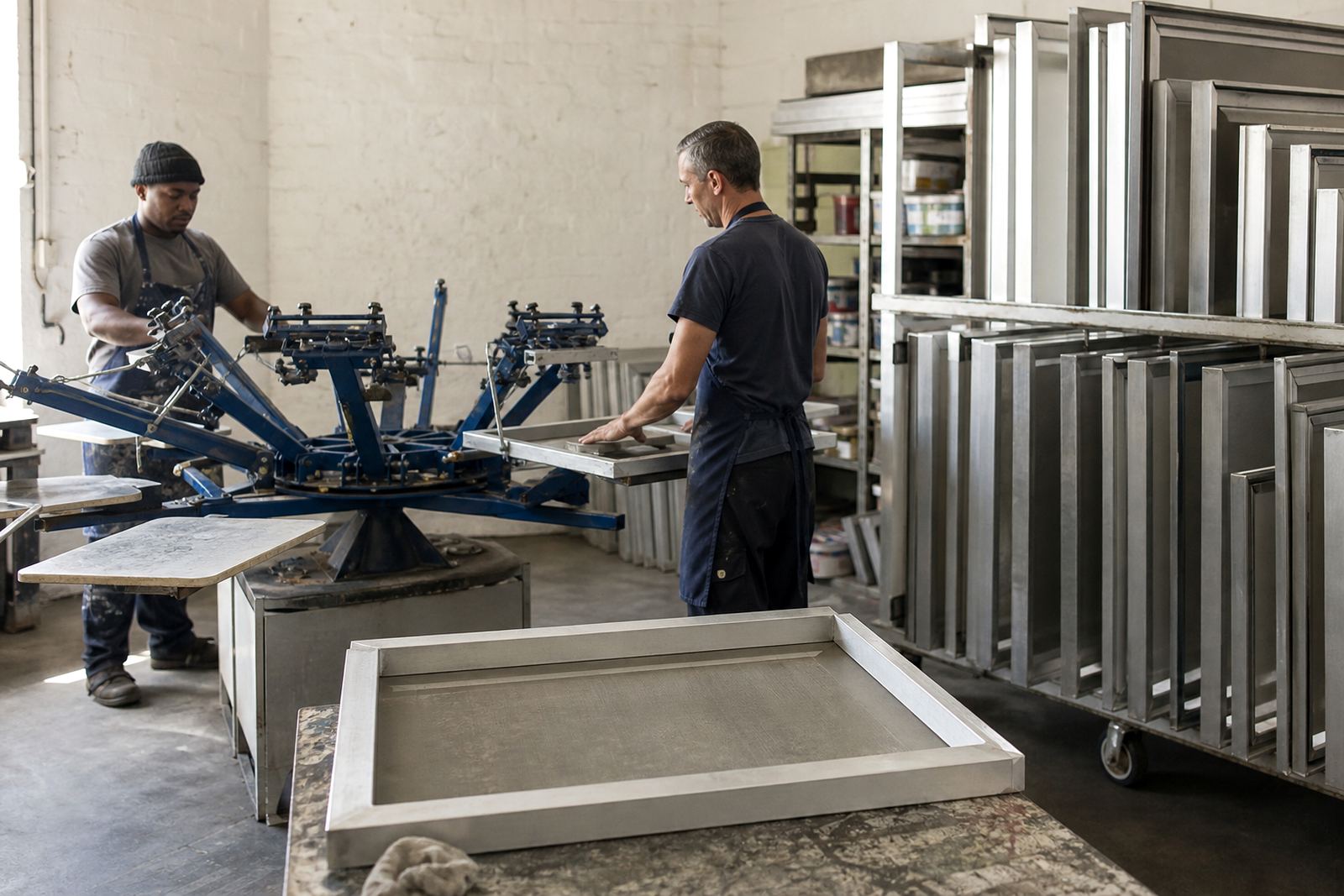
- Store screens vertically or in racks, not leaned loosely against walls.
- Use washable floors or trays in the reclaim area.
- Leave a clear walking path between press, drying space and packing table.
Common Setup Mistakes We See Early On
New print shops often start printing before the screens are properly checked. Loose mesh, dirty frames and poor tension are common reasons for patchy prints, ghosting and wasted garments. Another mistake is buying too few screens, which slows jobs when one frame is still drying or being reclaimed. The result is rushed work, and rushed work costs Rand.
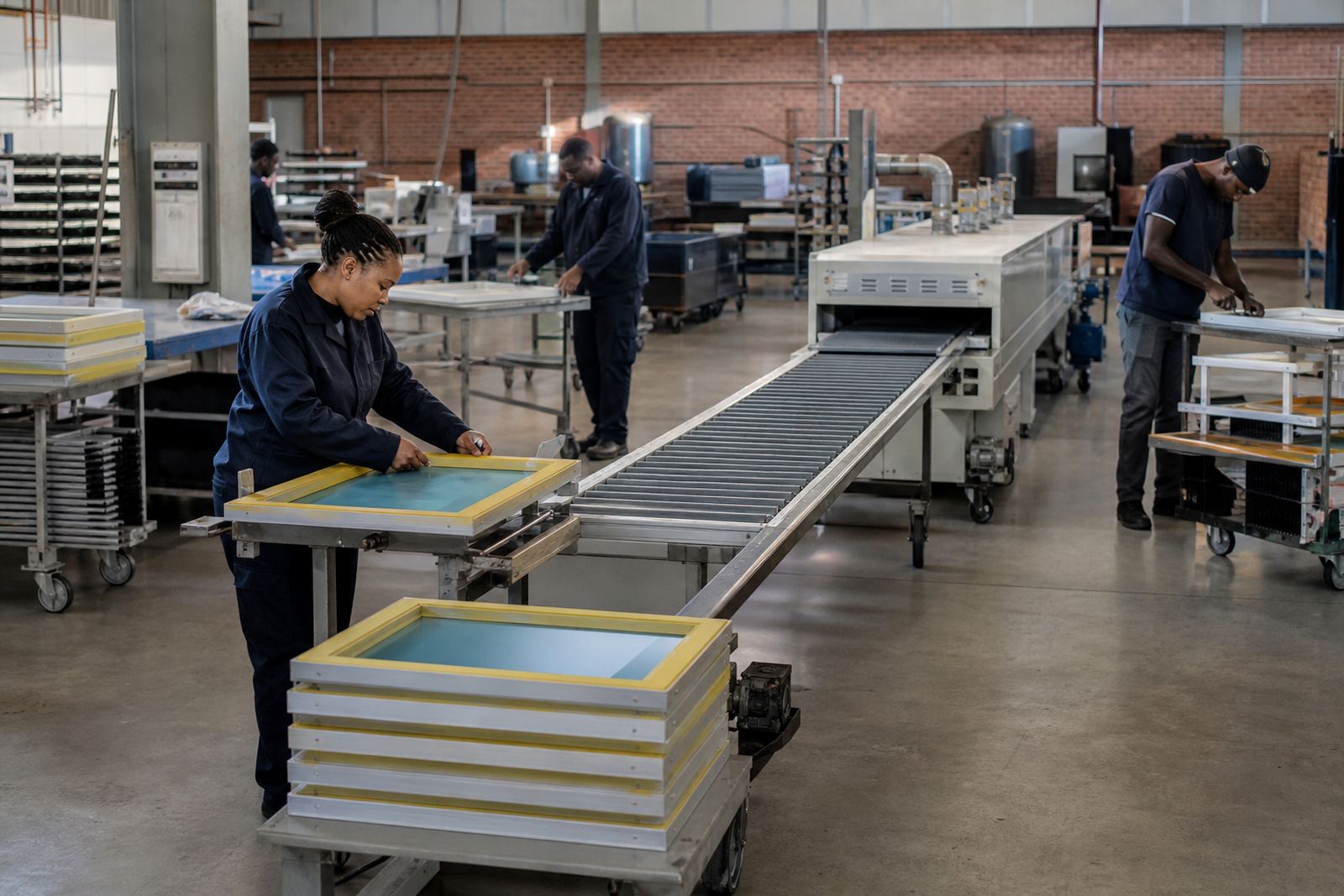
Another issue is choosing a frame size that does not suit the artwork. If the mesh area is too small, you spend more time taping and adjusting. If the frame is oversized for your press, handling becomes awkward and print alignment becomes harder. Our workshop in Maitland supports new printers with frame inspections, mesh removal, adhesive application and tension checks so you can avoid those early errors.
- Do not reuse a damaged frame just because it still looks straight.
- Do not leave reclaimed screens damp in a closed room.
- Do not stretch every job onto the same size frame.
- Do not ignore weak tension, it shows up in the print immediately.
Budget Ranges For A Lean Start
Budget is always part of the conversation for a startup. A careful new garment printer can begin with a modest screen setup and build up as orders come in. As a guide, a starter screen package with a small batch of stretched frames can sit in the lower thousands of Rand, while a wider set of custom sizes, restretching work and urgent turnaround orders will move the figure up depending on quantity and mesh choice.
For most new shops, it makes sense to spend first on the screens that will be used every week, then add specialist sizes later. If you are servicing local clients in Cape Town or taking deliveries to Johannesburg, Durban, Pretoria or Gqeberha, it is worth planning for extras so you are not turning away jobs because one frame is in cleaning or one screen did not hold tension. Screen care advice can also save you from replacing frames too soon.
- Basic startup screen setup: lower thousands of Rand.
- Mixed custom screen batch: mid thousands of Rand.
- Ongoing replacement and restretch work: depends on size, mesh and job volume.
How ScreenFrame Supports New Printers
We work with first-time garment printers who need clear advice and practical turnaround, not a sales pitch. From Bellville collections to Paarl supply routes and deliveries to major cities, the focus is on getting your screens ready for real work. If you need new screen stretching, frame cleaning, restretch existing frames or a bulk screen order, we can help you build a sensible starting point.
Our team includes Mandla Petersen, Ayesha Daniels, Sibusiso Mthembu, Bianca Jacobs, Ruan van Wyk and Lindokuhle Dlamini, and the shop base is in Maitland, Cape Town. That means you can ask about frame size, mesh choice, turnaround time and pickup or return before you commit. For a startup, that kind of support makes a proper difference when the first orders start landing.
- New screen stretching for first production runs.
- Custom size stretching for unusual artwork or press layouts.
- Urgent turnarounds when a job has to go out fast.
- Pickup and return options for busy owners who cannot leave the workshop.