
Fast-turn merch work starts with the right frame set
Event printers usually work under tighter timeframes than standard garment orders. A concert run, brand activation or seasonal campaign can shift from 100 shirts to 2 000 shirts in a few days, so your frames need to be ready for repeat use, quick changeovers and clean registration. If the frame twists or the mesh loses tension, the whole job slows down and the print quality drops.
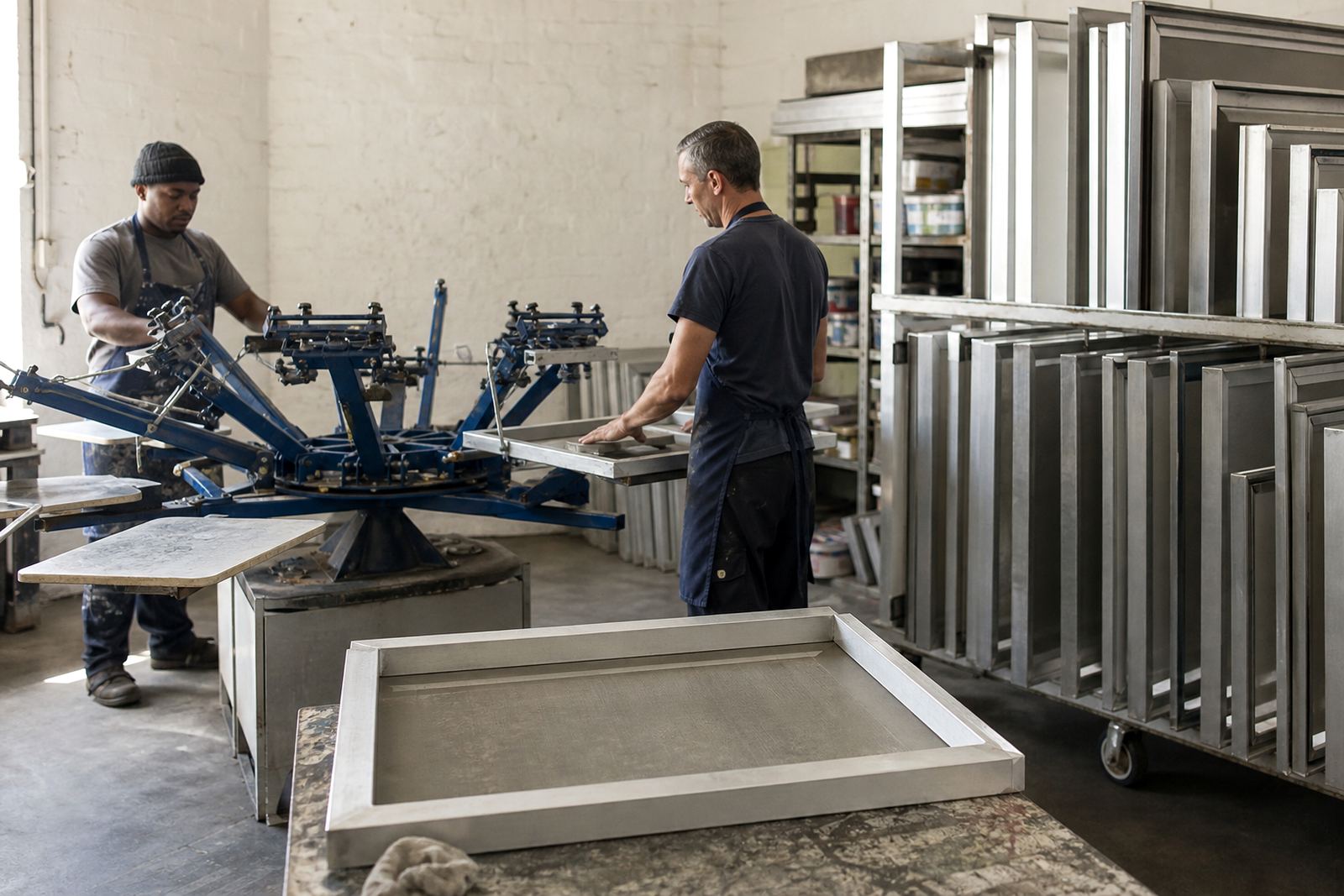
For this type of work, many shops keep a mixed set of frame sizes so they can match the artwork rather than forcing every design onto one format. In Cape Town, Johannesburg, Durban, Pretoria and Gqeberha, where deliveries and collections often need to fit production windows, it helps to plan the frame set around your most common garment sizes and print areas.
Typical setup for concerts, launches and seasonal campaigns
Most event merch printers use a practical mix of aluminium frames for both spot colour work and larger front prints. The goal is not to overcomplicate the workshop, but to keep enough flexibility for small runs, mid-size runs and urgent reprints. A tidy set-up also makes it easier to train staff and avoid costly mix-ups between jobs.
- Standard tees: frames sized for chest prints, sleeve logos and back prints
- Oversized garments: larger frames for wide artwork and multi-pass prints
- Special runs: custom sizes for tote bags, hoodies and promotional wear
- Back-up stock: extra frames for rush work when a screen needs restretching
If your team handles different campaign types in the same week, label each frame by size and mesh type. That simple step saves time during load-shedding, late afternoon packing and those rushed Thursdays when production needs to go out before the weekend. It also helps if you are working with one printer on a manual press and another on a more automated setup.
Planning the screen layout for cleaner production
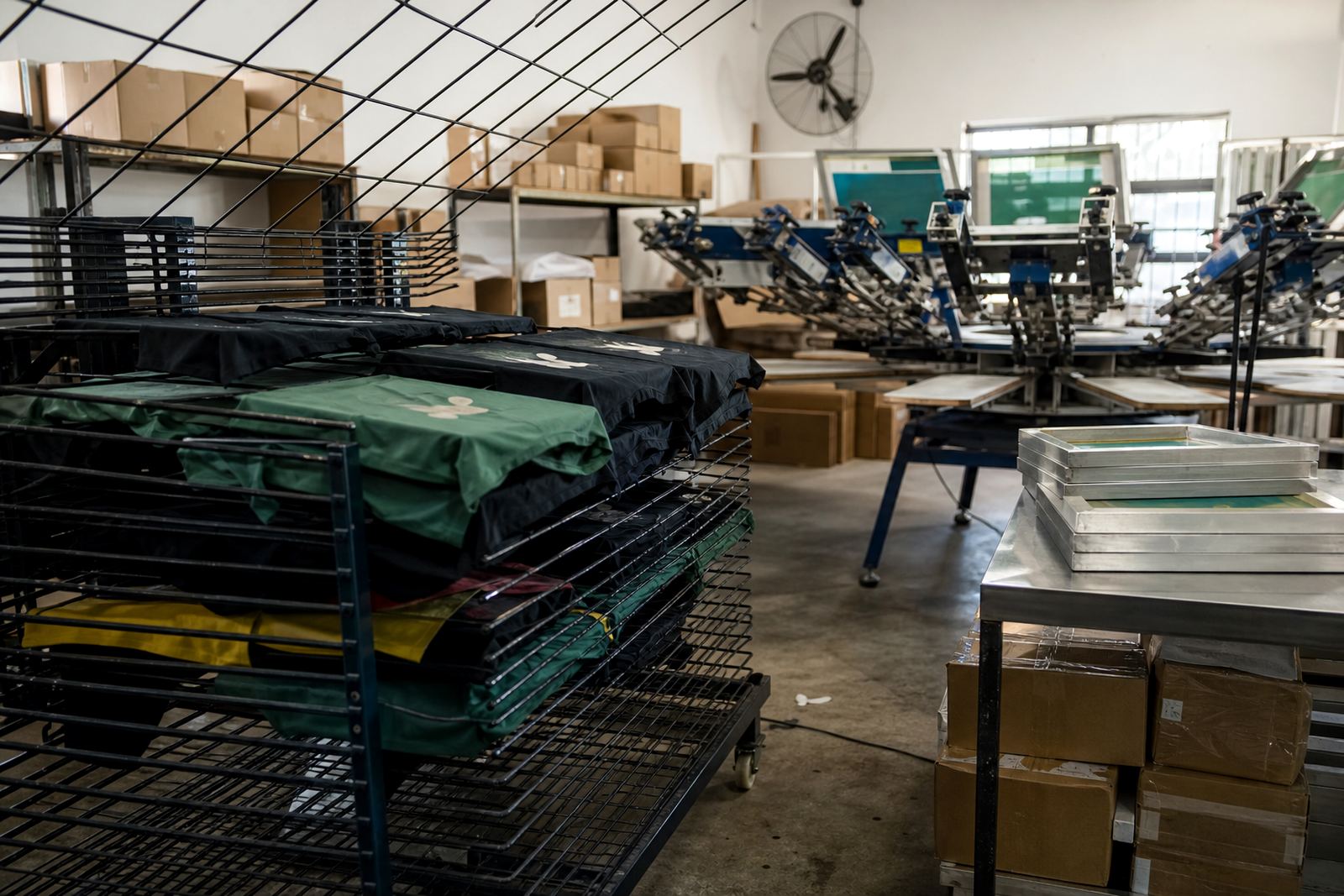
Good planning keeps event jobs moving. Before stretching, think about the garment style, print position, ink type and the size of the design. A frame that is too small can force you into awkward print strokes, while one that is too large takes up space and can slow drying racks and storage. For busy workshops in Maitland, Bellville or along the Paarl supply route, layout matters because every square metre in the workshop counts.
Where possible, group screens by campaign or client so the team can pull the right set without second guessing. If you print on darker garments, allow for extra stroke control and make sure the mesh is tensioned evenly across the full frame. Uneven tension often shows up as fuzzy edges, poor detail and a frustrating rework later on.
- Leave enough clearance around the artwork for registration marks
- Match the frame size to the largest print area you expect to run
- Keep mesh types consistent within a single campaign where possible
- Store screens flat and out of direct sun to protect tension
Common mistakes that slow down event orders
One of the biggest mistakes is stretching a screen too quickly because the deadline is tight. That usually leads to uneven tension, weak corners or a frame that needs attention after only a few runs. Another common issue is using the same frame size for every job, even when the artwork or garment type changes. It may feel efficient at first but it usually creates more handling problems later.
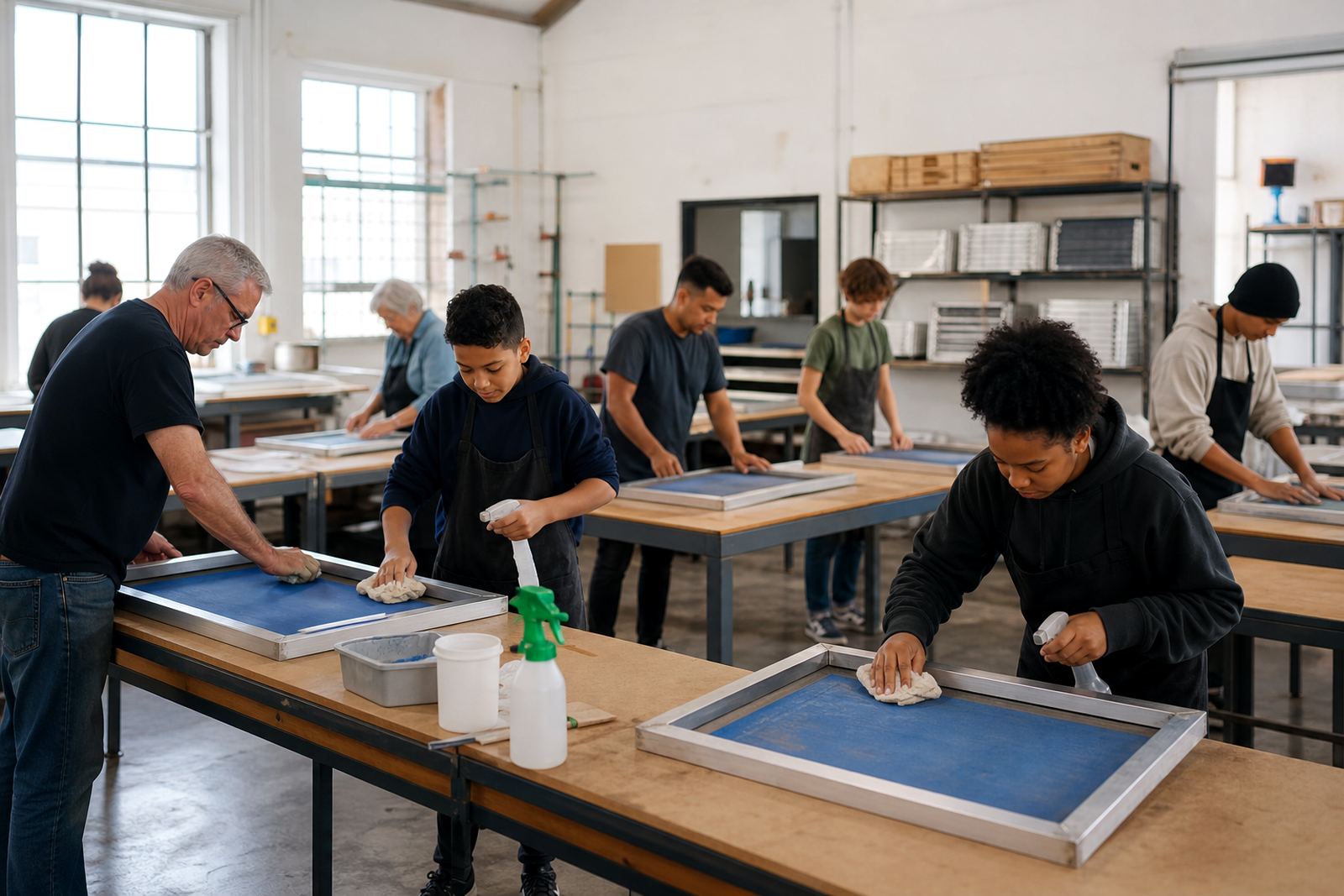
Some printers also skip frame cleaning between jobs. Ink build-up, adhesive residue and leftover mesh can affect the bond when a screen is restretched. In humid coastal areas like Cape Town and Gqeberha, moisture can also affect storage and drying times, so screens should be checked properly before the next campaign starts.
For urgent merchandise work, it is better to build in a small buffer than to push every frame to its limit. A little planning on the front end saves time when the order is already on the machine and the client wants a same-week handover.
Budget ranges for event merch printers in Rand
Budgeting for frames depends on size, quantity and whether you need new stretching or restretching on existing frames. Small promotional runs can work with a tighter frame set, while larger campaign printers need more sizes on hand and usually keep a few spare frames for urgent turnarounds. A practical workshop will also allow for inspection, cleaning and mesh replacement as part of normal maintenance.
As a rough guide, event merch printers in South Africa often budget from a few hundred Rand per frame for simple jobs, up to several thousand Rand for custom sizes or bulk screen orders. Bigger production setups may spend more if they want a full matched set for multiple presses. The final cost also depends on how much prep is needed, especially if old adhesive has to be removed or the frame requires extra cleaning before stretching.
- Small refresh jobs: budget for restretching and cleaning on existing frames
- Mid-size campaigns: allow for a mix of standard and custom sizes
- High-volume event work: include spare frames and urgent turnaround costs
- Workshop planning: keep money aside for inspections and mesh care
How ScreenFrame supports fast campaign production
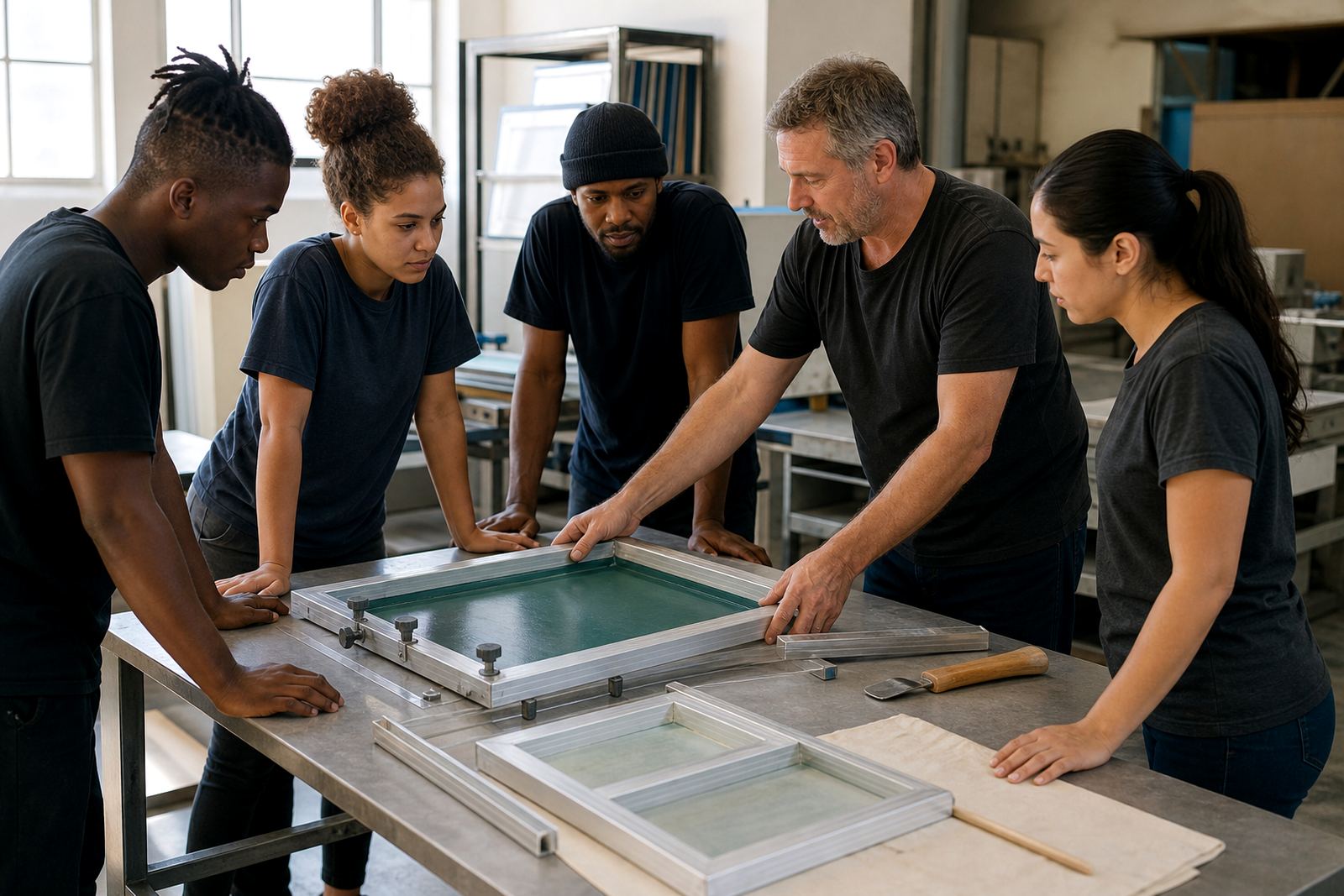
ScreenFrame works with garment printers who need dependable aluminium frames and careful screen stretching for event-driven work. From our Maitland base in Cape Town, we help customers across South Africa with new screen stretching, restretching, mesh removal, adhesive application, tension checks and frame inspections. For printers handling concert apparel, launch merchandise and seasonal promotions, that support makes it easier to keep screens ready and consistent.
We also handle pickup and return where needed, which helps when the workshop is busy and the order needs to move quickly. If you are comparing frame options for a campaign, the best next step is to send through the details on the contact page enquiry form. That gives us the size, quantity and turnaround needed so we can advise on the right setup for your job.
Mandla Petersen and the team work with printers who want practical advice as well as the finished frames. Whether you are producing a short run for a local event or a larger order for several branches, the focus stays on fit, tension and repeatability, not guesswork.