
Why shared workshop spaces need dependable frames
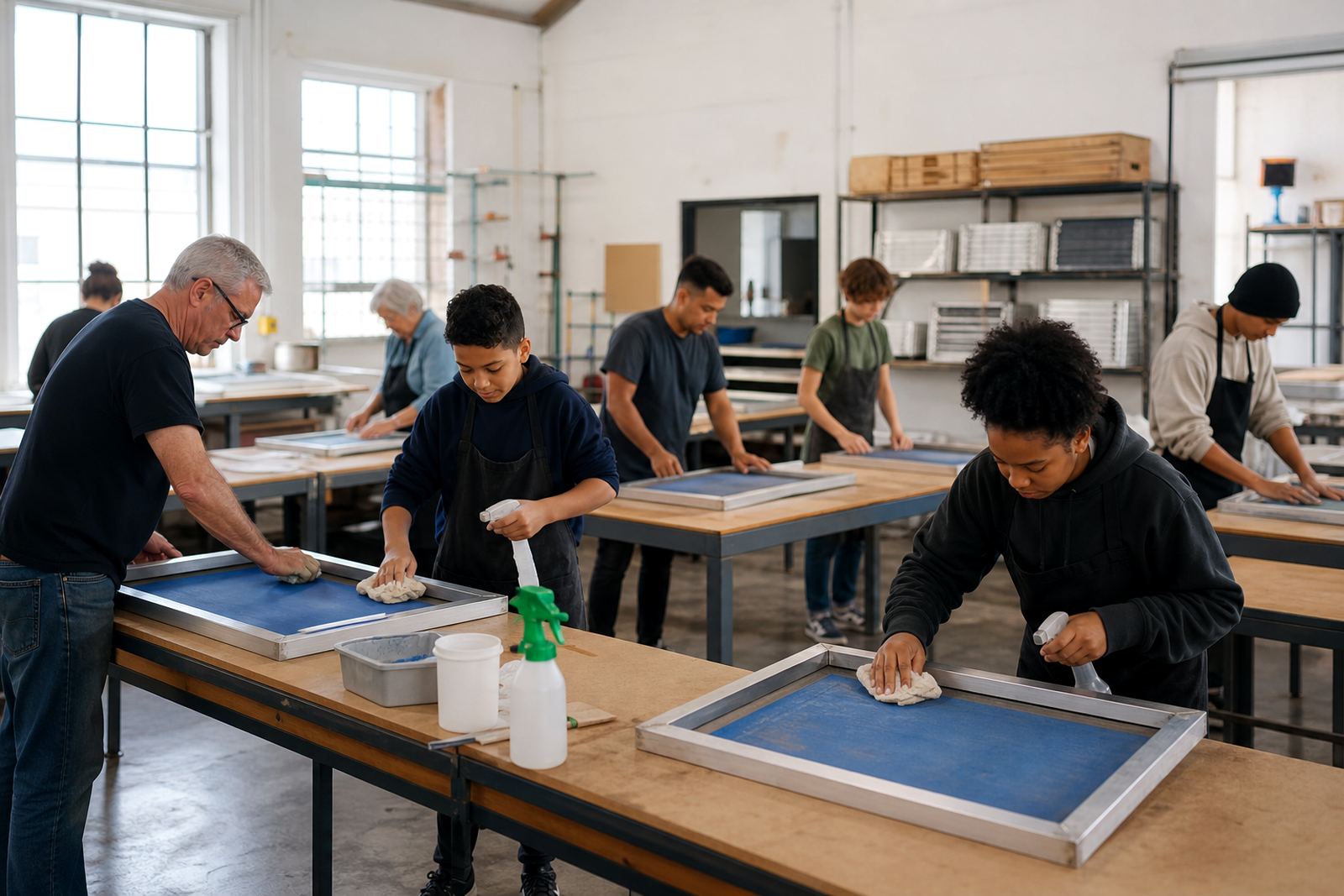
In a community workshop, screens are not handled by one operator only. They are moved between learners, volunteers and trainers, often in warm rooms where drying times are affected by humidity and load-shedding interruptions. That means the frame has to stay square, hold tension and keep its shape after repeated use.
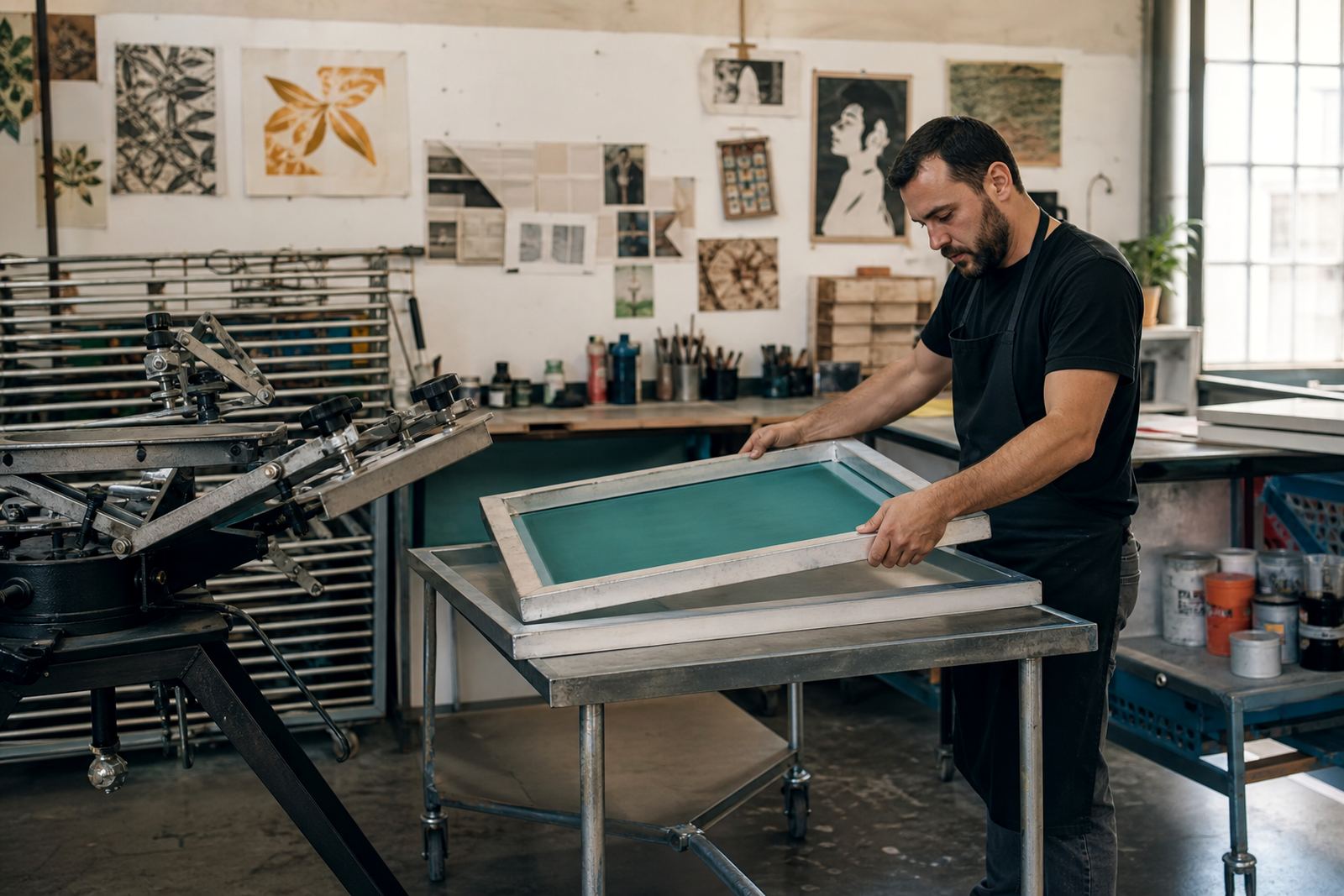
Our aluminium frames are a practical fit for this kind of setup because they are light enough for group work yet strong enough for regular handling. They are easier to clean between print runs, and they help reduce the stop-start problems that come with warped timber or tired old frames. For shared spaces in Maitland, Bellville, Woodstock, Athlone and similar workshop areas, that matters.
Typical equipment set for a community printing room
A good starter set does not need to be complicated. Most community groups do better with a small number of dependable frames in a few common sizes, then add more as the programme grows. For garment printing, the usual setup includes frames for A4 and A3 artwork, plus a few larger sizes for adult T-shirts and tote bags.
In Cape Town and Johannesburg, we often see workshops running with a mix of new screens and older frames that are still useful after mesh removal and cleaning. That can work well if the frames are inspected properly and the mesh tension is checked before each teaching cycle. A neat layout also helps when several people are printing at once, especially in narrow rooms or converted community halls.
- 2 to 4 small screens for test prints and learner practice
- 4 to 8 medium frames for standard T-shirt artwork
- 1 or 2 larger frames for bulk garment runs
- A clean drying area with airflow and dust control
- A labelled rack for finished screens and spare mesh
Layout planning that saves time and keeps printing tidy
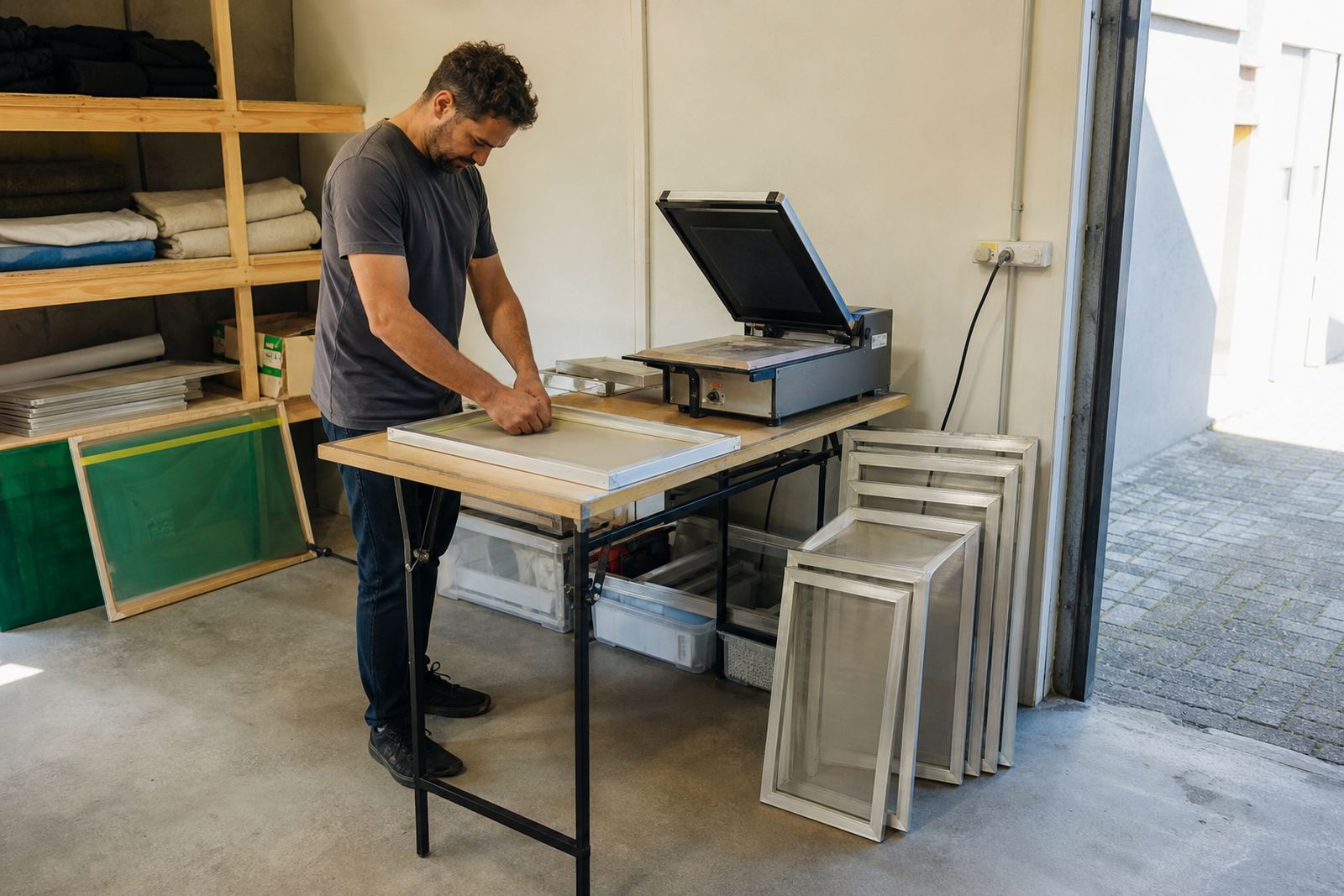
Good planning makes a big difference in a shared room. Keep the stretching, drying and printing zones separate if you can. Even a simple bench setup works better when wet adhesive is kept away from finished screens and when learners know where each step starts and ends. That reduces damage and keeps the work moving.
For coastal sites like Cape Town and Gqeberha, allow for moisture in the room. Mesh can take longer to settle, and cleaning water should not be left sitting around frames. In inland areas like Pretoria, dust control becomes more important. A workshop supervisor should also plan for safe storage, because stacked frames can bend if they are thrown onto a pile after class.
- Place stretching and curing away from the print table
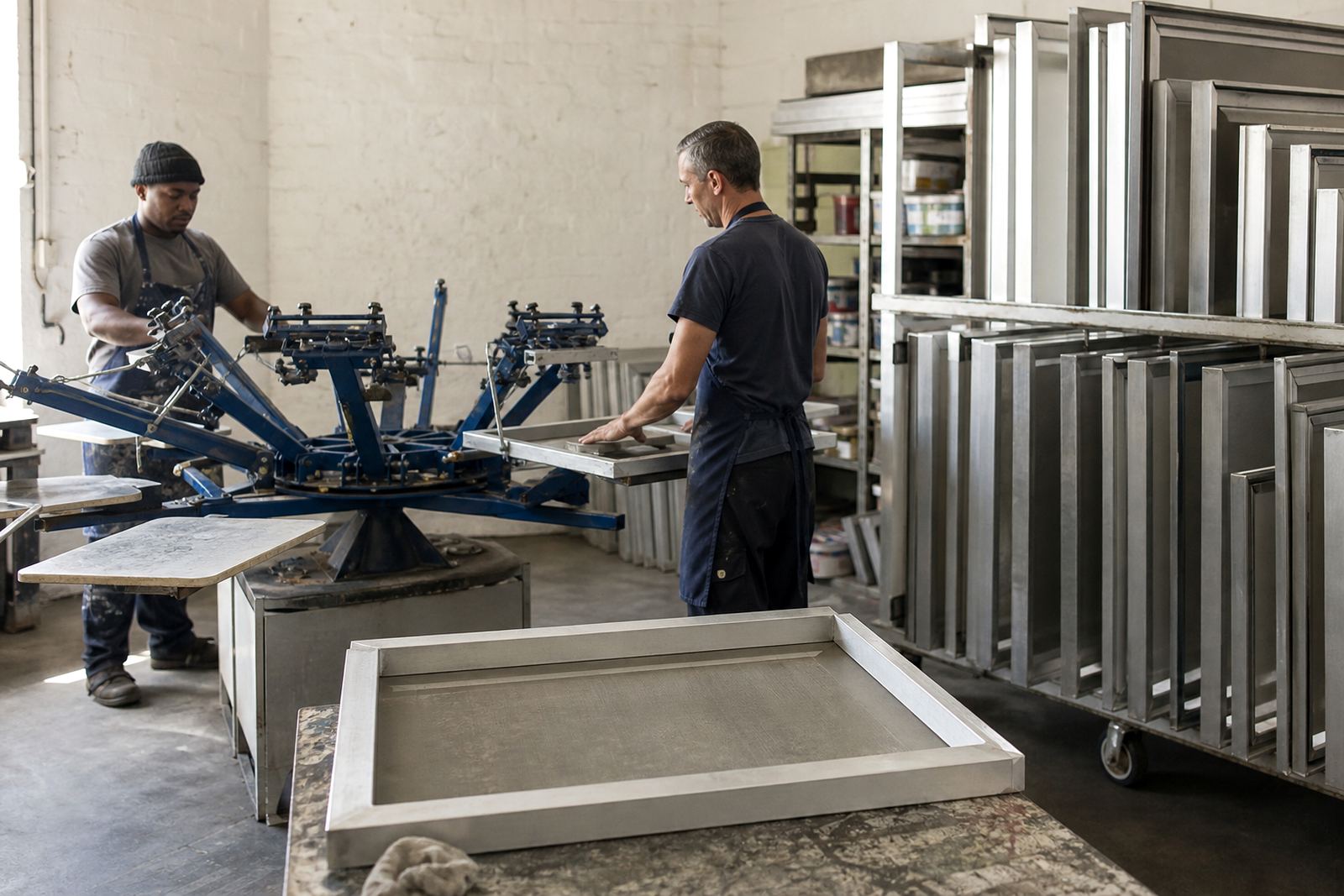
- Store screens vertically where possible
- Label each frame size clearly for shared use
- Keep a cleaning station close to the washing area
- Leave space for wheelchair access or group movement where needed
Common mistakes we see in training spaces
The biggest problem is trying to stretch too many screens at once without checking the frame condition first. If the frame is bent, dirty or badly repaired, learners end up fighting the equipment instead of learning the process. Another common mistake is using one screen for every job, which slows down production and wears out the mesh faster.
We also see workshops skipping proper frame cleaning before adhesive application. That leads to poor bond strength and screens lifting at the corners. In some cases, the room layout is the issue, not the frame itself. If the drying area is too close to the press or in a high-traffic passage, screens get bumped, dusted or damaged before they are ready. Small issues like this can cost real money over a term.
Budget ranges for community workshop orders
Community groups often need to plan carefully, especially when funding is released in stages. A small starter order of stretched aluminium frames usually begins in the low thousands of Rand, depending on the size mix and how many screens are needed. For a basic teaching set, many workshops budget from about R2 500 to R6 500.
A more active print room with several learner stations, mixed sizes and spare screens for ongoing classes can sit between R7 000 and R18 000. Larger orders for training centres, NGO programmes or municipal skills projects may go higher, especially if custom sizes, pickup and return, or urgent turnarounds are required. If you already have frames, restretching existing frames is often a sensible way to keep costs under control.
Because every room is different, we usually suggest starting with the frames that will be used every week, then adding specialist sizes later. That keeps the budget focused on the tools that actually earn their keep.
Working with ScreenFrame for group training and shared production
ScreenFrame supports community workshops from our Maitland base, with deliveries and collections arranged for Cape Town, Johannesburg, Durban, Pretoria and Gqeberha. We handle new screen stretching, restretch existing frames, mesh removal, frame cleaning, adhesive application, tension checks and inspections. For groups with training schedules, we also help with custom sizes and bulk screen orders.
When a project has learners, volunteers and production deadlines in the same room, clear communication matters. We can help you decide which screens to stretch first, which frames are worth saving and how to keep the set-up practical for your space. If you are planning a community print project, use the enquiry form on our contact page and we will work through the next steps with you.