
When an artist studio needs more than a hobby frame
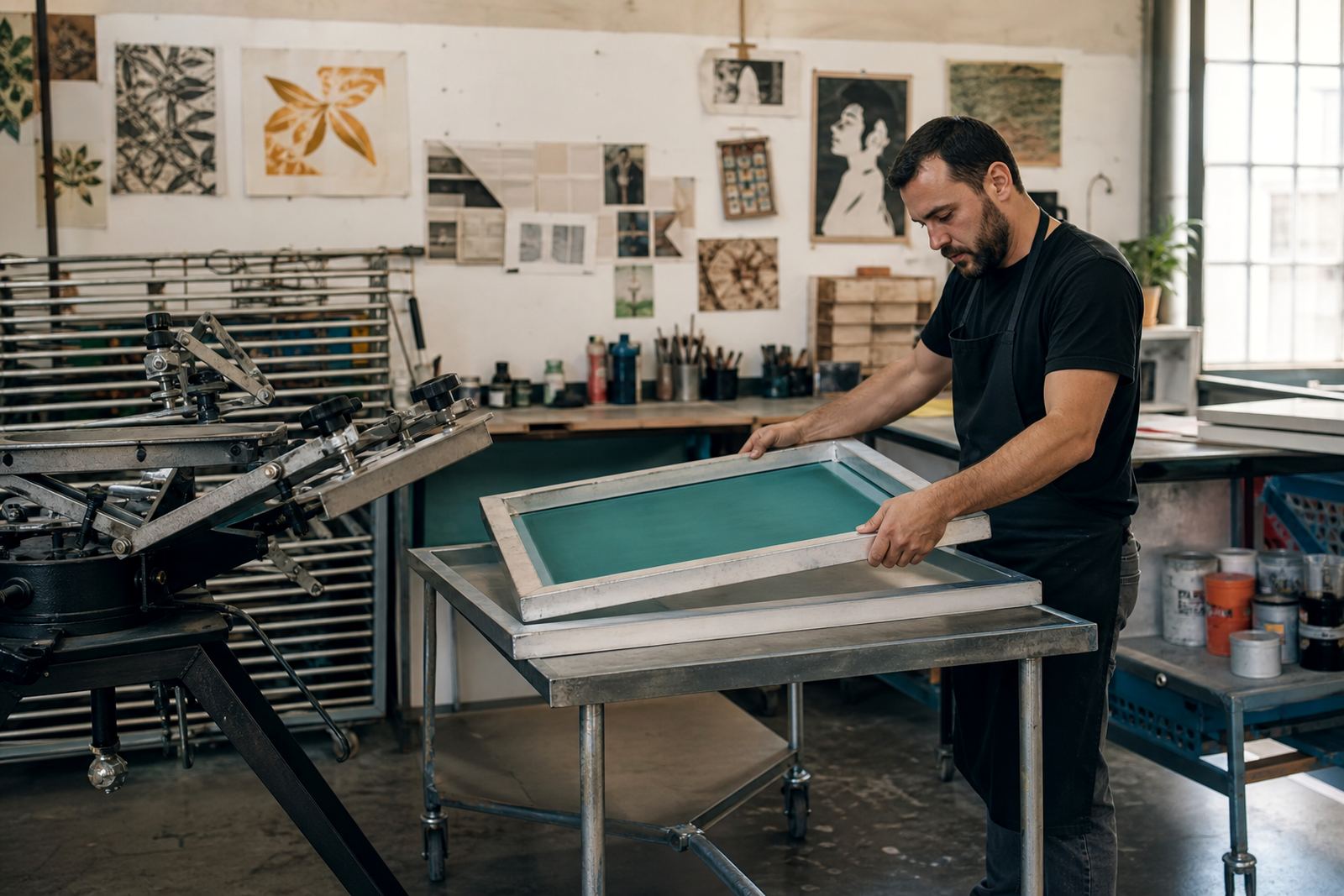
In an artist print studio, the screen is part of the edition. When you are printing 20 T-shirts for a launch, a run of art papers for a show, or mixed sizes for a collaboration, the frame has to stay square, hold tension and keep the stencil clean from the first pull to the last. A frame that twists or loosens will cost you ink, time and finished stock.
We work with studios that need dependable aluminium frames for regular use in Cape Town, Johannesburg, Durban, Pretoria and Gqeberha. Some are small ateliers in Woodstock or Maboneng, others run from shared workshop spaces with strict booking windows and limited drying room. In both cases, the same rule applies: if the frame is well made and stretched correctly, the print room runs calmer and cleaner.
Our base is in Maitland, Cape Town, with supply and delivery routes serving Bellville, Paarl and the major metro areas. Clients use the enquiry form on our contact page to ask for sizes, quantities and turnaround times.
Typical equipment set for edition work and garment runs
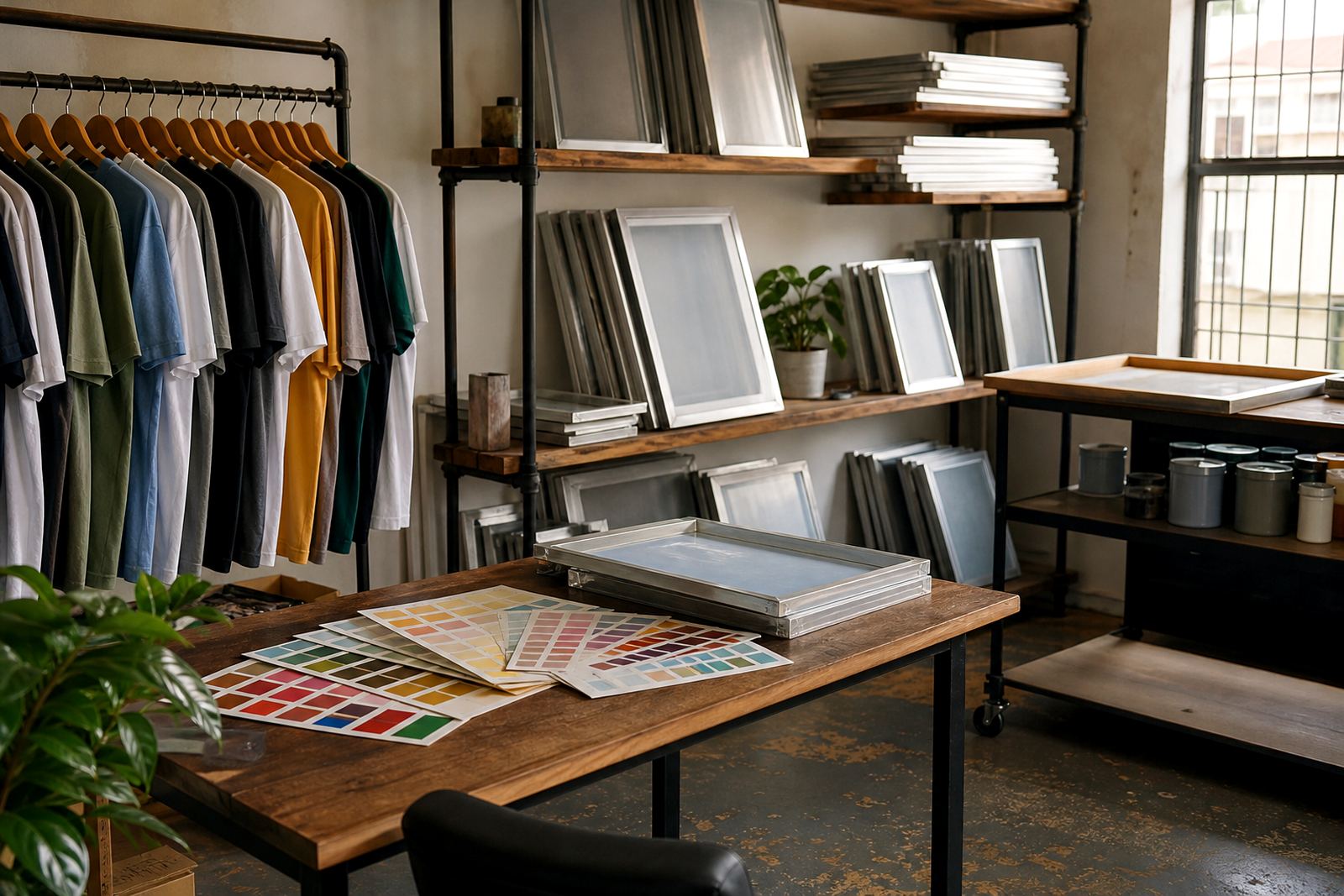
Most artist studios do not need a huge setup, but they do need the right sizes for the work on hand. A practical set often includes a few standard frames for posters or paper, a few garment sizes for tee and hoodie work, plus one or two larger frames for oversize imagery. Aluminium is useful here because it is light enough to handle daily, and it does not swell like timber in humid weather.
For studios near the coast, especially around Cape Town and Gqeberha, humidity can affect mesh behaviour and adhesive performance. That means a frame with good cleaning and proper tension checks matters more than it might inland. In winter load-shedding also changes workshop rhythm, so it helps when frames are ready to go, without extra setup time at the press.
- Standard garment frames for tees, tote bags and hoodies
- Smaller frames for test prints, sleeves and labels
- Larger frames for posters, editions and oversized artwork
- Replacement frames for worn or warped stock
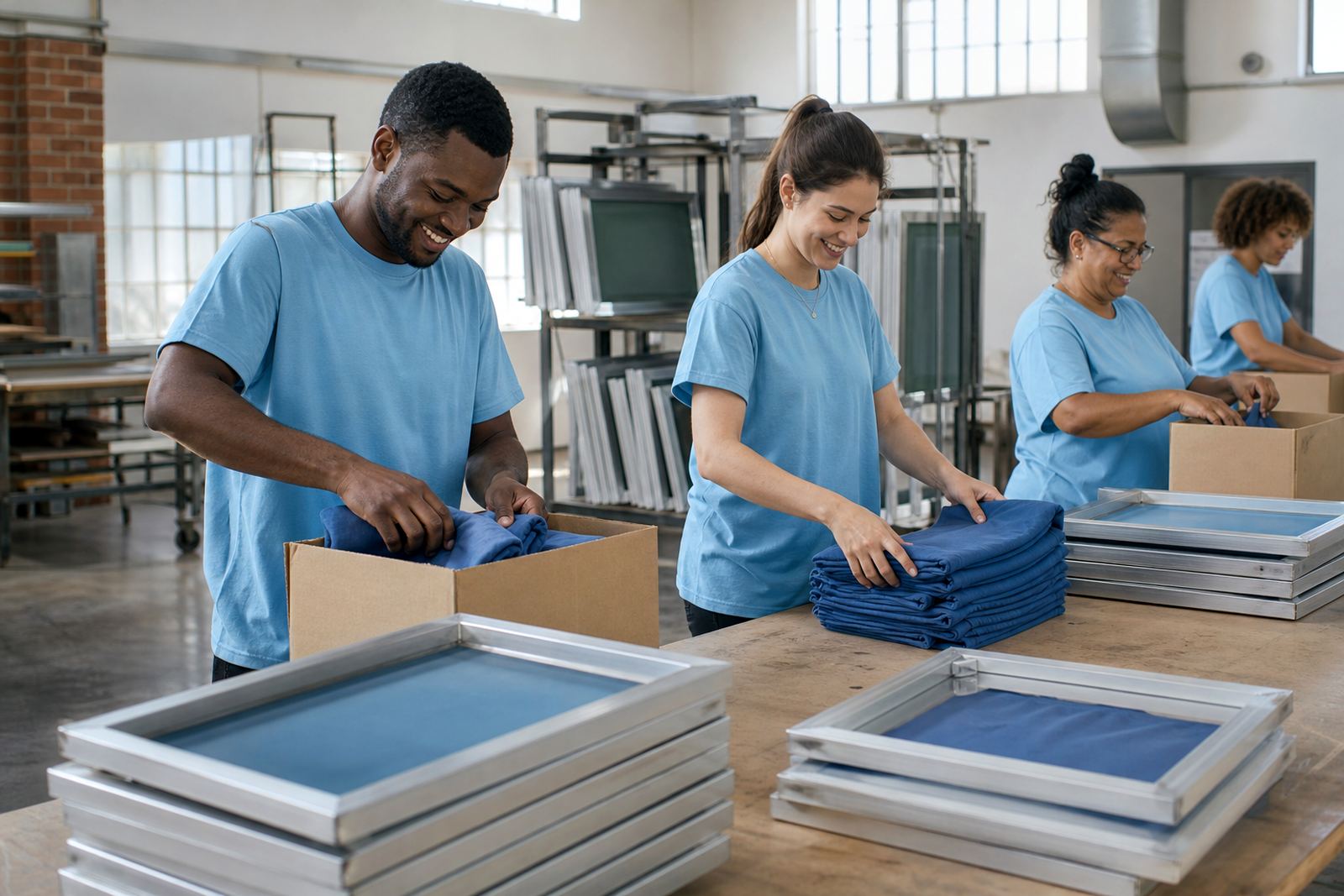
- Mixed batches for studios that print both art editions and wearables
Planning your studio layout around the frames you actually use
A good layout starts with the jobs you print most often. If your studio works on editions in the morning and garments after lunch, keep the most used frame sizes nearest to the press and drying area. Leave enough clear wall space for drying, inspection and storage, because crowded racks lead to bent corners and accidental mesh damage.
It also helps to separate clean, ready-to-print frames from used ones. A simple colour tag or size label on each frame can save a lot of time when assistants are moving fast between screens. If you are running tight production days in a shared space, ask for pickup and return or bulk screen orders so your delivery and prep plan matches your print calendar.
- Store ready-to-use frames upright and off the floor
- Keep cleaning materials near the reclaim and inspection point
- Match frame sizes to the squeegee and table width you already use
- Allow a little extra room for drying after adhesive application
- Use separate racks for active jobs and archive screens
Common mistakes that cost artist studios time and money
The most common mistake is choosing a frame only by outside size, without checking the print area and mesh tension needed for the job. Another is reusing a tired frame because it looks fine at a glance. In practice, a loose mesh can show up as blurry edges, poor registration and uneven ink deposit. That becomes expensive when you are printing a limited edition and cannot simply remake the run.
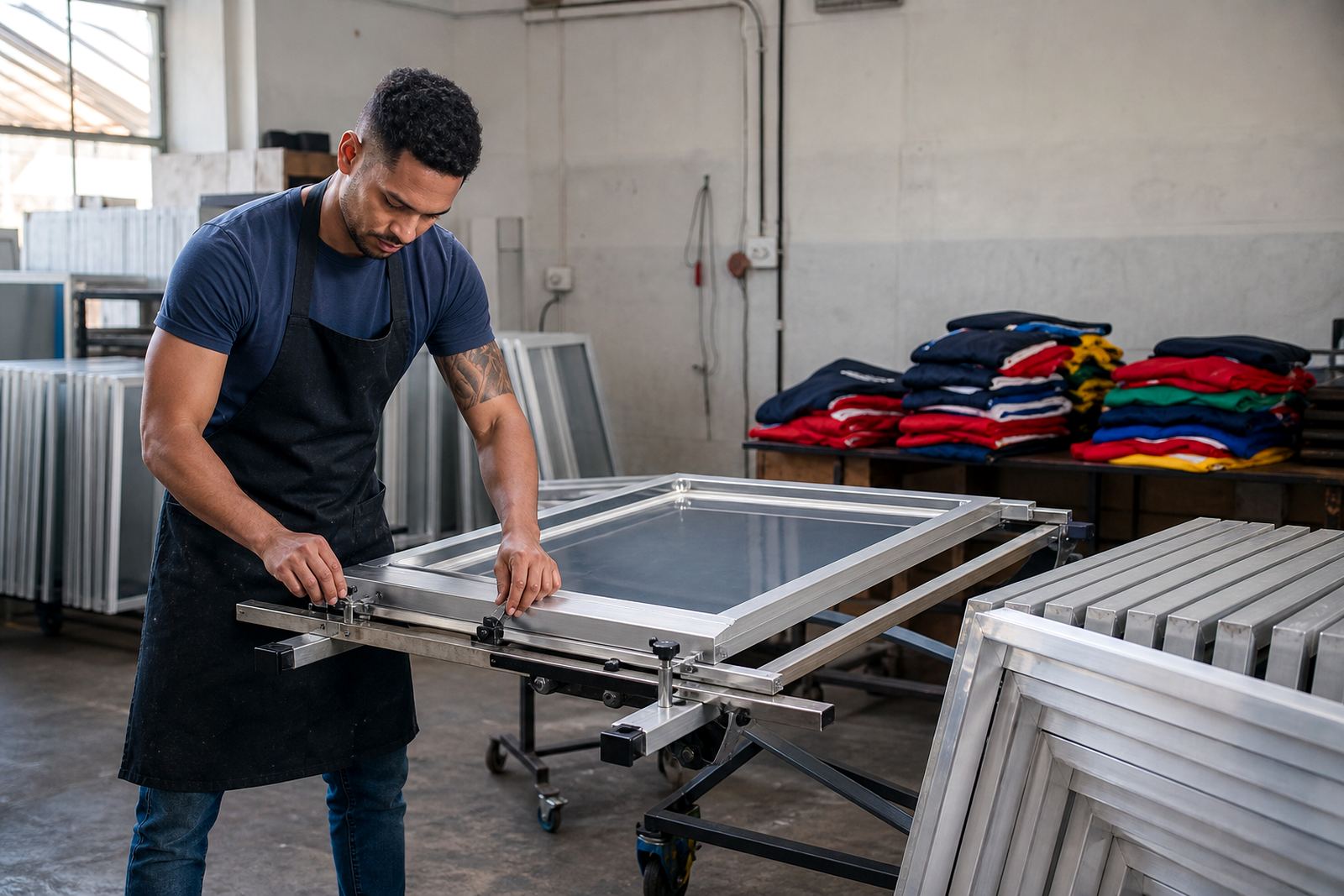
Some studios also skip frame inspections until after a print has gone wrong. That is risky if you are doing mixed runs for a market, a gallery drop or a retail order. We can help with restretch existing frames, mesh removal, frame cleaning, adhesive application and tension checks, so the frame is ready before you waste substrate and ink. A small miss in prep becomes a big miss on the press, simple as that.
Budget ranges for artists and mixed-run printers
Budget depends on size, quantity and whether you need new stretching or restretching of existing frames. For a lean studio setup, it is sensible to plan for a few entry-level frames first, then add specialist sizes as your commissions grow. If you are building a studio in phases, start with the sizes you print every week rather than buying one of everything.
As a working guide, many artist print studios in South Africa budget from about R450 to R1,200 per frame for common aluminium sizes, with larger or custom stretched frames priced higher depending on the mesh and specification. Restretching can be a more affordable option if your frame structure is still sound. Bulk screen orders usually improve the per-unit cost, which helps if you are planning a season of editions or a clothing drop.
For urgent turnarounds, factor in the fact that rushed work can cost more than planned production, especially when you need pickup and return between Maitland and your studio. If you are ordering for a show date or market deadline, send the size list early so the work can be scheduled properly.
How ScreenFrame supports studios from first proof to final edition
We work with professional printers and hobbyists who need frames that fit properly and hold up under repeated use. ScreenFrame offers new screen stretching, custom size stretching, screen care advice and frame inspections for studios that need dependable stock rather than guesswork. Our team in Maitland handles production and logistics so local collections and delivery routes stay practical.
Whether you are a solo artist printing small runs or a studio team handling wearable art for multiple clients, the aim is the same: clean screens, correct tension and fewer surprises on print day. That matters in South African conditions where heat, humidity and power cuts can interrupt a tight schedule. With the right frames in place, you can keep the workshop moving and focus on the print itself.
Who this use case suits best
This setup suits printmakers doing edition work, textile artists running wearable art collections, and studios that mix paper and garment printing in one space. It is also a good fit for schools, collectives and small production houses that need a sensible balance between cost and repeatability.
- Artist studios printing limited editions for galleries or fairs
- Clothing labels producing mixed garment runs
- Co-operative print rooms with shared equipment
- Training studios teaching screen-printing basics
- Small businesses that need a few dependable frames on rotation
If that sounds like your workshop, the next step is simple: send your frame sizes, quantities and turnaround needs through the enquiry form on our contact page and we will match the job to the right stretching plan.