
When Restretching Makes Sense
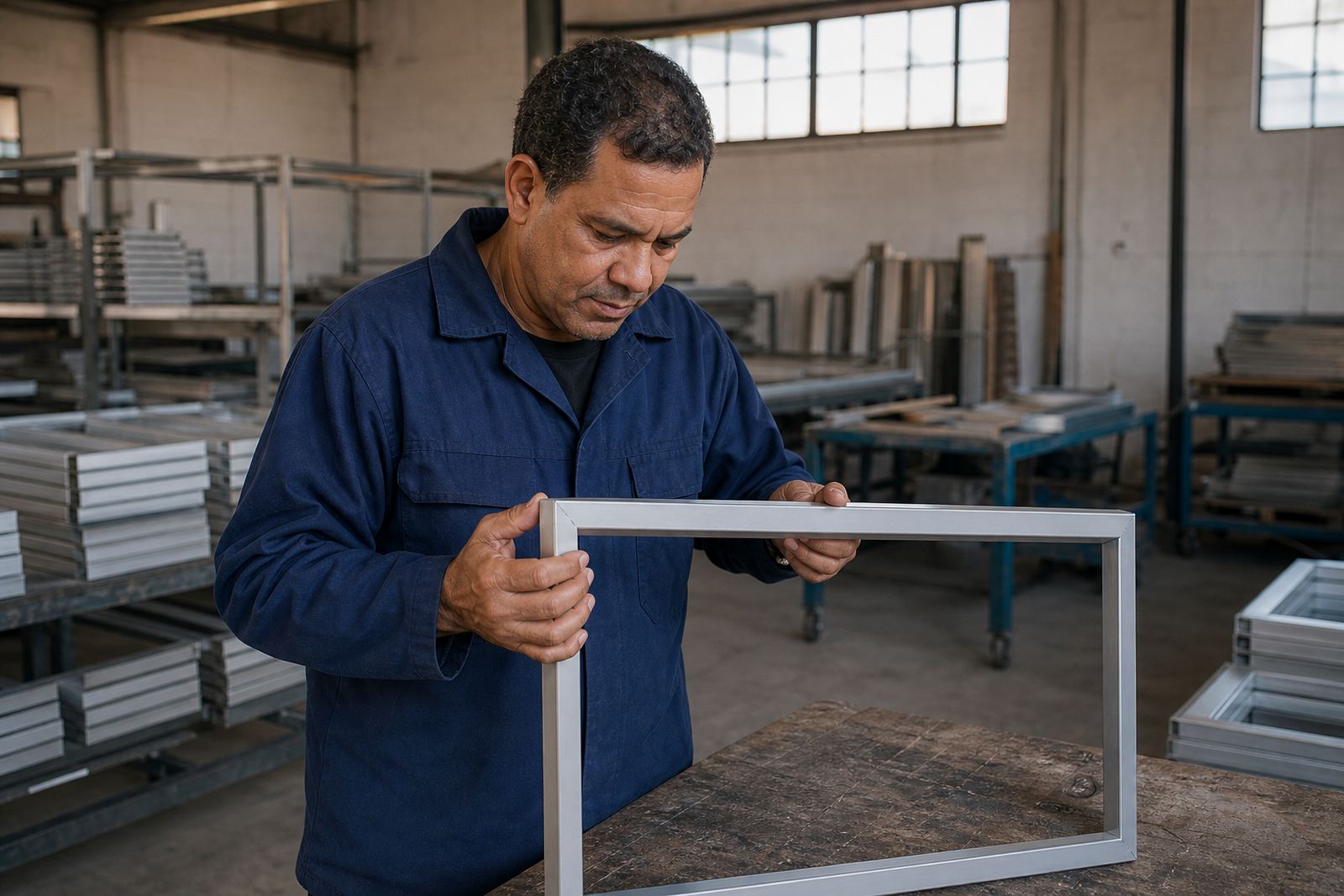
Restretching is the right call when the frame is straight, the corners are true, and the profile has not been damaged by warping, dents or corrosion. Many printers in Cape Town, Johannesburg and Durban keep the frame and renew the mesh instead of buying a full replacement. That keeps costs down and still gives you a clean, working screen for garment printing.
We commonly restretch frames used for cotton tees, hoodies, tote bags and workwear. If the aluminium is still solid, there is no need to throw it out. A careful restretch can give you another long service life, especially on frames that are stored properly between jobs and not left with cured ink or adhesive buildup.
What Is Included In The Service
Our restretching service covers the full preparation and fitment needed to put the frame back into use. We work with standard workshop sizes and custom sizes, and we can handle single frames or bulk screen orders for busy print shops.
- Old mesh removal and frame cleaning
- Adhesive application suited to the frame type
- Fresh mesh fitment and tensioning
- Tension checks before release
- Frame inspection for bends, edge damage and joint movement
- Pickup and return where arranged
Where a frame needs a minor touch up before stretching, we will flag it first so you know if it is worth proceeding. We do not waste time on frames that will not hold tension properly, because that only causes problems on press later.
How We Restretch Your Frame
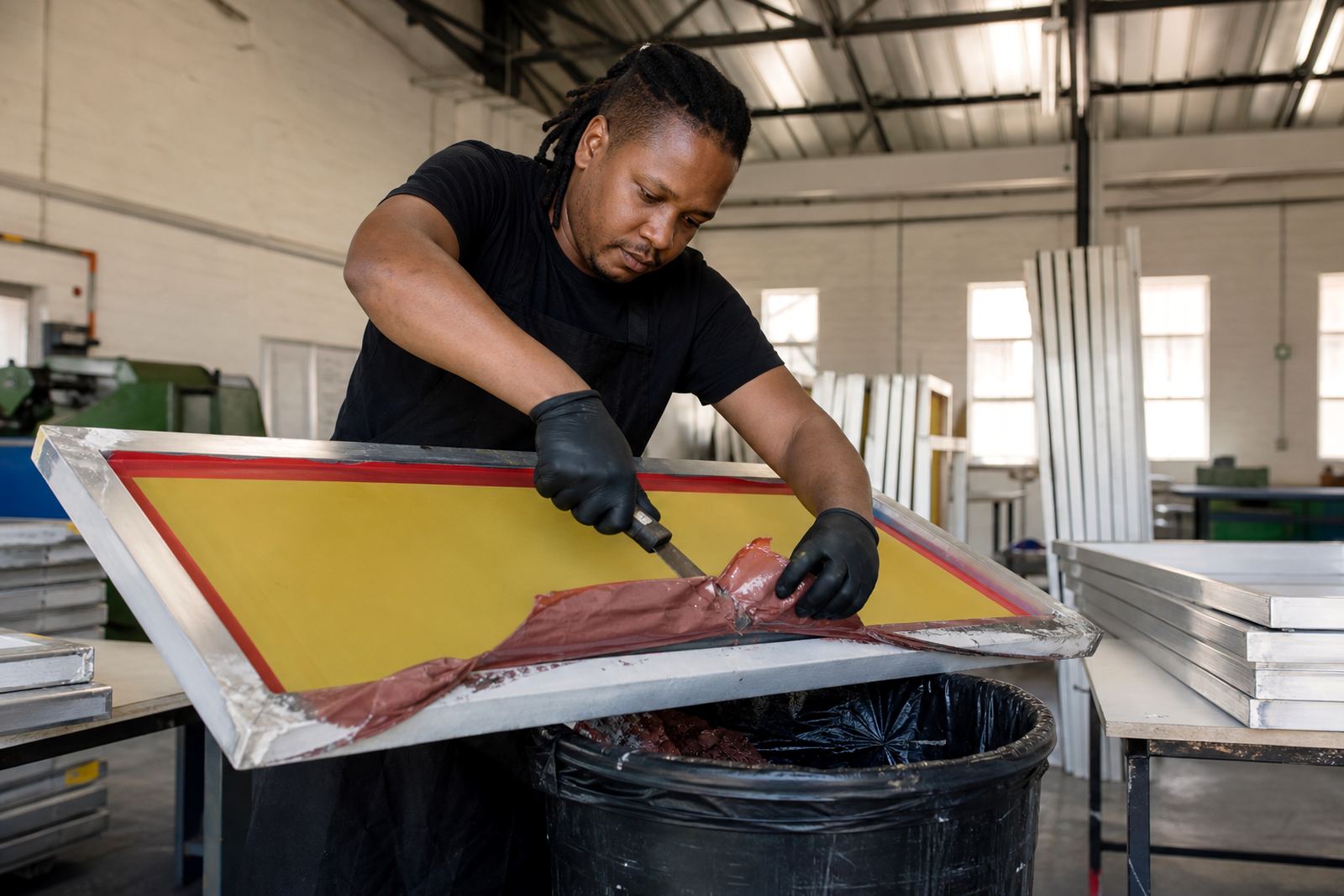
The process starts with an inspection at our Maitland workshop or on receipt from your collection route. We check the frame size, condition and previous mesh type, then remove the old mesh and clear the contact surfaces. Any residue left behind can affect bond strength, so the prep stage matters.
After cleaning, we apply adhesive, position the new mesh and stretch to the required tension. Once the mesh has settled, we run a tension check and inspect the edges for even bonding and proper alignment. The result should sit square and feel consistent across the screen, not tight on one side and loose on the other.
- 1. Receive and inspect the frame
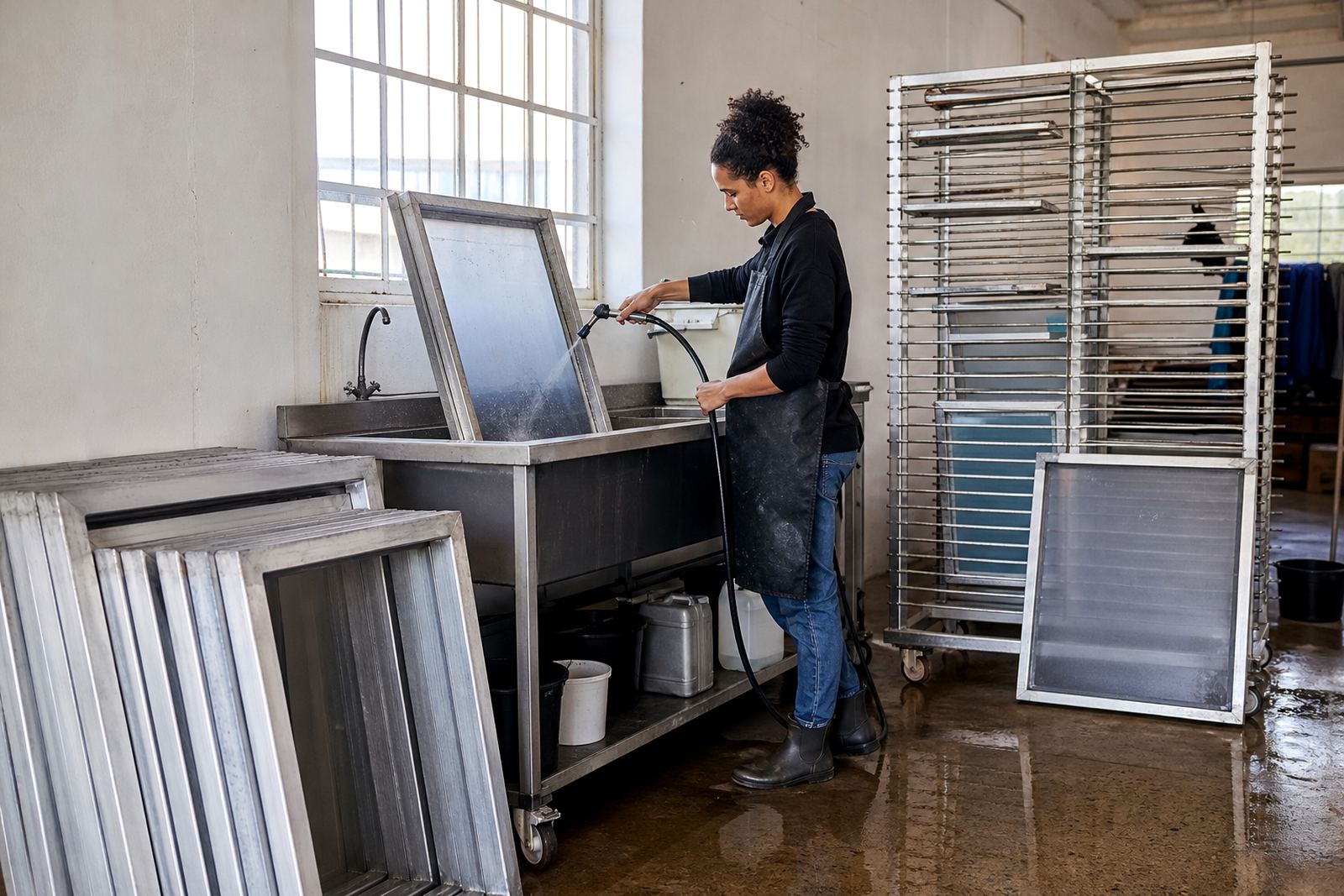
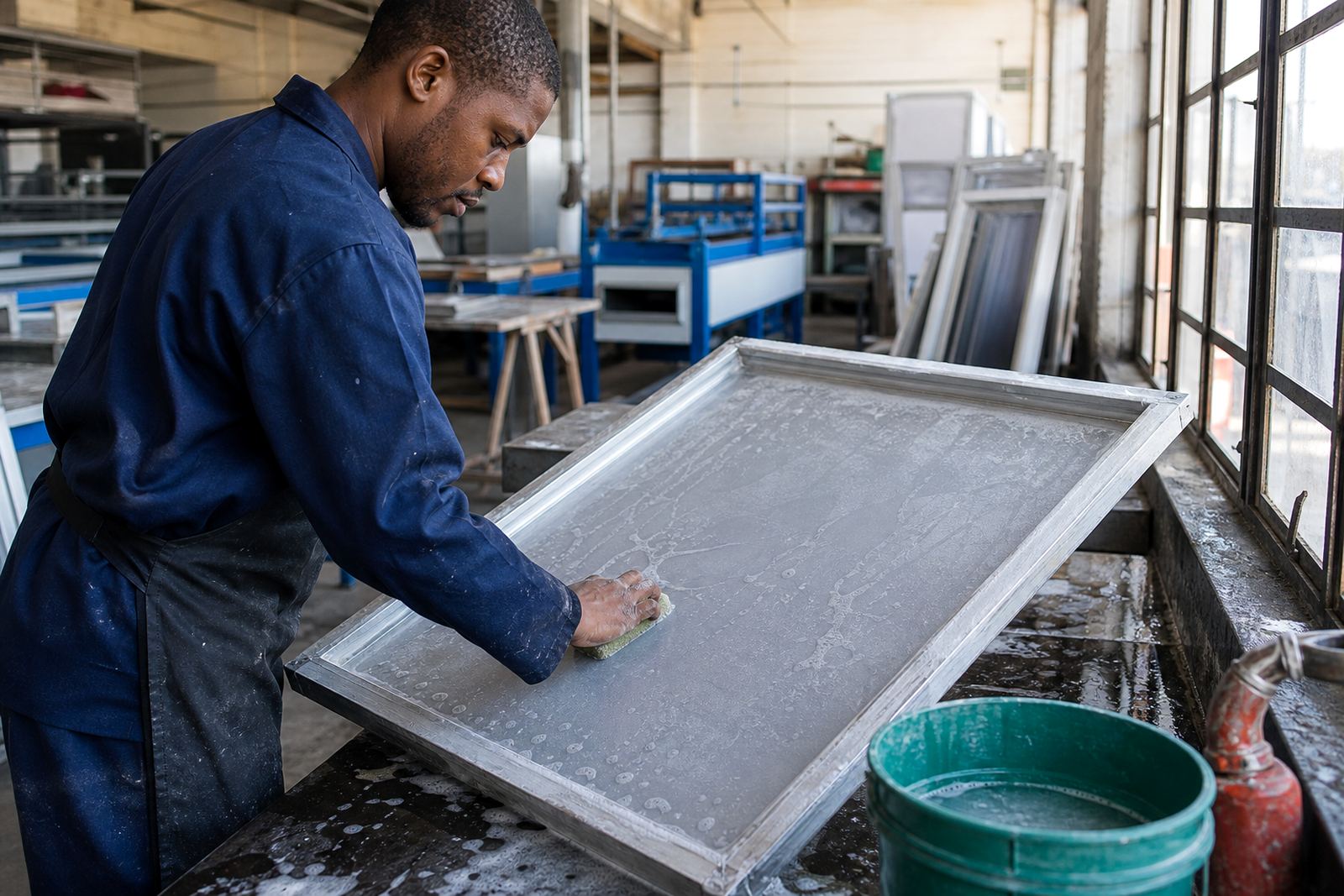
- 2. Remove old mesh and clean the aluminium
- 3. Apply adhesive and fit fresh mesh
- 4. Stretch to the required tension
- 5. Check finish, alignment and frame condition
- 6. Release for collection or return delivery
Typical Sizes, Mesh Options And Tension Targets
We restretch common garment printing frames from small test screens through to larger production sizes, including custom dimensions used by local workshops. For most manual print shops, the frame size and mesh choice depend on the artwork detail, ink deposit and the substrate being printed. Fine detail usually needs a higher mesh count, while heavier ink work may need something more open.
As a general guide, screen tension should be consistent across the full print area and suitable for repeat use. We do not work off guesswork. If the frame is for fine detail or long production runs, we will advise on the mesh count and tension range before stretching. Coastal humidity in places like Cape Town and Gqeberha can also affect storage and handling, so proper drying and storage matter after the job is done.
- Custom sizes available for workshop and production use
- Mesh selection matched to artwork detail and ink type
- Suitable for garment printing, sampling and short runs
- Advice on storage in humid or dusty conditions
Turnaround Times And Urgent Jobs
Turnaround depends on the number of frames, the size of the order and the condition of the frames when they arrive. A small order can often move through quicker than a bulk batch, especially when the frames are in good condition and only need standard prep. For printers working against a job deadline, we can discuss urgent turnarounds where workshop capacity allows.
Bulk screen orders are planned to keep the workflow steady, which helps with consistency across a full set. If you are sending frames from Johannesburg, Pretoria or Durban, it is best to book in advance so the pickup or delivery run is organised properly. This saves time and helps avoid delays caused by municipal loading restrictions, traffic or power cuts affecting workshop timing.
Pricing Approach And Care Between Restretches
We price restretching based on frame size, mesh type, quantity and any extra preparation needed. A frame that only needs normal cleaning and a new stretch will cost less than one with adhesive build-up, damaged corners or stubborn mesh removal. That is why we assess each job before we confirm the work.
For maintenance, most printers should inspect frames regularly and restretch them when tension drops, mesh becomes damaged, or print quality starts to drift. In busy shops, that can be every few months on high-use screens. Good care extends the life of the frame, so wipe down ink residue, keep frames dry, and store them flat or upright where they will not twist. A little care goes a long way, honestly.
- Pricing depends on size, quantity and preparation work
- Best value comes from reusing sound aluminium frames
- Inspect screens for wear before critical print jobs
- Store away from direct sun, damp floors and rough stacking
Key facts
| Service type | Restretch Existing Frames |
|---|---|
| Frame material | Aluminium screen-printing frames |
| Mesh service | Removal, cleaning and fresh stretch |
| Typical use | Garment printing and workshop production |
| Area served | Cape Town, Johannesburg, Durban, Pretoria and Gqeberha |
| Base | Maitland, Cape Town |