
Why clean frames before restretching?
Frame cleaning is not just about removing old glue. It is about giving the aluminium a proper surface so the next adhesive layer can bite cleanly and hold through production. When residue, dust, mesh fibres or old tape are left behind, the new stretch can fail early, especially on busy garment jobs where frames are washed often and handled in a hurry.
We clean frames for printers who want better tension stability, neater edge bonding and fewer surprises when the screen goes onto press. This matters in Cape Town, Johannesburg, Durban, Pretoria and Gqeberha where workshop conditions vary a lot. Coastal humidity, inland dust and long storage periods all affect how a frame behaves once it comes back into use.
A proper clean also helps when you are reusing frames from older jobs. If the frame has been in storage near a loading bay, under shelves, or in a room with overspray and lint, the surface can carry a thin film that weakens adhesive performance. We strip that back so the frame is ready for the next stretch, and not just visually clean.
What our frame cleaning service includes
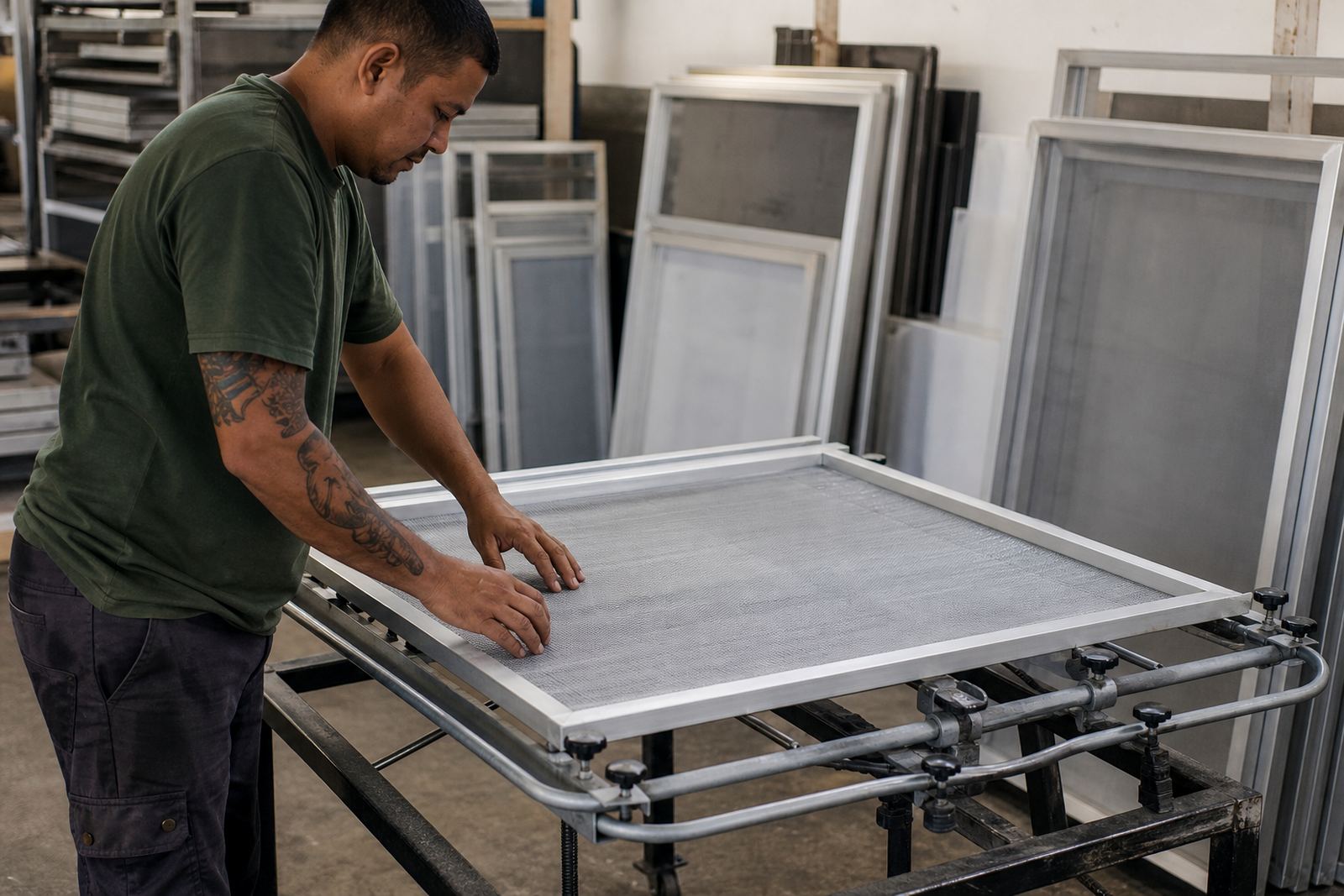
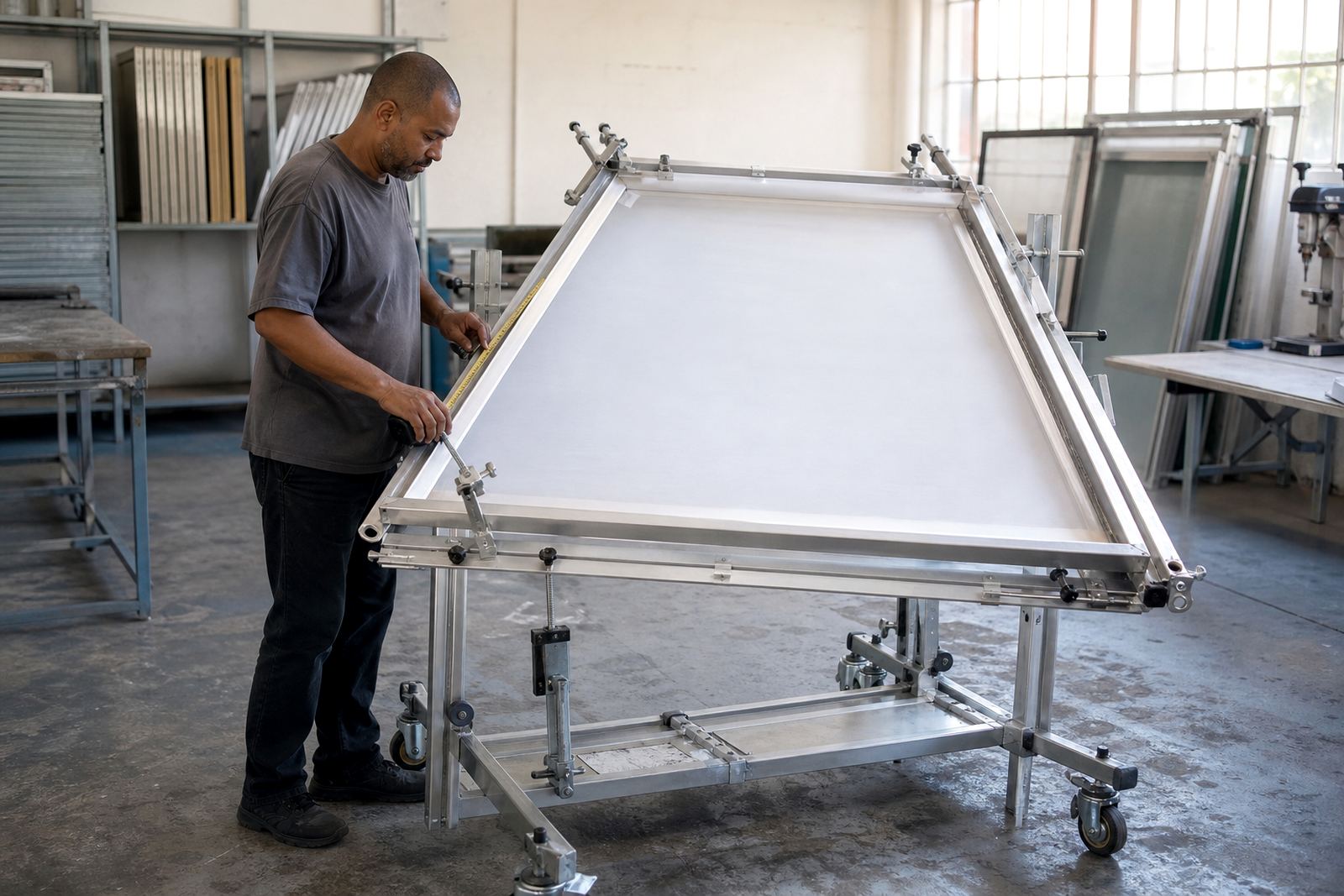
Our workshop cleaning service is set up for aluminium screen-printing frames used in garment decoration. We handle single frames and bulk batches, from small workshop pieces to larger production sizes. The process is careful but practical, aimed at preparing the frame for restretching, inspection or reuse. We do not over-polish the surface because the goal is adhesion not showroom shine.
- Removal of old adhesive, tape and mesh residue
- Degreasing of the bonding area
- Surface wipe-down to remove dust and loose particles
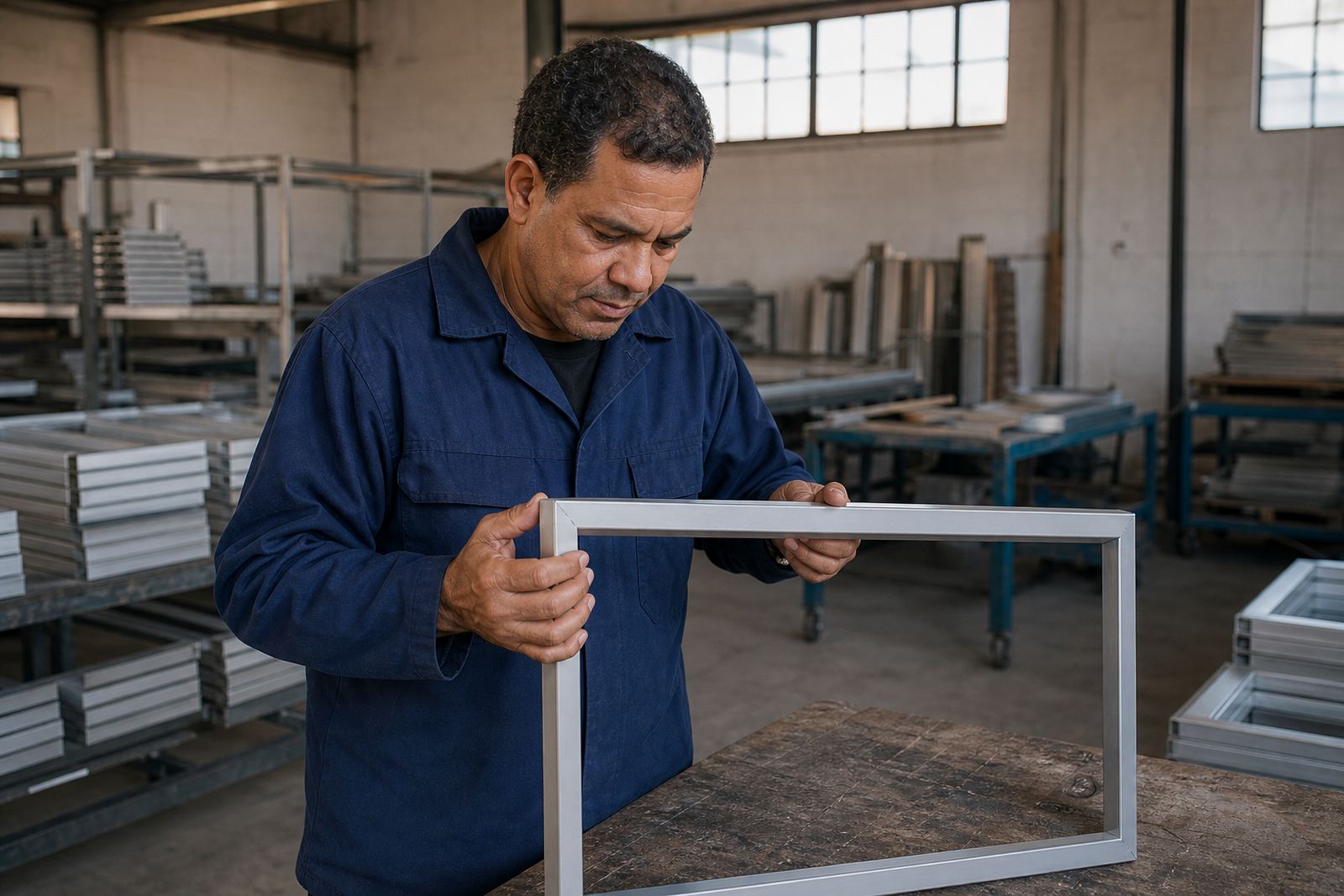
- Checks for dents, cracked corners and damaged joins
- Preparation for fresh adhesive application
- Basic frame condition notes before restretching
Where needed, we can also advise if a frame is too worn for another clean stretch. Some frames are better retired, especially if they have twisted corners, deep corrosion or repeated repair marks. That sort of call can save time and money over the long run.
How the workshop process works
When frames arrive at our Maitland workshop, we sort them by size, condition and the next job they are meant for. That lets our team clean and prep them in a sensible order, rather than treating every frame the same. A frame going back into regular garment production gets a different level of attention than one being held for light hobby use.
- Receiving and sorting by frame size and condition
- Initial inspection for warping, loose corners and damage
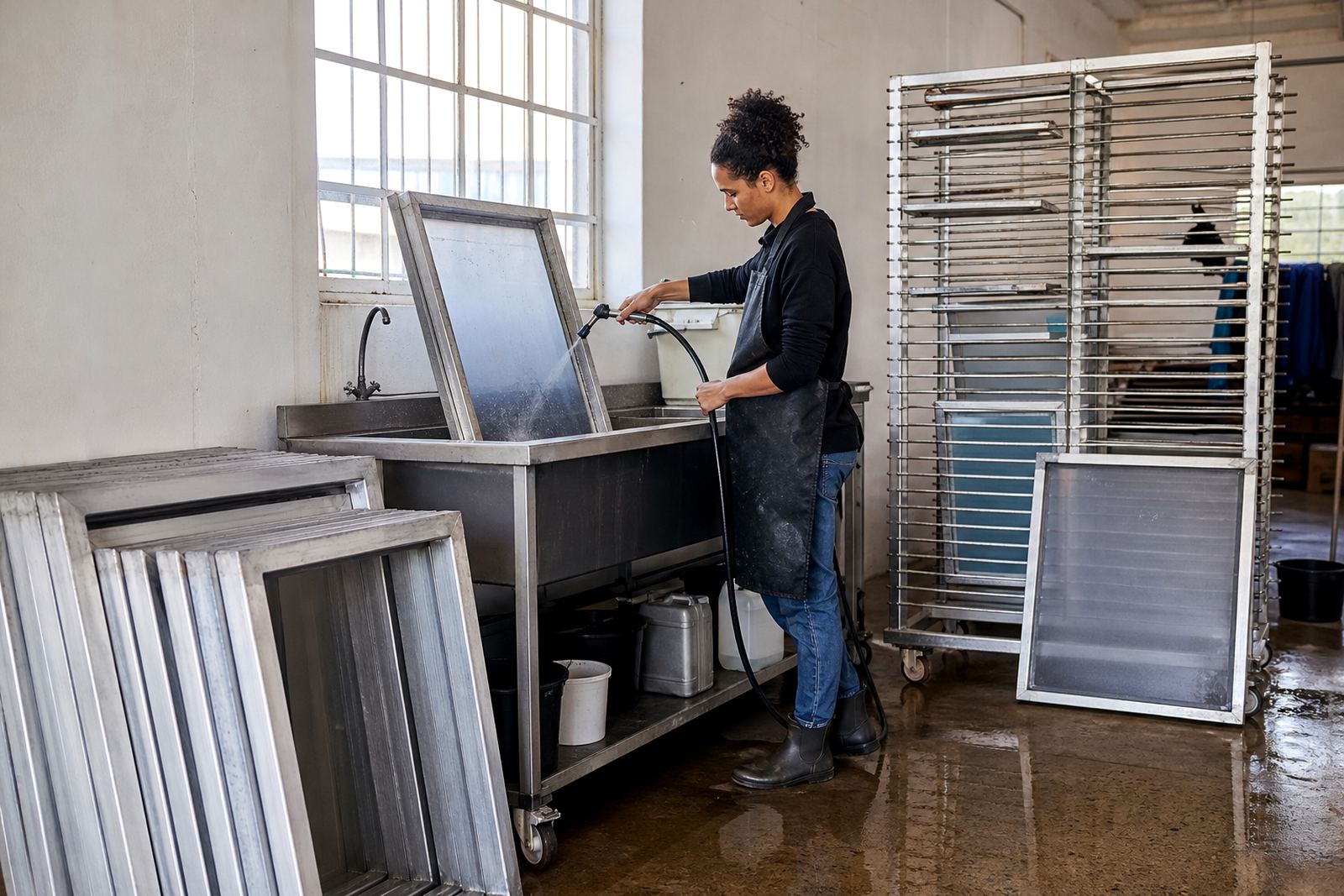
- Removal of old mesh, adhesive and surface contaminants
- Cleaning and degreasing of the bonding face
- Final check before adhesive application or restretching
The process is straightforward, but the detail matters. If the frame edge is not properly cleaned, the adhesive can sit on old material instead of the aluminium and that leads to early lifting. We keep an eye on the edges, corners and any areas where old glue has built up in layers. A little extra care here makes the next stretch much easier to work with.
Specs we work to in the workshop
We clean aluminium frames for standard garment-printing use and custom sizes as well. Common workshop sizes range from small hand-press frames to larger production frames used for repeated runs. The cleaning method is matched to the frame condition, with enough attention to support good adhesive performance without damaging the metal.
- Frame material: aluminium
- Common use: garment screen printing and repeat production
- Suitable for: new stretch prep, restretch jobs and frame reuse
- Batch size: single frames to bulk orders
- Condition checks: corners, edges, joins and surface contamination
- Service area: Maitland, Cape Town and national delivery routes
For printers working through load-shedding or running tighter schedules, clean frames help reduce stoppages later. When frames are prepped well, the stretch team can move faster and with less risk of a bond failure. That matters when you are trying to keep screens moving between artwork, exposure and press time.
Turnaround times and urgent work
Turnaround depends on how many frames you send in, how much residue needs to come off, and whether the frames are also being restretched. Simple cleaning jobs can move quickly, while heavily built-up frames take longer. We always aim to keep the work practical for printers who need screens back into circulation without unnecessary delays.
Urgent turnarounds are available where the workshop schedule allows. If you have a production run coming up, it is better to send the frames early and note the deadline upfront. In Cape Town, tight delivery windows and municipal traffic can affect collections, so planning ahead helps. For Johannesburg, Durban, Pretoria and Gqeberha deliveries, timing is usually tied to the route schedule and batch size.
Pickup and return can be arranged for suitable orders, and Bellville collections are available for local clients who need a simple handover. If a frame is badly contaminated, we will let you know before work continues. Better to flag it early than rush a poor clean through the system.
Pricing approach and maintenance intervals
Pricing for frame cleaning is based on the size of the frame, the condition of the bonding surface, and whether the job is part of a restretch or bulk screen order. Heavier residue, repeated adhesive layers and damaged edges take more labour, so the quote reflects the real time needed in the workshop. That way clients only pay for the work their frames actually require.
For regular production shops, we suggest scheduled cleaning at sensible intervals rather than waiting until the frame is in poor shape. If a frame is used hard in a garment workshop, a check after each major run is wise. For lower-volume users, cleaning before each restretch is usually enough, provided the frames are stored dry and away from dust.
- High-use frames: inspect after each production cycle
- General workshop use: clean before every restretch
- Stored frames: check before reuse if they have been idle for months
- Coastal conditions: inspect more often because humidity can affect residue and bonding
Good maintenance saves money. A frame that is cleaned properly can often be reused more than once, while a neglected frame may fail earlier and cost more in wasted mesh, adhesive and labour. If you are working with mixed stock, we can help sort which frames are worth keeping in the rotation.
Key facts
| Service type | Workshop frame cleaning for aluminium screen-printing frames |
|---|---|
| Primary purpose | Prepare frames for restretching and improve adhesive performance |
| Typical frame material | Aluminium |
| Service areas | Maitland, Cape Town plus national delivery routes to Johannesburg, Durban, Pretoria and Gqeberha |
| Order sizes | Single frames, small batches and bulk screen orders |
| Related work | Restretch existing frames, adhesive application, tension checks and frame inspections |