
Safe mesh removal before the next stretch
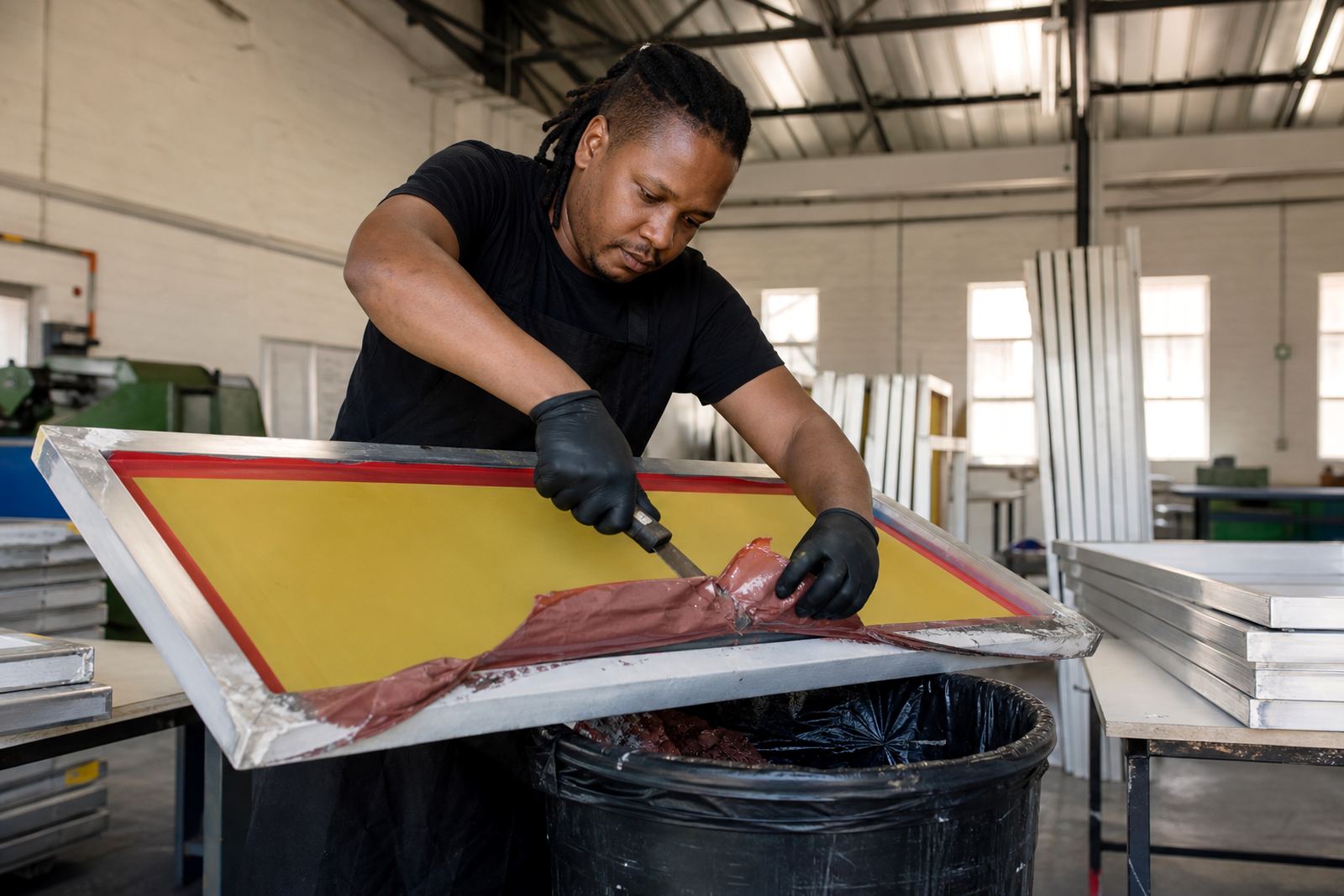
Mesh removal is the first step when a screen has faded, torn, lost tension, or picked up glue, ink and contamination that cannot be recovered on the press. We strip the old mesh from the frame without bending the aluminium, lifting the corners, or leaving stubborn adhesive that can interfere with the next bond. That matters when you are running repeat garment jobs in Cape Town, Johannesburg, Durban or Pretoria and need screens that behave the same way from one run to the next.
We work on standard aluminium frames used for garment decoration, including small, medium and large print sizes. The aim is to leave the frame clean, sound and ready for the next stage, whether that is a full re-stretch, frame repair check, or mesh change for a different mesh count.
What is included in the removal service
Each removal job is handled as a proper workshop process, not a quick pull-and-discard job. We inspect the frame first, remove the mesh in a controlled way, and clear away glue and residue so the frame can be reused with less risk of weak adhesion. If the frame has damage from long use, heat, humidity or rough handling during delivery, we will flag it before it goes back into production.
- Careful cutting and release of worn mesh
- Removal of old adhesive and loose fibres
- Basic frame inspection for bends, cracks or loose corners
- Surface prep for cleaning or re-stretching
- Advice on whether the frame should be reused or replaced
For printers near the coast, especially around Maitland and other humid areas, we also look out for corrosion marks and residue that can shorten the life of the next stretch if ignored.
How we remove mesh from aluminium frames
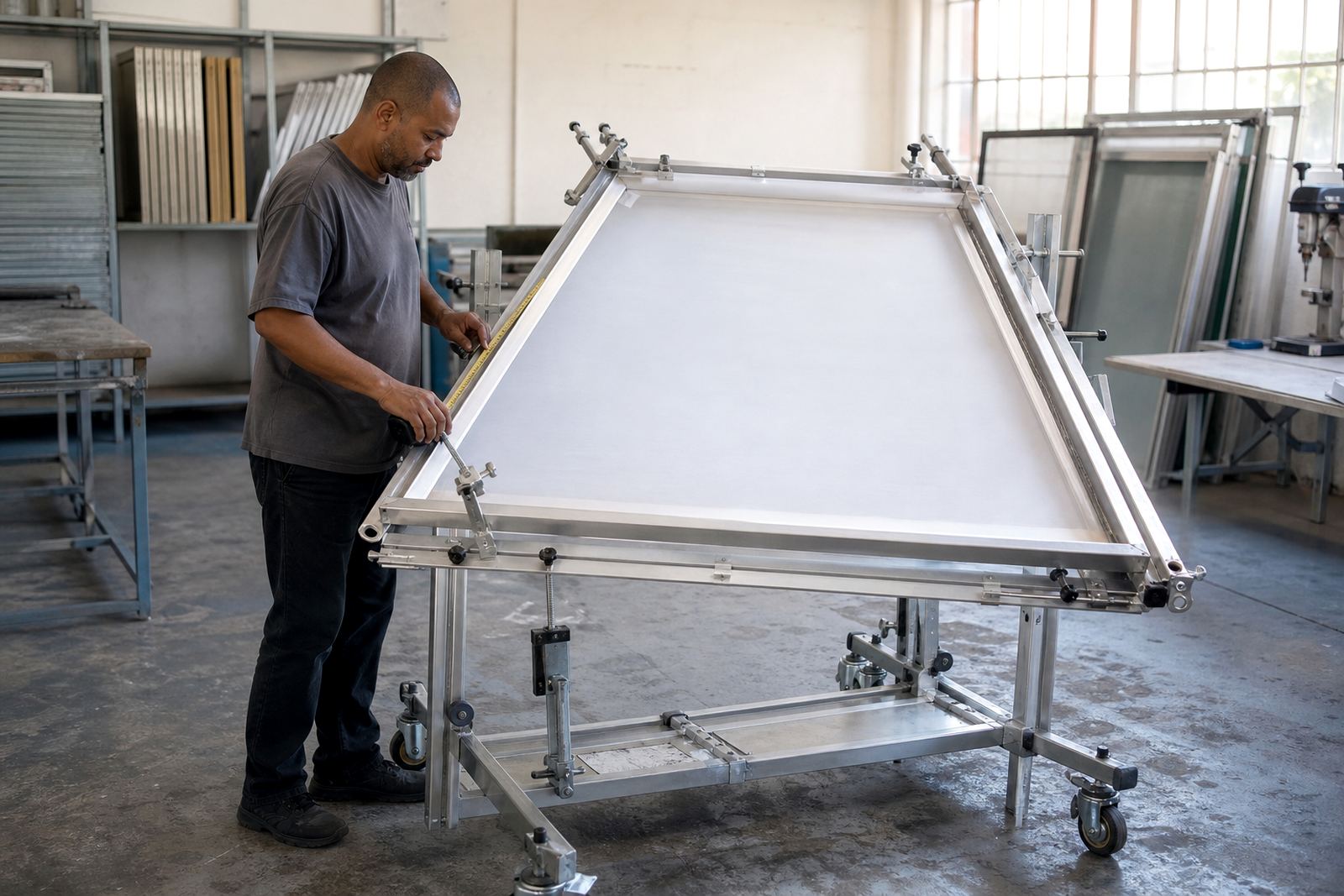
We start by checking the frame size, mesh condition and current bond. Some screens come apart cleanly, while others need patient work because the adhesive has gone brittle or the mesh has fused into the corners. Our production team then releases the mesh in stages so the frame stays true and the welds or joins are not stressed.
- Step 1: Receive and identify the frame size and condition
- Step 2: Strip the mesh without distorting the aluminium
- Step 3: Remove remaining glue, tape and debris
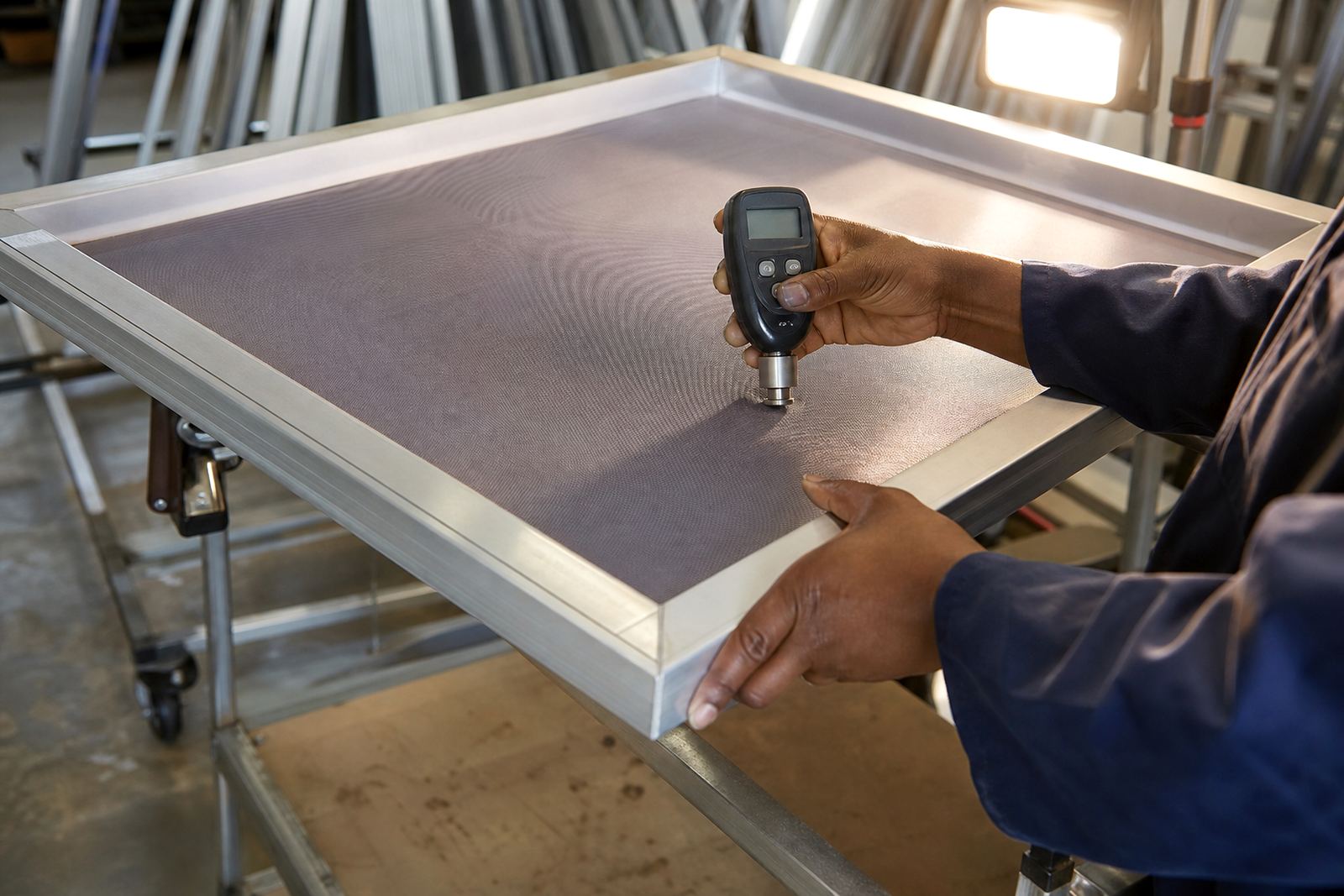
- Step 4: Inspect corners, rails and joining points
- Step 5: Prepare the frame for cleaning or re-stretching
If a screen has been overexposed to heat, solvents or repeated wash cycles, the mesh can leave a hard film behind. We deal with that before the frame moves on, so the next stretch has a cleaner base to bond to.
Turnaround for workshop and delivery orders
Turnaround depends on how many screens are coming in, how badly the old mesh is stuck, and whether the job is paired with cleaning or new stretching. Smaller orders can often be handled quickly, while bulk work for garment printers may be queued with other production steps. We do our best to keep urgent turnarounds moving, especially when a print run is held up by one damaged screen.
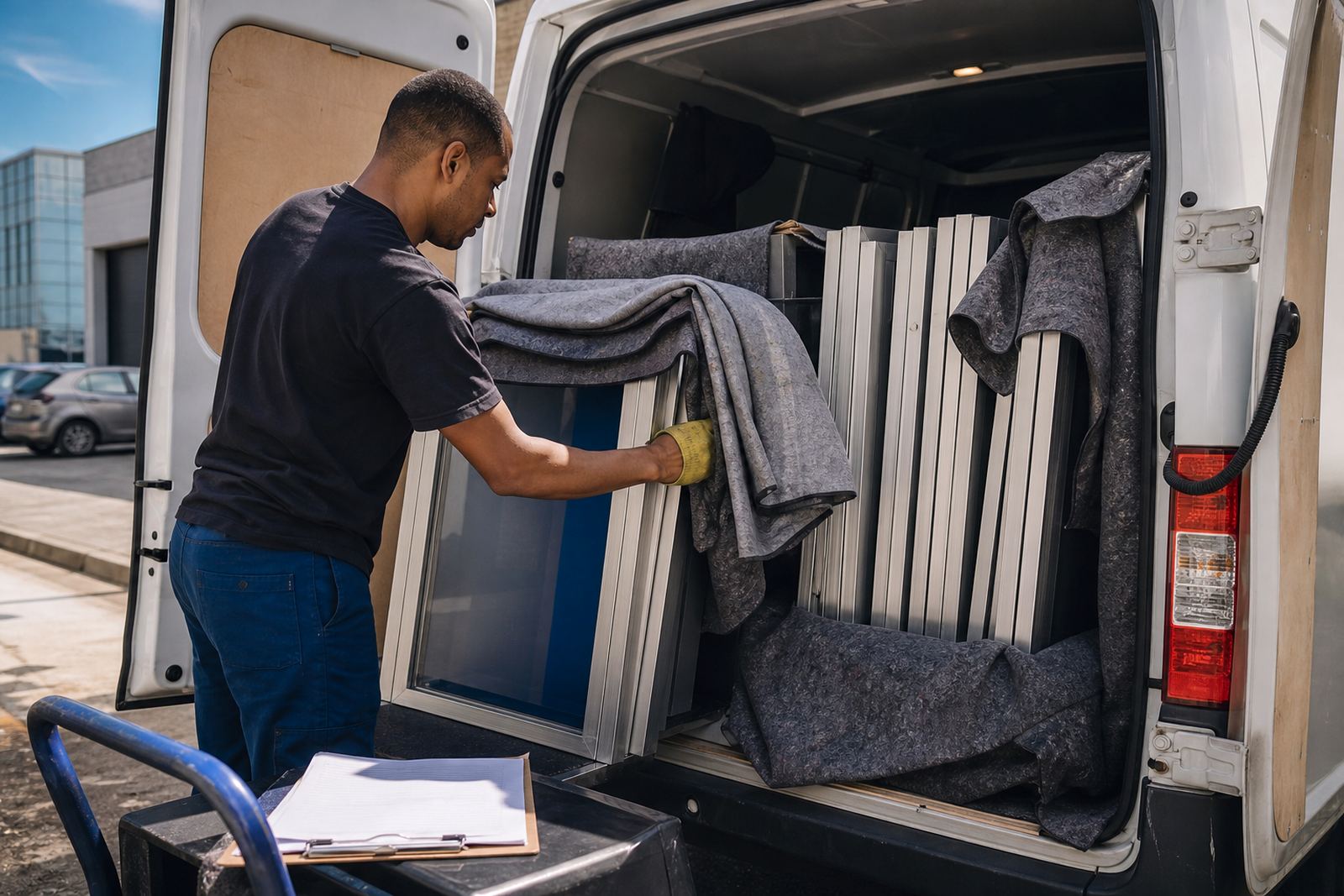
Clients in Cape Town may use the Maitland workshop or Bellville collections, while Johannesburg, Durban, Pretoria and Gqeberha orders are handled through delivery routes. For larger production batches, we can plan removal with pickup and return so your screens are not sitting around the workshop longer than needed. If there is a deadline tied to a municipal tender, shop promotion or seasonal clothing run, tell us early and we will plan around it.
Pricing that depends on condition and volume
Pricing for mesh removal is based on the size of the frame, the number of screens, and the amount of residue that must be cleared before the next step. A frame with light adhesive is quicker to process than one that has old glue, broken mesh and heavy build-up around the edges. Bulk screen orders are usually more cost effective per unit, especially for garment printers who rotate the same frame sizes through production every week.
We keep pricing practical and tied to the actual work needed. If you are restretching the frame after removal, we can group the tasks so you are not paying for separate handling where it is not necessary. For small studios and hobby printers, we can also talk through the most sensible option for reuse rather than forcing a full replacement when the frame is still sound.
When to remove mesh and how to keep frames in use longer
Mesh should be removed when it is torn, slack, warped, clogged or no longer holds tension well enough for clean garment printing. If the screen has been sitting through load-shedding interruptions, heat, or coastal moisture, the mesh and adhesive can age faster than expected. Regular checking saves time later because a weak screen can waste ink, blur detail and slow down a production line.
- Inspect screens after every heavy production run
- Remove mesh when tension drops or print edges soften
- Do not leave ink and wash chemicals sitting on the frame
- Store cleaned frames flat and dry, away from direct sun
- For busy shops, schedule a frame check every few weeks
Good care also means avoiding rough stacking and keeping the frame edges free from dents. A frame that is treated properly will usually take more than one re-stretch, which makes mesh removal a useful part of the long term print setup rather than a once-off fix.
Key facts
| Frame material | Aluminium screen-printing frames |
|---|---|
| Service purpose | Safe removal of worn or damaged mesh before cleaning and re-stretching |
| Typical frame sizes | Custom sizes handled on request |
| Order types | Single screens, bulk screen orders, urgent turnarounds |
| Service area | Maitland, Cape Town plus Johannesburg, Durban, Pretoria and Gqeberha deliveries |
| Condition check | Corners, rails, glue residue and frame integrity inspected before next step |