
Made-to-order frame sizes for work that does not fit standard stock
Custom size stretching is for printers who need frames built to a specific outside size, inside opening or mesh count, rather than working around whatever stock is on hand. It suits oversized runs, narrow frames for small print areas, special jigs, or older equipment that only accepts a particular frame dimension. In Cape Town workshops, Johannesburg print rooms and coastal operations where humidity can shift mesh tension, getting the size right from the start saves a lot of rework.
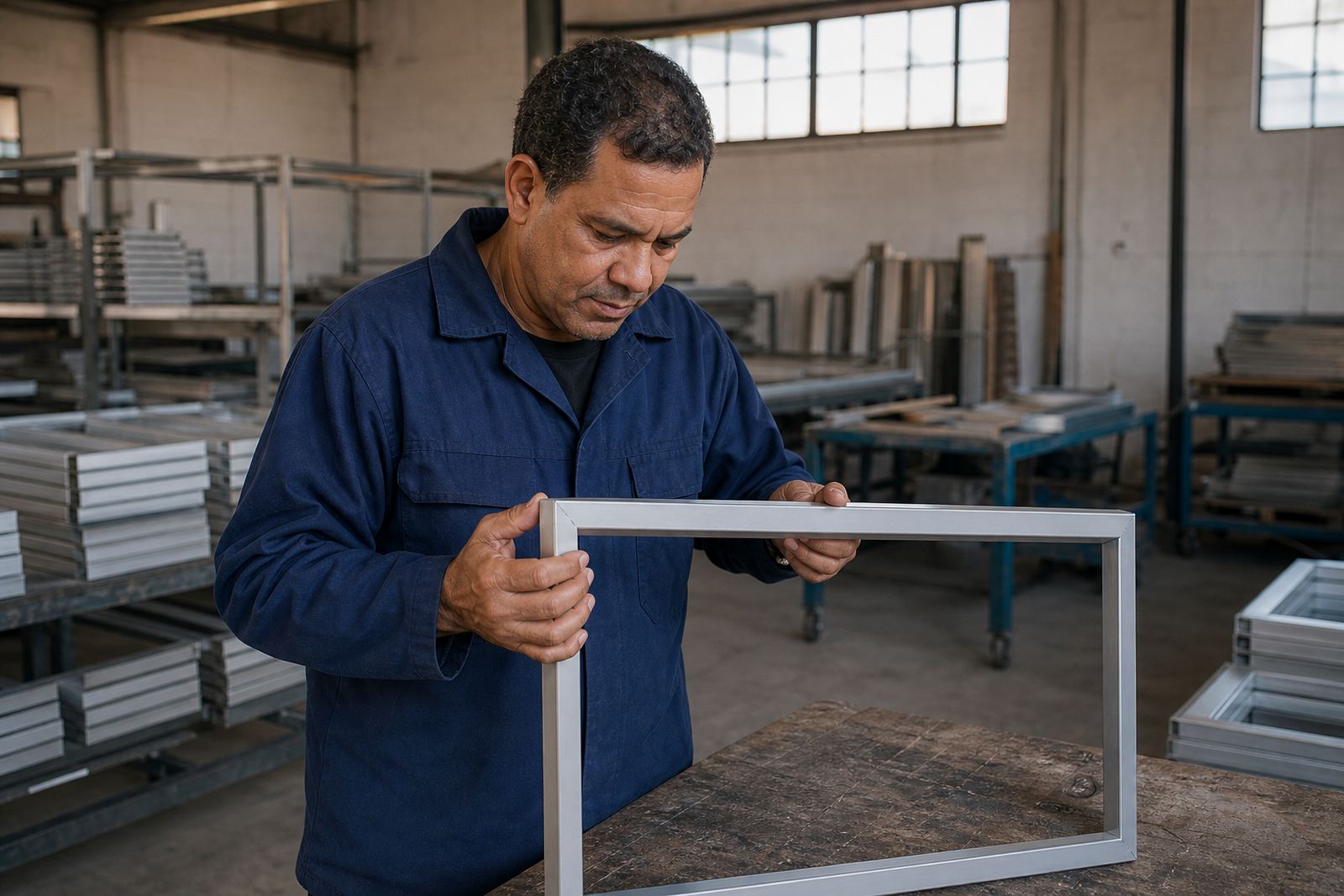
We stretch aluminium frames to the size you specify, with an eye on the final use of the screen. That includes garment printing, fine detail work, heavier ink deposits and repeat production. If your artwork needs more open area for registration marks or a smaller frame body for easier handling, we can set the frame dimensions to suit the job. Our team checks that the frame is square, the corners are sound and the mesh sits evenly across the full surface, not just tight in the centre.
- Custom outside dimensions to suit your press, drying racks or washout area
- Frame sizes for one-off jobs, repeat production or batch orders
- Options for light, medium or high tension requirements
- Support for screen printers working from Maitland, Bellville, Paarl and nationwide delivery routes
What is included in the custom stretching service
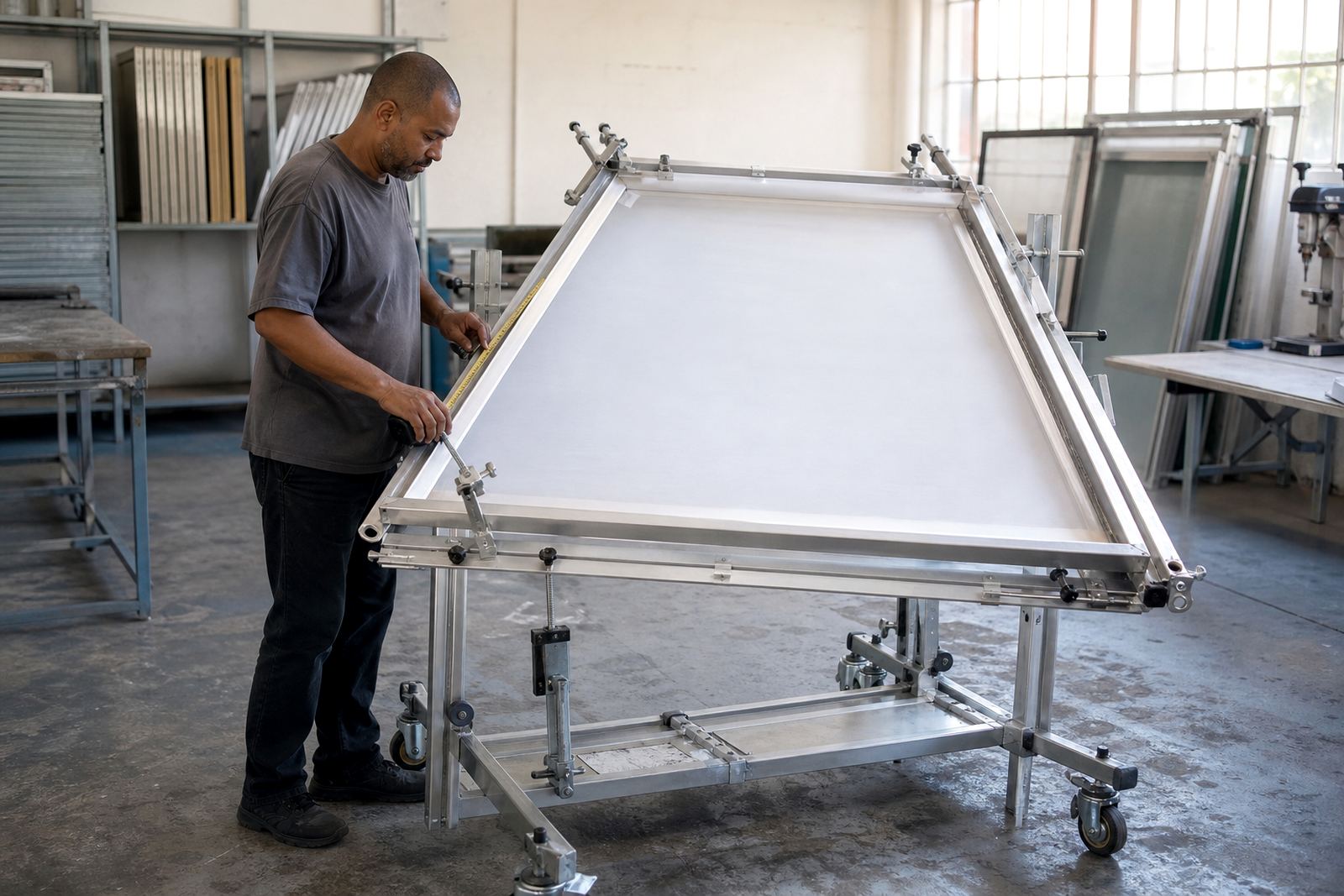
The service covers the stretching and preparation of the screen frame itself, together with the checks needed before it leaves the workshop. We do not treat custom sizing as a simple cut and staple job. The frame is inspected, cleaned and prepared so the adhesive bonds properly, and the mesh is tensioned evenly to help with clean stencil edges and stable print results. For printers in Durban or Gqeberha, where coastal air can affect storage, proper prep matters as much as the size.
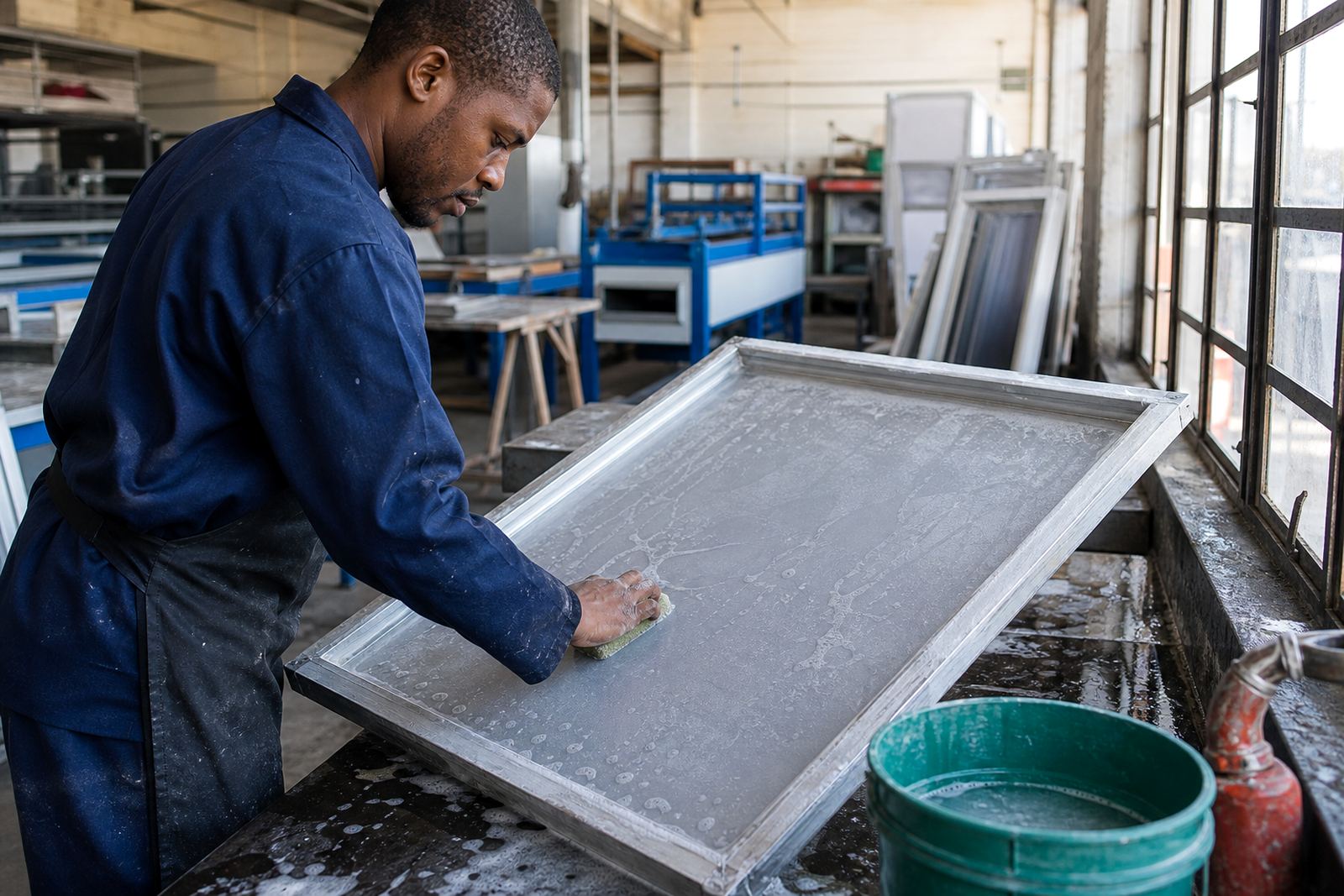
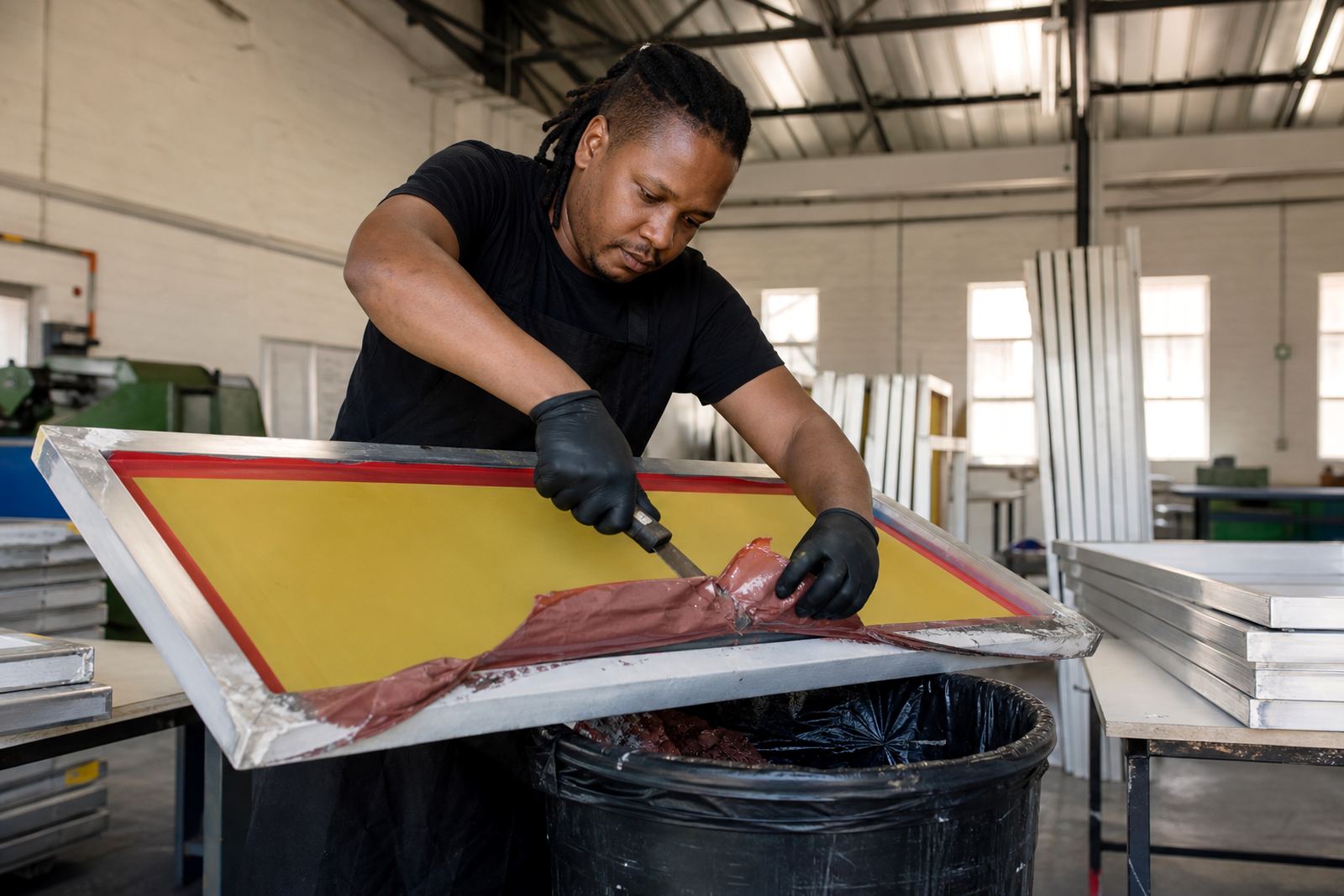
Included in the service is mesh removal where required, frame cleaning, adhesive application, tension checks and final inspection. If a frame is being built to unusual dimensions, we also confirm corner alignment and straightness so the screen sits properly on the press. If you are ordering multiple frames, we can keep dimensions consistent across the batch, which helps when the same artwork repeats over long production runs. That consistency matters when you are moving between different garment sizes or taking on contract work with fixed print positions.
- Mesh removal on existing frames when reusing aluminium stock
- Frame cleaning to remove residue, dust and old adhesive
- Adhesive application matched to the frame and mesh type
- Tension checks before release, with visual inspection for even stretch
How the workshop process works from enquiry to collection
You send your frame size requirements through the enquiry form on our contact page, and we come back with the details needed to quote and plan the job. If you already know your target dimensions, mesh count and quantity, that speeds things up. If not, we can work from your press size, artwork size or the garments you print most often. For example, a printer in Pretoria doing mixed schoolwear and corporate tees may need a different setup from a studio in Maitland doing short runs for local labels.
Once the order is confirmed, the frames are prepared in the workshop, stretched, checked and packed for pickup or delivery. For local clients we can arrange pickup and return, while out-of-town orders move through our delivery routes. We also handle urgent turnarounds when production has been held up by a damaged screen or a last-minute contract job. Every order is handled by a small team, so your job is not lost in a large queue.
- Send your frame dimensions and quantity through the enquiry form
- We confirm the spec, turnaround and pricing approach
- Frames are cleaned, prepared and stretched to size
- Final checks are completed before pickup or delivery
Sizing, mesh choice and tension specs that affect print quality
The right custom size is only part of the job. Mesh choice and tension need to match the printing method, ink type and detail level. A finer mesh can help with detailed artwork and thinner ink laydown, while a more open mesh can suit heavier deposits and larger print areas. If the frame is too large for the press or too small for the artwork, you waste movement, time and ink. That becomes expensive quickly when you are running multiple colours.
We work with made-to-order dimensions that suit practical workshop use, not just paper measurements. Allowance is made for grip areas, frame handling and your stencil space, because a screen that looks right on paper can still be awkward in the press. Where needed, we can advise on maintenance intervals too. In high-volume shops, screens may need inspection after every busy run. In smaller operations, a scheduled check every few weeks helps pick up slack mesh, corner movement or adhesive wear before it causes print faults.
- Outside frame size matched to your press and artwork clearance
- Mesh count selected for detail level, ink coverage and substrate
- Even tension across the full frame, not only the centre area
- Recommended inspection intervals based on workload and storage conditions
Pricing is based on size, quantity and preparation required
Custom size stretching is priced according to the frame dimensions, the mesh type, the number of screens required and any prep work involved before stretching can begin. A frame that only needs a straightforward stretch is handled differently from one that needs full cleaning, mesh removal and extra inspection. Bulk screen orders are priced with quantity in mind, so production shops can keep their costs predictable.
We keep the approach practical and clear. You pay for what the job needs, not for features that do not apply. If your frames are for long-term use in a humid coastal store room, it may be worth spending a bit more on the preparation stage so the screens hold up better between print runs. The same applies if the order is urgent and needs priority handling. We will always explain the cost drivers before work starts, so you can plan around your monthly production budget without surprises.
- Base pricing changes with frame size and mesh specification
- Discounts may apply on bulk orders and repeat production batches
- Urgent turnarounds are quoted separately where workshop capacity allows
- Pick up and delivery options are included in the final quote where relevant
Care tips to keep custom stretched screens working longer
A properly stretched custom frame should stay usable for a good stretch of production time if it is cleaned and stored correctly. After printing, wash out ink residue promptly and let the screen dry fully before stacking. Do not lean frames against rough walls or leave them in direct sun all day, especially in Gauteng heat or coastal damp. Simple handling makes a real difference to mesh life and stencil quality.
For regular users, we suggest a quick check before each major run. Look for slack corners, pinholes, damaged mesh and frame warping. If a screen starts to lose tension, or if the frame has taken a knock, bring it in for inspection before it affects print quality. Our team can advise on frame care, storage spacing and when to replace rather than patch a screen. That way you keep production moving and avoid unexpected downtime in the middle of an order.
- Rinse and dry screens as soon as printing is complete
- Store flat or upright in a clean dry area, away from direct heat
- Check corners and mesh tension before each new production run
- Book inspection if the frame has been dropped, bent or overused
Key facts
| Frame material | Aluminium |
|---|---|
| Service area | Maitland, Cape Town with deliveries nationwide |
| Use case | Garment printing, contract work, special-size screens |
| Turnaround | Standard and urgent options, subject to workshop capacity |
| Prep work | Mesh removal, frame cleaning, adhesive application, tension checks |
| Order method | Enquiry form on our contact page |