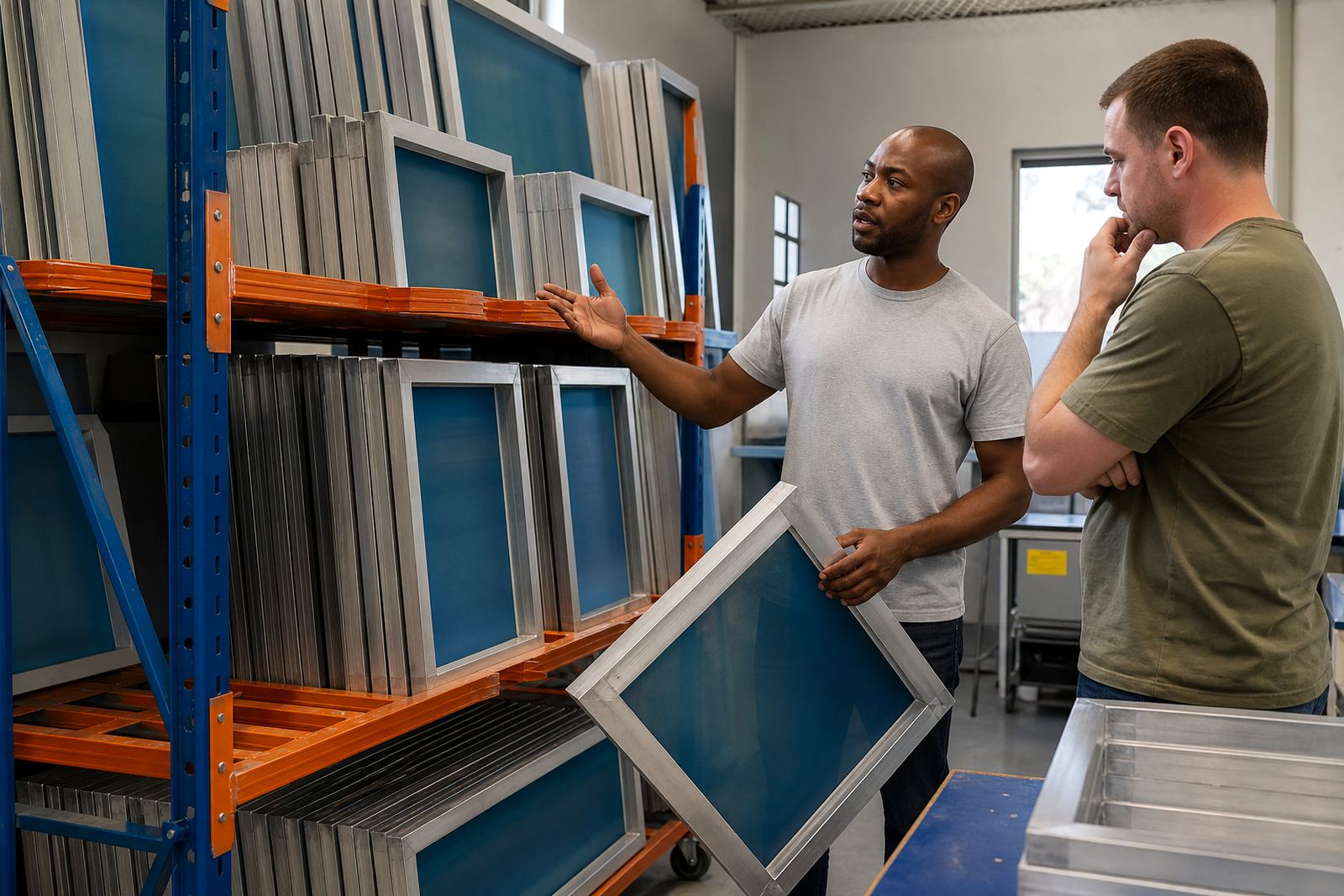

New aluminium frames stretched for garment printing
Our new screen stretching service is for printers who want fresh, production-ready screens built on aluminium frames. We work with garment printing in mind, so the finished frame is light in hand, stable on press and suited to repeated washdowns, ink contact and daily handling in a busy workshop. ScreenFrame has been doing this work since 2008 from our Maitland base, with Mandla Petersen and the team overseeing each job before it leaves the workshop.
We prepare the frame, fit the mesh, apply the adhesive system and check tension before dispatch or collection. That means you do not have to fight with loose corners, uneven pull or screens that sag after a few runs. For printers handling jobs in Cape Town, Johannesburg, Durban, Pretoria or Gqeberha, we also offer pickup and return options and can assist with bulk screen orders.
What is included in a new stretch
A new stretch is more than just pulling mesh across aluminium. It is a set process that starts with frame inspection and ends with a screen that is checked for even tension and neat bond lines. Ayesha Daniels handles production flow with the workshop team, while Sibusiso Mthembu checks each screen for fit and finish before it is released.
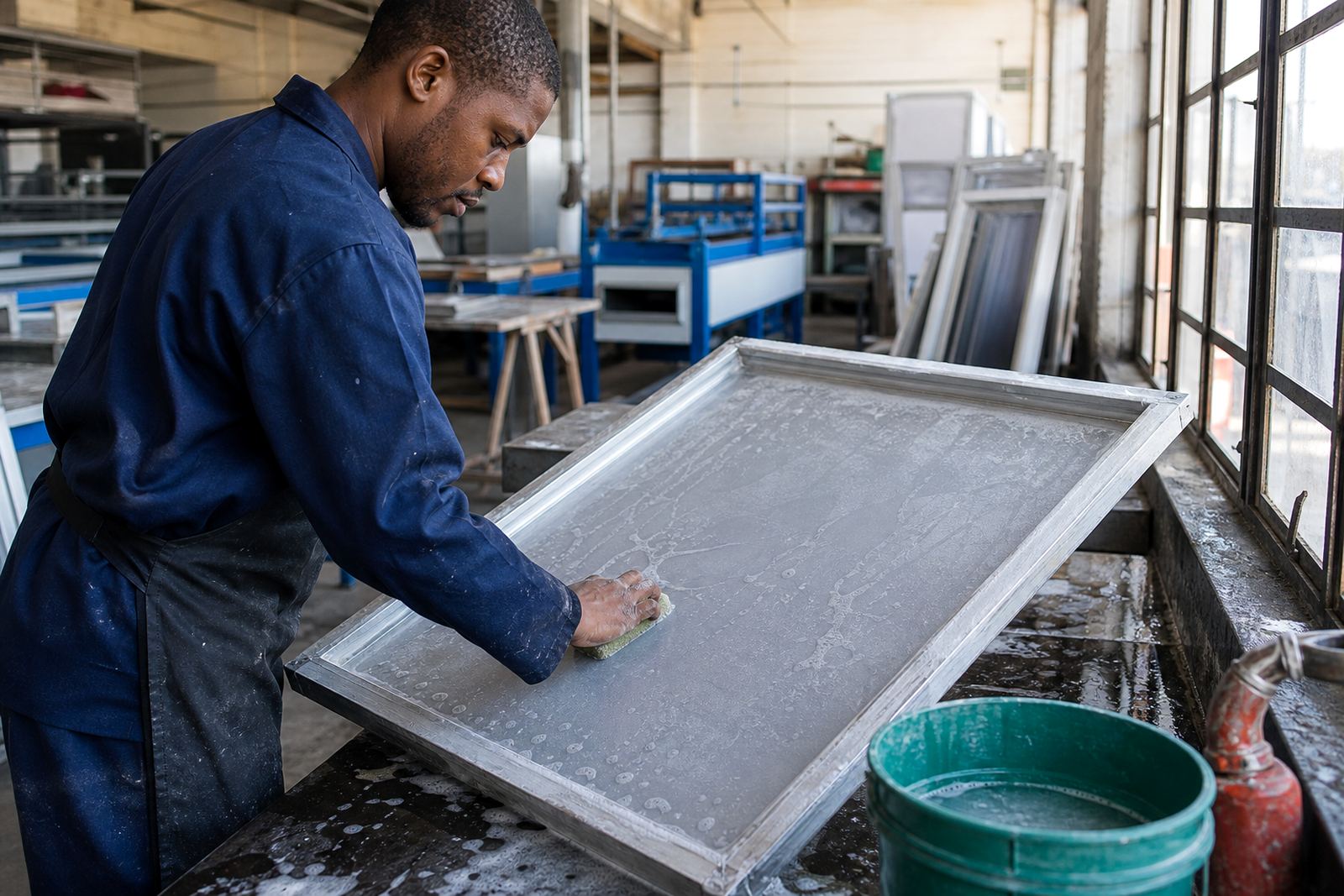
- Aluminium frame preparation and cleaning
- Mesh selection matched to the print application
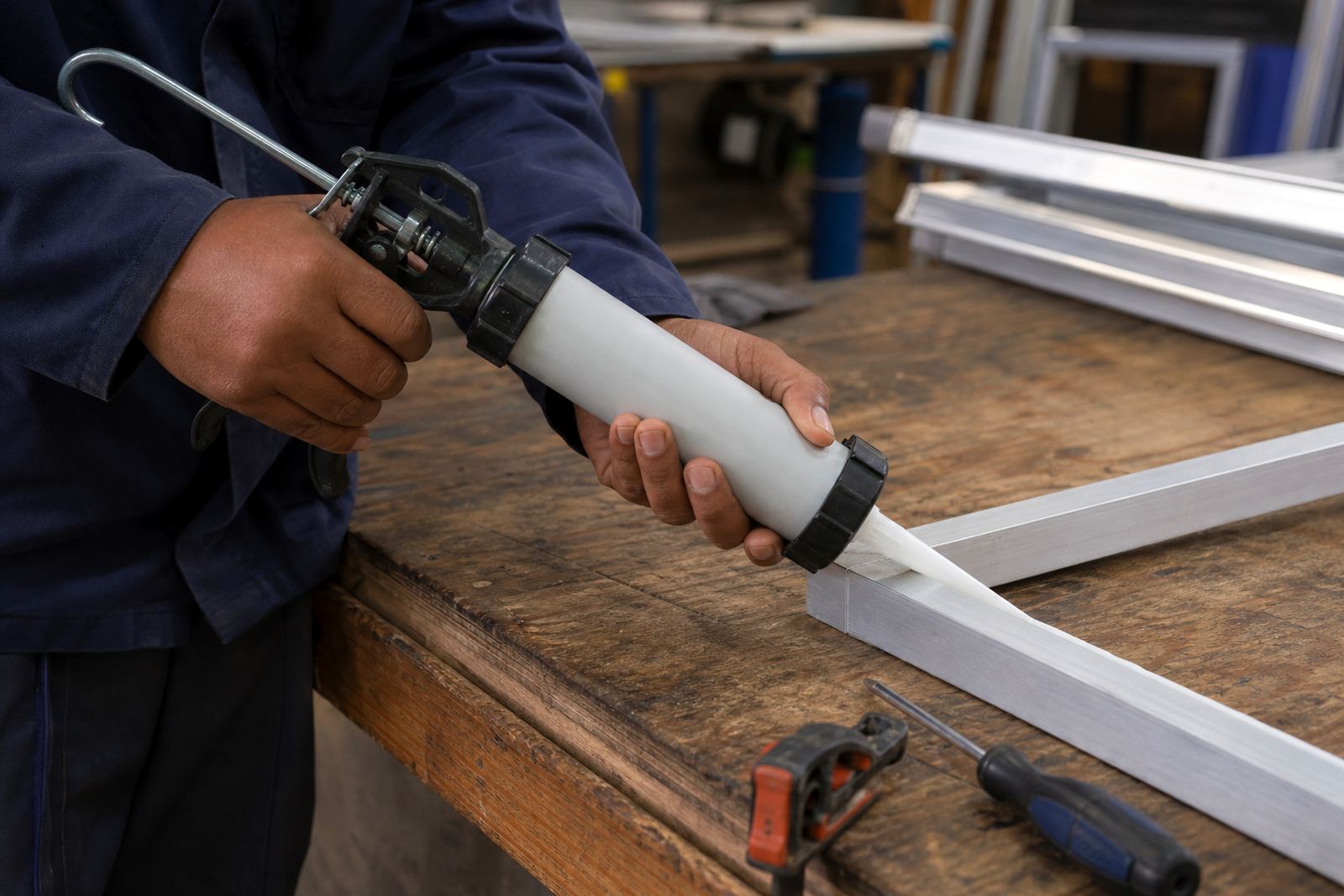
- Adhesive application and mesh bonding
- Corner seating and edge finishing
- Tension check across the full print area
- Final frame inspection for warping, dents or movement
If you need custom size stretching, we can work to the frame dimensions you supply. We also handle urgent turnarounds when production is waiting and a screen cannot be delayed. For Durban humidity, Cape Town coastal air or inland workshop conditions, the frame and mesh choice matter because storage and use conditions affect how long the screen keeps its pull.
How the stretching process works
We keep the process clear so you know what is happening with your screens. Bianca Jacobs handles customer coordination and Lindokuhle Dlamini manages collection and delivery timing, so the job moves without confusion.
- You send through your size requirements or bring in the frame
- We inspect the frame for straightness, cleanliness and surface condition
- The correct mesh is selected for the print type and detail level
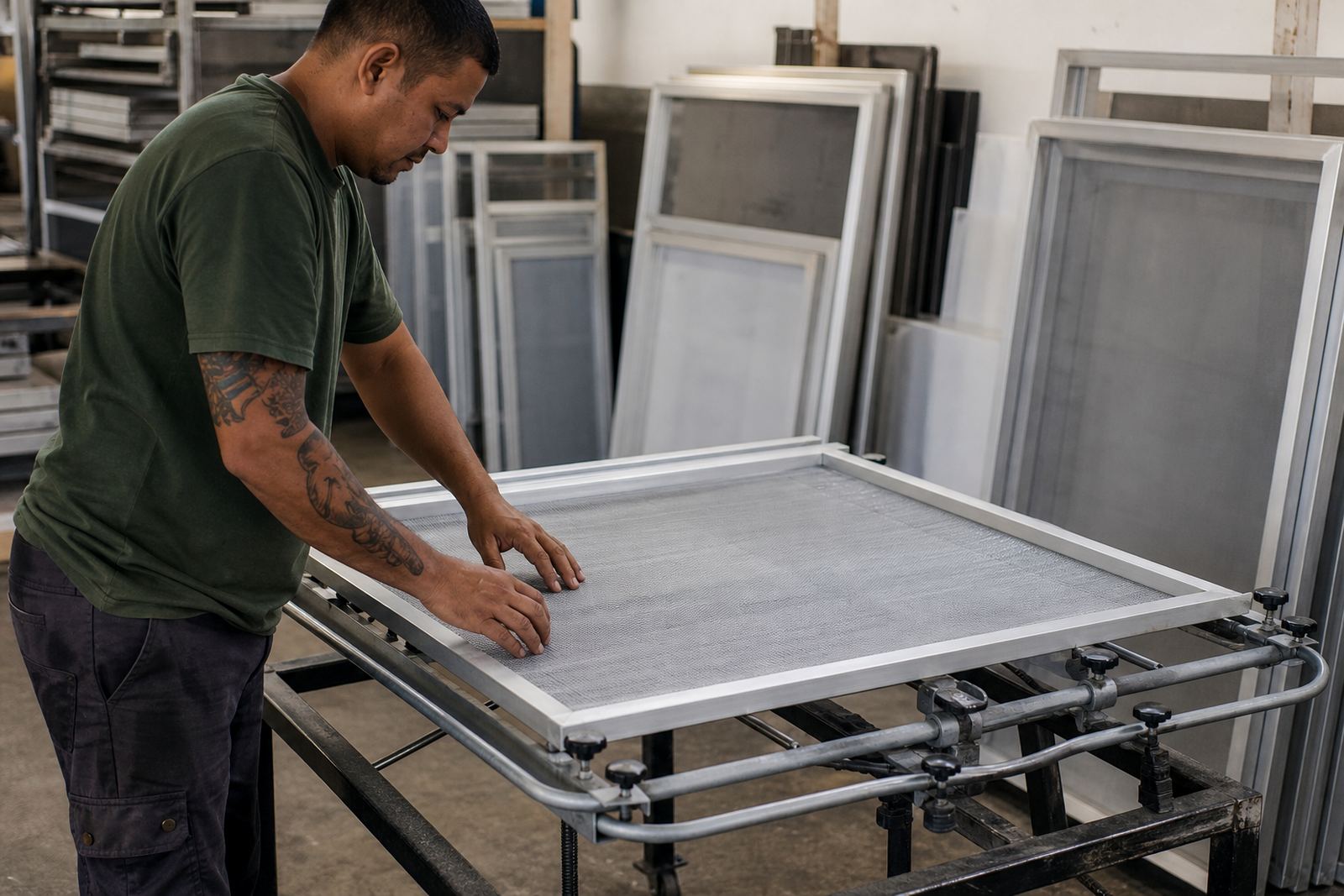
- The mesh is stretched and bonded under controlled tension
- We check the corners, surface and overall tension balance
- Your screen is marked, packed and made ready for collection or delivery
In simple terms, the aim is to give you a screen that is ready to mount and print on with minimal adjustment. Ruan van Wyk supervises workshop handling so the screens are kept square and clean during the full process. If a frame shows damage, we will flag it before stretching rather than force a poor result. That saves time later and helps prevent registration problems on press.
Mesh, frame and tension specifications
Different garment jobs need different mesh counts, and the choice affects ink deposit, detail and speed on press. We stretch for common print needs from bold underbase work to finer detail where a cleaner mesh is needed. The frame must stay square, the bond must hold and the mesh must sit evenly from edge to edge.
- Frame material: aluminium
- Common frame sizes: supplied to your required dimensions
- Mesh options: selected to suit the artwork, ink and garment type
- Use: manual and workshop-based garment printing
- Finish: tension checked and ready for production use
- Application: new screens for long run printing or short run repeat jobs
We also advise on screen care after stretching. A clean frame, proper storage and careful washing all help the screen last longer. In Cape Town coastal areas, moisture in storage rooms can affect both mesh and adhesive life, so we often recommend keeping screens off the floor and away from direct sun. If your workshop is in a load-shedding area, keep screens away from heat sources and dust while equipment is switched off.
Turnaround times and collection options
Turnaround depends on frame size, quantity and the mesh specification, but we work to keep lead times practical for production schedules. Small orders can often move quickly, while larger batches are planned so your workshop is not left waiting. If you need a fast job, tell us upfront and we will assess whether an urgent turnaround is possible.
Clients can use our Maitland Workshop, arrange Bellville collections, or plan supply and delivery routes through Cape Town, Johannesburg, Durban, Pretoria and Gqeberha. The Logistics Coordinator sets the timing so orders do not sit around longer than needed. For shops running weekly production, many clients choose a regular stretch and delivery rhythm to keep screens moving in step with print orders.
Pricing that matches the job, not guesswork
We price new screen stretching according to frame size, mesh type, quantity and the amount of prep needed on each frame. That keeps the quote fair and clear. A simple batch of standard frames costs less to process than a mixed order with custom sizes, repairs or extra cleaning. Bulk orders are priced differently from one-off screens, and urgent work may carry a priority charge because it interrupts the normal workshop flow.
When you send your enquiry through the contact page form, we use the details to give you a practical quote based on the actual job. If you are comparing suppliers, ask about frame size, mesh count, finishing and whether tension checks are included. Those details affect what you receive and what the screen will do on press. We would rather give a proper number than a rough figure that changes later.
When to restretch and how often to inspect
New screens do not need frequent replacement if they are cared for well, but every workshop should inspect them regularly. A light check after each production run helps spot sagging, mesh damage or adhesive failure before the next job starts. If the screen has been stored for a while, inspect it again before use because temperature changes and handling can shift the tension a bit.
For active garment printers, we suggest a visual check every few jobs and a more careful inspection at set maintenance intervals, especially where screens are cleaned aggressively or stacked for transport. If the mesh has lost pull, if the frame has been bumped, or if the print starts to show blur at the edges, it may be time to restretch. ScreenFrame can advise on whether the screen still has life left or whether a fresh stretch will save time and scrap on the next run.
Key facts
| Service | New screen stretching on aluminium frames |
|---|---|
| Base | Maitland, Cape Town |
| Coverage | Cape Town, Johannesburg, Durban, Pretoria and Gqeberha |
| Frame material | Aluminium |
| Use | Garment printing production screens |
| Related work | Custom sizes, bulk orders, urgent turnarounds, pickup and return |