
How a tired screen starts to show itself
When mesh ages, it usually gives warning signs before it splits or goes completely slack. The frame may still look fine, but the screen surface stops behaving the way it did when it was first stretched. Fine detail softens, edges blur and the print can start to drift from one pull to the next.
In a busy garment shop, that kind of change costs time. You may find yourself adjusting off-contact settings, slowing down the press or wiping more often to compensate. If the same setup used to run cleanly and now needs constant correction, the screen is likely past the point where a quick fix will help.
In Cape Town, humidity near the coast can make a tired screen feel even less stable. A mesh that once held tension well may now respond badly to moisture, especially when stored in a workshop that gets hot during the day and cooler at night.
Print faults that point to restretching
Some faults come from ink, artwork or setup, but repeated faults on more than one job are usually a screen issue. If the frame is sound and the stencil is properly prepared, the mesh itself may be the weak point.
- Blurred detail on fine text or halftones
- Poor registration on repeat runs
- Uneven print pressure across the design
- Flooding or ink leaking at the edges
- Screen bounce or a soft, springy feel during print
- Stencils wearing out quicker than normal
These signs often mean the mesh has lost even tension. Once that happens, the print surface no longer releases ink in a controlled way, and the result becomes inconsistent from shirt to shirt.
When fresh mesh makes more sense than repairs
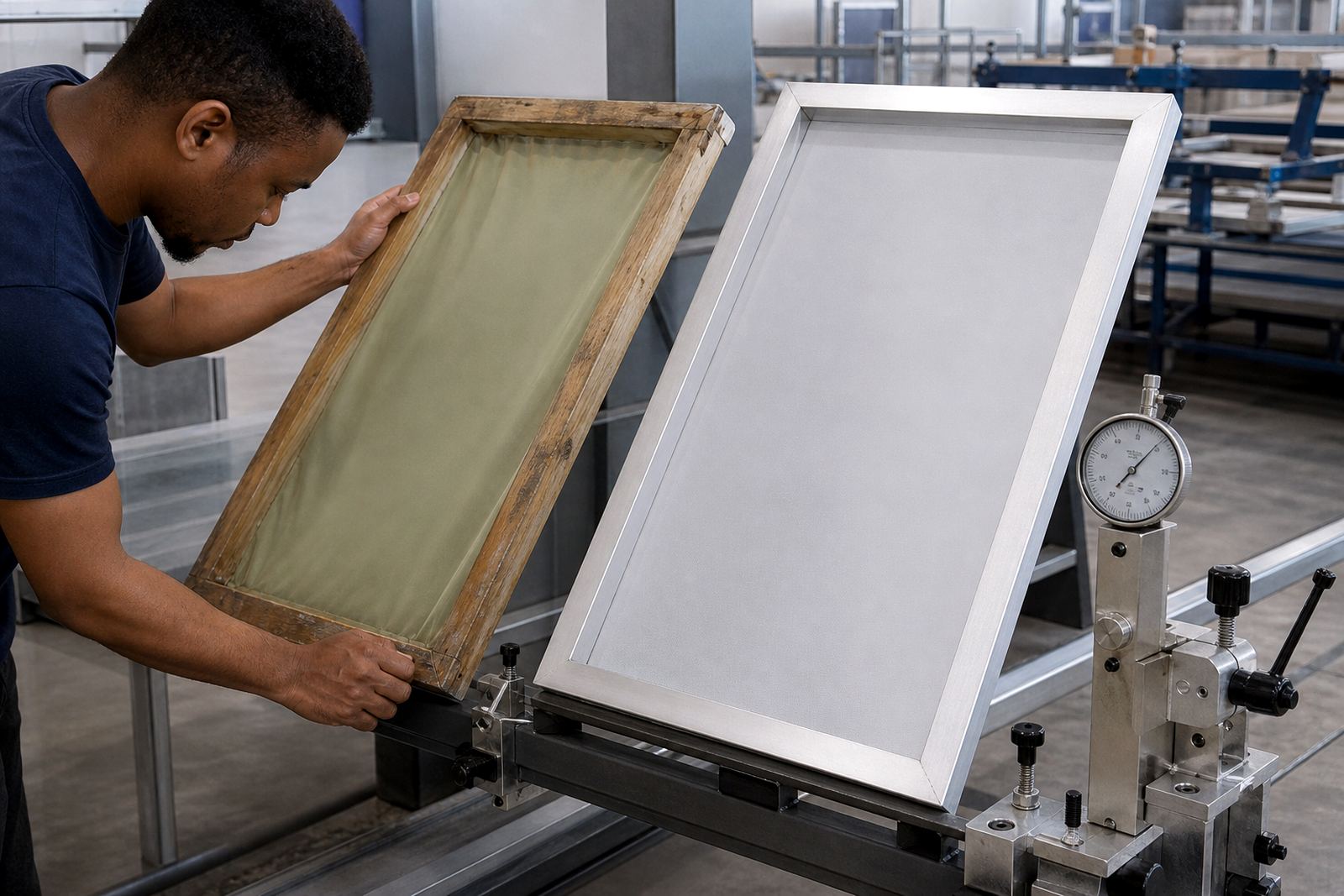
Restretching is usually the better choice when the frame is still in good condition and the mesh has simply reached the end of its useful life. It is especially practical where the frame is straight, clean and free of major damage. In that case, fitting new mesh gives you a better result than trying to make an old screen keep going.
If you are running regular garment jobs, the cost of lost prints can outweigh the cost of replacing the mesh. A frame that works with steady tension gives you cleaner edges, better ink control and less wasted stock. That matters whether you print a few dozen shirts or a larger run for school events, team wear or promotions.
A restretch also makes sense if the screen has been cleaned properly but still performs badly. If the adhesive holds, the frame is solid and there is no twisting or cracking, then fresh mesh can bring the screen back into useful service without replacing the whole frame.
A practical check before you send a frame in
Before deciding on a restretch, it helps to inspect the frame carefully. Not every screen is worth saving, and not every problem starts with the mesh. A short workshop check can tell you a lot about whether the frame is worth reusing.
- Check the frame for bends, dents or loose corners
- Look for old adhesive residue that may affect bonding
- Inspect the mesh for holes, slack spots or staining
- Make sure the stencil area is still usable and clean
- Confirm the frame size still suits your press and artwork
If the frame has warped, the mesh will not tension evenly no matter how carefully it is fitted. In that case, replacing the frame may be the only sensible option. But if the structure is still straight, a restretch can extend its working life by a long way.
Why timing matters for South African print shops
Across South Africa, many printers work around load-shedding, delivery delays and tight production windows. That means a screen that starts failing on a Monday can slow the whole week. Waiting until the mesh tears usually creates more pressure than sending the frame in when the first signs appear.
For example, a garment printer in Bellville might notice registration drifting on a batch of workwear prints for a local client. The frame looks fine, but the mesh no longer holds tension through repeated pulls. Restretching that screen before the next order can save the job from reprints, which is always cheaper than scrapping a half-finished run.
Coastal towns often see mesh age differently from inland areas. Durban humidity, for instance, can affect older screens that have already been through many cleaning cycles. Pretoria workshops may deal more with heat and dust. Either way, once a screen starts behaving unpredictably, fresh mesh is often the practical answer.
What a good restretch should deliver
A proper restretch is not just about fitting new mesh. It should leave you with a screen that feels consistent, prints cleanly and works with your normal setup. The mesh should sit evenly across the frame, with no soft sections or loose corners. Adhesive application, tension checks and careful finishing all matter.
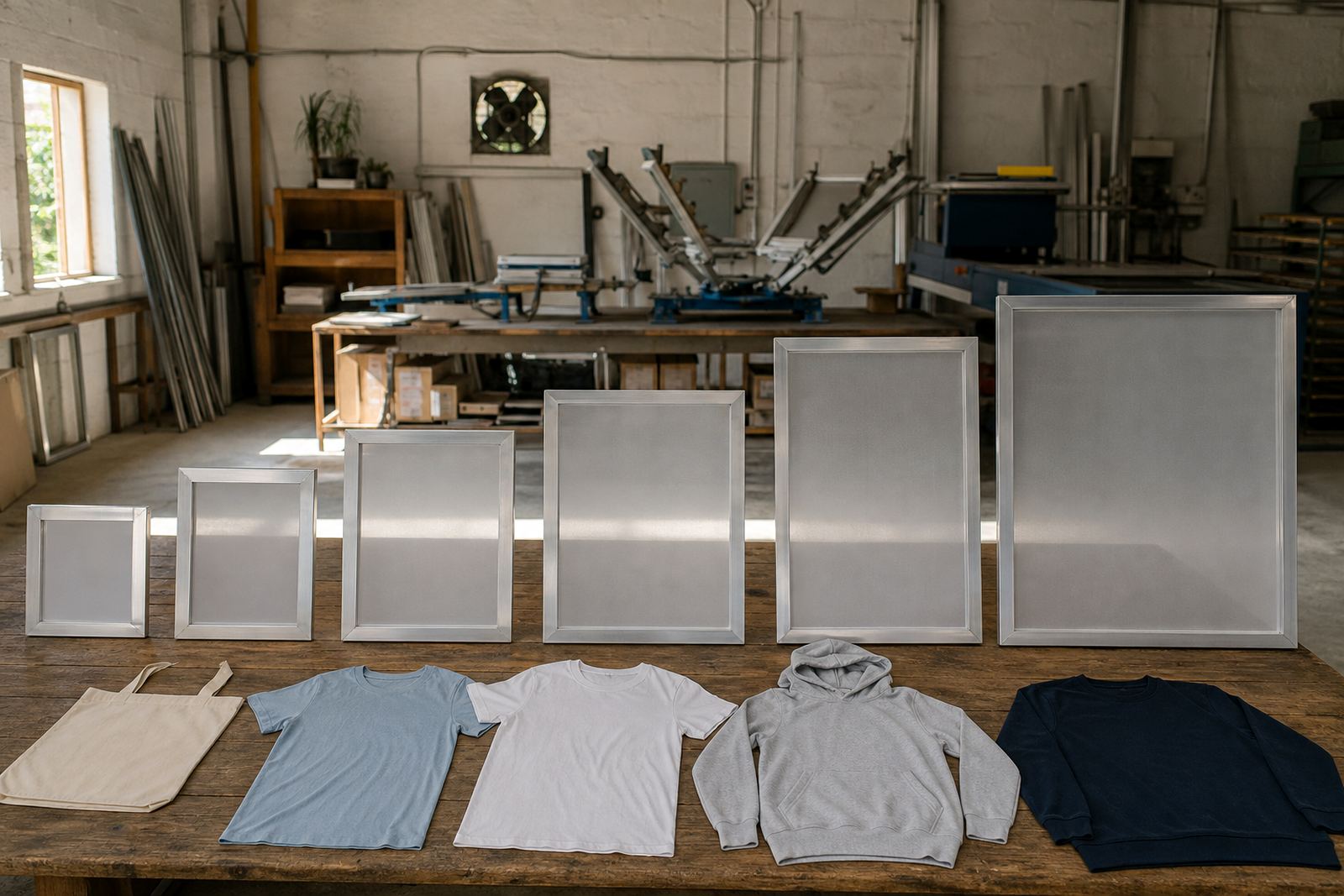
After restretching, the screen should help you get back to a steady workflow. That means less fiddling with settings, fewer rejects and less strain on the press operator. If your workshop keeps a mix of frame sizes, it can also help to maintain a small rotation of screens in different states of readiness, so you are not stuck when one frame goes out of service.
When printers in Maitland, Johannesburg or Gqeberha are working to deadlines, a well-restretched screen is often the difference between getting the order out on time and having to explain a delay to a customer.
Keep screens in service for as long as they still earn their keep
Not every worn screen needs to be thrown out. Many frames can be brought back into service with new mesh, provided the frame is still straight and the old surface has reached the end of its run. The main question is simple: does the screen still help you produce clean, reliable prints?
If the answer is no, restretching is worth serious consideration. It is a practical way to keep equipment working, control costs and avoid unnecessary waste. The best time to act is usually before the screen fails completely, not after the job has already gone wrong.
For garment printers, knowing when to restretch is part of running a steady workshop. The signs are usually there, and once you know what to look for, the decision becomes much easier.