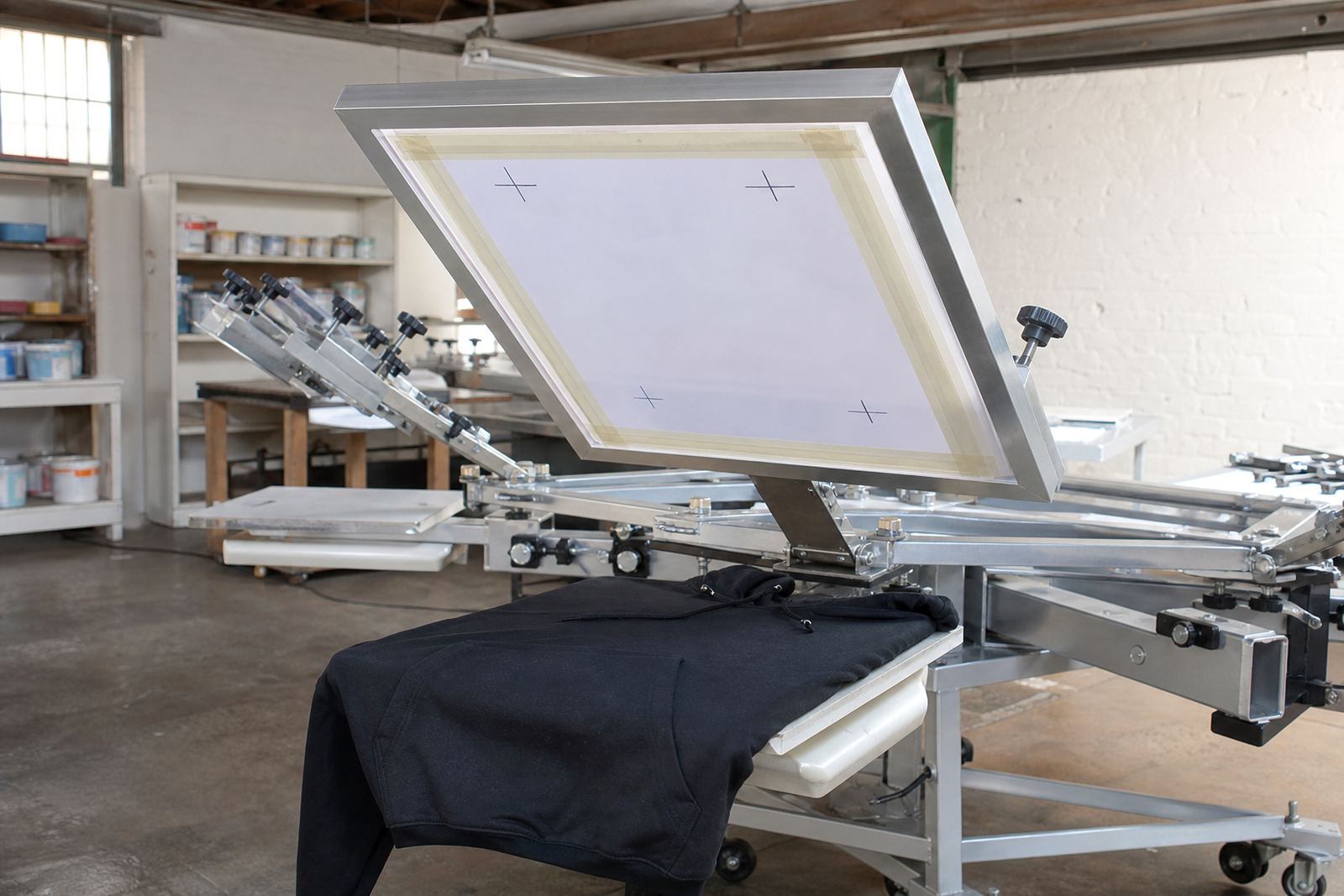
Why hoodie prints need a different frame approach
A hoodie is not just a bigger garment, it behaves differently on the press. The fabric is heavier, the seams are bulkier and the front pocket or zip can change where the design sits. If your screen is too small, you end up forcing artwork into the available space instead of setting it up properly from the start.
For garment printers in Cape Town, Johannesburg or Durban, the first question is not only what image size you want. It is how the hoodie will lie on the platen, how much clearance you need around the print area and whether the frame can handle repeated use without losing tension. That matters even more when you are running batches for winter stock, school wear or club orders.
A good rule is to plan the screen around the artwork plus a workable border. That extra space gives you room for registration marks, cleaner tape-up and a more stable stretching job. It also makes daily use easier when you are changing jobs quickly and trying to keep a workshop moving during load-shedding windows.
Choosing frame dimensions for front and back hoodie graphics
For many hoodie fronts, a practical print field is around 280 mm to 320 mm wide, with height depending on the design. Larger chest prints or full front artwork can go wider, especially on oversized garments. The frame itself should be larger than the print area by enough margin to keep the mesh workable and the edges strong.
As a guide, many printers prefer frame sizes in these bands for hoodie work:
- Small to medium graphics: a frame that gives at least 50 mm to 70 mm clearance around the image area.
- Large chest or front prints: a frame with enough width for 320 mm to 360 mm print zones.
- Oversized back prints: a wider frame that can carry 400 mm plus without crowding the mesh.
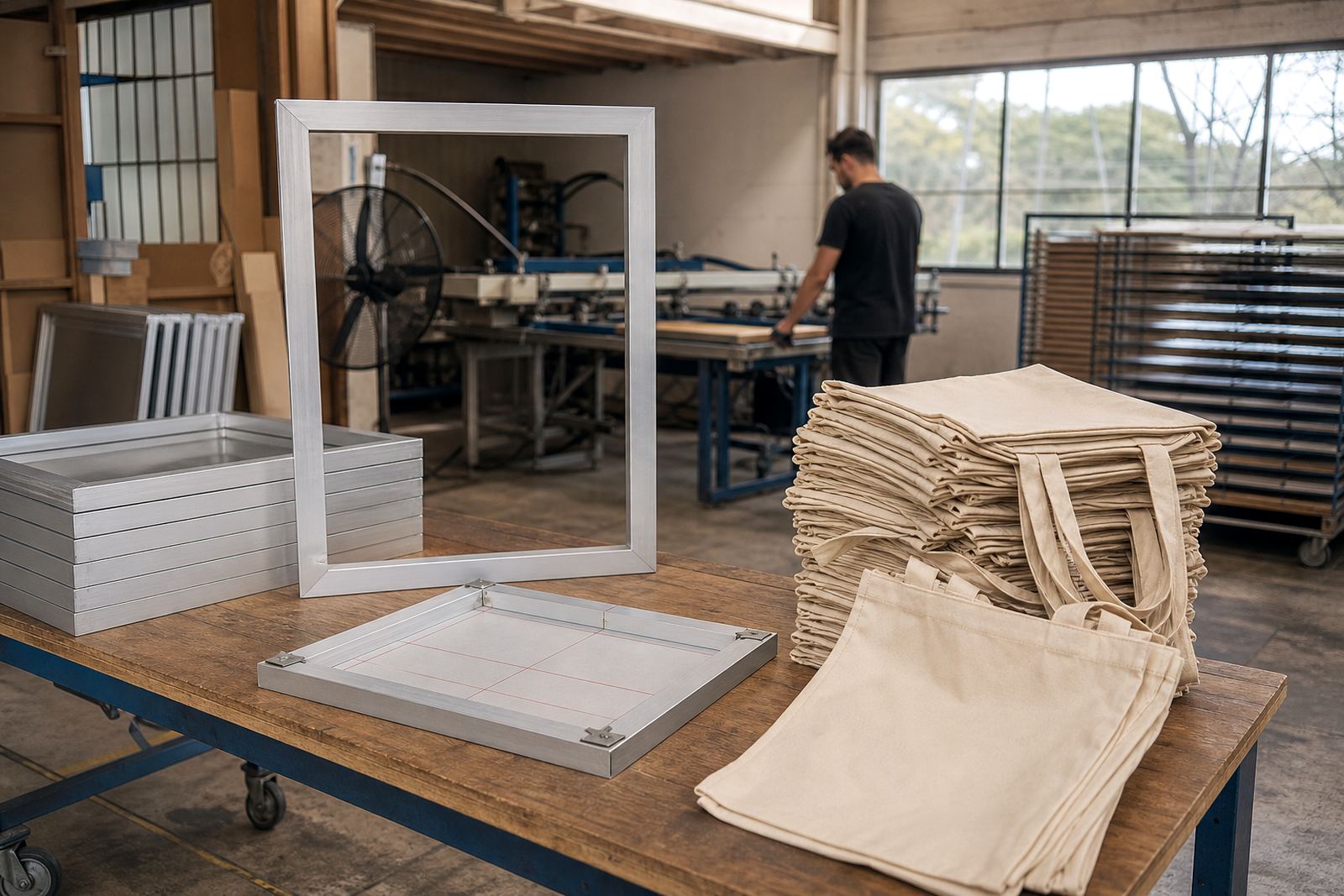
- Mixed garment work: one or two larger frames that can handle hoodies, sweatshirts and tote bags without constant restretching.
The key is not to chase the biggest frame possible. A frame that is too large for your normal jobs can be awkward to coat, store and expose. A frame that is too small will limit artwork and often leads to rushed fixes. For most small and medium garment shops, a sensible middle ground works best, with one larger size reserved for bold hoodie backs or winter runs.
Mesh tension matters more on thicker garments
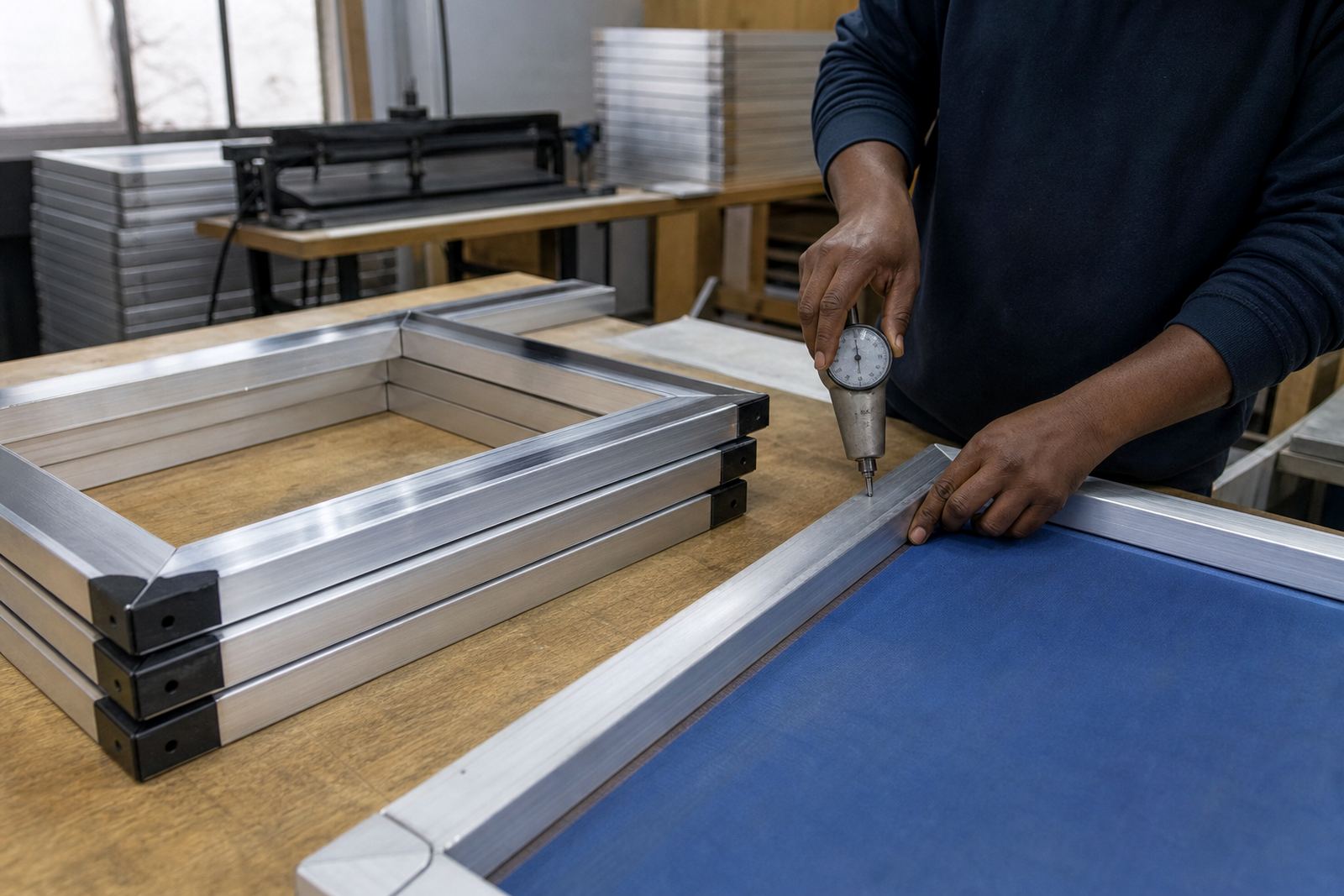
Hoodies often need firmer pressure at print time because of the thickness of the fabric and seams. If the mesh is slack, the print can blur or lose detail when the squeegee passes over uneven surfaces. Strong, even tension helps keep the stencil stable and the print cleaner.
That is why the frame choice and the stretching job should be matched to the garment type. When the frame is well made and the mesh is stretched evenly, you can get better snap back and better control on puff print, block colour and fine line work. It also helps when you are printing more than one colour and need consistent register across a longer run.
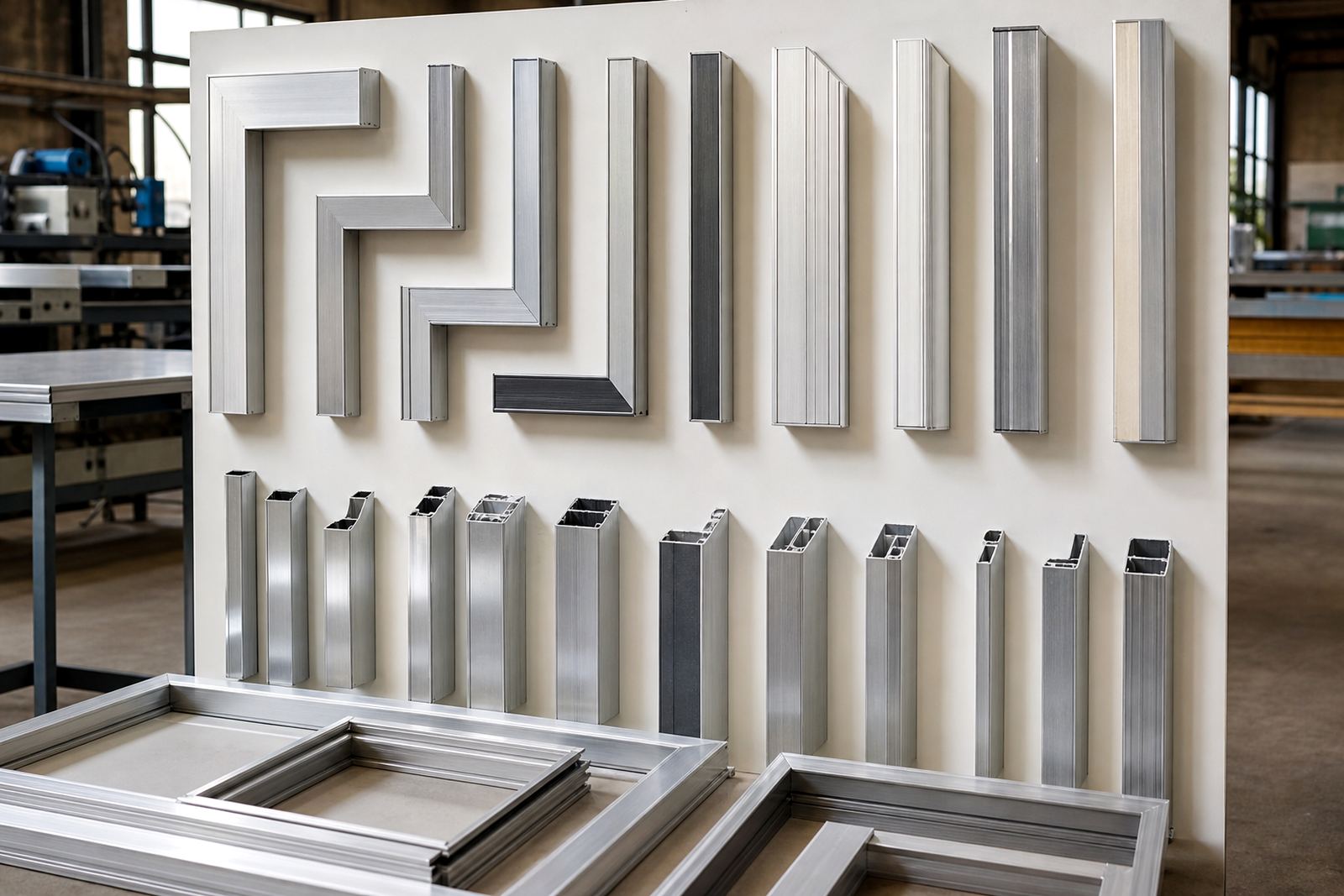
For workshops in coastal areas like Maitland or Gqeberha, humidity can affect stored mesh and frame condition. Aluminium frames are a practical option because they handle moisture better than many other materials and are easier to keep clean between jobs. Still, a frame that has been left with old ink or adhesive build-up will not perform properly, no matter how good the mesh is.
Set up the screen size around the garment shape
Hoodies are shaped differently from standard tees, so it helps to think about the garment itself before you stretch a screen. Pockets can sit high or low. Drawstrings may get in the way. Zip hoodies need more careful layout because the centre line is split.
When planning screen dimensions, consider these points:
- The height of the print area above the pocket or rib band.
- How much room the artwork needs on the left and right for centring.
- Whether the design must stop clear of seams, zips or bulky stitching.
- If the same frame will also be used for sweatshirts, pullovers or heavier winter tops.
A clean print on a hoodie usually comes from setting the job up with enough breathing space. That means leaving a margin on the screen so the ink can travel smoothly and the print edge stays sharp. If you try to fill every part of the mesh, you make coating harder and raise the risk of uneven exposure. A bit of spare space is not wasted, it is useful working room.
Bulk orders need a repeatable screen setup
When you are printing 50, 100 or 300 hoodies, consistency matters more than anything. If each screen behaves differently, your print time goes up and your waste goes up too. That is why many printers keep a standard hoodie screen size for repeat orders, then add one or two custom sizes for special jobs.
Bulk work also needs practical handling. Screens should be labelled clearly, cleaned properly and checked before the next run. A frame with damaged corners or loose mesh can slow down a whole production day. If you are running a mixed order for schools, events or retail stock, keeping the sizes standard helps you move faster and reduces mistakes.
Useful workshop habits include:
- Keep one main hoodie screen size for everyday front prints.
- Use a second larger screen for oversized back graphics.
- Check tension before each batch, not after the first bad print.
- Store screens flat and dry, especially in humid months or near the coast.
For busy suppliers in Cape Town and beyond, this simple discipline can save time on the press and lower the cost of rework.
A local example from a Cape Town hoodie run
A Maitland workshop handling a winter hoodie order for a Cape Town sports club may need two screen sizes. One screen can cover the front chest logo and another larger frame can handle the back sponsor print. If the hoodies are heavy fleece, the printer will want extra clearance so the fabric sits properly on the platen and the ink lays down evenly.
In that sort of run, a custom size stretch is often the smarter choice than forcing a standard frame to do everything. The front logo may only need a modest print field, but the back design may stretch wider than expected once the garment is flattened. That is where careful measuring and proper tension checks pay off. The order may look simple on paper, but the actual hoodie shape can make or break the final print.
For printers serving Johannesburg, Pretoria, Durban or Gqeberha as well, the same principle applies. Regional shipping and pickup schedules are easier to manage when the frames are made to suit the job from the start. It is one less thing to correct later and it keeps production moving without last minute scrambling.
What to ask before you order or restretch hoodies screens
Before you place a screen order, measure the artwork, check the garment type and decide whether the screen will be used for single pieces or repeat batches. If you are unsure, it helps to speak through the print size, the ink system and the number of colours before the frame is stretched. That gives a clearer match between the job and the screen.
Ask yourself these questions:
- What is the actual print area in millimetres?
- Will the screen be used for hoodies only, or for mixed garment work too?
- Do you need a standard size or a custom size for a specific run?
- Will the frame be handled often enough that durability matters more than a one-off fit?
For South African garment printers, the best screen size is the one that makes the work easier, cleaner and more repeatable. It should suit the hoodie, suit the press and suit the way your workshop runs day to day. When those three line up, the prints are steadier and the job is simpler from the first pull to the last.