
Why seasonal peaks catch printers off guard
In South Africa, print demand does not stay flat through the year. School calendar runs, winter clothing orders, sports days, concerts, church events and year end functions can all hit within the same few weeks. If your frames are still in rotation from the previous season, small issues start to slow the workshop down. Loose mesh, uneven tension and old adhesive residue can all affect registration and repeat work.
For printers in Maitland, Bellville and the wider Cape Town area, this often shows up first in the delivery bay. One week the shop is quiet, then suddenly you need more frames for back-to-school jobs, then more again for winter hoodies and teamwear. The pressure is similar in Johannesburg, Durban, Pretoria and Gqeberha. Planning for those spikes is less about having extra hands and more about having the right frames ready when the orders come in.
Start with a frame audit before the rush hits
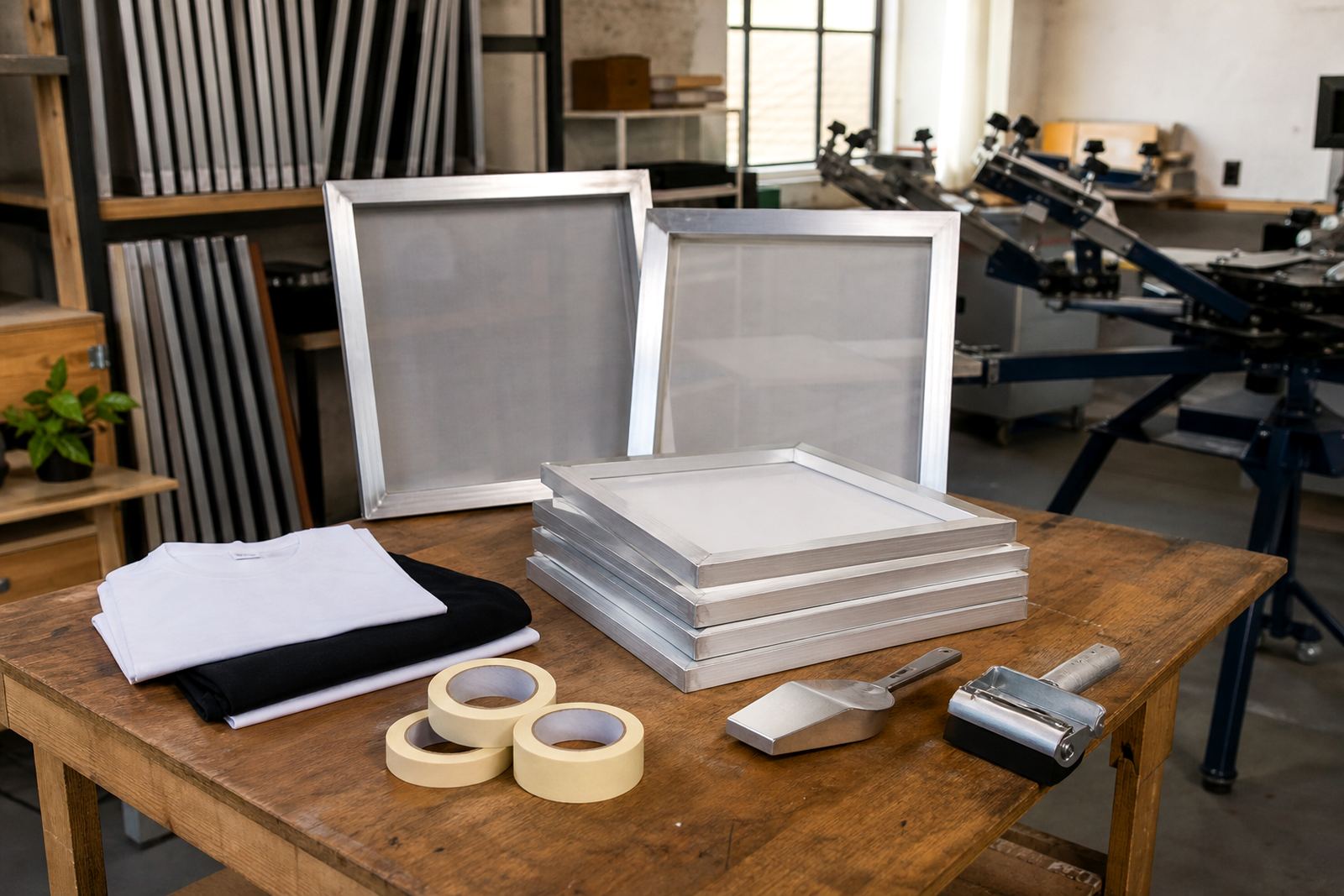
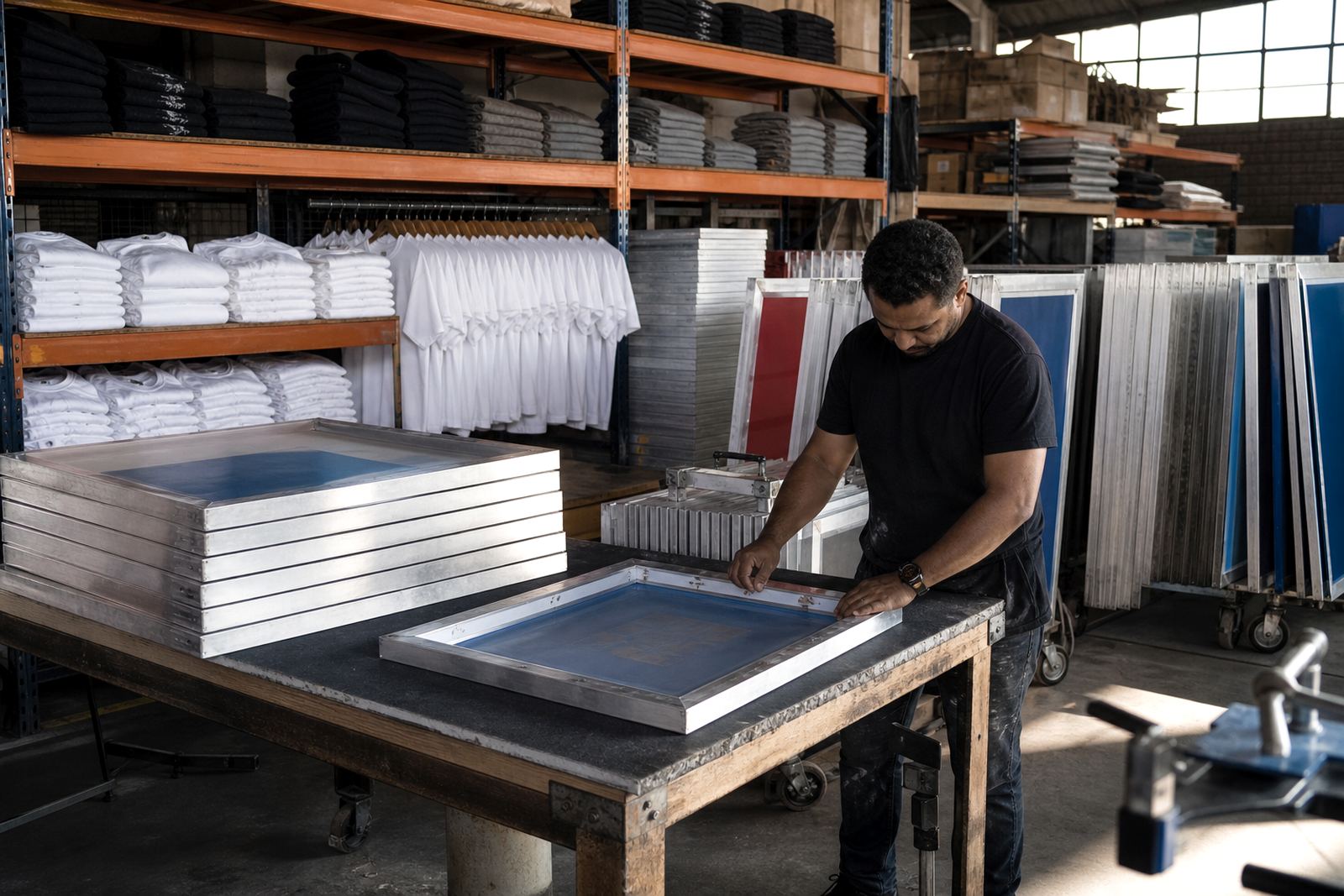
A proper frame check before busy season saves time later. Walk through every frame and separate the ones that are ready, the ones that need restretching and the ones that should be cleaned or retired. A quick visual glance is not enough. Check corners, joins, warping and whether the frame still sits flat on the table.
If you are working with mixed stock, colour-code your batches or keep a simple log. That helps when you are balancing school orders with retail work and short-run event jobs. In our workshop, we often see printers holding onto frames that look fine from a distance but fail under repeated use. That leads to poor mesh grip, inconsistent print results and extra downtime.
- Look for dents, bent corners and signs of frame movement after clamping
- Check for dried adhesive, ink build-up and old mesh fragments
- Sort frames by size so you know what can be used immediately
- Mark any frame that needs a tension check before it goes back into production
Match the frame plan to the type of order
Not every peak period needs the same preparation. School clothing orders usually come in steady batches, while event work tends to be more urgent and often changes at short notice. Winter orders can be bulky too, because thicker garments need careful setup and more attention to print placement. The better you match your frame stock to the job mix, the fewer surprises you get during production.
For garment printers handling jobs across Cape Town, a useful habit is to keep one set of frames ready for fast turnaround work and another set reserved for higher volume jobs. If a rush order lands on a Thursday and needs pickup by Monday, you do not want to spend Friday sorting worn frames. Clean, stretched and checked frames give you more control over the schedule and help avoid rework.
- Keep urgent-order frames separate from everyday workshop stock
- Reserve larger frames for repeat logos and bulk school runs
- Use custom size stretching where artwork dimensions do not fit standard stock
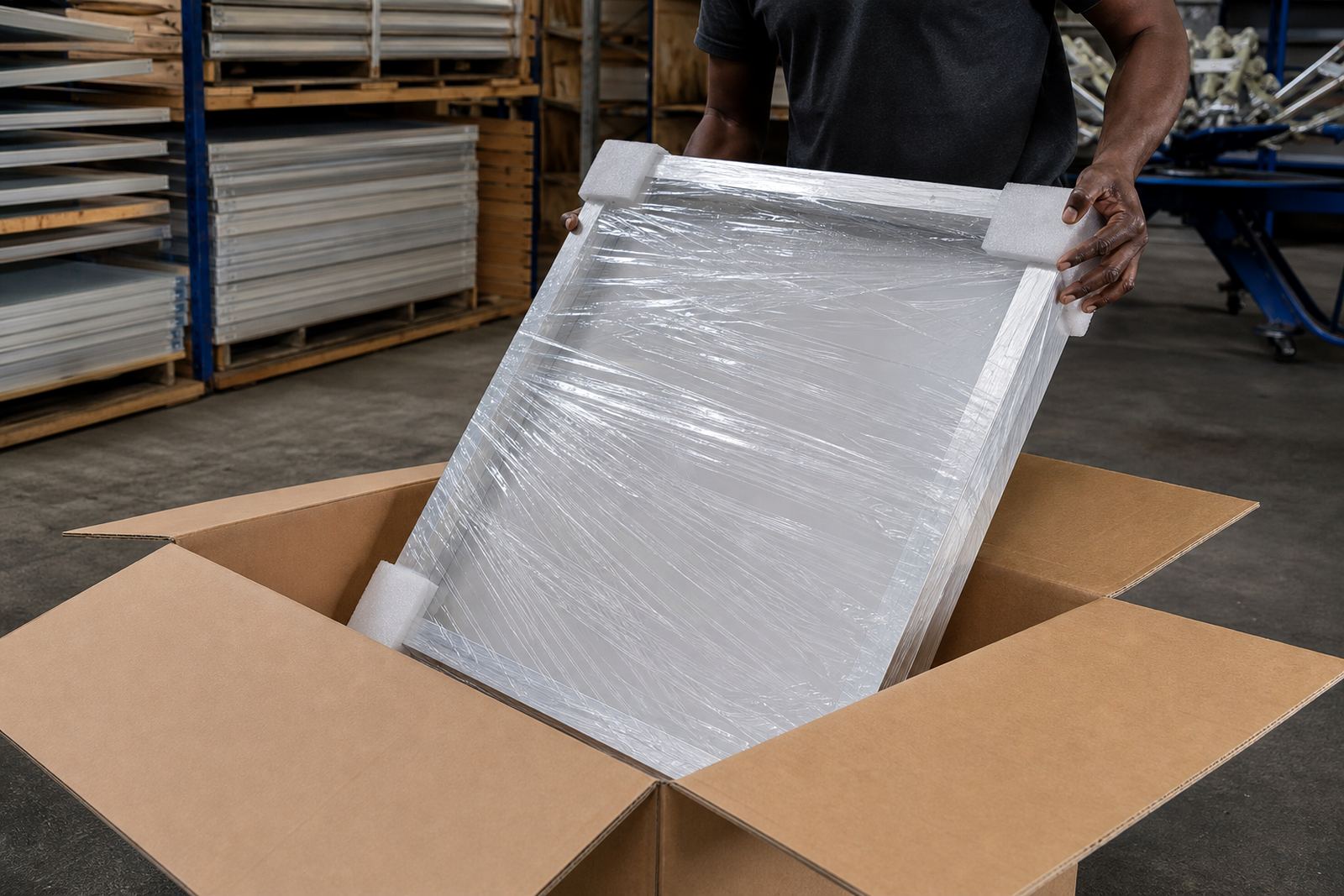
- Plan pickup and return early if the job must move between workshop and client site
Why mesh tension matters in humid and coastal conditions
In places like Maitland, Durban and Gqeberha, humidity can affect screen performance more than some printers expect. Coastal conditions can make stored frames pick up moisture, which then affects drying time and the feel of the mesh. If frames are not tensioned properly, you can get soft edges, uneven deposits and a screen that simply does not behave the same way from one job to the next.
That is why a tension check before peak season is worth the effort. It is not only about stretch quality at the moment of fitting. It is also about whether the screen will hold up through a week of repeated use, cleaning and handling. A stable frame gives the printer better repeatability, especially when the same design must be printed across different garment sizes.
If your workshop sees a lot of winter volume, this becomes even more important. Cold mornings and damp storage can make weak screens fail faster. A frame that passes inspection now is much less likely to slow you down during the first big run of the season.
Keep cleaning and adhesive work in the schedule
Many busy printers leave cleaning until there is a problem, then pay for it later in time and labour. Frame cleaning, mesh removal and adhesive application should be part of the seasonal reset. Old residue can stop a new stretch from sitting properly and may also cause problems when you need to remount a screen quickly.
Before the first major rush, set aside frames that need full cleaning and separate them from frames that only need light maintenance. It is also a good time to inspect the frame edges for wear. If the adhesive bond has failed before, the same issue can return when the workshop gets busy and screens are handled more often than usual.
A clean frame is easier to inspect, easier to store and easier to trust when the order count starts climbing. That kind of preparation also helps if you are managing bulk screen orders and need consistent output over several weeks.
Build a simple peak-season workflow that holds up
When the pressure builds, the workshop needs a clear routine. The easiest systems are usually the ones that stick. Keep a weekly check on frame condition, store stretched screens in a dry, dust-free area and make sure the team knows which screens are assigned to which job. If one screen is tied to schoolwear and another to an event run, confusion costs time.
It also helps to plan around practical South African realities. Load-shedding can shift drying times. Road delays can affect deliveries to Johannesburg, Pretoria or the Cape Winelands. Municipal collection times and access rules can also change how jobs move in and out of the workshop. If you build a little buffer into your schedule, you reduce the risk of missed handovers and last-minute stress.
- Set a monthly inspection day before the busy period begins
- Keep an extra set of ready-to-use frames for urgent turnarounds
- Label screens by size, job type and intended garment range
- Plan workshop stock around likely peak dates, not only current orders
A Cape Town example that shows the value of planning
Take a small garment printer in Cape Town handling school sport orders, winter fleece runs and two event jobs in the same month. The shop might start with a few screens looking usable, but once the first rush begins, the weak frames become obvious. One frame loses tension, another has old adhesive at the corners and a third needs cleaning before it can be used again. By the time the orders are due, the team is doing maintenance instead of printing.
If that same printer had checked all frames two weeks earlier, the busiest jobs would have started with a proper stock of cleaned, stretched and inspected screens. The workshop would still have been busy, but the work would have moved in order rather than in panic. That is the real value of preparing for seasonal peaks. It gives you more control over your timing, your output and the quality of the finished garment, which matters when clients are waiting on strict dates.
For printers across Cape Town, Johannesburg, Durban, Pretoria and Gqeberha, the message is the same. Prepare the frames before the calendar turns, and the season becomes much easier to manage.