
Start With A Clean, Dry Screen Before Packing
Before a screen leaves the workshop, it should be clean, fully dry and checked for loose adhesive, dust or mesh damage. Any moisture left on the frame can cause trouble during a long trip, especially on routes to Durban, Gqeberha or the coastal belt where humidity is high. If a screen is packed while still damp, the mesh can relax and the adhesive bond may weaken.
We always suggest a final inspection before packing. Look at the corners, welds or joints on the frame and make sure there are no sharp edges that can cut through wrapping. A screen that is already under strain should not be sent without checking the tension first. If it has a weak point, courier movement can turn a small issue into a full re-stretch later.
Use A Rigid Outer Layer To Prevent Frame Bend
A stretched screen needs a rigid outer layer, not just soft wrapping. Cardboard alone can crush when stacked with other parcels, and thin plastic gives very little protection. For courier transport, the frame should be protected so it cannot flex, twist or rub against other loads in the van or truck.
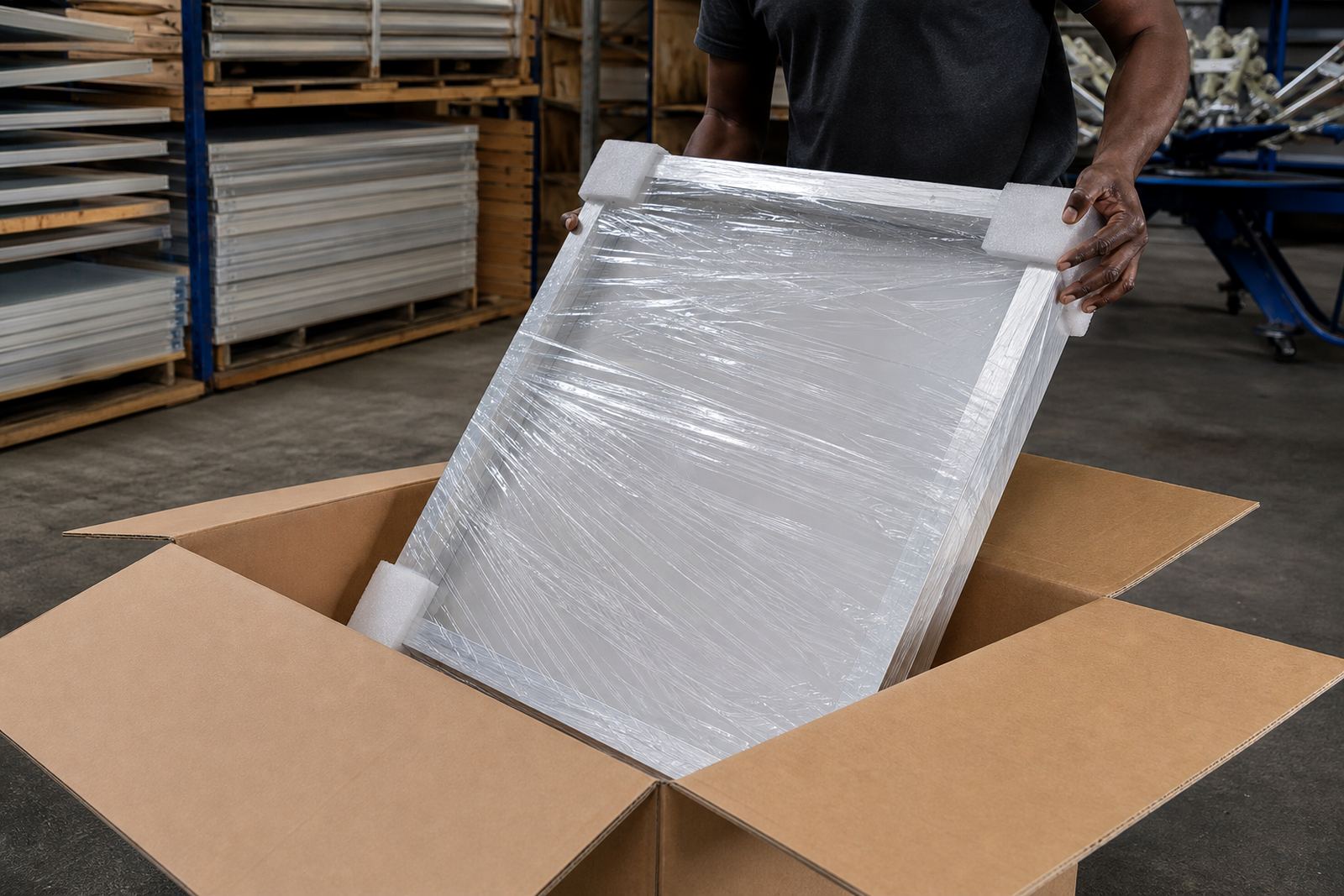
For larger screens, a flat board or rigid sleeve is a better first layer. Add corner protection and make sure the mesh face is not touching rough surfaces. On multi-stop routes like Maitland to Bellville, then onto Paarl, parcels are often handled more than once so the outer packing must cope with repeated movement.
- Use corner protectors on every frame.
- Keep the screen face off the floor and off rough cardboard.
- Bundle multiple screens separately so one frame does not scrape another.
- Mark the parcel as fragile and keep the label visible on the top face.
Protect Mesh Tension During Long-Distance Transport
The mesh is the part that suffers most when packing is rushed. Too much pressure across the face can alter tension, while loose packing can allow the screen to knock against the sides of the box. The best method is to keep the screen supported evenly, with pressure spread across the frame and not concentrated on one corner.
If a screen is sent from Cape Town to Johannesburg or Pretoria, it may face hot loading bays, cold night transport and road vibration all in one trip. That is normal for South African courier runs, so the packing needs to allow for those changes. A screen that is tightly wedged into the packaging can arrive with a frame out of square or mesh that has slackened slightly.
- Do not tape directly onto the mesh.
- Keep weight off the centre of the screen face.
- Separate each screen with a clean spacer sheet if more than one is shipped.
- Avoid over-tight strapping that can pull the frame inward.
How To Pack For Load-Shedding Delays And Overnight Routes
Courier collection times do not always line up neatly, especially when load-shedding or traffic delays slow down a handover. A packed screen may sit longer than planned in a depot or vehicle, so the packing has to hold up without needing a quick repack. That means the screen should be sealed against dust, kept dry and packed so it can stand upright or lie flat without movement.
If the courier route includes overnight transport, the parcel may spend hours in transit before anyone sees it again. In these cases, use clean wrapping that will not trap moisture from the workshop or from early morning coastal air. A little preparation saves a lot of trouble when the parcel finally reaches a printer in Durban or Gqeberha and must go straight into production.
Label Screens Properly So The Courier Handles Them Correctly
Clear labels make a real difference. A screen that looks like any other flat parcel can be placed under heavier items if it is not marked well. Use simple handling instructions and make sure the address label is fixed to a flat, visible area, not wrapped around a corner where it can peel off.
For bulk screen orders, it helps to note whether the parcel contains new stretched screens, restretched frames or frames awaiting mesh work. That way, the receiving team can open the package in the right order and avoid unnecessary handling. A courier does not need a long explanation, but they do need clear handling cues.
- Mark the parcel as Fragile and Keep Flat where needed.
- Place the sender and receiver details on more than one side.
- Number multiple parcels so all screens arrive together.
- Include a short note if the screens must not be stacked.
A Practical Cape Town Example From Workshop To Client Floor
Take a small printer in Maitland sending two stretched screens to a client in Durban for a garment run. The screens leave the workshop clean, dry and checked for tension. They are then wrapped with corner protection, separated with rigid sheets and packed so there is no movement inside the box. The parcel is marked clearly and booked for pickup and return, with enough room around the frame so nothing presses on the mesh.
That package can travel through several depots before delivery. If the packing is sound, the screens arrive ready for use instead of needing a repair or full re-stretch. For printers working to deadlines, that matters more than fancy packaging. Good packing is simply part of the job, same as checking the screen before a print run starts.
When It Makes Sense To Ask For A Pickup And Return Service
Not every printer has time to wrap screens properly, especially when orders come in late or a job is due the next morning. In those cases, a pickup and return arrangement is easier because the screens are handled by people who know how to protect them for courier travel. It also reduces the chance of damage caused by rushed packing at the last minute.
For businesses in Cape Town, Johannesburg, Durban, Pretoria and Gqeberha, the safest option is often to pair courier transport with proper screen care advice and a pre-check before dispatch. That is especially useful for custom size stretching, urgent turnarounds and bulk screen orders where one damaged frame can hold up the whole print schedule.
Good packing does not need to be complicated. It just needs to keep the screen straight, dry and protected until it reaches the printer who needs it.