
Why tension changes the print on press
Mesh tension is the pull across the screen mesh, and it affects how the stencil releases ink onto fabric. Too little tension and the screen drags on the garment, the print can wobble, and fine detail starts to blur. Too much tension and the mesh can weaken faster, or become hard to control during long print runs. The aim is not just a tight screen, but a screen that stays stable through the full job.
For garment printers in Cape Town, Johannesburg or Durban, this matters even more when the day starts cold and ends warm, or when humidity changes after rain. Mesh behaves differently in those conditions. A frame that feels fine in the morning can relax later, especially if it has been stored near heat, moisture or direct sun.
What good tension looks like on a real job
You do not need complicated equipment to spot a screen that is behaving well. A properly tensioned frame gives a clean snap-off, holds registration better, and lets the squeegee move with less effort. The print should feel consistent from the first shirt to the last, without needing constant pressure changes.
- The mesh rebounds quickly after the squeegee passes
- Fine lettering keeps its shape instead of softening at the edges
- Ink deposits stay even across the print area
- The screen lifts cleanly off cotton, polycotton, and light synthetics
- Registration marks line up with less chasing between colours
If you are doing a short run of 20 shirts in Bellville or a larger order for a school, club or promotional job, stable tension saves time. You spend less time fighting the screen and more time printing. That is especially useful when working around load-shedding windows and trying to finish a job before transport cut-offs or collections.
Why screens lose tension over time
Even a well-made frame will not hold the same tension forever. Mesh stretches a little each time it is used, cleaned, scrubbed and exposed to inks, solvents and drying conditions. If the frame gets knocked in transit, left in a hot workshop, or stored with weight on it, tension can drop further. Coastal humidity in places like Maitland and Gqeberha can also affect how the mesh settles after washing.
Some printers only notice the problem when print quality slips. Others catch it earlier by checking the screen before every run. A quick inspection can prevent wasted garments and save you from redoing a job that should have been straightforward.
- Repeated squeegee pressure on long runs
- Mesh ageing after many wash cycles
- Heat, moisture and poor storage
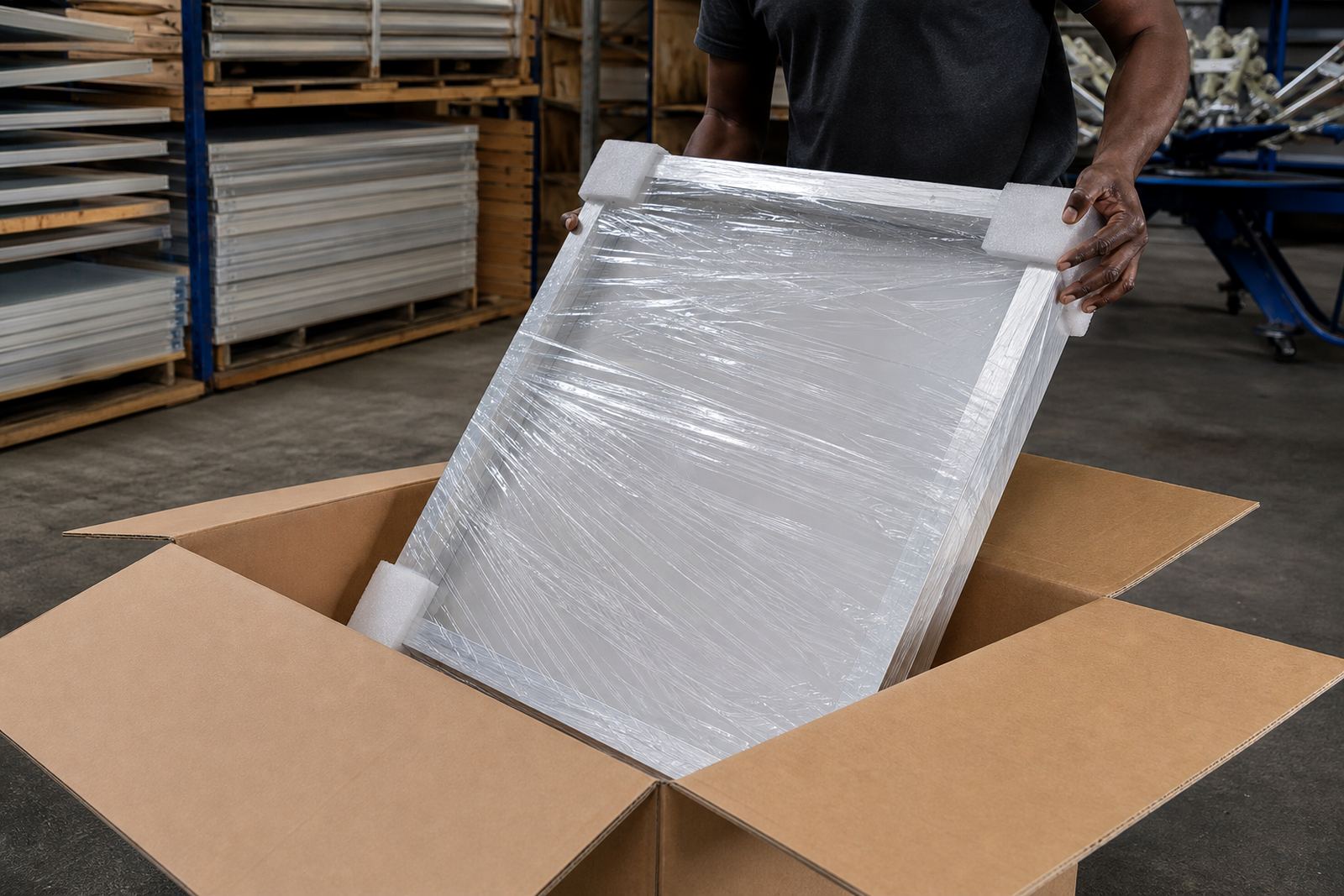
- Frame movement or damage during collection and delivery
- Using one screen for very different ink types and mesh counts
A practical tension routine for small workshops
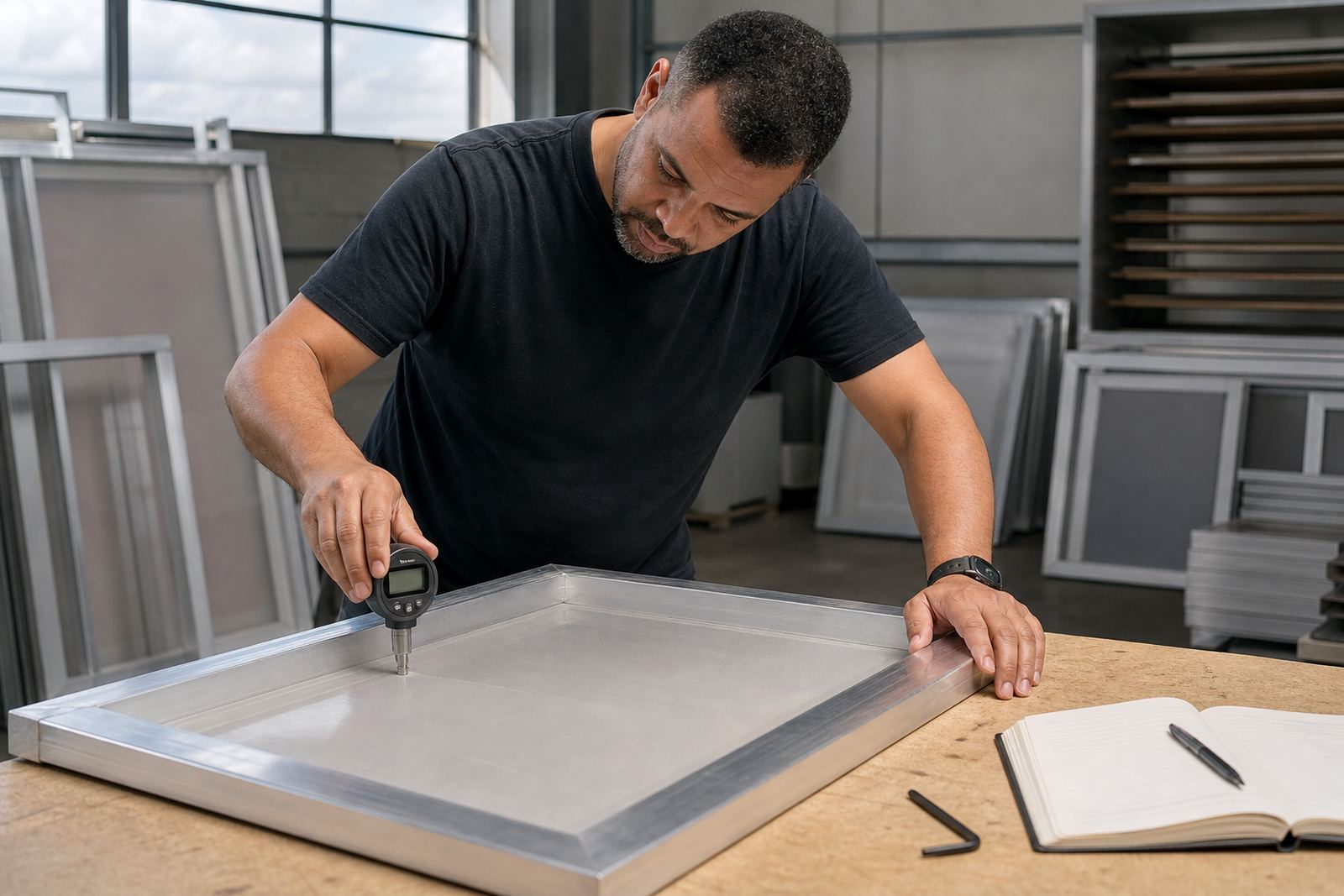
For small teams and hobby printers, the best routine is simple and repeatable. Check the frame before coating, after drying, and again before the print run starts. If the mesh feels slack by hand, shows visible sag, or gives uneven pressure across the stencil, it may need restretching or replacement. Do not wait until the job is already on press.
Keep a basic note of which screen is used for which garment type and mesh count. A light job for fine detail does not need the same setup as a bold print for workwear. If you have several frames, mark them clearly so the right screen goes back into service for the right job. Small habits like this reduce mix-ups and help keep quality steadier.
- Store screens flat or in a way that prevents bending
- Keep frames clean and free from dried adhesive
- Rinse ink off before it hardens in the mesh
- Check tension before and after long print runs
- Separate screens used for fine detail from general-use frames
When restretching makes more sense than replacing
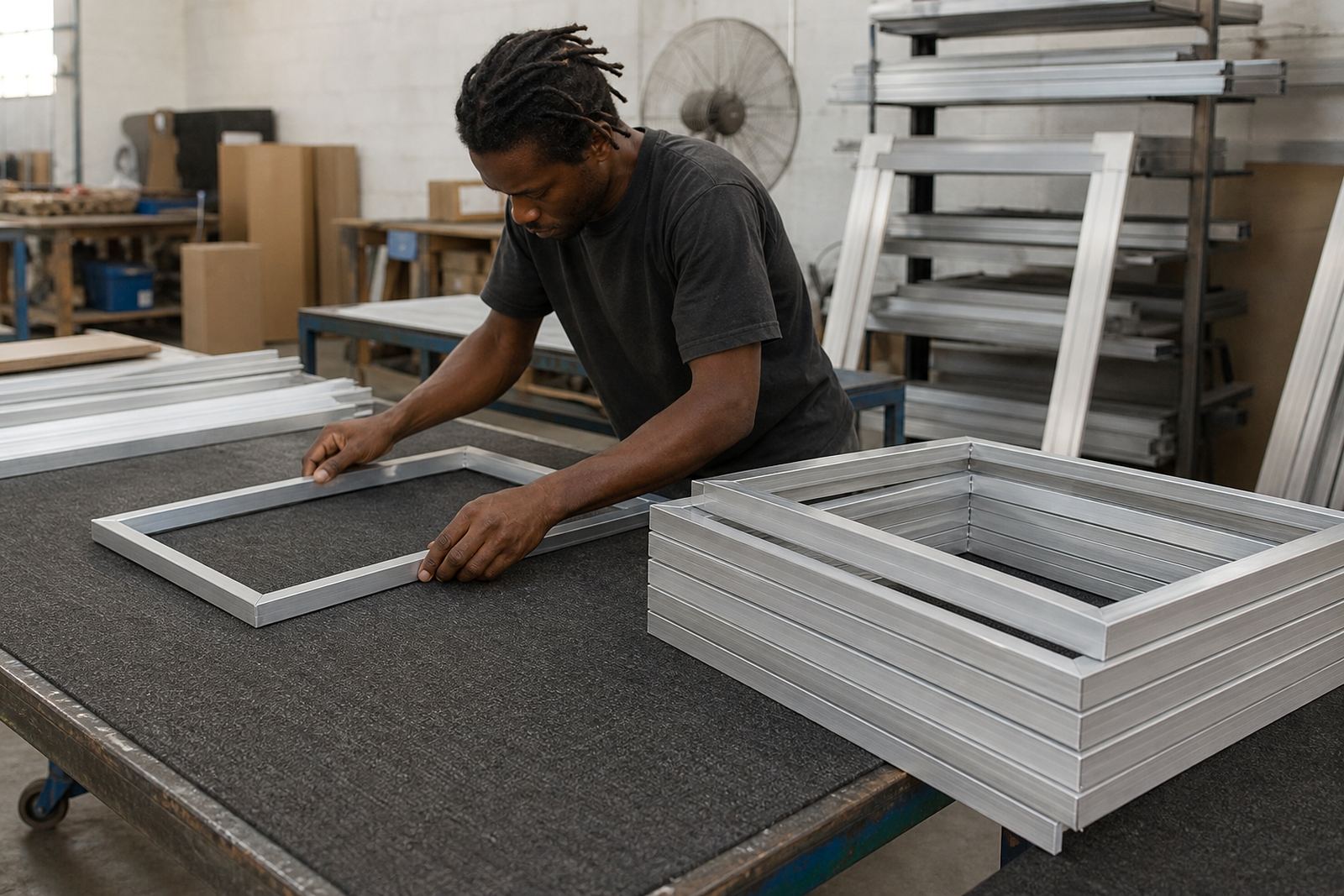
If the aluminium frame is still square and in good condition, restretching can be a smart option. It is often cheaper than buying new frames, especially for printers running several sizes at once. Restretching also helps if you already know which frame sizes fit your racks, exposure setup and work area. A sound frame with poor mesh is still useful once the mesh is removed and replaced properly.
For businesses in Pretoria, Durban or Johannesburg that handle repeat work for garments, restretching can keep production moving without changing the whole workflow. It is also helpful when you need custom sizes, bulk screen orders, or urgent turnarounds. The key is making sure the frame itself is inspected first, because a twisted or damaged frame will not give reliable results no matter how good the mesh is.
What South African printers should ask before placing an order
Before you order stretched screens, think about the type of printing you do and where the screens will be used. A workshop in Maitland may deal with quick turnarounds and collections, while a printer in Paarl might prefer regular supply routes and dependable pickup planning. The right frame size, mesh count and tension level should match the job, not just the catalogue number.
Good questions to ask include how the frame will be checked, how the mesh is applied, and whether the screen is suitable for repeat use. If you work with cotton tees, hoodies, tote bags or workwear, explain the garment type and print detail so the screen can be set up properly. That kind of detail helps prevent costly rework and keeps the print run moving, even when the workshop is busy.
ScreenFrame works from Maitland, Cape Town, with services for new screen stretching, restretching, mesh removal, frame cleaning, adhesive application, tension checks and inspections. We also support pickup and return, plus deliveries to Johannesburg, Durban, Pretoria and Gqeberha. If you need practical advice on screen care or a better fit for your next garment run, send your enquiry through the contact page.