
Why screen frames twist in the first place
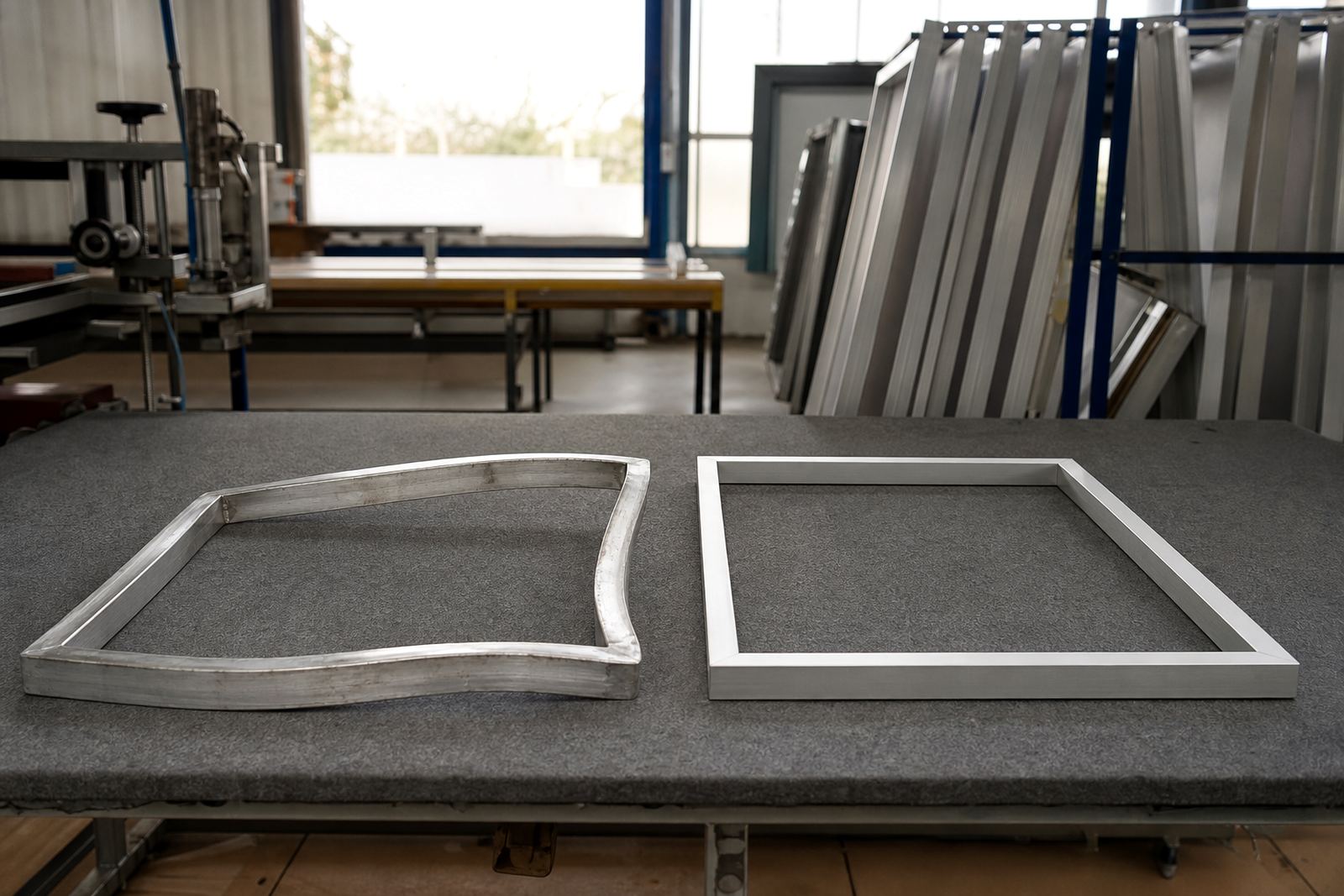
Screen frames do not usually warp from one big mistake. More often it happens slowly through uneven tension, rough handling, heat and damp storage. When a frame is stretched too hard on one side, or left leaning against a wall for weeks, the aluminium can start to move out of square and the mesh loses its even pull.
In Cape Town workshops we often see this after busy production periods, especially when screens are stacked near loading bays or stored where coastal moisture gets in. If the frame is light, it is easier to shift it by accident. If the mesh has been removed and the frame is left under strain, the corners can also go out of true.
Set up your storage area to keep frames flat
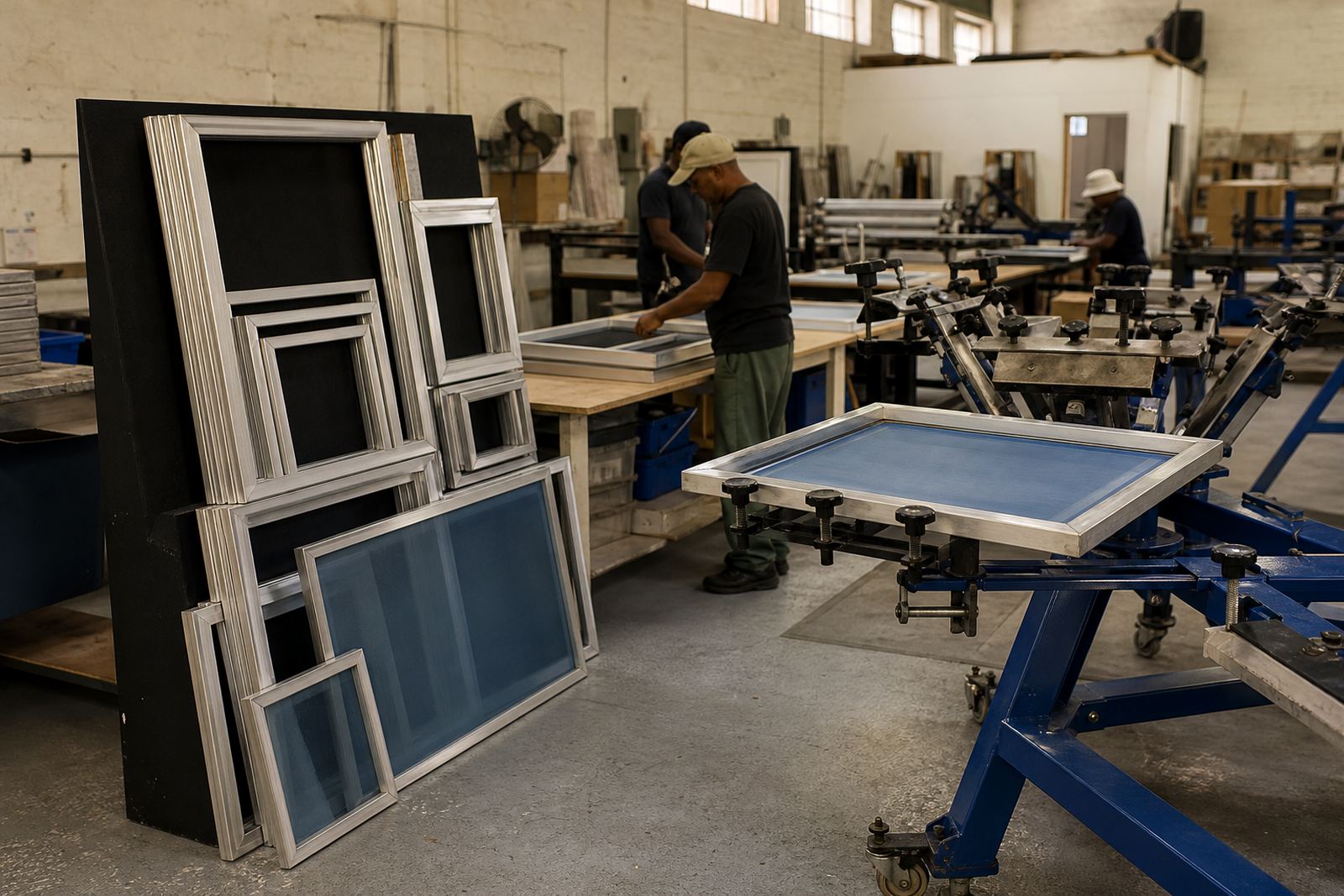
Storage is the first line of defence. Keep screens flat on a clean rack or shelf, with full support across the frame and not just at the corners. If they must stand upright, use proper dividers so each frame sits straight and cannot slide into the next one. A leaning stack in a hot room is asking for trouble.
Make sure the storage area is dry, shaded and away from direct sun. In places like Durban and Gqeberha, humidity can creep into a room fast, so avoid floor contact and keep screens off concrete if possible. Even a small puddle from cleaning can cause marks, adhesive softening or staining over time.
- Store frames in a level position with even support.
- Keep them off the floor and away from damp walls.
- Separate sizes clearly so smaller frames are not squeezed by larger ones.
- Do not stack heavy objects on top of stretched screens.
Handle every frame as if the corners matter
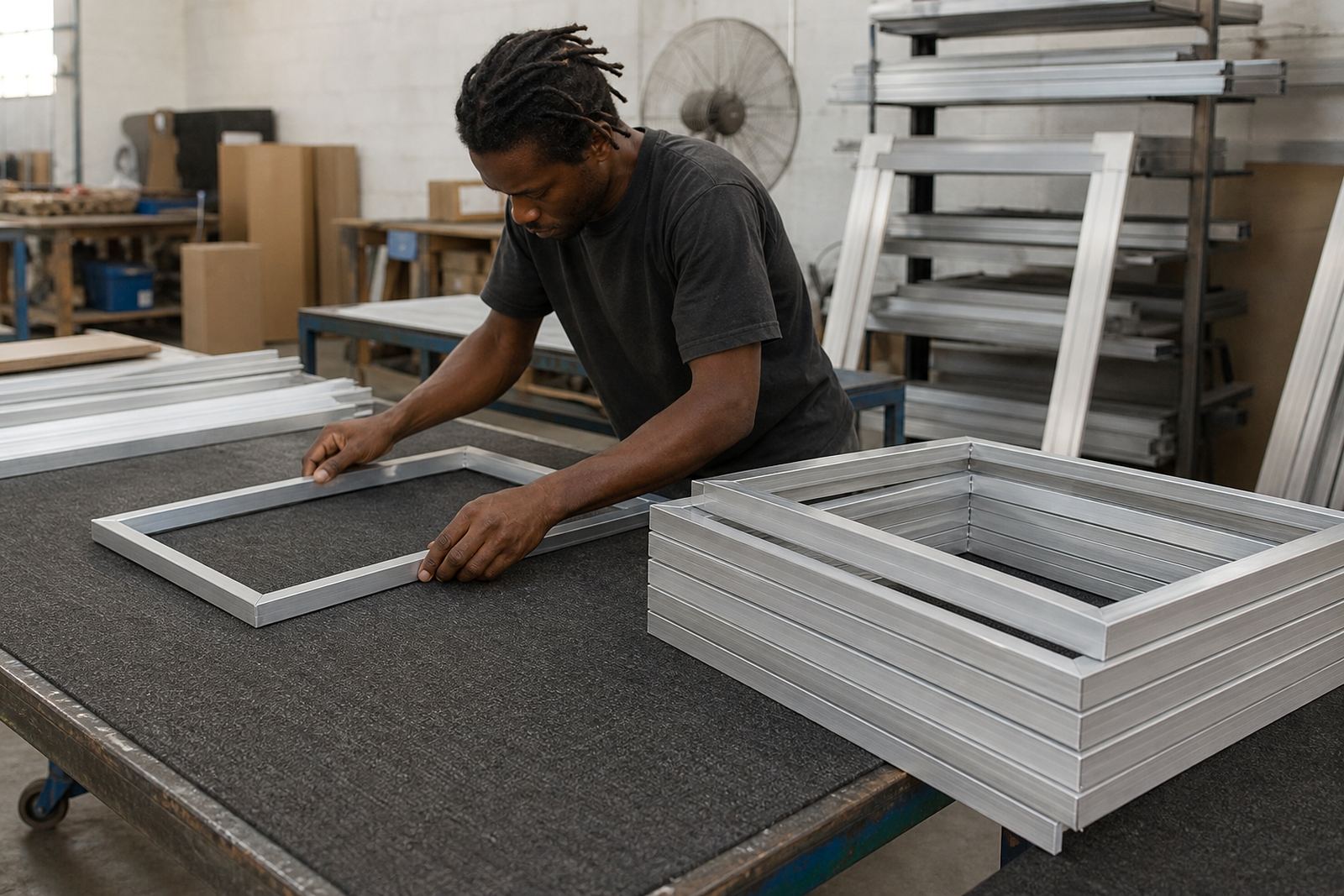
Most frame stress happens during moving, loading and unloading. Pick up frames with both hands and hold them by the sides, not by the mesh. If you are carrying several at once, keep the stack controlled and do not drag them across concrete, steel benches or workshop floors. A single knock on the corner can change the shape enough to affect print quality.
For teams doing pickups in Johannesburg, Pretoria or between Bellville and Paarl, packing matters as much as the route. Use separators, keep the load secure and do not let the batch shift in the bakkie. Sudden braking, potholes and bad roads can all twist a frame that was perfectly square at collection.
Watch tension before the screen reaches production
A frame under uneven tension will show the signs early if you know what to look for. The mesh may sag on one side, the print area may pull out of square, or the frame may rock slightly on a flat surface. Tension checks should be done before the screen goes into production, not after a few ruined garments have already gone through the press.
If a screen is being used for fine detail, tight registration or repeated colour runs, small distortions become very obvious. That is why regular inspection is worth the time. A quick check can save ink, garment stock and a long evening of rework. It also helps the workshop spot whether the problem is the frame, the mesh, or the way the screen is being stored.
- Check each frame on a level surface before use.
- Look for bowed sides, lifted corners and uneven mesh pull.
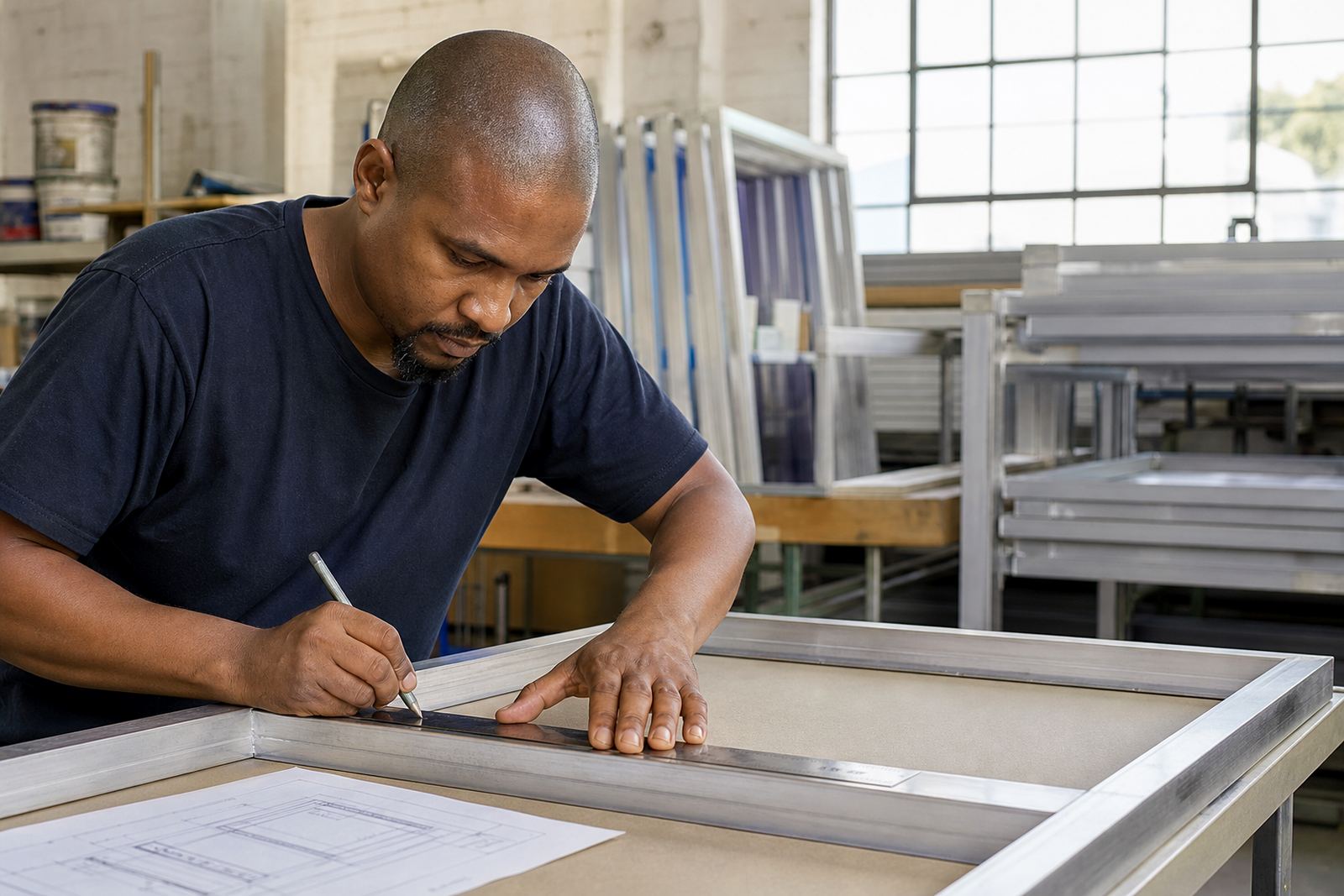
- Compare the frame against a known straight edge if needed.
- Remove damaged screens from the run before they affect production.
Take care with cleaning, adhesive and restretching
Cleaning is necessary, but harsh treatment can shorten the life of a screen. Avoid soaking frames for long periods or using scraping methods that damage the aluminium. If adhesive residue is left on the frame after mesh removal, it should be cleaned properly before a new stretch is applied. Old residue can create uneven contact and make the new mesh sit wrongly.
When a screen is being restretched, the frame must be checked for straightness first. If the frame is already bent, stretching new mesh over it will not fix the problem. It usually makes the fault harder to see until the first print run. A proper inspection saves time, and it helps the workshop decide whether the frame can still be used or should be set aside.
Plan for local conditions, not just the workshop floor
South African printers deal with more than just day-to-day handling. Coastal humidity, summer heat, load-shedding interruptions and transport between branches all affect screen condition. In Maitland, for example, a frame can leave the workshop in good shape, then sit in a warm vehicle and pick up stress before it even reaches the customer. That is why careful packing and a stable storage routine matter so much.
For garment printers who run short jobs, bulk orders or urgent turnarounds, the simplest routine is often the best one: inspect, clean, store flat, move gently and keep screens away from moisture. Do that consistently and your frames stay square for longer, with fewer surprises on press.
- Keep a separate area for used, clean and ready-to-print screens.
- Label sizes clearly so frames are not forced into the wrong stack.
- Use pickup and return services where transport conditions are hard to control.
- Ask for screen care advice if you are unsure about storage or tension loss.
When to replace, repair or restretch a warped screen
Not every warped screen must be thrown away, but it should not be forced back into production either. If the corners no longer sit square, the frame flexes under light pressure or the print keeps drifting out of alignment, it is time for a proper assessment. Sometimes the answer is a restretch and cleaning. Sometimes the safer choice is a new frame.
The important thing is to act early. A screen that is only slightly out of shape can still cost more in wasted garments, setup time and reprints than a replacement would. For printers working across Cape Town, Johannesburg, Durban, Pretoria and Gqeberha, a dependable screen is not a luxury, it is part of keeping the job moving. A straight frame is simply easier to print with, and that shows up in the final result.