
Randburg Brief for Premium Garment Artwork
The client was a small fashion label in Randburg working on a short seasonal drop for premium tees and light sweaters. The artwork used fine linework, small type and layered spot colour, so the print team needed frames that would keep tension steady and give them cleaner edges on every pass.
The brief was straightforward but exacting: supply high-tension aluminium screen-printing frames, match the stencil sizes to the artwork, and get the screens ready in time for a tight production window. They were printing on higher-value garments, so they could not afford ghosting, slack mesh or uneven pressure across the print area.
Because the drop was planned around a retail launch, timing mattered just as much as finish quality. The team wanted a practical setup that would work for the full run, not only for sampling. They also needed advice on screen care because the same set of frames would be used again after the launch.
What We Had to Work Around
Randburg production schedules are often packed, and this job had a few pressure points. The label wanted a fast turnaround, but the artwork details meant the screens had to be stretched properly and checked before release. There was also a limit on storage space at their print area, so the frames had to arrive ready for use and be easy to handle during changeovers.
Another factor was print consistency across a short run on premium fabric. The client needed a screen set that would hold tension under repeated squeegee passes without sagging, especially on the finer details. With load-shedding still affecting many workshops, they also wanted a solution that would not need constant rework if the schedule moved around.
- Fine detail artwork with small text and tight registration marks
- Premium garments that needed clean ink laydown and sharp edges
- Limited setup time before the launch print run
- Need for screens that could be reused after the drop
Frames, Stretching and Prep We Supplied
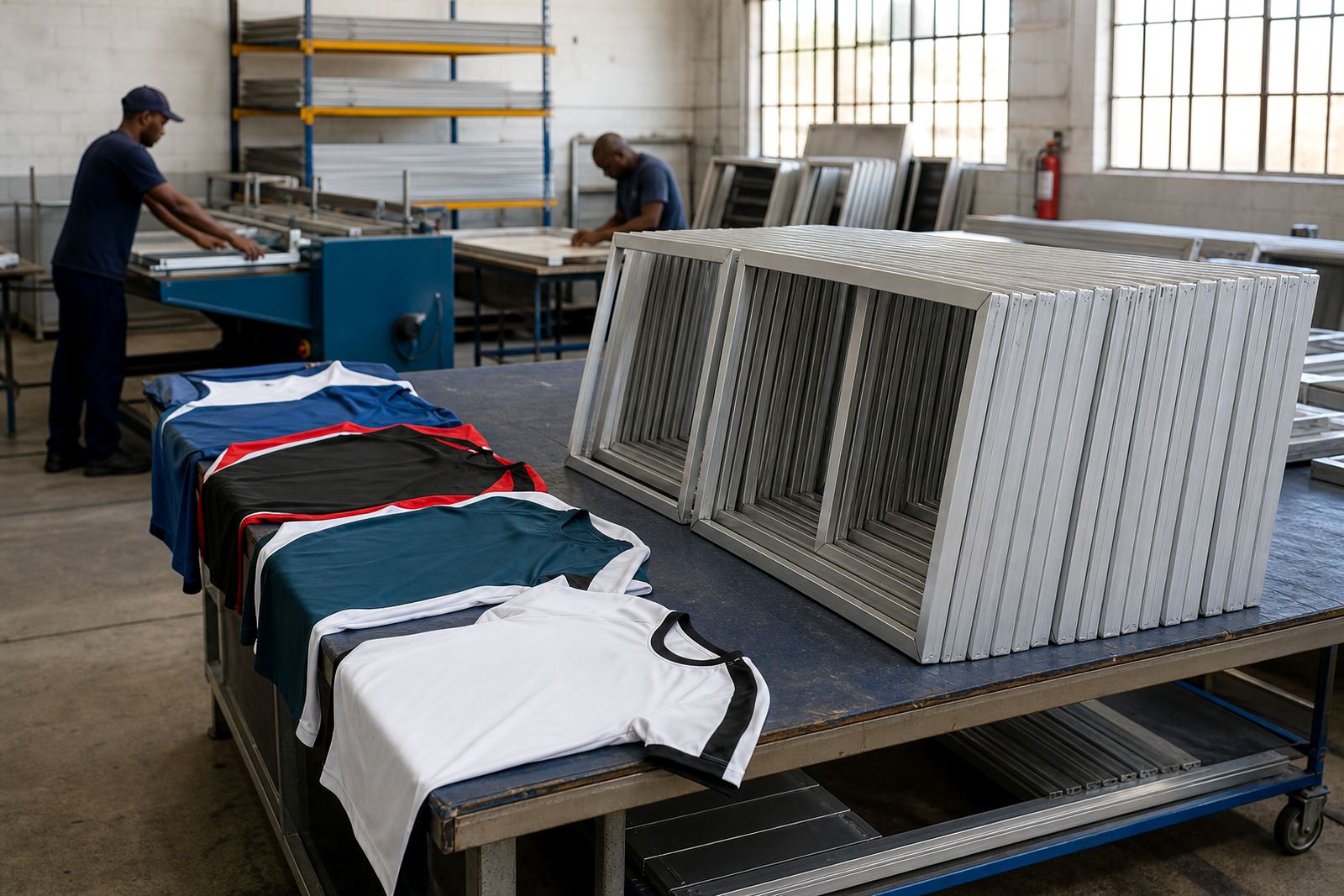
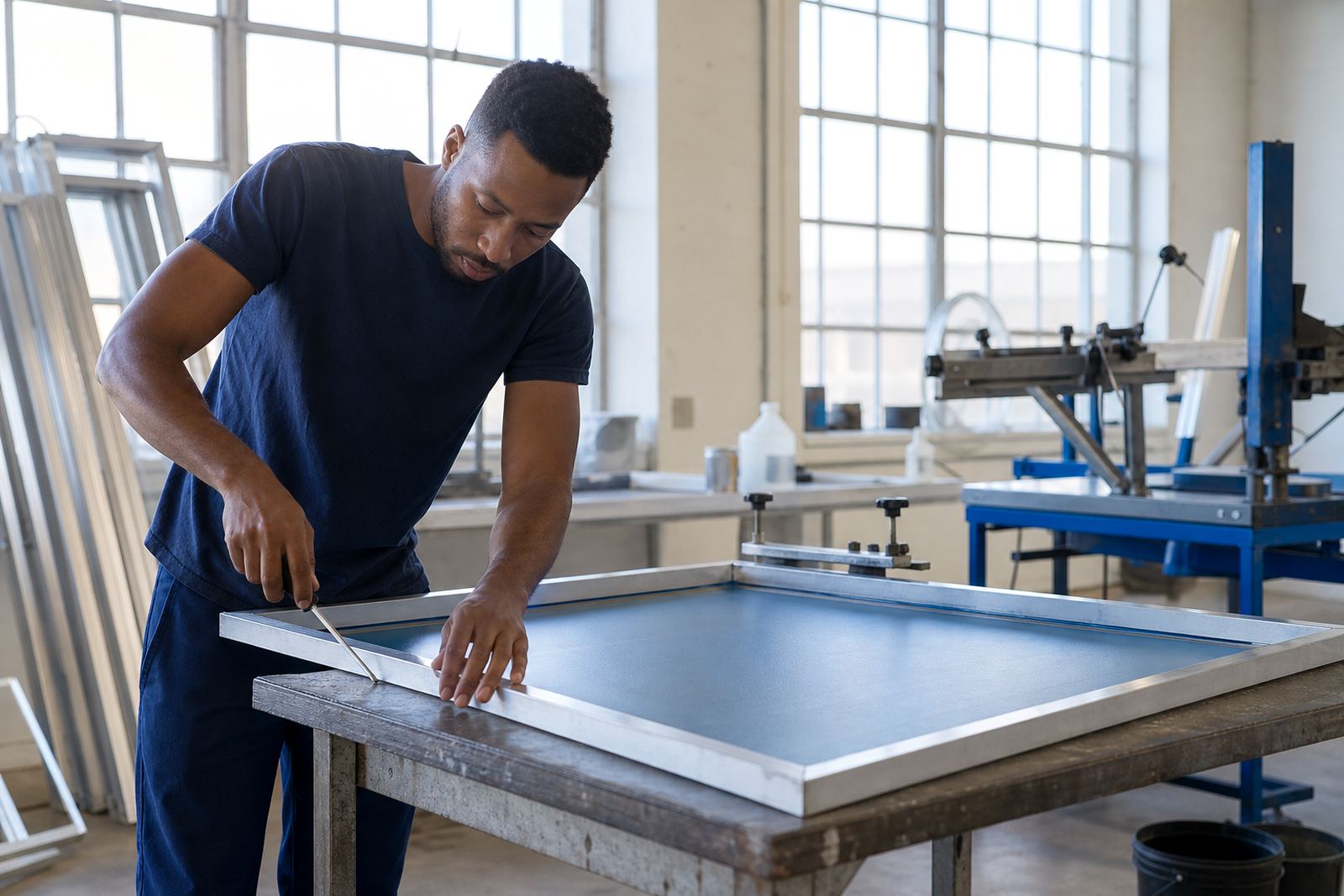
We supplied new aluminium screen-printing frames with custom stretching for the artwork sizes provided. The mesh was tensioned for fine garment decoration, then checked for even pull across the full frame. Where needed, we also handled mesh removal and frame cleaning before stretching the new screens. The result was a cleaner working surface and better contact for the stencil.
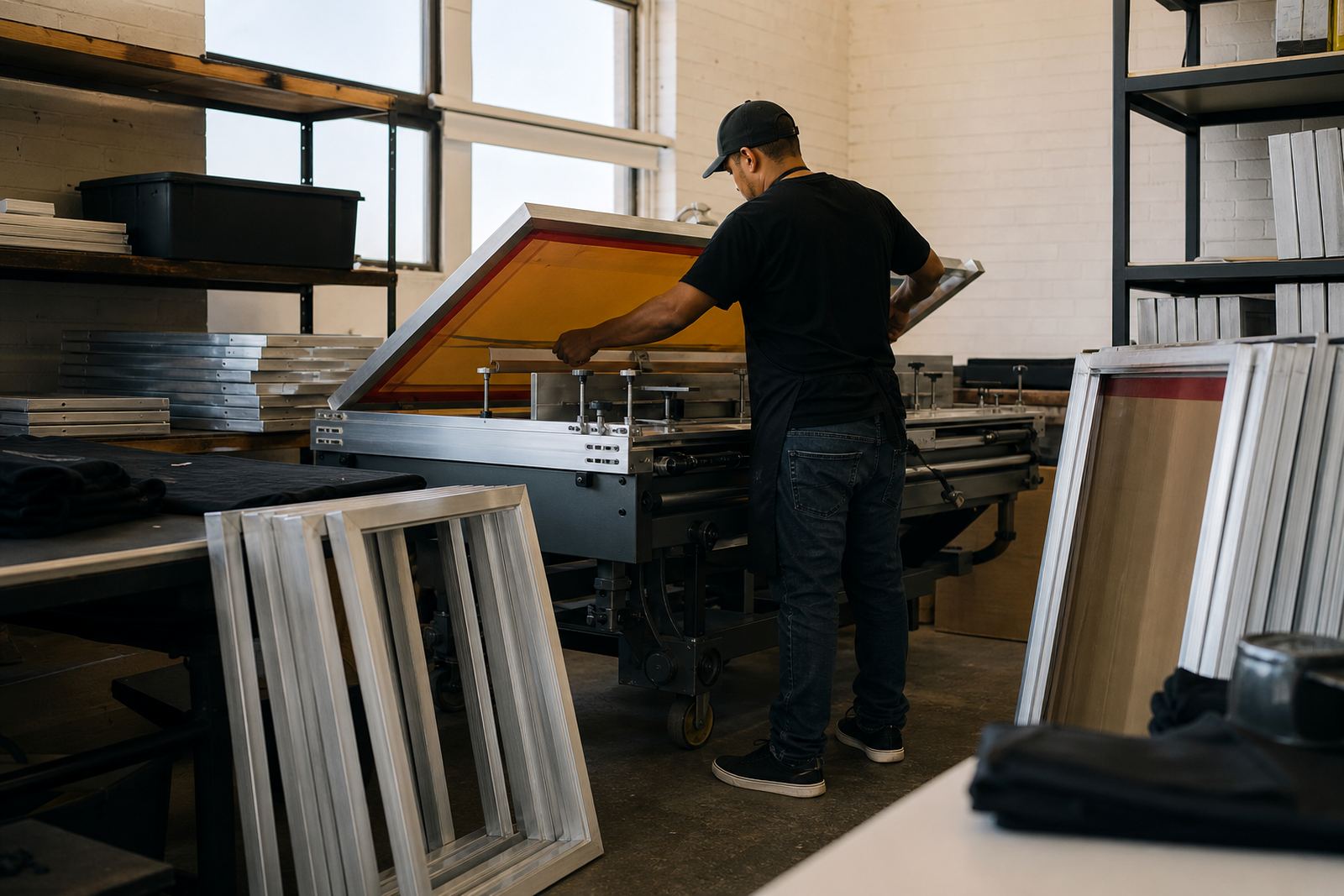
For this project, we used a practical production approach: confirm the art dimensions, stretch to size, inspect the corners and edges, then carry out tension checks before handover. The screens were prepared for flat-bed garment printing and suited to short production bursts with repeated use. The client collected part of the order and the balance went out through our delivery route, which helped keep the launch moving.
- Custom size stretching to match the garment artwork
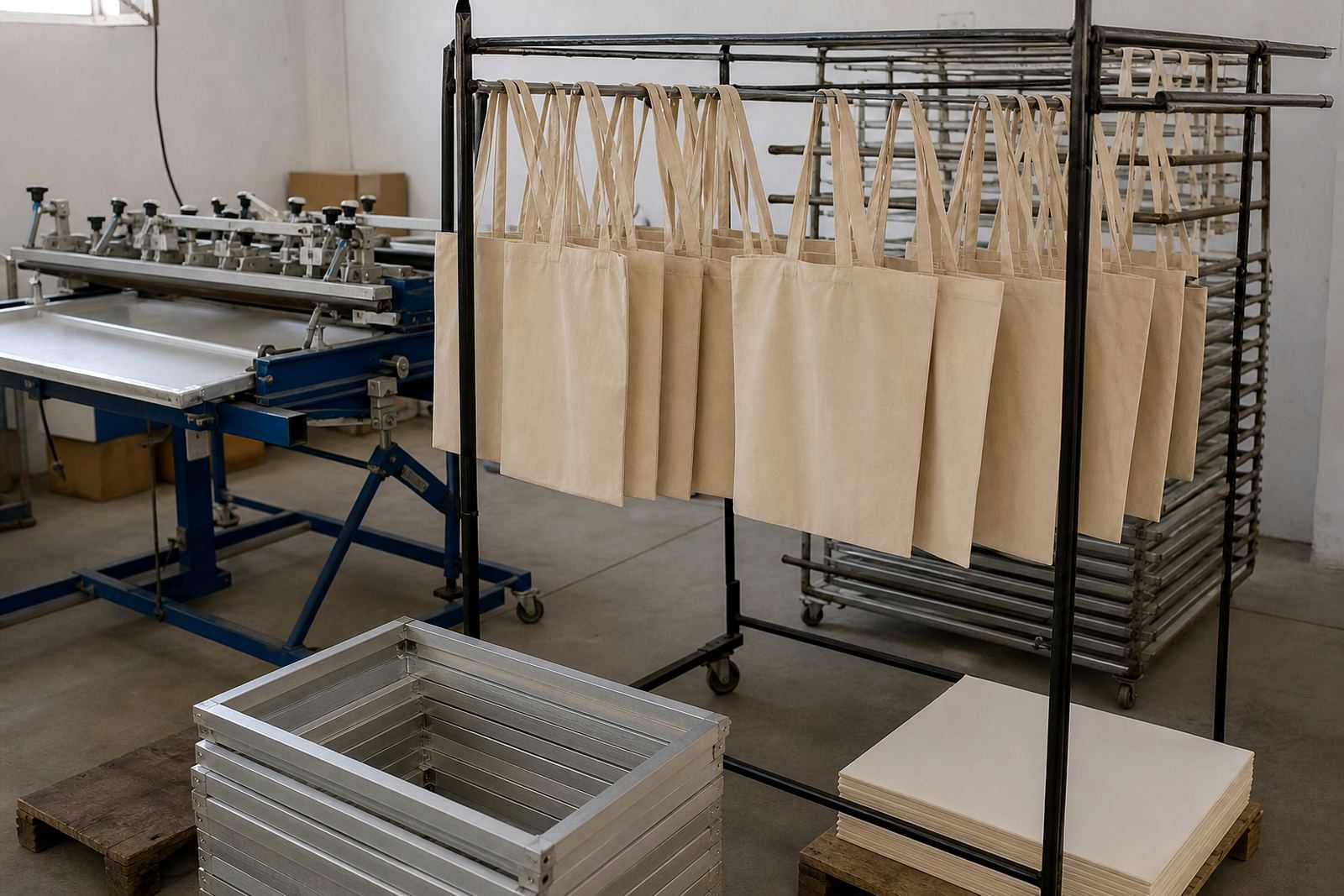
- Aluminium frames chosen for light handling and regular reuse
- Adhesive application and cleaning carried out where required
- Final inspection before release to the print team
Project Timeline and Delivery Points
The full job ran over two weeks from brief to handover. In week one, we confirmed the frame sizes, checked the artwork requirements and prepared the existing stock for stretching. That stage included frame inspection and any mesh removal needed before the new mesh was applied. In week two, we completed the stretch, checked tension and arranged handover through a mix of pickup and return plus local delivery support.
The timeline worked because the client kept the artwork final and gave us a clear launch date. We were able to plan the sequence around the print schedule, which reduced stop-start delays. The last screens were delivered in time for the main run, and the workshop team could go straight into production without waiting for corrections.
- Week 1: brief confirmation, measurements and frame prep
- Week 1 to 2: stretching, adhesive work and tension checks
- End of Week 2: inspection, release and handover
Results on the Print Floor
The improved frame tension gave the printers better control on the fine artwork, especially on thin lines and small logo text. The first pulls were cleaner and the team reported less movement in the mesh during the run. That mattered on the premium garments where any fuzziness would have shown straight away.
The client also found the screens easier to manage during repeat production. Because the frames were supplied with the run in mind, the workshop spent less time adjusting screens and more time printing. The label said the setup suited their process well and it held up across the batch, which is exactly what they needed for a launch with no room for rework.
- Sharper detail on small type and linework
- Less variation between prints across the run
- Faster setup in the workshop
- Reusable frames for the next garment drop
What We Would Do Again for a Similar Drop
If we were handling the same kind of project again, we would keep the same approach: confirm artwork sizes early, stretch to the final print spec and inspect each frame before it leaves the workshop. For fashion drops, that order matters because a small error on the screen can show up across the whole batch.
We would also keep the communication tight between the client, the workshop and the delivery route. For time-sensitive runs in Randburg, Johannesburg, Pretoria or Durban, that keeps the work moving without last-minute surprises. A clean handover with clear specs saves time later and helps the print team focus on the garments instead of the screens.
If the label wanted to repeat the project or scale it up, we would suggest batch ordering the next set of frames at the same time as the current run. That makes it easier to keep mesh type, tension and frame sizes consistent from one collection to the next, and it helps when the next drop lands during a busy period.
Why This Fit ScreenFrame’s Core Service
This project matched the work we do every day for garment printers across South Africa. We stretch screens, check tension, clean frames and prepare aluminium frames for repeat use. From Maitland to Bellville, and through our delivery routes to Johannesburg, Durban, Pretoria and Gqeberha, the same principle applies: get the screen right and the print job runs better.
For the Randburg fashion drop, the client needed a practical supplier who could deal with the detail, the timing and the finish. That is where our workshop process helped. It kept the job simple for the client and dependable for the print team, with no fuss and no missed steps.
Key facts
| Project location | Randburg, Johannesburg |
|---|---|
| Client type | Boutique fashion label |
| Frame material | Aluminium screen-printing frames |
| Service scope | New screen stretching, frame inspection, tension checks, pickup and return |
| Timeline | 2 weeks from brief to handover |
| Use case | Fine detail garment printing on premium apparel |