
Why this run mattered for repeat teamwear
The client prints teamwear for schools, clubs and local events in Gqeberha, where garment orders often land in short production windows and need to be repeated later in the season. Their older screens had started to show uneven tension, and that made registration less predictable on multi-colour logos and sponsor marks. When the same artwork comes back in three weeks or three months, you need the screen set to behave the same way every time.
The brief was straightforward. Replace the weak screens, restore working tension across the frame set, and keep the print shop moving without a long stoppage. The printer did not want a patch job. They wanted a proper reset of the screens they use most often for repeat teamwear runs, especially on cotton tees, golf shirts and lightweight poly blends.
What we found when the screens came in
Once the frames arrived from Gqeberha, we checked each one for frame condition, mesh wear, glue failure and tension drift. A few screens were still serviceable, but several had stretched beyond what is practical for clean repeat work. In a teamwear environment, that shows up fast as blurry edges, colour shift and more time spent chasing alignment on press.
We also found a mix of old adhesive residues and mesh damage around corners and clamp points. Coastal humidity can be hard on stored screens, especially if they are kept in a workshop with temperature swings or stacked too tightly. That meant the job was not only about new mesh, but also about proper cleaning, frame prep and getting the whole set back to a usable standard.
- Uneven tension across multiple screens
- Adhesive residue on frame edges and clamp areas
- Mesh fatigue from repeated use and storage pressure
- Need for reliable repeat registration on small and medium runs
What we supplied and how we worked
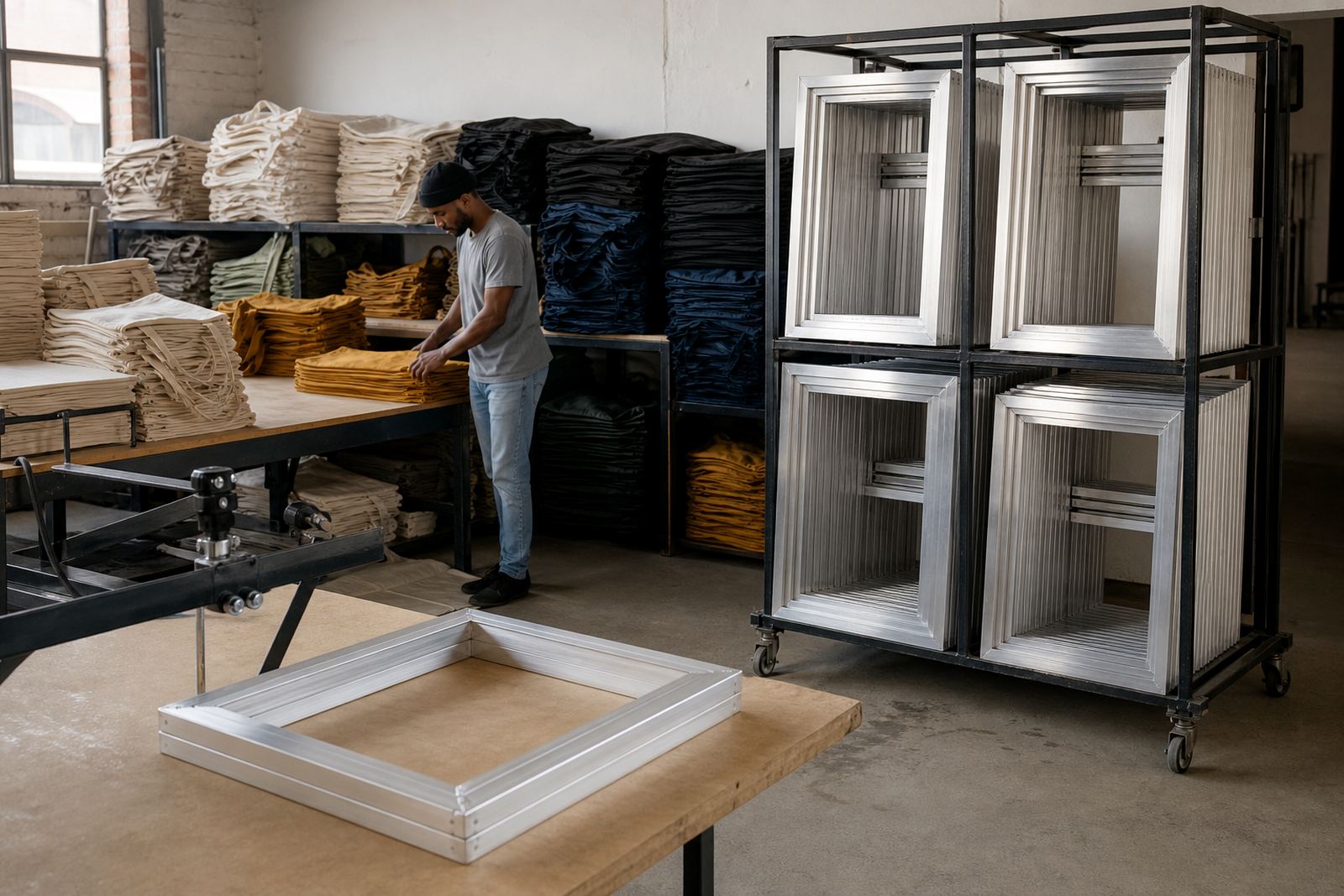
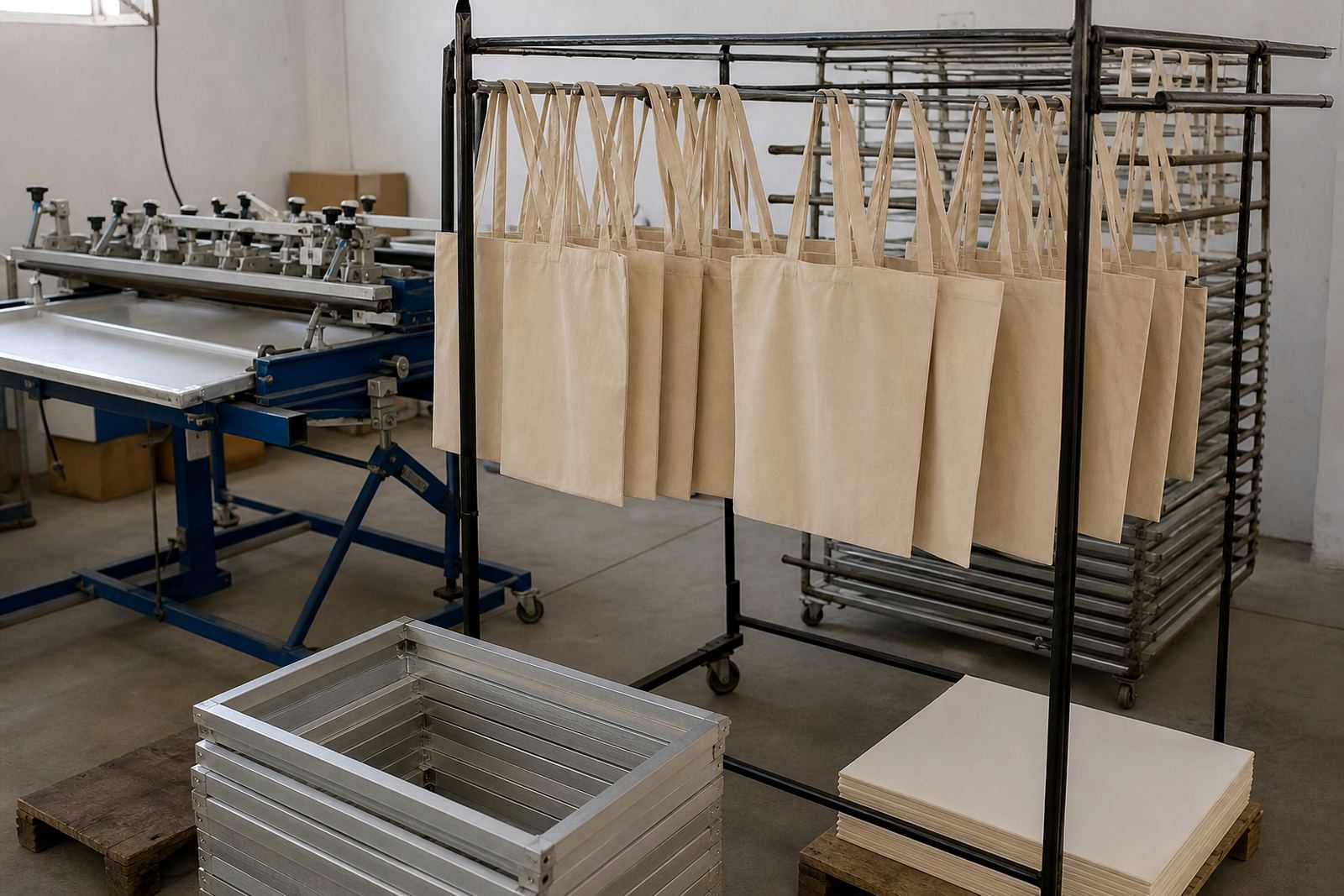
We supplied aluminium screen-printing frames and did new stretching where needed, along with restretching on selected existing frames. For this kind of work, the fit has to be exact. If the mesh sits wrong at the corners, or the tension is inconsistent from one frame to the next, the printer pays for it later in setup time and wasted garments.
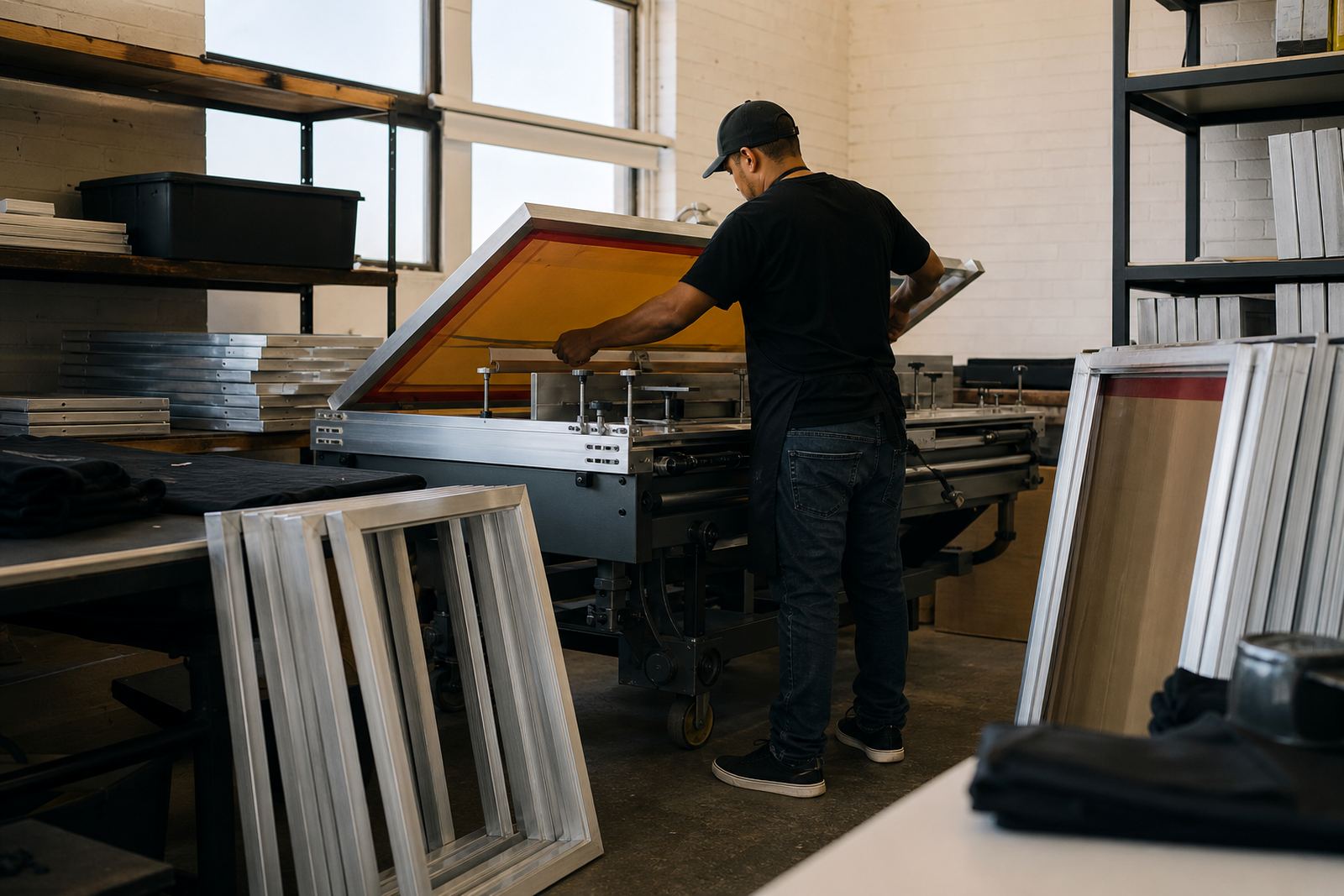
Our workshop team carried out mesh removal, frame cleaning, adhesive application and tension checks before handover. We also inspected each frame for damage that could affect repeat output. Where the frame was still in good condition, we kept it in service. Where it had no useful life left for garment printing, we replaced it. That balance saved the client from unnecessary spend while still giving them a dependable working set.
- New screen stretching on selected sizes
- Restretch existing frames where the aluminium was still sound
- Frame cleaning and adhesive prep before remounting
- Final tension checks before dispatch
Sizes, mesh choice and the practical detail
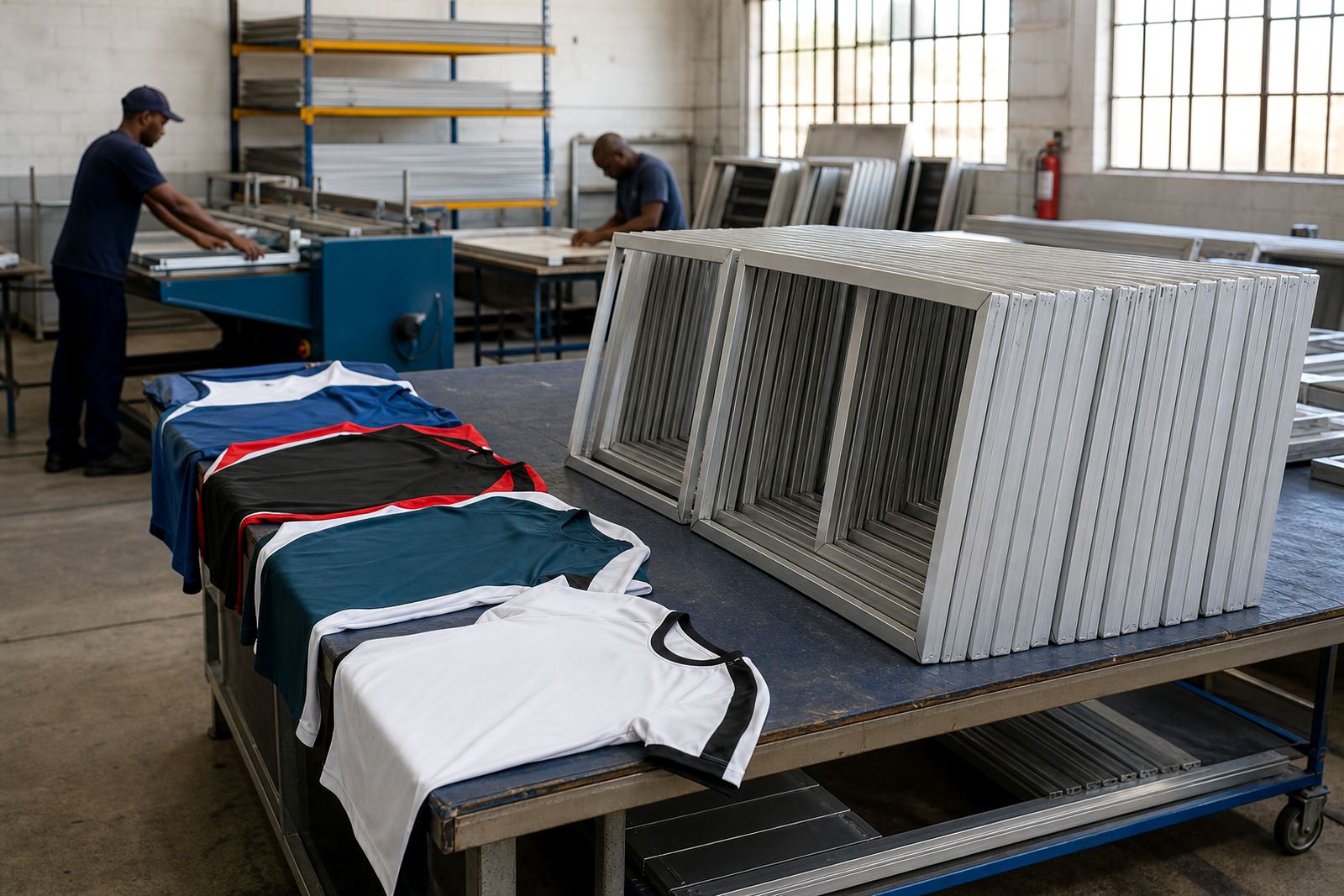
The order covered mixed frame sizes used for teamwear printing, from smaller logo screens to larger artwork areas for full chest graphics and back prints. We worked to the sizes the shop already uses so they did not need to change exposure layouts or press habits. That matters when a production crew is already under time pressure and managing loadshedding as well.
For the garment mix, we matched the screens to the kind of artwork they run most often: solid spot colours, sharp outlines and repeat sponsor branding. The aim was not only a clean first print, but consistent results through the full run. On teamwear work, one screen that drifts can slow the whole line down, so the set has to hold its shape right through the order.
- Mixed frame sizes for chest, back and logo prints
- Suitable for cotton, poly cotton and sportswear blends
- Prepared for repeat use in a busy print shop
- Checked for clean edges and stable tension across the full set
Timeline from collection to return
The full job ran over two weeks from intake to handover. In week one we assessed the frames, removed worn mesh, cleaned the aluminium and confirmed which items could be restretched. In week two we completed the new stretching, did tension checks and prepared the screens for return to the client. Because the printer needed minimal downtime, we kept communication tight and moved the work through in a planned sequence.
For the client, the main value was not just speed. It was knowing which screens were worth keeping, which ones needed replacement and when the set would be back on site. That let them schedule repeat teamwear work with less guesswork and fewer last-minute changes.
What changed once the new set went back into production
Once the screens were back in use, the printer had a more stable base for repeat orders and better control on registration. That reduced the need for constant adjustment on press and made it easier to move through batch work without stopping to correct the same issue over and over. The workshop also reported less snagging during handling because the frames had been cleaned and set properly before dispatch.
The client told us the real improvement was consistency. When a school order or club order comes back, the screen has to behave the same way as it did the first time. That means cleaner setup, more predictable ink laydown and fewer surprises when the press starts running. It is basic work, but on garment printing it makes a proper difference.
- More consistent repeat output across reorders
- Less time spent resetting screens between colours
- Cleaner handling and better frame condition overall
- Improved confidence for bulk teamwear runs
What we would do again on the next run
If we handled the next round for this printer, we would take the same practical approach: inspect first, keep what still has value, and replace only what no longer supports clean production. That is usually the best way to manage screen sets for busy shops in Gqeberha, especially when storage conditions, transport and seasonal demand all play a part.
We would also recommend a regular check on the full screen set before peak teamwear season. A quick inspection can catch glue failure, mesh wear and frame damage before it affects an order. For printers working across Cape Town, Johannesburg, Durban, Pretoria and Gqeberha, that kind of maintenance saves time and avoids last-minute pressure when the run is already booked.
Key facts
| Project | Gqeberha Teamwear Run |
|---|---|
| Client type | Sportswear printer handling repeat teamwear orders |
| Location | Gqeberha, Eastern Cape |
| Scope | New screen stretching, restretching existing frames and frame prep |
| Frame material | Aluminium screen-printing frames |
| Timeline | 2 weeks from intake to handover |