
What the Johannesburg shop needed
This project came from a high-volume trade printer in Johannesburg working on repeated garment runs for local retail, school, and promotional orders. Their issue was not a lack of work, it was frame downtime. A portion of the workshop stock had slack mesh, uneven tension and a few damaged frames that kept slipping out of service just when the press schedule was full.
The brief was practical. Refresh the core frame stock, reduce time lost to rework, and keep enough serviceable frames on hand for fast changeovers. They also wanted a clearer system for identifying which frames were ready for fine detail jobs and which were better suited to general print runs. No fancy setup, just dependable kit that could handle daily use in a busy Gauteng shop.
Constraints on a trade floor that never slows down
The workshop runs at trade pace, so the main constraint was timing. The client could not afford a long shutdown while frames were being sorted. There was also limited storage space, so any incoming and outgoing stock had to be tracked carefully. Johannesburg dust and dry air also mean frame condition can drift faster than some shops expect, especially when screens are stacked near hot equipment or left in open store rooms.
We also had to work within the realities of garment printing. Some frames were still usable after cleaning and restretching, while others had warped corners or tired mesh that would not hold a stable tension. The aim was to protect the good stock and retire the poor stock with minimal disruption.
- Keep the line moving while stock was being assessed.
- Separate urgent-use frames from general-purpose frames.
- Make sure the finished set could cope with repeated washdown and handling.
- Reduce wasted time on press from screen failures and loose tension.
What we supplied and did
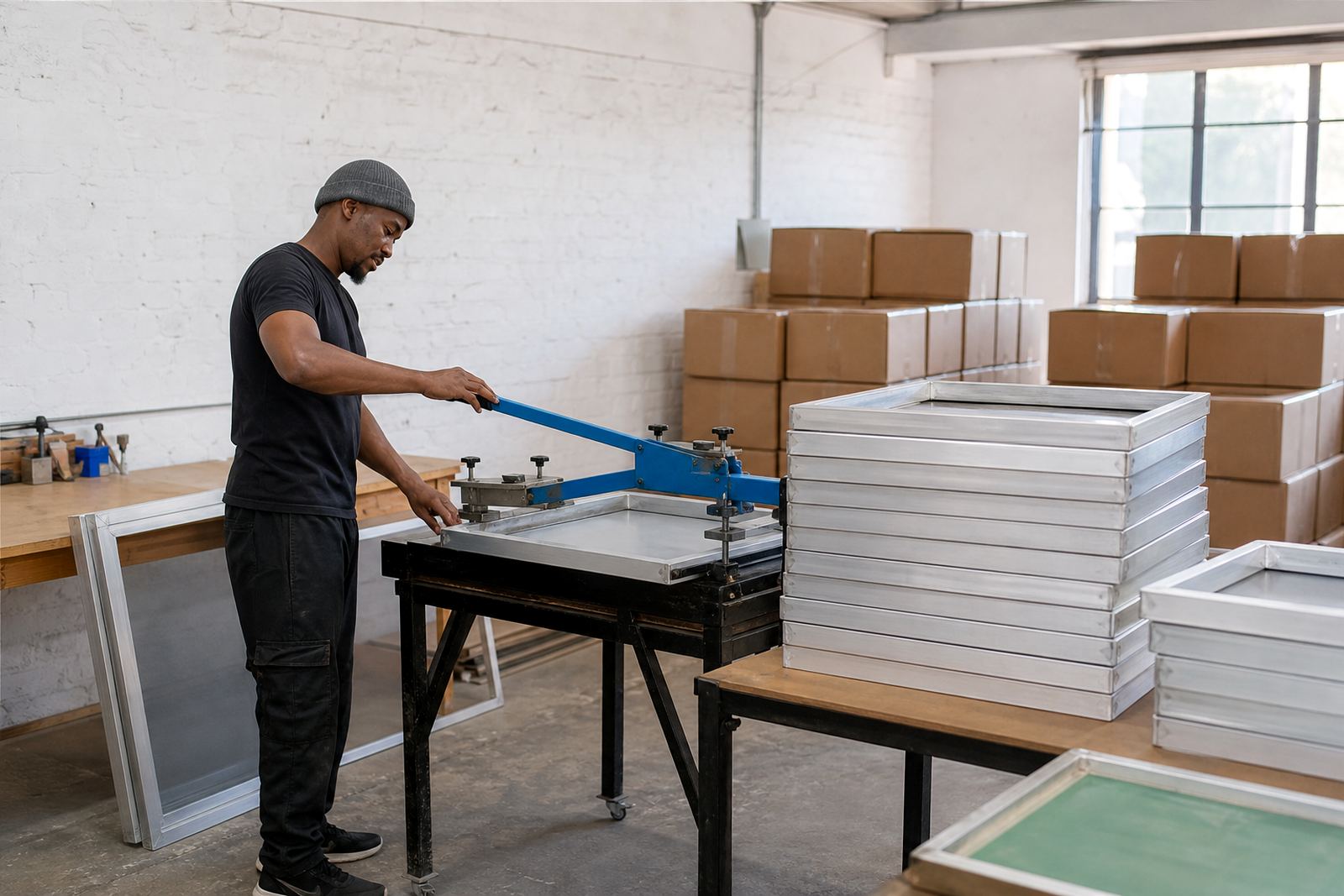
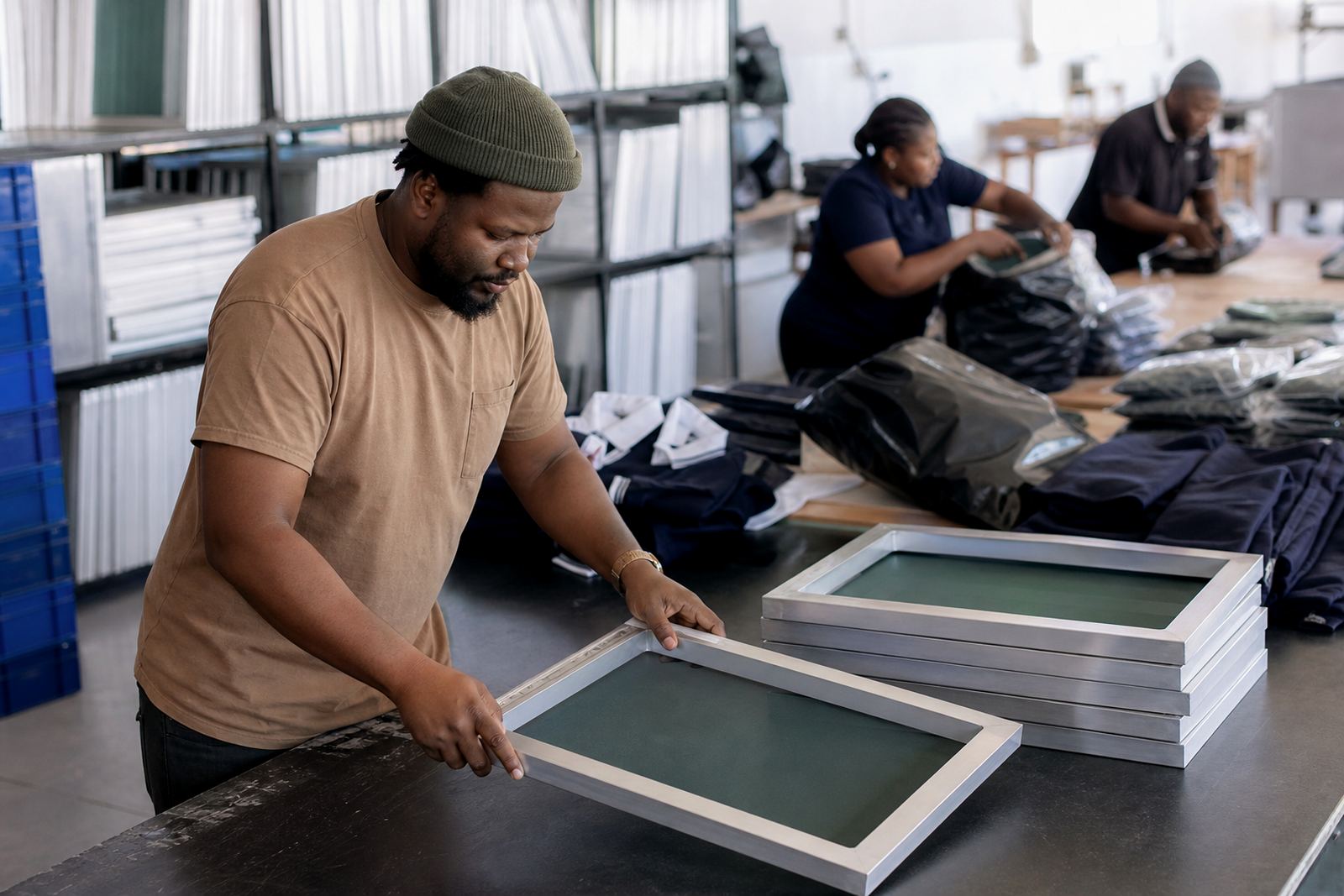
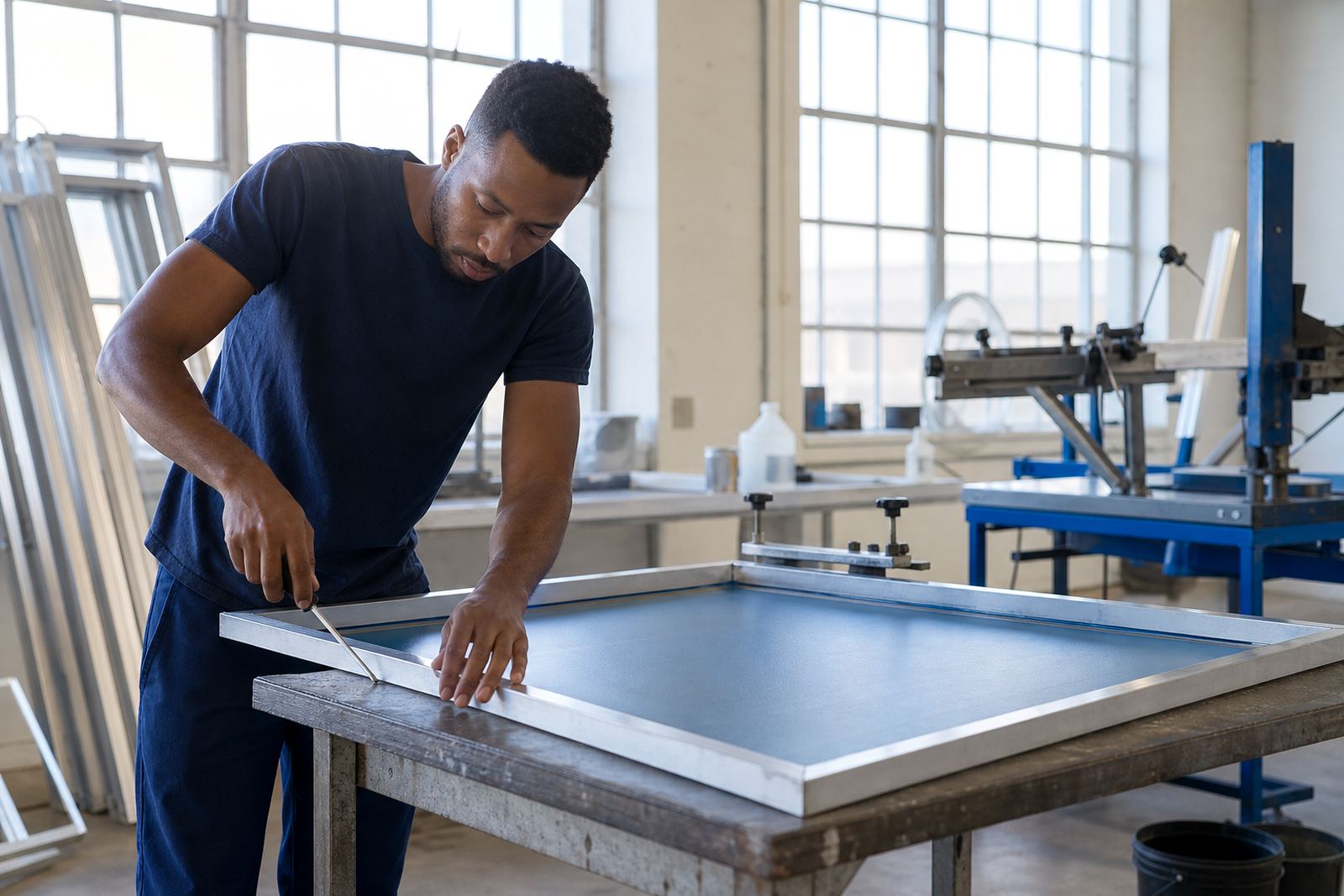
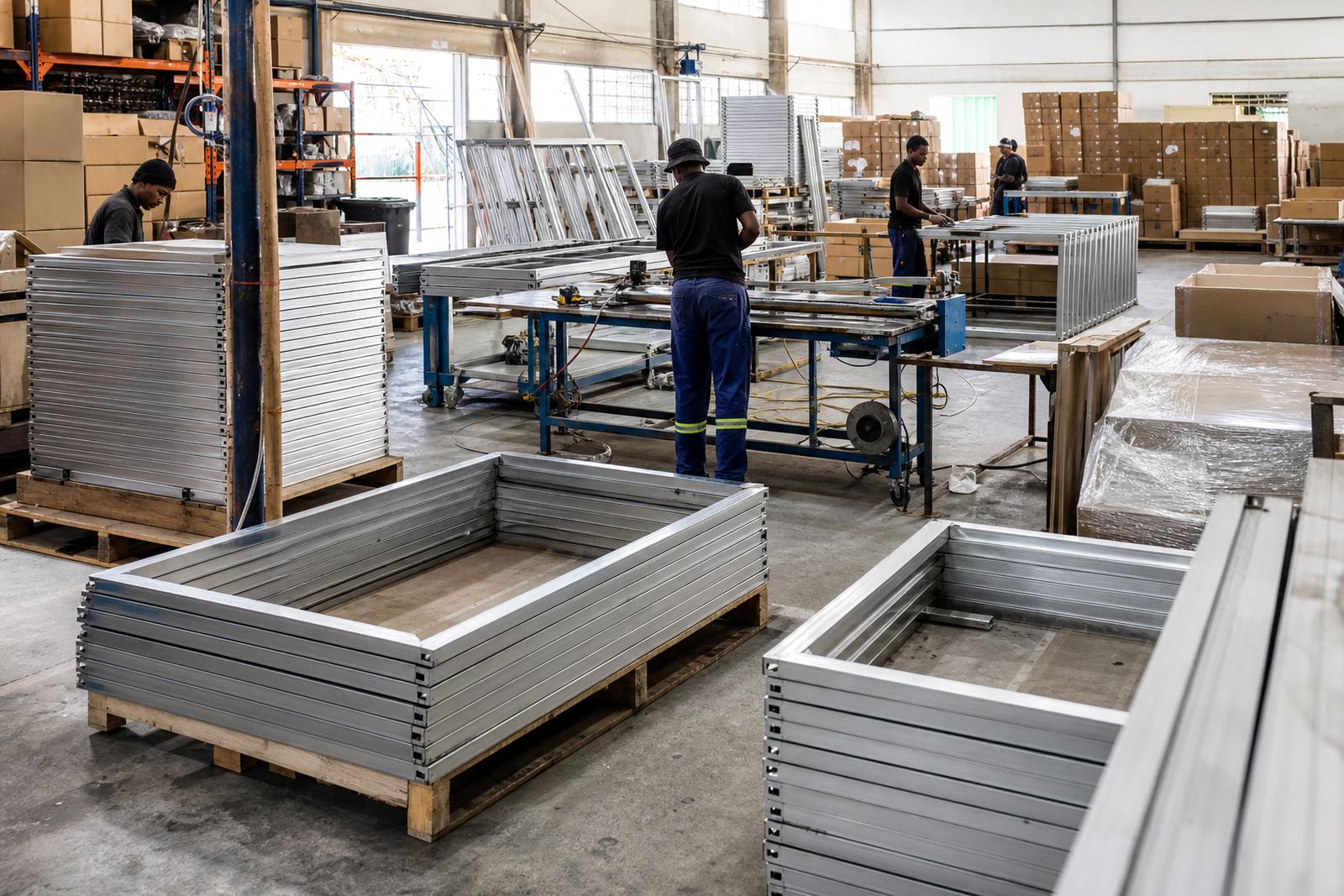
We supplied new aluminium screen-printing frames in the sizes the shop used most often, then restretched selected existing frames where the structure was still sound. Frames were cleaned, adhesive applied where needed, and each unit went through tension checks before release. The workshop also needed custom size stretching for a few odd-format jobs, which let them keep smaller and larger frames in service instead of replacing everything at once.
Where old mesh had lost grip or been damaged by repeated reclaiming, we removed it and prepared the frame for a fresh stretch. Where the frame was sound, a full clean and restretch brought it back into circulation. We also inspected corners, checked for adhesive failure and marked each batch so the client could group frames by use type.
- New screen stretching for core stock replacement.
- Restretch existing frames to extend useful life.
- Mesh removal and frame cleaning for damaged units.
- Adhesive application and tension checks before dispatch.
- Custom size stretching for special runs and smaller jobs.
Timeline and workshop flow
The work was completed over three weeks. In week one, we assessed the incoming stock, separated frames by condition and identified what could be reused. In week two, the main stretching work was done and the first batch returned to the client for immediate use. In week three, we finished the remaining frames, handled the odd sizes and completed final inspections before the balance was released.
This staggered approach suited the client because it kept production active while the refresh was under way. It also gave the shop time to plan press work around the incoming batches, so there was no pile-up at one point in the schedule. A simple plan, but it worked well for a trade floor that could not afford idle time.
Results on press
Once the refreshed frames were back in use, the client saw less screen-related downtime and fewer stops for re-stretching between jobs. Registration was more stable on repeat runs, and the team could pick the right frame for the right job without second-guessing the condition of the stock. That made changeovers quicker and reduced the amount of time spent sorting out avoidable print faults.
The biggest gain was confidence. The workshop knew which frames were ready for fine work, which were suitable for heavier production runs, and which should stay out of circulation. That made planning easier on busy days and gave the team a more dependable screen pool for the next round of orders.
- Less lost time from loose mesh and tired frames.
- Cleaner separation of ready stock and repair stock.
- Better handling of repeat orders and urgent jobs.
- Improved consistency across the main frame set.
What we would do again for similar Gauteng shops
For a Johannesburg printer with heavy daily volume, we would take the same route again: assess what can be saved, replace only what must go, and return the strongest possible working stock in stages. That approach keeps costs sensible and avoids a full overhaul when only part of the frame pool is actually worn out.
We would also keep the same focus on batch sorting and clear frame identification. In a busy shop, that small bit of structure pays off fast. It helps staff pull the right screen for the job, keeps the workshop tidier and makes it easier to plan around urgent work, power interruptions or load-shedding windows without scrambling at the last minute.
Key facts
| Client type | High-volume trade garment printer |
|---|---|
| Town | Johannesburg, Gauteng |
| Project duration | 3 weeks |
| Core work | New stretching, restretching, cleaning, adhesive application and tension checks |
| Frame format | Mixed standard and custom sizes for garment printing |
| Outcome | Less downtime on press and a more reliable working frame pool |