
A first order for a new print shop in Maitland
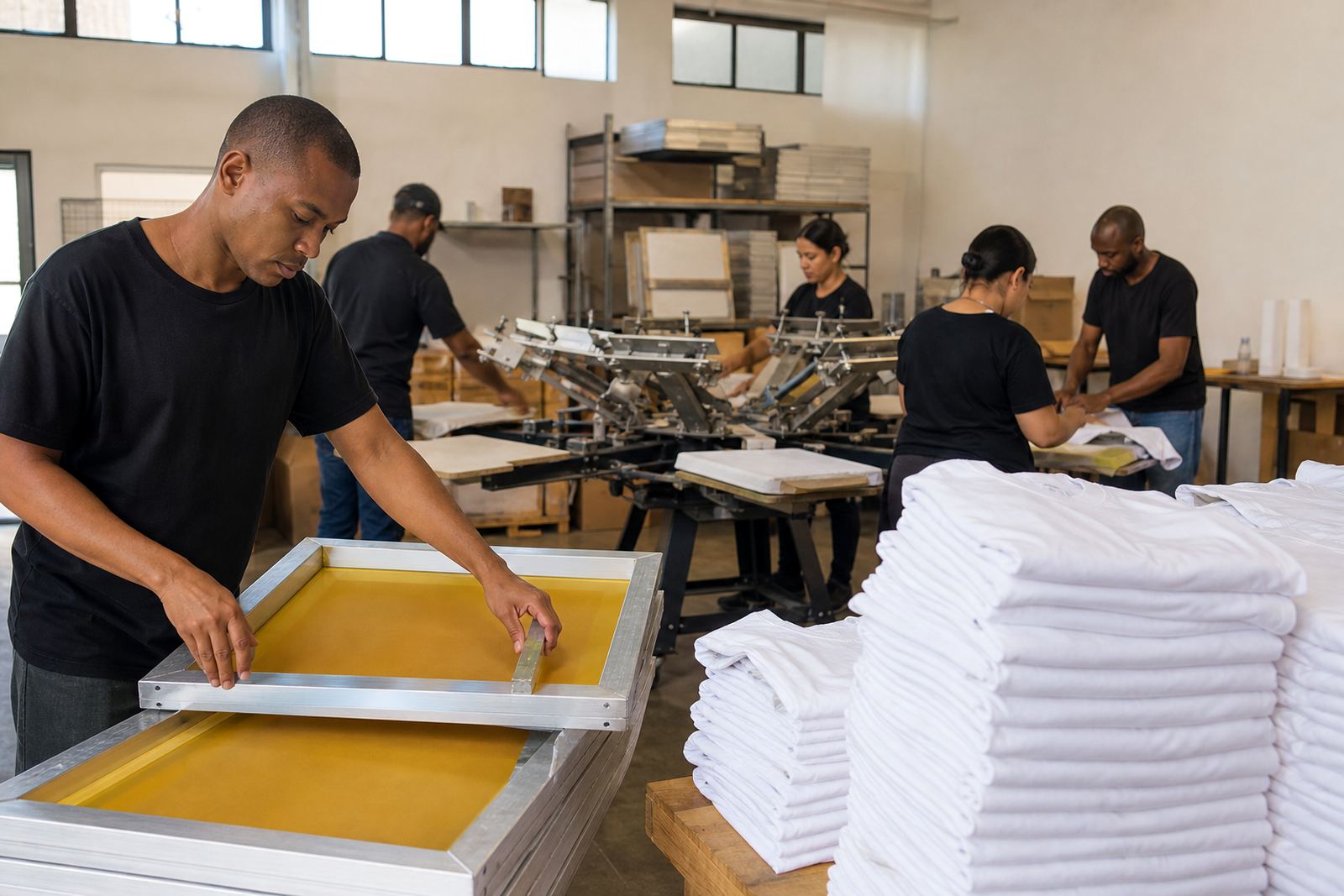
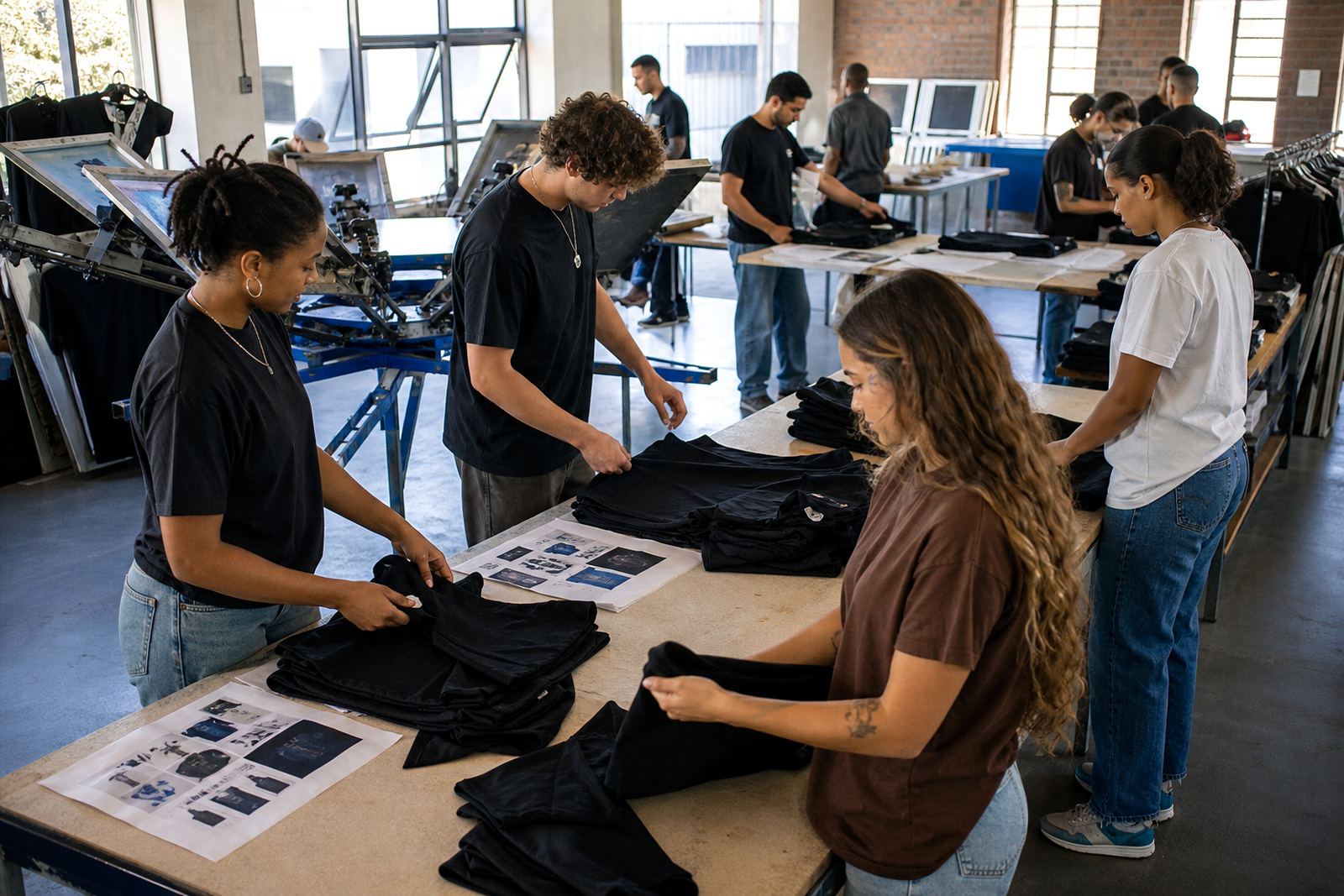
This project came from a start-up garment printer working out of a small industrial unit in Maitland, Cape Town. The team had a manual press, a drying area and a tight opening budget, so the order had to be practical from the start not expensive in a way that looked good on paper only.
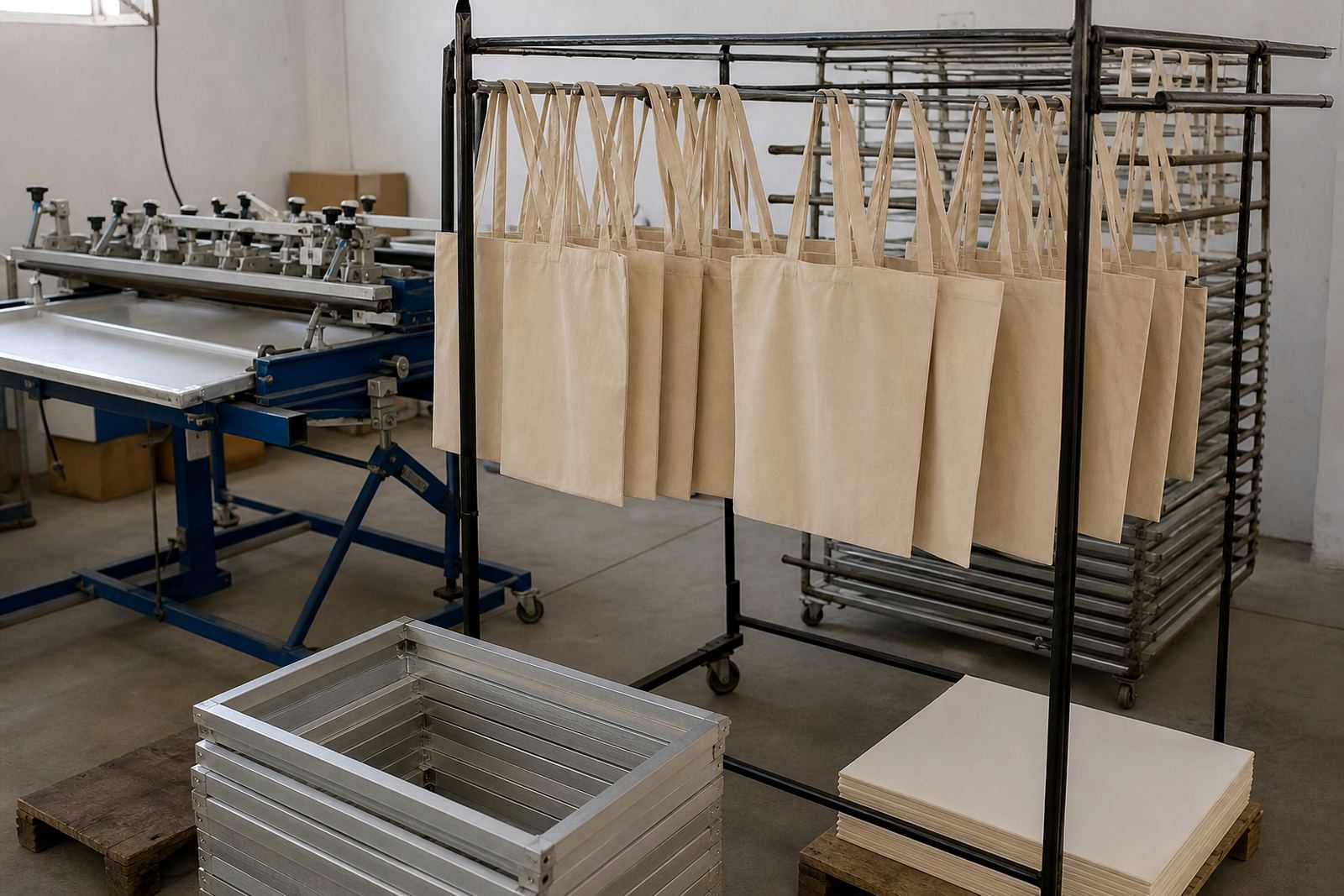
The client needed a starter set of frames and stretched screens that could handle everyday cotton and polycotton work, with enough variety for small jobs, name runs and larger artwork. We kept the order focused on commonly used sizes and made sure the frames were suited to repeated cleaning, storage and transport between the workshop and pickup point.
- Client type: new garment printer
- Location: Maitland, Cape Town
- Setup: manual printing line
- Main need: starter frames and stretched screens
The brief: keep it simple, accurate and ready for production
The brief was straightforward. The owner wanted screens that would sit correctly in the press, keep tension well and arrive ready to use. They were also conscious of space, because a first workshop often ends up with ink, chemicals, reclaiming gear and garments all sharing the same floor. There was no room for oversized stock or trial-and-error ordering.
We discussed the artwork sizes the shop expected to print most often, how many colour passes they planned to run, and whether they would be washing screens onsite or sending them out. From there, we settled on a mix of standard and custom sizes that would cover entry-level garment work without leaving the team stuck with frames that were too narrow or too long for the job.
- Need for accurate frame fit
- Space-saving starter quantity
- Screen tension suitable for manual printing
- Frames that could be cleaned and reused
What we supplied and stretched
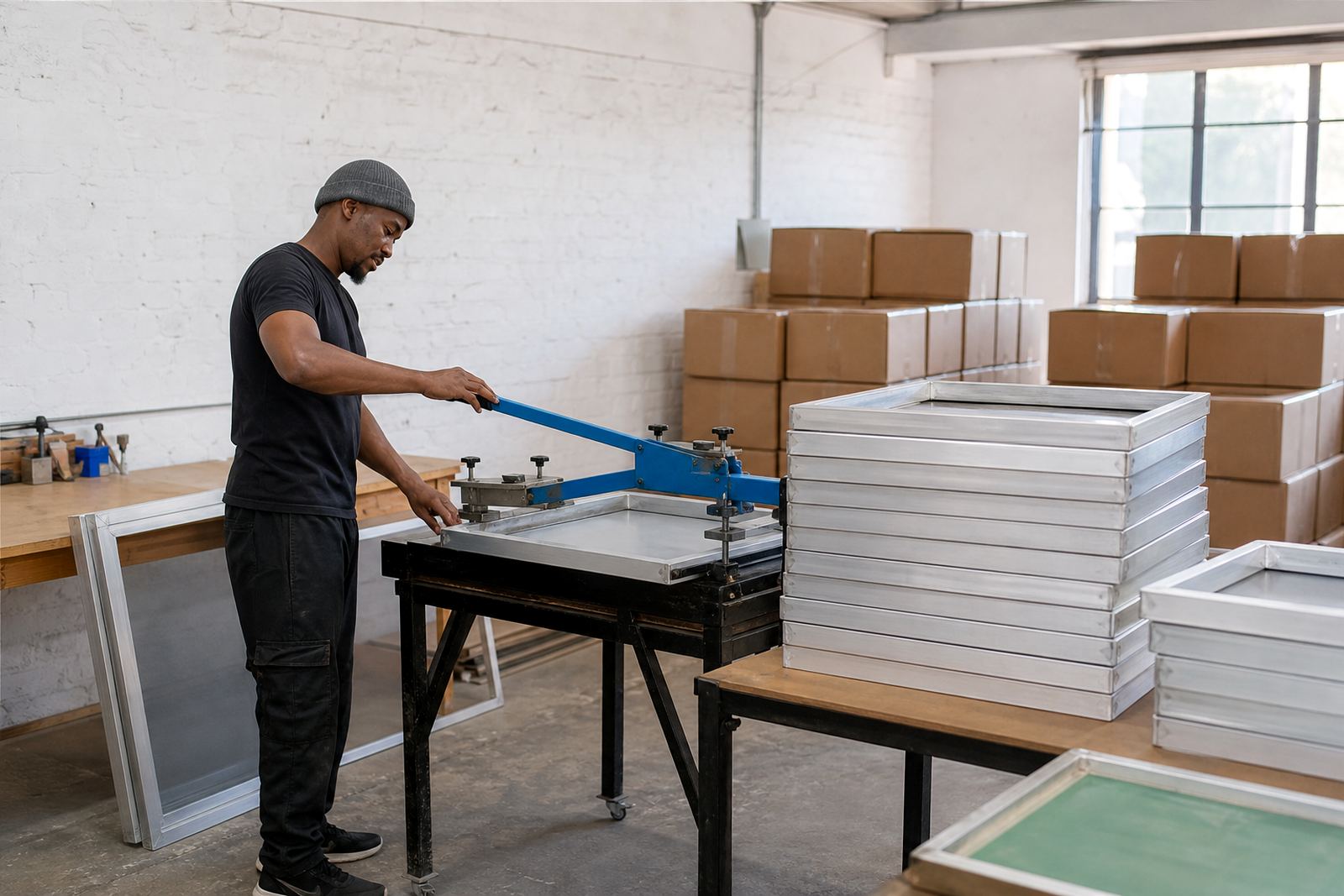
We supplied aluminium screen-printing frames with stretched mesh suited to garment decoration, including a blend of working sizes for test runs and regular production. The frames were prepared for practical use in a Cape Town workshop where temperature shifts, dust and coastal humidity can affect storage and screen life. That means clean edges, sound adhesion and tension that holds up after a few washouts matter more than fancy extras.
The order included new screen stretching, adhesive application, tension checks and frame inspection before dispatch. We also removed surplus mesh where needed so the client received clean, usable screens rather than half-finished stock. The screens were set up to support manual registration and repeat printing, which is where a lot of new shops first feel the pressure if the frames are not even.
- Aluminium frames for garment printing
- Stretched screens supplied ready for use
- Mesh removal where required
- Adhesive application and tension checks
- Frame inspections before release
How the job ran over two weeks
This was completed over a two week window, starting with the sizing discussion and ending with collection from our Maitland side of the operation. The first week focused on confirming frame dimensions, quantities and the print methods the client would use most often. The second week covered stretching, final checks and preparation for handover.
Because the shop was opening into live work quickly, timing mattered. We planned the order so the client could begin with a small but useful core set, then add more frames later once the job mix settled. That kept cashflow under control and stopped the workshop from carrying dead stock in the first month.
- Week 1: brief, sizing and order confirmation
- Week 2: stretching, checks and handover
- Delivery arranged to suit the opening timetable
What changed once the first screens were in use
Once the screens were in the workshop, the client had a cleaner setup for setting artwork, loading ink and keeping repeat jobs consistent. The team could move from test prints to production without stopping to correct loose mesh or chase odd frame sizes. That saves time on the press, and for a startup every minute counts when orders come in from local schools, small clothing labels and promotional runs.
The client reported that the frames fitted the press properly and the stretched screens felt stable during printing. There was less wasted ink on poor registration, and less handling damage when screens were stacked after cleaning. For a first setup, that makes the whole process calmer and easier to manage.
- Better fit in the manual press
- Cleaner registration on repeat prints
- Less waste from poor tension
- Faster setup between jobs
What we would repeat for another startup
If we were setting up another new garment printer in Cape Town, Johannesburg, Durban or Gqeberha, we would take the same practical approach. Start with the sizes the workshop will use most, check the press dimensions early and only add specialist frames once the client has real production data. That keeps the order useful from the first week instead of sitting in the corner waiting for a job that never comes.
We would also keep the screen care advice simple. In South Africa, screens last longer when they are dried properly, stored flat and not left in damp corners after a coastal evening. For workshops in Maitland or other busy industrial areas, that small discipline goes a long way. It is basic work, but it protects the frames and keeps the screens printing the same way from Monday to Friday.
- Start with the most used sizes
- Match frames to the actual press
- Plan storage for heat, dust and humidity
- Build the order around current work, not guesswork
Key facts
| Project type | Startup screen-printing order |
|---|---|
| Client location | Maitland, Cape Town |
| Timeline | 2 weeks |
| Frames supplied | Aluminium screen-printing frames |
| Services used | New screen stretching, tension checks, frame inspections |
| Application | Manual garment printing setup |