
Start with a clean, dry screen before it goes onto the rack
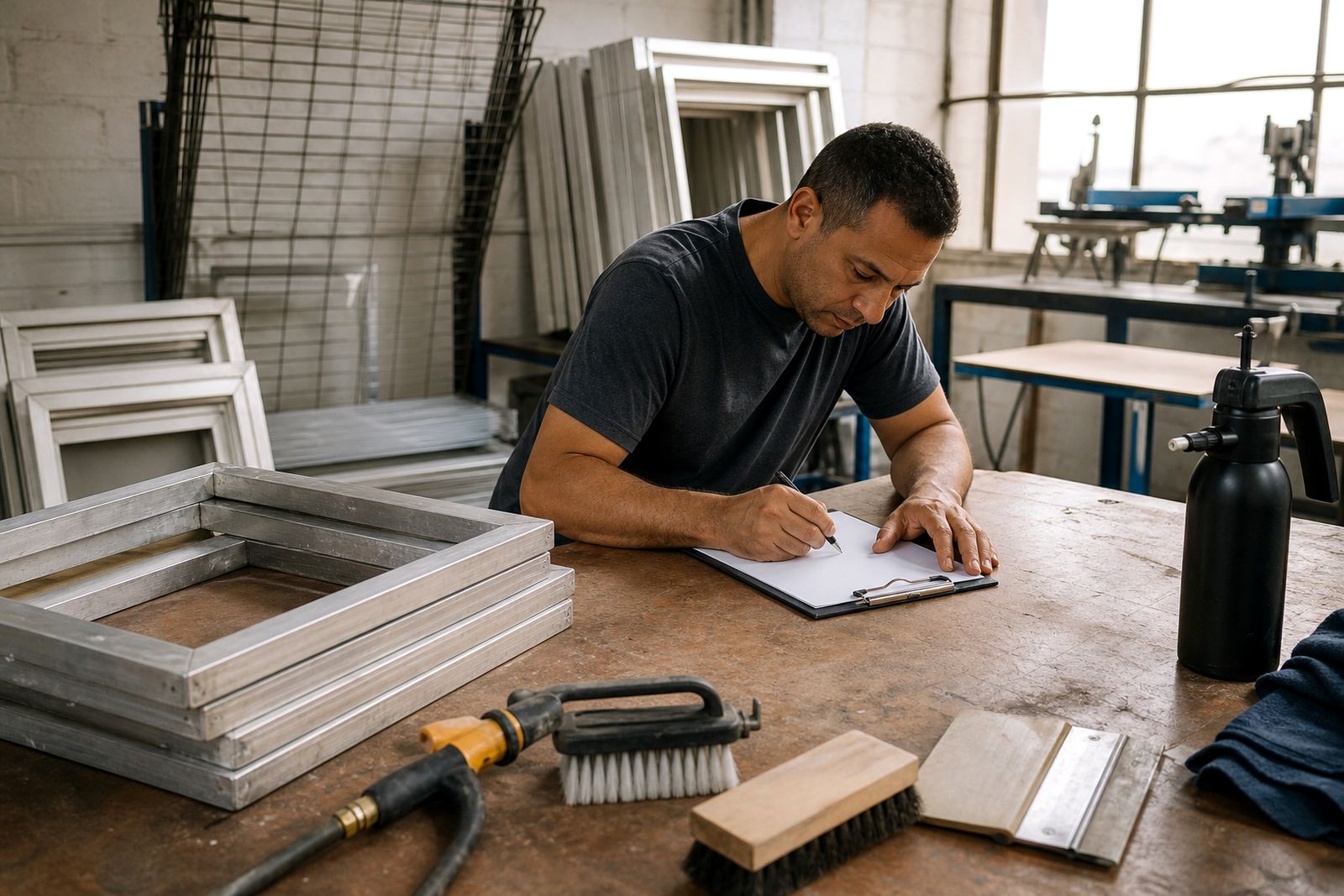
Before you store any screen, remove ink residue, tape off old adhesive and check that the frame is fully dry. Moisture trapped under mesh or along the corners can lead to staining, weak bonds and a musty smell, especially in coastal areas like Cape Town and Durban where humidity hangs around after rain. If you have washed screens after a long run, let them air dry in a ventilated area before stacking or placing them in storage.
Drying is not just about the mesh. Wipe the aluminium frame too, including the inside corners and any hand grips. Dust, solvent traces and water spots may look minor, but over time they can make the frame harder to handle and can affect how neatly it sits on the rack. In busy shops, this small step also helps keep the storage area tidier and safer for staff moving screens around.
Choose a storage method that suits your workshop space
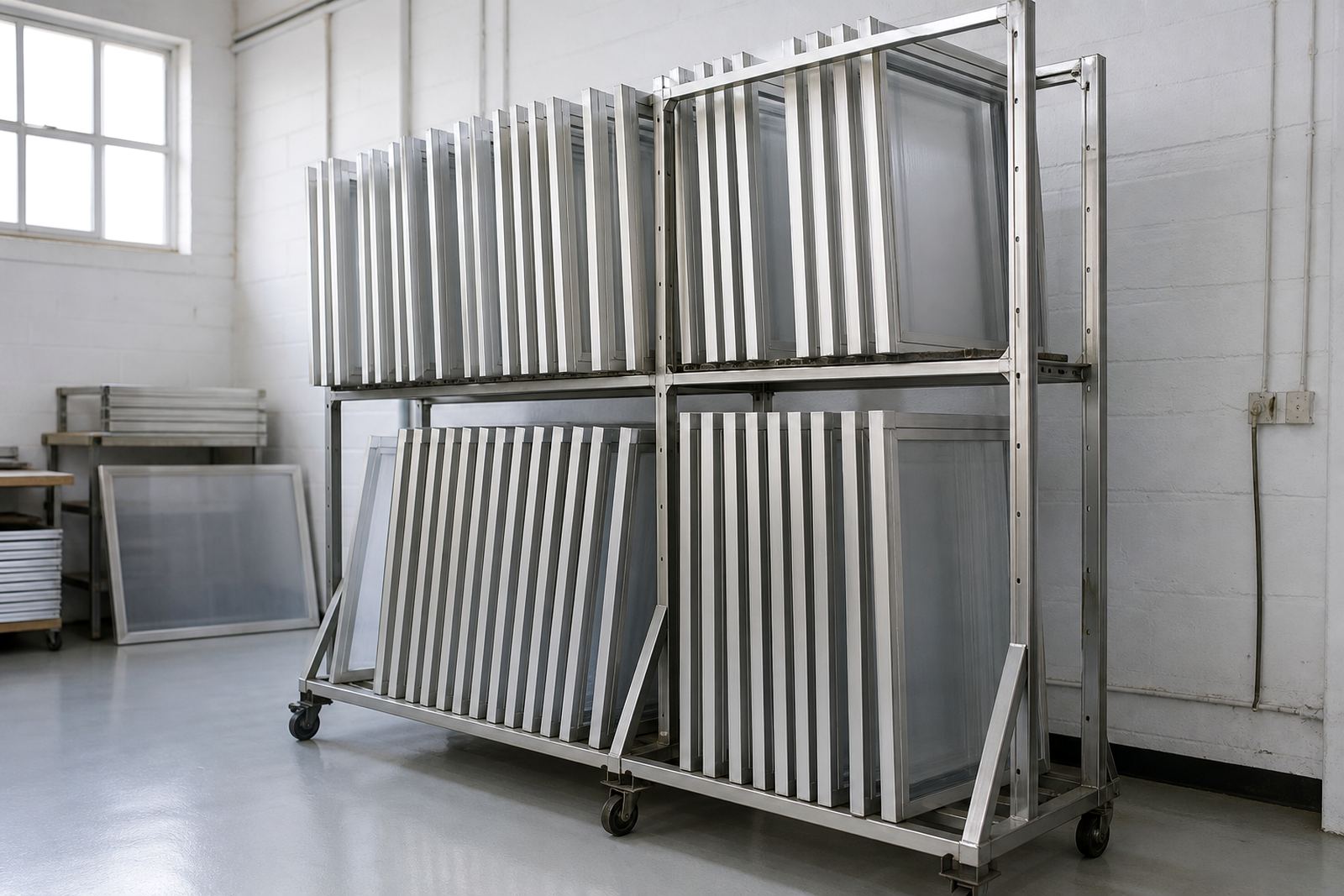
The best storage setup is the one your team will actually use every day. Some printers prefer upright racking with slot dividers, while others use flat shelving for short-term holding. Upright storage usually saves floor space and makes it easier to sort screens by size, mesh count or job type. Flat storage can work for short runs, but screens must be supported evenly so the frame does not twist under its own weight.
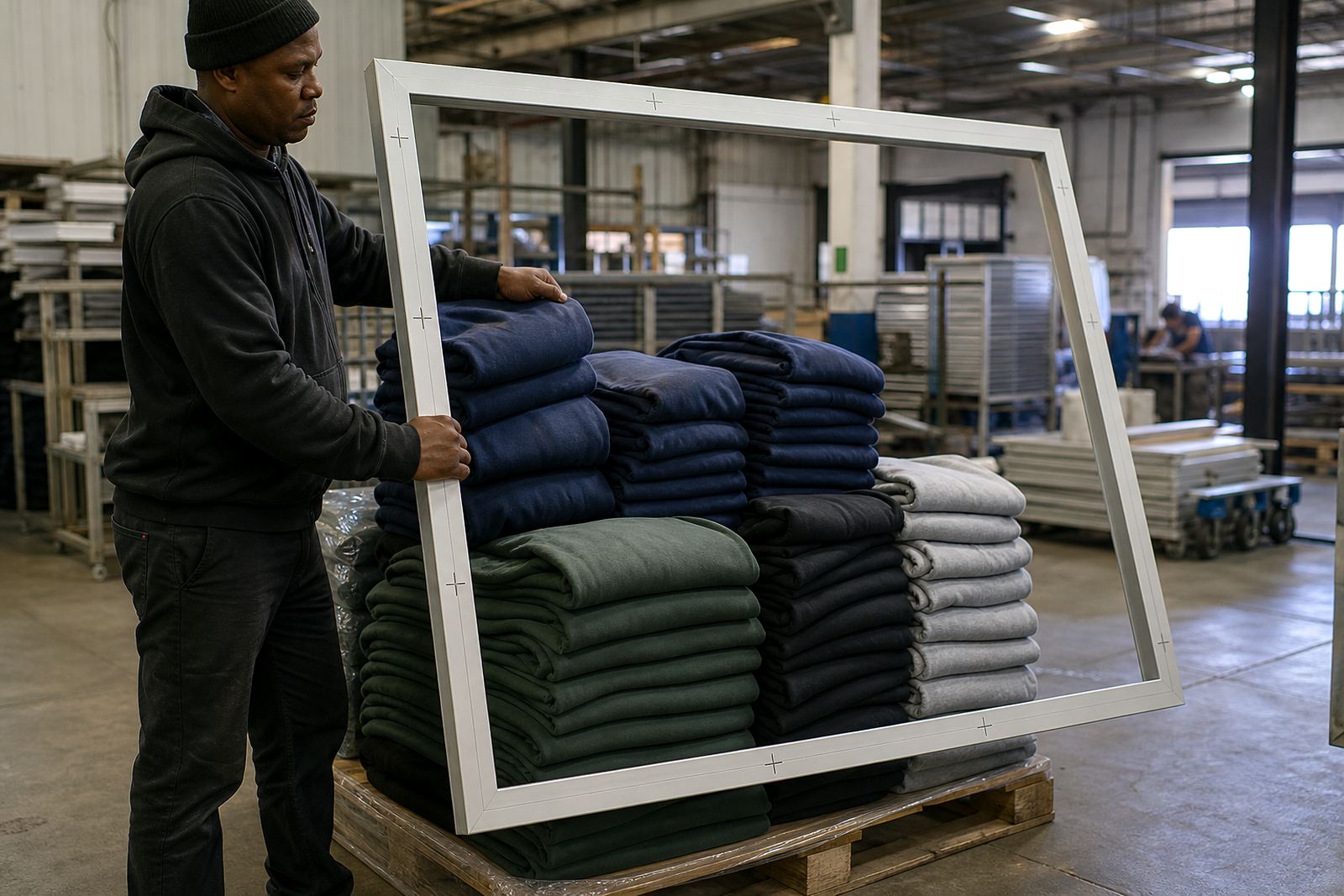
If your shop in Maitland, Bellville or Pretoria has limited room, make sure the storage area is close to the press but not in the way of loading, washing or reclaiming. Keep a clear walkway for moving larger frames. Screens leaning against walls or piled on pallets tend to get chipped corners, bent edges and accidental mesh contact. That can turn a good frame into a problem job later on.
- Keep screens off damp floors and away from wash bays
- Use dividers, tags or size markings so frames are easy to find
- Separate fresh work from reclaimed stock to avoid mix-ups
- Leave enough space for two people to lift larger screens safely
Protect the mesh from pressure, dust and sunlight
Mesh damage often starts in storage, not at the press. Never place weight on top of stretched screens and do not slide frames across each other. Even light rubbing can mark the mesh, loosen tension or leave small abrasions that show up in print quality later. Screens should rest on their frames, not on the mesh surface.
Dust is another quiet problem. In workshop spaces with foot traffic, compressed air, cutting debris or fibre from garments, fine particles settle on stored screens and can work into the mesh. Use covers where needed, but avoid wrapping wet screens in sealed plastic because that traps moisture. Where sunlight reaches the storage area, keep screens out of direct UV exposure. Long exposure can make some tapes and coatings age faster, and the heat inside a Cape Town corrugated shed or Durban lock-up can build up quickly.
- Never stack heavy items on top of stored screens
- Keep mesh away from floor dust and loose fibres
- Use breathable covers for long-term holding
- Store away from direct sun and hot windows
Label each frame so jobs move faster
Clear labelling saves time when orders are moving through different stages. Mark each screen with the job name, mesh count, frame size and any special note such as discharge ink, fine detail or spot colour. If your team does repeat work for schools, clothing brands or local promotional runs, a simple tagging system helps staff pull the right frame without searching through the whole rack. That matters when a client needs a quick turnaround and the press schedule is already full.
A good label also helps with maintenance. If a frame has had repeated retensioning, a mesh change or a corner repair, note it down so the team can check it before the next run. This is especially useful in larger operations where different people handle stretching, printing and dispatch. One clear label can save a lot of back and forth later on, and yes it keeps the workshop calmer too.
Check screens before you store them for long periods
If a screen will sit unused for weeks, give it a short inspection first. Look for frayed mesh, loose adhesive, bent corners, tape lift and any sign of frame movement. Screens that are slightly out of shape can still be useful, but they should be marked for repair rather than left in general stock. A quick check now avoids confusion when an urgent job comes in later.
Use a simple checklist before long-term storage:
- Mesh is dry and free from ink build-up
- Corners are square and not damaged
- No visible separation between mesh and frame
- Frame is clean and labelled correctly
- Screen is stored in the right size bay
For bulk operations, it helps to keep a small repair box near the storage area with tape, markers and inspection notes. That way, small faults are logged straight away instead of being discovered only when the screen reaches the press.
Make room for rotation, pickup and return
Good storage is about flow, not just space. Keep the screens that are in active use separate from those waiting for collection, return or rework. In a busy shop, mixing all three can lead to lost frames and job delays. A simple in and out zone near the door works well for pickup and return, while the main rack stays organised by size or production stage.
If you are storing screens at a branch or holding them for delivery to Johannesburg, Gqeberha or Durban, protect the corners with spacers or soft supports so they do not knock together in transit. On tighter premises, make sure screens are never balanced where a forklift, trolley or hand truck might catch them. The aim is to keep the workshop moving without damage or wasted time.
When storage is part of the daily routine, screens stay in better shape and the whole print room runs cleaner. That means less rework, fewer damaged frames and better use of every square metre.