
Start with a Clean Frame After Every Run
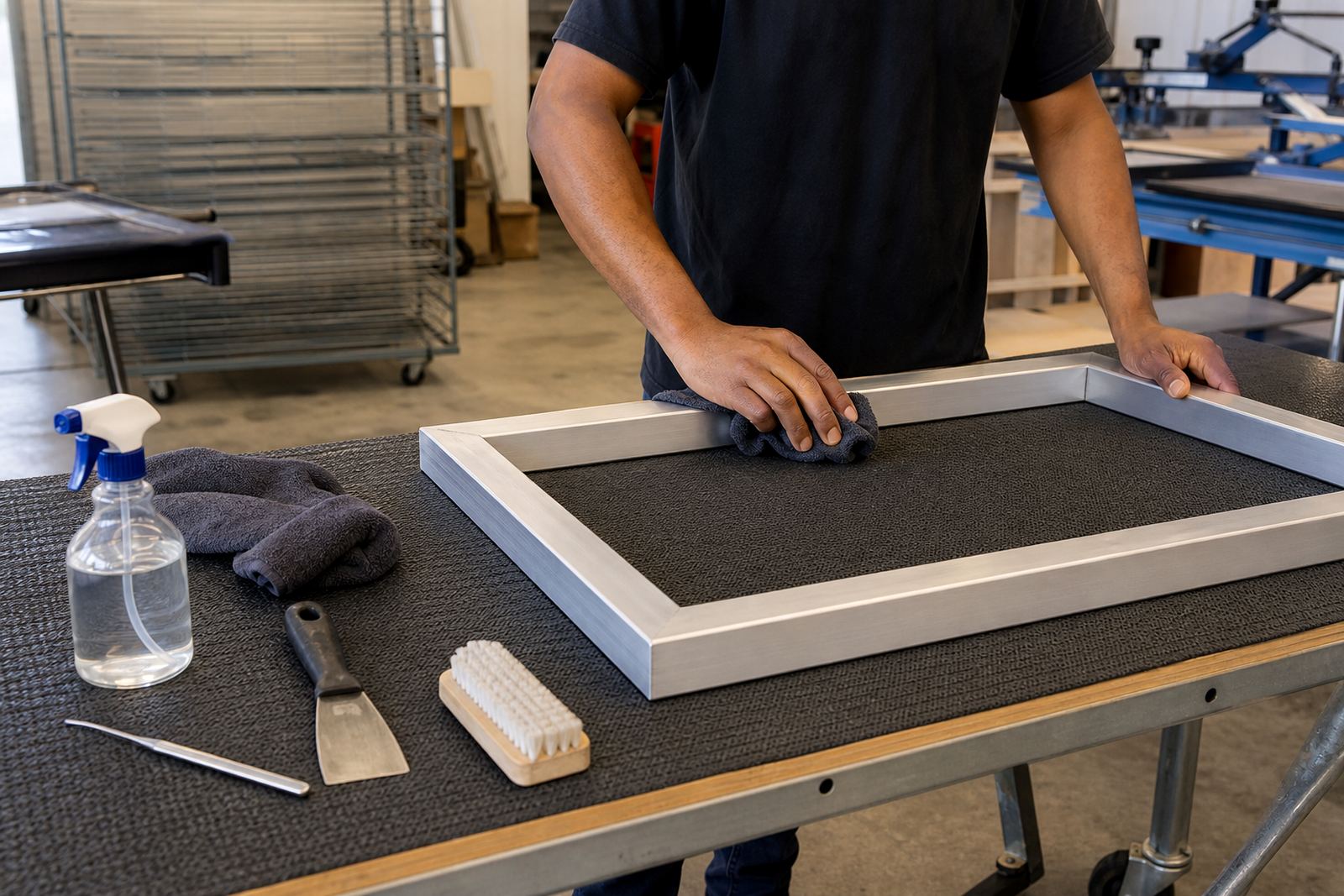
Once a job is finished, clear off ink, tape residue and adhesive before they harden. In Cape Town, Durban and Gqeberha, coastal humidity can make leftover product set faster than expected, so do not leave frames overnight if you can help it. A simple clean at the end of the shift protects the mesh and keeps the frame ready for the next stretch or reclaim.
Use lukewarm water, a soft brush and a mild cleaning agent suited to workshop use. Avoid harsh scraping on the aluminium corners, because small marks can build up over time. If there is dried adhesive around the bond line, soften it first and work slowly. Rinse fully and let the frame dry in a dust free area before storage.
- Remove tape, ink residue and loose fibres first
- Wash the frame edges and corners with a soft brush
- Rinse away cleaning product completely
- Dry upright so water does not sit in the corners
Check Tension Before the Screen Goes Back to Work
Even a well made frame can lose tension if it is handled roughly or stored under strain. Before reuse, check for sagging mesh, uneven pull or loose corners. If one side feels softer than the others, the frame may need restretching rather than a quick patch. That small check can prevent registration issues and poor print detail later on.
For shops handling bulk orders in Johannesburg, Pretoria or across the Paarl supply route, keep a simple log of frames that need attention. A quick note after each inspection makes it easier to plan the next stretch and avoid rush jobs when orders pile up.
- Press lightly in the centre to feel for even resistance
- Look for ripple lines or bowed corners
- Compare the frame against a known good screen if needed
- Set aside any frame that sounds loose when tapped
Store Frames Flat, Dry and Out of Direct Sun
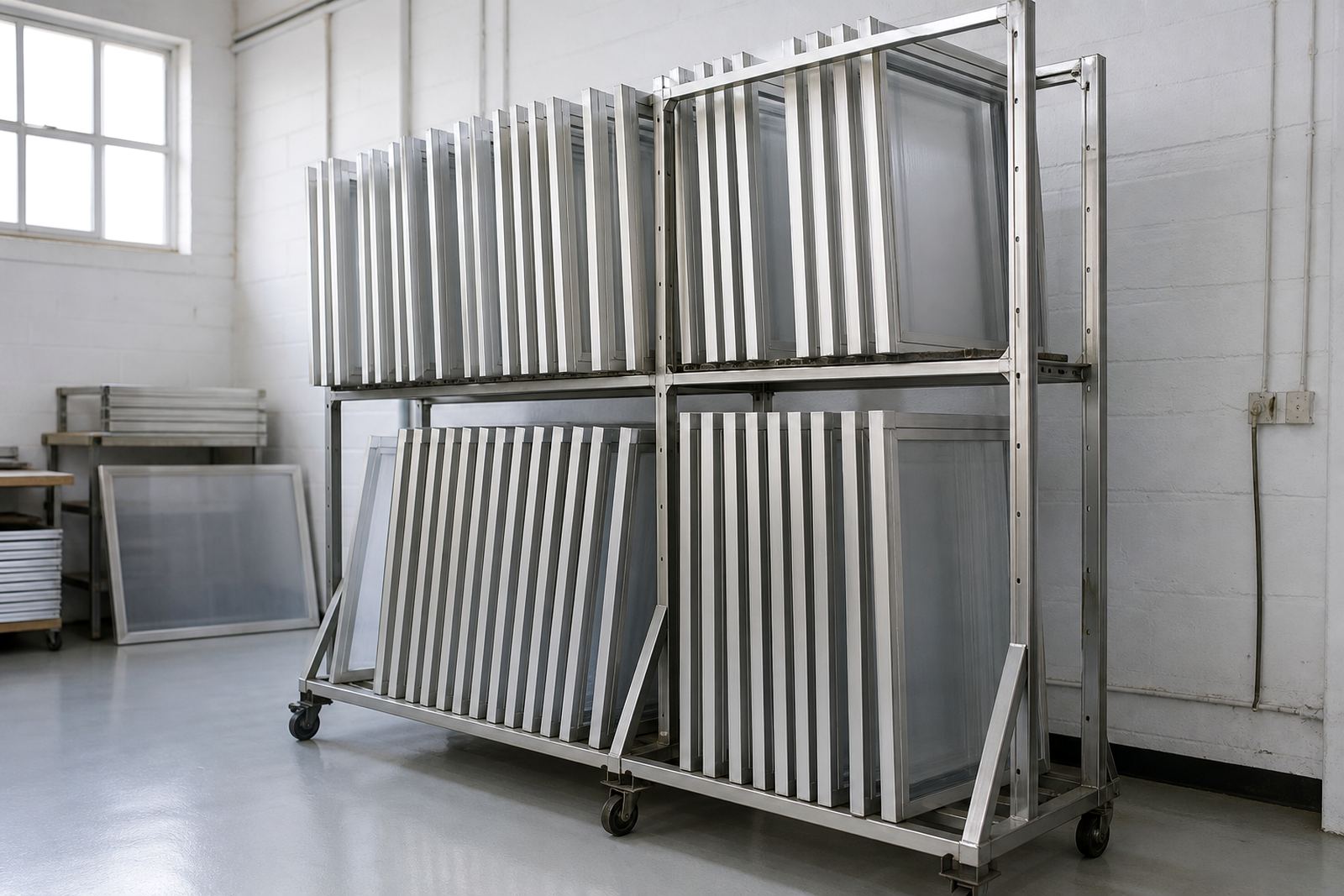
Storage matters just as much as cleaning. Keep frames in a dry, level area where they will not twist, knock against each other or sit in direct sunlight. Heat can affect mesh life and long exposure to sun can dry out adhesives more quickly than expected. In busy workshops, a simple rack or labelled stack helps prevent damage from daily movement.
If you are holding frames over a weekend or during load-shedding interruptions, make sure they are fully dry before stacking. Moisture trapped between frames can lead to corrosion on fittings and a dusty film on the mesh. In coastal areas, add extra airflow if you can.
- Stack frames so the corners are supported
- Keep them off the floor to avoid damp and dust
- Do not lean loaded frames against rough walls
- Separate sizes clearly to avoid edge knocks
Know When to Restretch Instead of Patching
A frame that is still straight but has lost tension may not need to be replaced. Restretching is often the better choice when the aluminium is sound and the mesh has only relaxed with use. This is common on frames that have seen heavy daily printing, frequent wash-downs or transport between jobs in Cape Town, Durban, Pretoria and Gqeberha.
If the mesh is torn, the adhesive line is failing, or the frame has bent, a restretch may not be enough on its own. In those cases, a full inspection helps decide if the frame can be cleaned, reworked or should be taken out of service. Better to sort it early than chase bad prints all week.
- Choose restretching when the frame is straight and the mesh is simply tired
- Replace damaged mesh if there are tears or weak spots
- Inspect bond lines for lifting or separation
- Check for frame twist before approving the screen for reuse
Handle Adhesive Areas with Care
Adhesive should hold firmly, but it also needs careful handling during cleaning and inspection. Do not soak bonded areas for long periods, and avoid sharp tools that can lift the edge of the mesh. When cleaning around the bond, work gently and use enough patience to keep the surface neat. A tidy adhesive line is a sign of good workshop discipline, not just neatness.
If you are applying new adhesive during a stretch, follow the correct curing time before the screen goes into service. Rushing this step can cause early failure under pressure, especially on higher volume runs. Keep the area dust free while it sets.
- Use mild cleaners around adhesive zones
- Do not pry at the bond with metal tools
- Allow proper curing before printing
- Keep the work area clean while the adhesive sets
Practical Checks for Busy Workshops
A short routine at the start or end of the day keeps problems from stacking up. In larger print rooms, assign one person to check frames for dents, loose mesh and cleaning residue. In smaller setups, a five minute check before packing away can save hours later. Good care is not complicated, it just needs to happen every time.
If you run orders through Bellville Collections, Maitland Workshop or any delivery route, record which frames are due for inspection, which need mesh removal and which can go straight back into use. That helps when orders are moving fast and there is pressure to keep the presses turning.
- Inspect corners, edges and mesh tension every week
- Wipe down frames before storage
- Log damaged or tired screens as soon as they are seen
- Keep spare frames ready for urgent work
When to Ask for a Proper Inspection
If a frame keeps losing tension, shows repeated print faults or has been through a hard knock, it is worth having it checked properly. A proper inspection can pick up twists, adhesive failure and small alignment problems before they turn into wasted garments. This is often the best route for shops handling schoolwear, teamwear and repeat branding work where consistency matters.
ScreenFrame supports garment printers across South Africa with new screen stretching, restretching, mesh removal, frame cleaning and pickup and return. If you are unsure whether a frame can be saved or needs fresh work, send an enquiry through the contact page and we will help you decide the next step.
- Use inspection when faults keep coming back
- Set aside frames after impact or rough transport
- Ask about custom size stretching for repeat jobs
- Plan bulk screen orders before peak season begins