
How Screen Care Helps Your Frames Last Longer
Well cared for frames keep their tension better, clean up faster and give more consistent prints over time. For garment printers in Maitland, Johannesburg, Durban, Pretoria and Gqeberha, that matters because each screen that stays true saves time on setup and reduces waste on press. Our care advice is based on aluminium screen-printing frames used for daily production, short runs and repeat jobs.
The main causes of early frame failure are avoidable: standing screens in damp corners, leaving emulsion or ink to dry on mesh, dragging frames across concrete floors, and storing them in places where heat or moisture changes too quickly. Coastal humidity in Cape Town and Durban can also affect cleaning and drying, while dry inland conditions can make residue bake onto the mesh harder than expected. A steady routine helps with all of that.
- Keep frames off the floor and away from direct sunlight.
- Do not stack wet screens face to face.
- Rinse and clean frames as soon as possible after printing.
- Check mesh tension regularly, especially on high use screens.
What Our Screen Care Advice Covers
Our service is practical and task focused. We look at the condition of the frame, the mesh and the adhesive area, then advise what can be cleaned, what should be re-tensioned and when a full restretch is the better option. The aim is to help you keep frames in use for as long as they remain sound, instead of replacing screens too early.
ScreenFrame supplies advice for new frames, older frames and mixed workshop sets. We also guide customers who collect from Bellville, send orders through the Paarl supply route, or receive deliveries to Johannesburg, Durban, Pretoria and Gqeberha. If your workshop handles both plastisol and water based inks, or sees a lot of repeat jobs, we tailor the guidance to your production pattern.
- Storage checks for dry and damp workshops
- Handling advice for one person or team handling
- Cleaning routines for ink, emulsion and adhesive residue
- Signs that a frame needs inspection or restretching
Recommended Routine After Printing
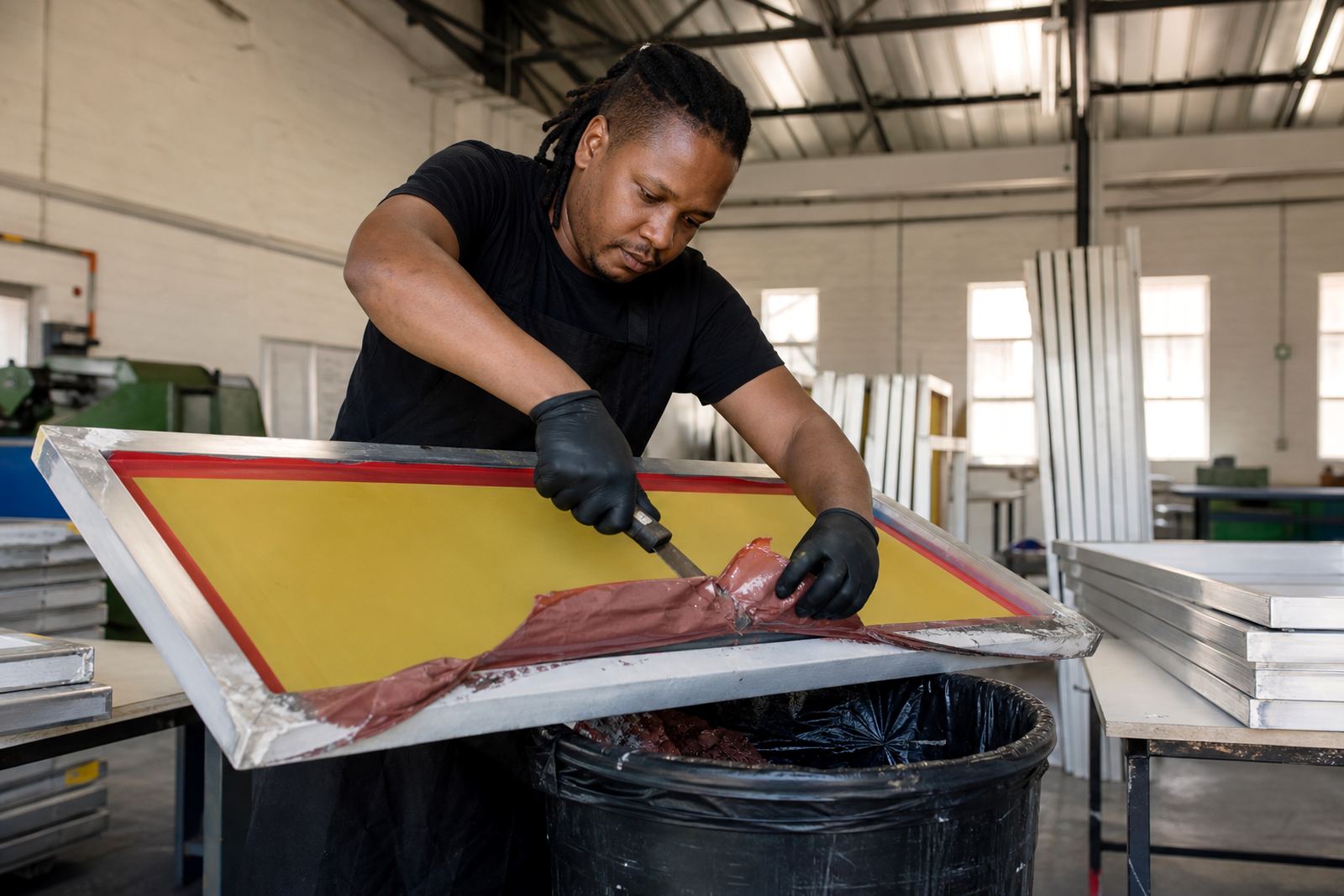
The best time to protect a screen is right after the print run ends. Leave dried ink or emulsion on a frame for too long and you end up working harder later, with more chance of damage to the mesh or frame corners. A short same day clean is usually enough to keep things under control.
For most workshops, we suggest a basic routine after each job: remove excess ink, rinse the screen, clean the frame edges, and dry it properly before storage. If the screen will be reused often, label it clearly and keep it in a consistent position so the mesh is not twisted or pinched. In humid areas, allow extra drying time and never pack screens while they are still holding moisture.
- Wipe down frame rails and edges after every print run
- Use clean water and a suitable cleaning method for the mesh type
- Dry screens upright where air can move around both sides
- Store screens by size, job type or mesh count for easier retrieval
Storage And Handling In South African Workshops
Storage is where many screens lose service life. A frame that is technically fine can still be damaged by poor stacking, heat, pressure or rough handling. In Maitland workshops, for example, tight storage bays often mean screens are packed close together, so the safe way to store them matters just as much as the cleaning routine. In inland areas, dust buildup can also become a problem if screens are left exposed.
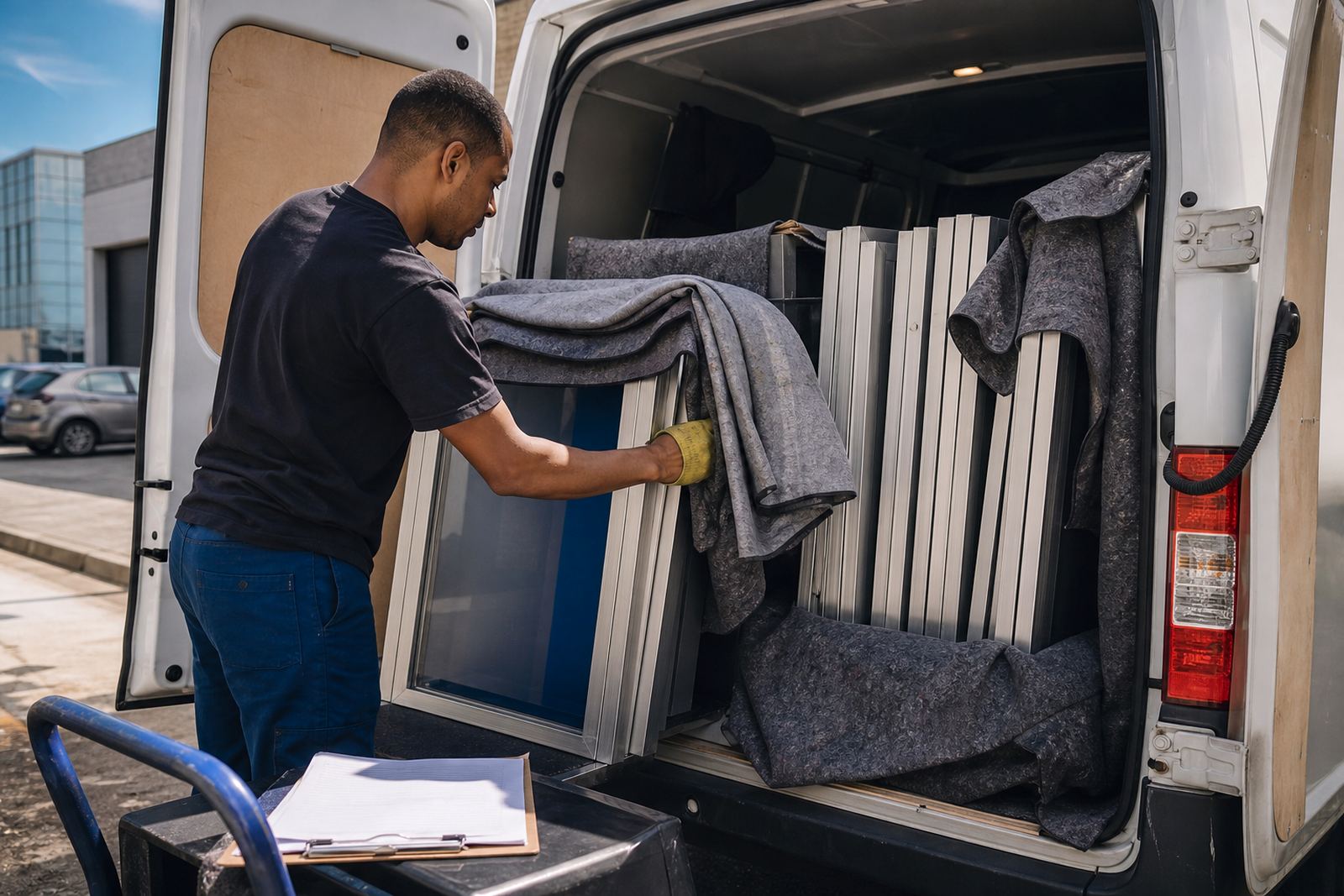
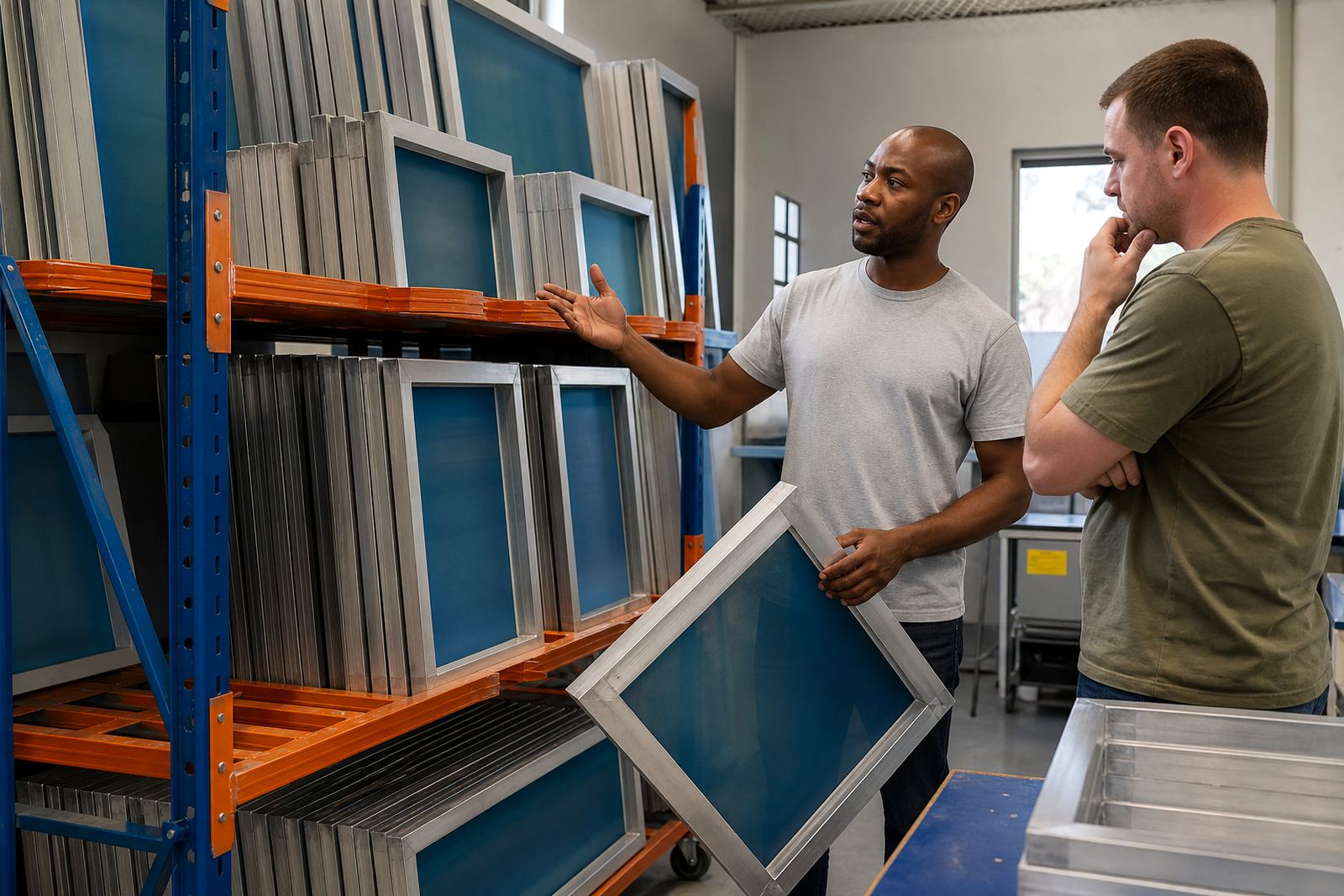
We recommend storing frames vertically or in racks that keep weight off the mesh. Do not lean heavy items against the edge of a frame and avoid resting screens where forklifts, trolleys or foot traffic can knock them. If you move screens between sites, use clear labelling and keep transport stable so the corners do not scrape against each other.
- Use racks or separated bays for different frame sizes
- Avoid stacking heavy screens on top of each other
- Keep screens away from heaters, direct sun and standing water
- Protect corners and edges during pickup and return transport
Inspection Points And Maintenance Intervals
Routine checks help you spot trouble before it affects print quality. We suggest a quick visual inspection weekly for active screens and a fuller check every 4 to 8 weeks depending on workload. Busy garment printers with repeat orders may need shorter intervals, while smaller hobby setups can usually inspect less often if the screens are stored correctly.
Look for slack mesh, frame warping, adhesive lift, corner damage, stubborn residue and any signs of corrosion on fittings or hardware. If a screen no longer registers cleanly or the print starts to show uneven detail, it may need mesh removal, a fresh stretch or a proper inspection. That is especially important where screens are used for fine artwork or repeated colour work, as even small tension changes can show up on press.
- Weekly check for visible damage, residue and handling wear
- 4 to 8 weekly check for tension and frame alignment
- Immediate inspection after a drop, impact or severe washdown
- Full review before peak periods or bulk production runs
How ScreenFrame Handles Advice, Inspection And Follow Up
When you ask for screen care advice, we first listen to how your workshop runs, what mesh counts you use and how often the screens are in rotation. From there, we advise on the care steps that suit your setup and, if needed, arrange inspection of the frame for tension loss or cleaning issues. Where screens are still in good condition, the focus stays on maintenance rather than replacement.
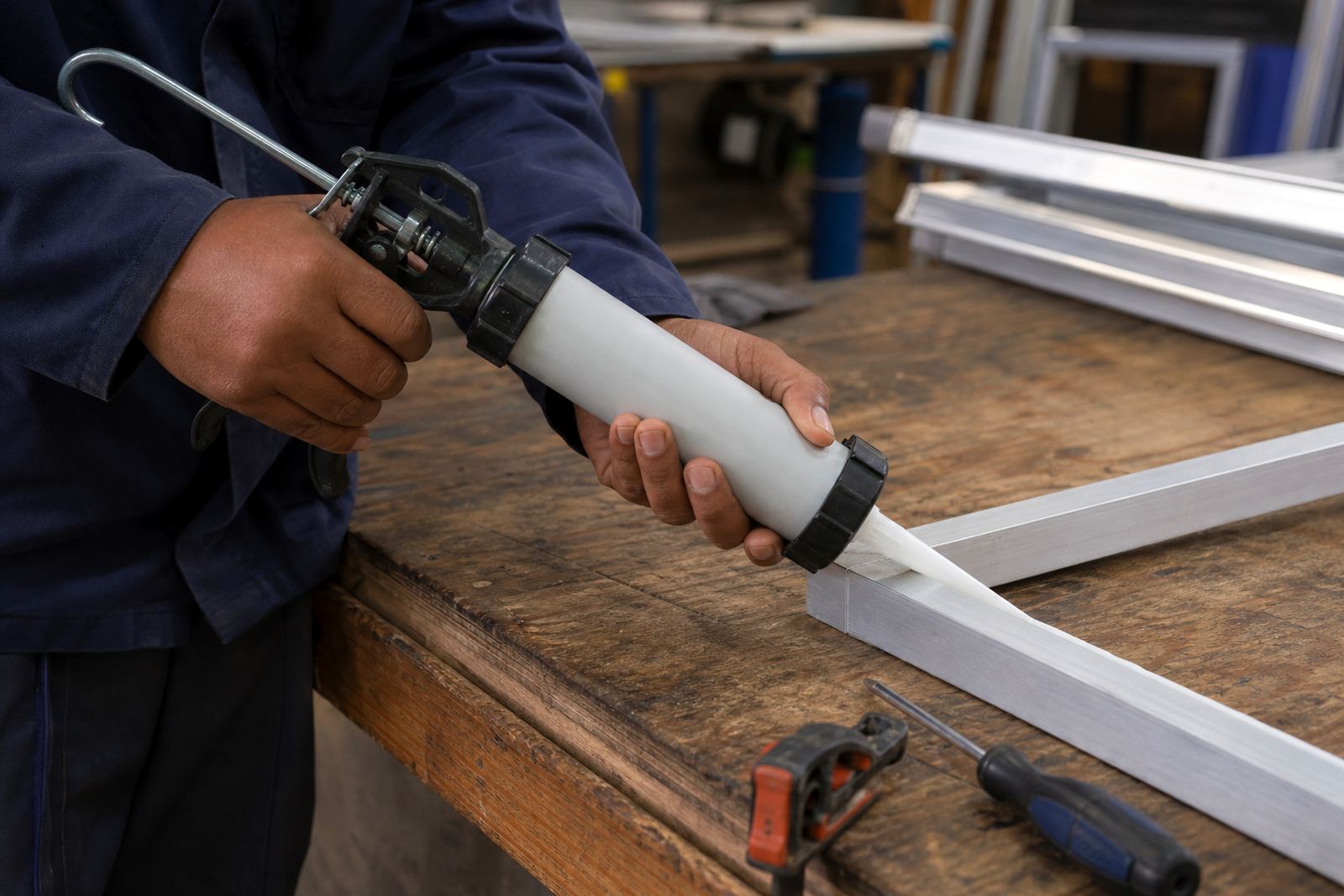
Our process is straightforward. You submit an enquiry through the contact page, give us the frame size, mesh type and problem area, and we advise on the next step. If a screen needs physical attention, we can assist with restretching, mesh removal, adhesive application or cleaning support. Turnaround depends on workload, frame condition and order size, but urgent work can be prioritised where the schedule allows. Pricing is based on the type of screen, the condition of the frame and the work needed, so you only pay for what the job requires.
- Enquiry and screen details submitted through the contact page
- Assessment of condition, care need and likely maintenance interval
- Advice, inspection or service recommendation
- Optional follow up for repeat orders or bulk screen sets
Key facts
| Service area | Maitland, Cape Town with deliveries and supply routes to Johannesburg, Durban, Pretoria, Gqeberha and Bellville collections |
|---|---|
| Frame material | Aluminium screen-printing frames |
| Typical frame sizes | Custom sizes available for garment printing setups |
| Maintenance interval | Weekly visual checks, with fuller inspections every 4 to 8 weeks |
| Turnaround | Depends on condition and workload, urgent turnarounds available where possible |
| Pricing approach | Quoted to frame size, condition, cleaning needs and whether inspection or restretching is required |