
Why a smaller frame earns its keep
Test frames are not just for beginners. In a busy workshop they are a practical way to make sure a job will print cleanly before the full set of garments gets started. A smaller frame uses less mesh, less ink and less setup time, which matters when you are working under pressure and trying to avoid waste.
For garment printers in Cape Town, Johannesburg or Durban, a test frame is especially useful when artwork comes in from different customers with different expectations. One client may want a fine halftone, another a bold white print on dark cotton, and a third may be matching an old design from years ago. A quick test lets you see what the image does on fabric before you commit to the whole order.
It also helps with approvals. If a customer wants to sign off on colour, registration or print feel, a test frame gives you something physical to show them. That is much easier than trying to explain the result in words.
What to check before you run a test print
A test frame works best when the rest of the setup is already sorted. If the frame is loose, the mesh is damaged or the tension is uneven, the test will only tell you that the frame itself is the problem. Start with a clean, straight frame and make sure the mesh suits the artwork and ink being used.
On small test pieces, the details show up quickly. That is useful, but it also means any mistake shows up quickly too. Look at registration marks, edge sharpness, mesh tension and whether the stencil breaks down under the squeegee. In humid coastal conditions, especially around Maitland or Gqeberha, you also need to watch drying times because moisture can change how the emulsion behaves.
- Check that the frame is level before exposing or printing.
- Use the same ink, squeegee and garment type as the final job.
- Record mesh count, tension and exposure settings for future runs.
- Keep test prints labelled so you know which version passed approval.
Approvals are quicker when the sample is real
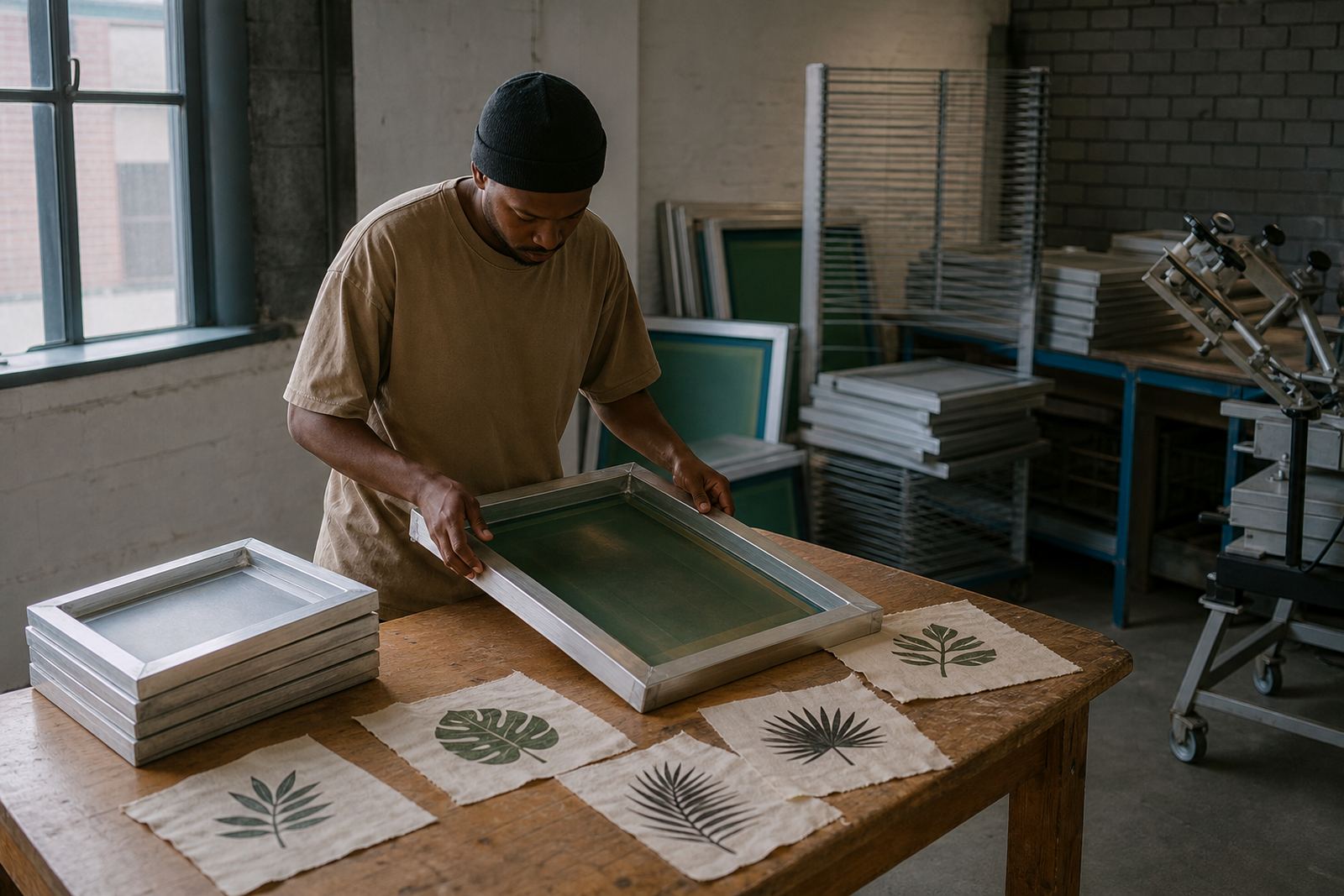
Clients make faster decisions when they can feel the print and see the colour on fabric. That is one reason test frames are so useful for approval work. A screen printed sample shows opacity, texture and edge quality in a way that a digital mock-up cannot. It is easier for a brand manager or clothing buyer to confirm that the job is right when the test piece is sitting on the table in front of them.
For local runs, this can avoid costly delays. A printer in Pretoria may send a sample to a client, only to find that the approved shade is slightly darker than expected. If that comes out after a full production run, the cost is already gone. A test frame reduces that risk. It gives you room to adjust flash time, underbase strength or stroke pressure before the order goes out.
When approval is tight, keep the process simple and consistent. Use one sample garment, one print position and one clearly marked version at a time. That keeps decisions clean and prevents confusion later.
Using test frames for ink and fabric trials
Not every garment behaves the same. Cotton, polycotton and performance fabrics can each react differently to the same ink and curing method. A test frame lets you compare results without burning through stock. That is handy for schools, clubs and small clothing labels that often mix fabric types in the same order.
You can use a test frame to compare more than colour. It is also useful for print feel, cure speed, stretch recovery and how the ink sits on textured fabric. If a print looks good but cracks after a stretch test, you know to adjust the ink or curing process before the full run.
- Test on the same fabric weight as the final garment where possible.
- Try a short run on both light and dark items if the order includes both.
- Use the test to compare two inks or two exposure settings side by side.
- Note the results immediately while the print is still fresh.
Keeping your test frames tidy and ready
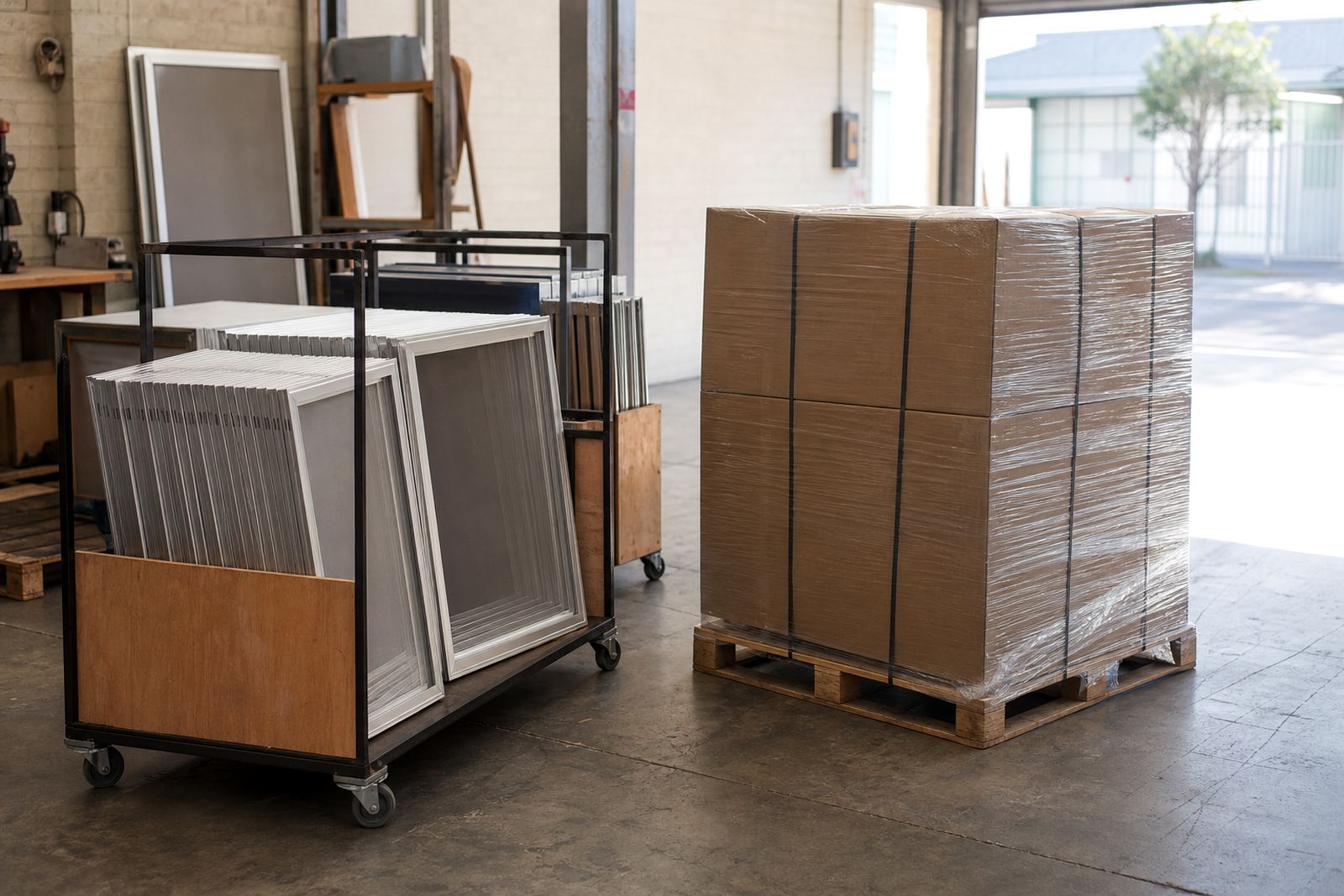
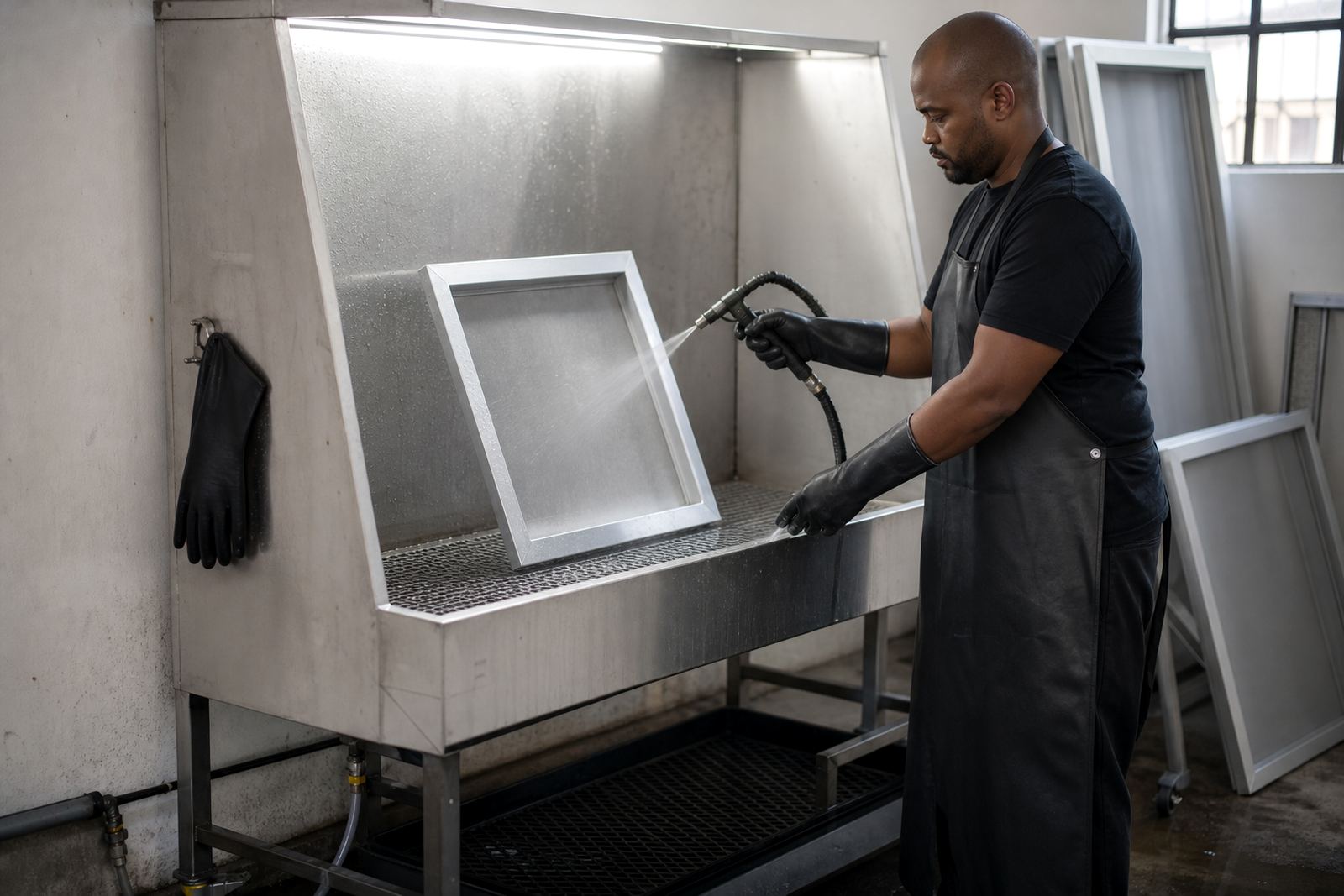
Because test frames are used often, they need regular care. Mesh removal, frame cleaning and proper adhesive application all help extend the life of the frame. If you leave ink, tape or emulsion on the frame for too long, the next test starts off at a disadvantage. Clean frames give you more reliable results and save time in the workshop.
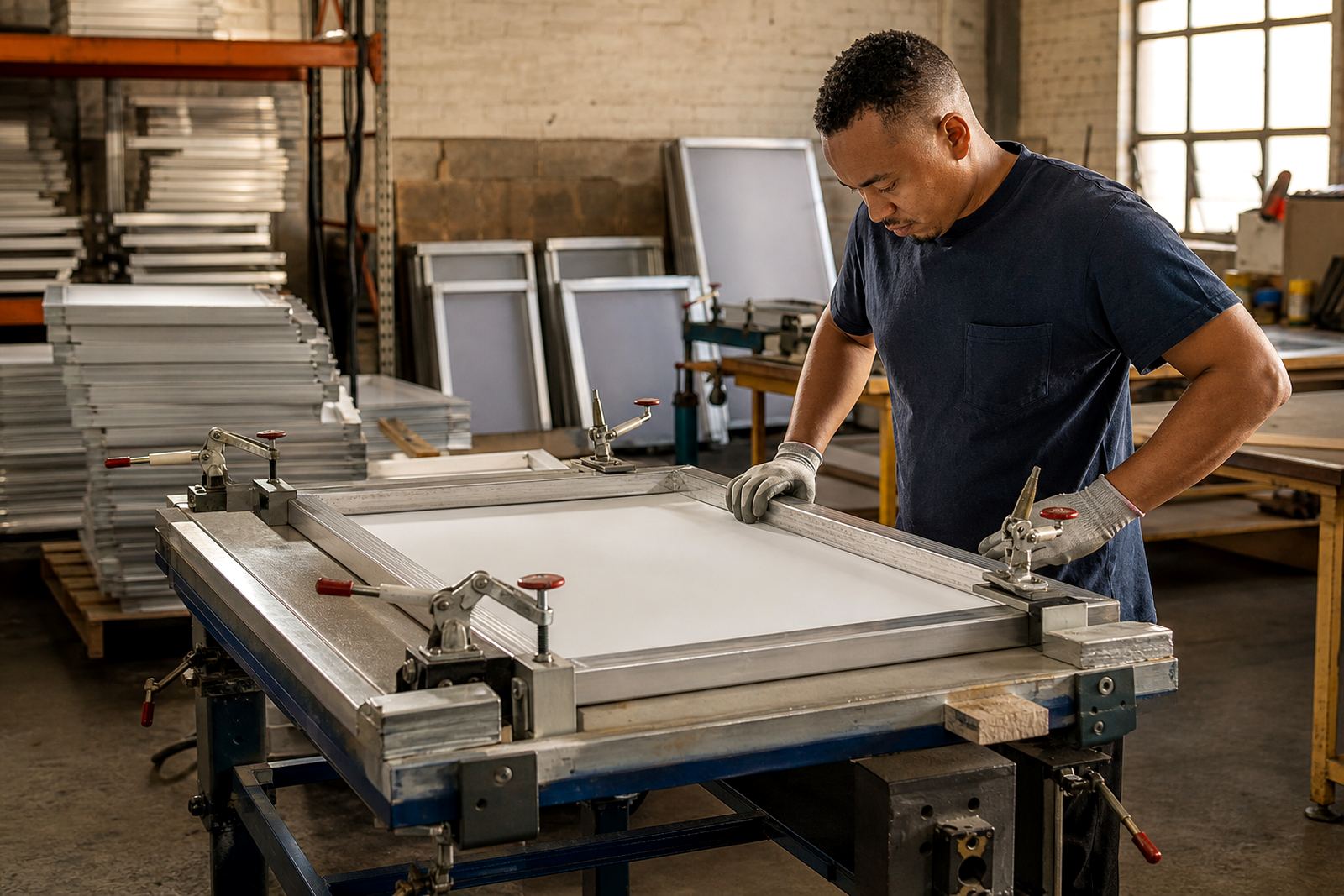
It is also worth checking the frame itself now and then. Small bends, loose corners or poor tension can creep in after repeated use. A proper inspection before each job catches faults before they affect the print. In a workshop doing urgent turnarounds, that sort of routine matters because a bad test frame can slow down the whole queue.
If your workshop handles stretch and restretch work, keep a simple rotation system. That way the test frames are always ready when you need them, and the stronger frames stay in service longer.
A simple Cape Town example from a clothing run
Take a small clothing order in Bellville for a local events crew. The client wants black tees with a pale logo on the chest and a heavier print on the back. Before the full order starts, a test frame is used to check the logo on one sample shirt and the back print on another. The first sample shows the underbase is a bit too heavy, while the second reveals the back image needs a finer exposure.
Because the issues are found early, the workshop adjusts the setup and the final run moves ahead without wasted shirts. The client gets a cleaner result and the printer avoids rework. That is the value of test frames in plain terms. They help you print once, print right, and keep the job moving.
For printers serving Cape Town, Johannesburg, Durban, Pretoria and Gqeberha, small test frames are one of the most practical tools in the room. They are not about doing less. They are about doing the important checks before the expensive part begins.
When to use a test frame and when to go straight to production
Not every job needs a full approval process, but most jobs benefit from at least one test if the artwork, fabric or ink is new. If you are repeating a known design on the same shirt with the same setup, you may not need much more than a quick inspection. But if any part of the run has changed, the test frame becomes useful again.
Use it for new customers, new colour matches, mixed fabric orders, and urgent jobs where there is no room for mistakes. It is also worth using when training a new operator, because a small frame makes the learning process safer and easier to control.
Good print shops do not waste time on unnecessary work, but they also do not gamble on a full order when a small test could prevent problems. That is why test frames stay in use long after the first setup is done.