
Made to your measurements, not the other way around
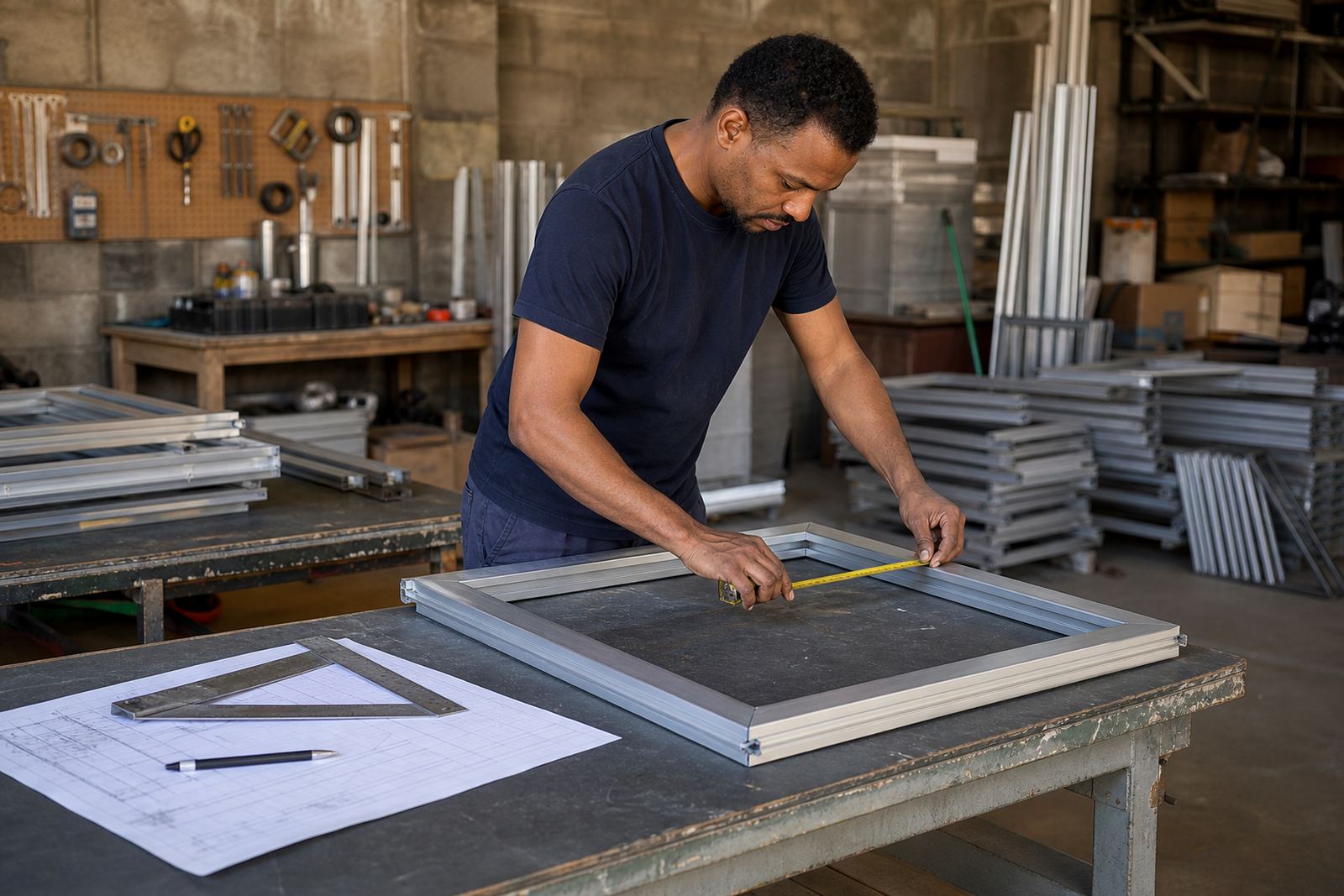
A custom size frame is an aluminium screen-printing frame built to your required outer size and profile so the mesh can be stretched to suit a specific job. It is used when standard frames are too small, too wide, or simply do not fit the pallet, artwork, or workshop process you are running. For printers in Maitland, Cape Town and for deliveries to Johannesburg, Durban, Pretoria and Gqeberha, this is often the practical answer when production needs change and standard stock sizes do not line up.
We make frames for garment decoration work, sampling, bulk runs and special projects. That includes unusual artwork layouts, extra-large prints, narrow placements on tees or hoodies, and workshop jigs where the frame needs a certain outside dimension to sit correctly. If you need a frame that suits a specific clamp set-up or a custom pallet, we can work to that size instead of forcing a compromise.
- Built to your requested outside dimensions
- Suitable for new screen stretching or restretching existing frames
- Made for garment printing, sample runs and special workshop needs
- Can be paired with mesh suited to the artwork detail and ink type
Sizes, profiles and options that matter in daily use
Custom size does not only mean length and width. It also includes the frame depth, wall thickness, corner strength and the usable print area you need after stretching. Those details affect tension, weight, cleaning and how easy the screen is to handle in a hot workshop or during long shifts. A frame that is too light may flex under pressure, while one that is too heavy can slow down handling and add strain to the operator.
We can produce a range of dimensions for different production requirements, from compact screens for small artwork to larger formats for signage-style garment prints. If you are running many jobs back to back, or working through load-shedding and trying to keep changeovers quick, the right frame size can save time. It also helps when you need consistency across multiple screens so the registration stays predictable.
- Common garment print sizes and custom outside dimensions
- Different frame depths for easier handling or stronger support
- Options for single screens or matched sets for repeat jobs
- Suitable for fine detail work or heavier production use
Where a custom frame suits best
Custom size frames are useful anywhere the print process has a fixed physical requirement. Garment printers often ask for them when they are setting up new artwork sizes, handling bulk orders, or trying to fit a press and pallet system that was not built around standard frame sizes. They are also useful for print rooms that want one standard across the shop, even when the artwork varies. That makes daily work simpler and less fussy.
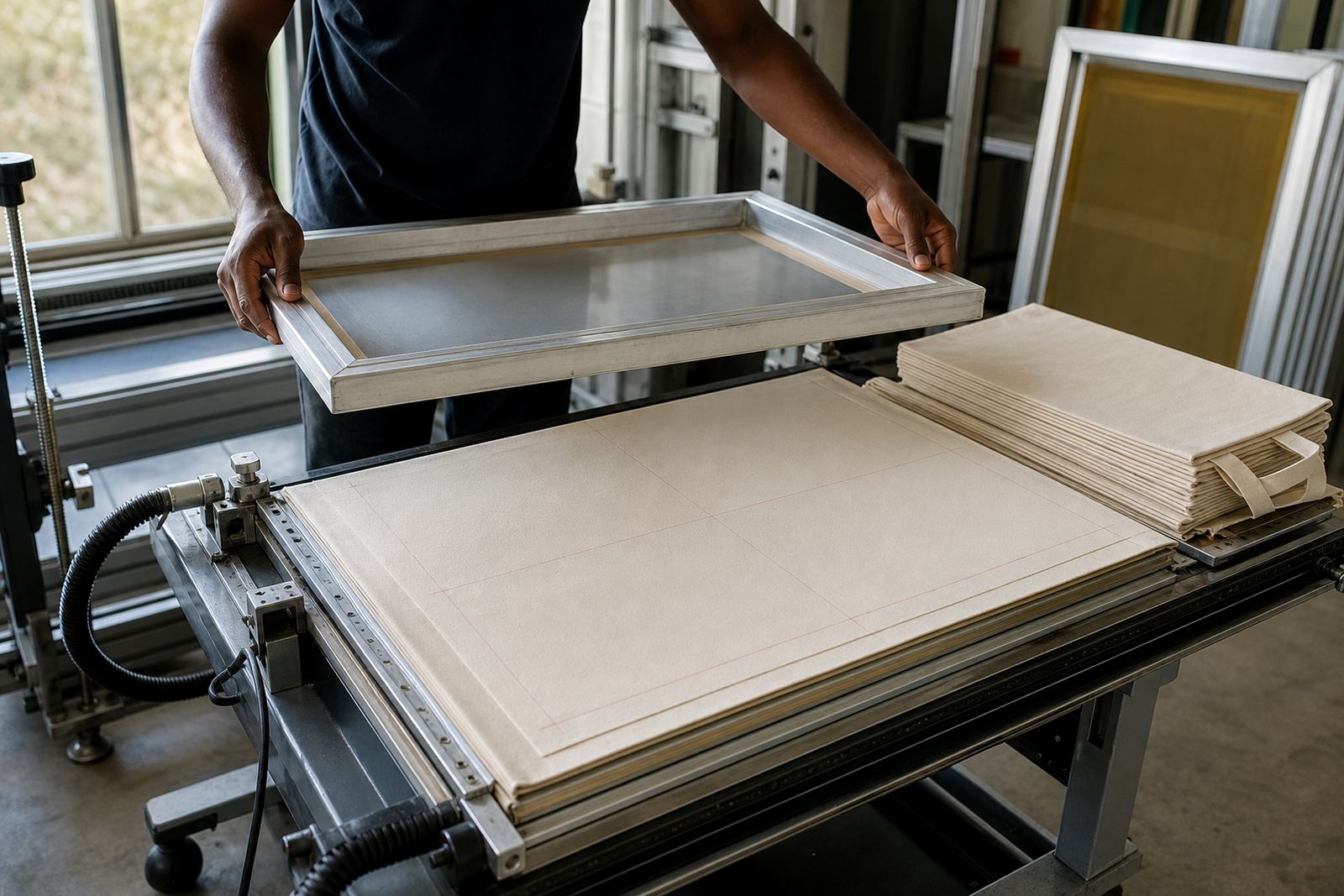
They suit cotton tees, poly-cotton garments, hoodies, tote bags and other printed items where the image size or placement needs to stay exact. In coastal areas, where humidity can change how mesh behaves, the right frame size and tension also help keep results more consistent. If you are printing in a workshop with limited space, a custom frame can be sized so it stacks neatly, stores efficiently and does not get in the way of drying racks or washup stations.
- Garment print shops needing repeatable screen sizes
- Setups with non-standard pallets or clamp spacing
- Printers handling oversized or unusual artwork
- Workshops in humid coastal conditions or busy production spaces
What to consider before ordering
Before ordering, check the exact outside measurements you need, the mesh count for the job, and whether the frame must fit a particular press, pallet or stretching jig. It also helps to confirm the artwork size including bleed and registration marks, because a screen that looks large enough on paper can end up too tight once the image is positioned. If you are unsure, measure the usable print area rather than only the blank mesh space.
Send us the details that affect production so we can make the frame properly first time. The more exact your measurements, the less chance of delays or rework. If you need multiple frames, keep the set consistent so your screen room does not end up with mixed sizes that slow things down later.
- Outside dimensions and required print area
- Artwork size, bleed and registration position
- Press or pallet clearance if the frame must fit a machine
- Mesh count and whether the screen is for fine detail or heavier ink deposit
- Quantity needed for single jobs or repeat production
Installation, stretching and servicing
Custom size frames do not need special power or gas requirements. They are a manual workshop product, made for stretching, inspection and cleaning rather than powered installation. What they do need is proper handling during screen preparation, enough space for stretching and drying, and care when moving them through the workshop so corners and mesh tension stay intact. In a tight print room, a frame that is the correct size from the start is easier to live with than a screen that has been forced to fit.
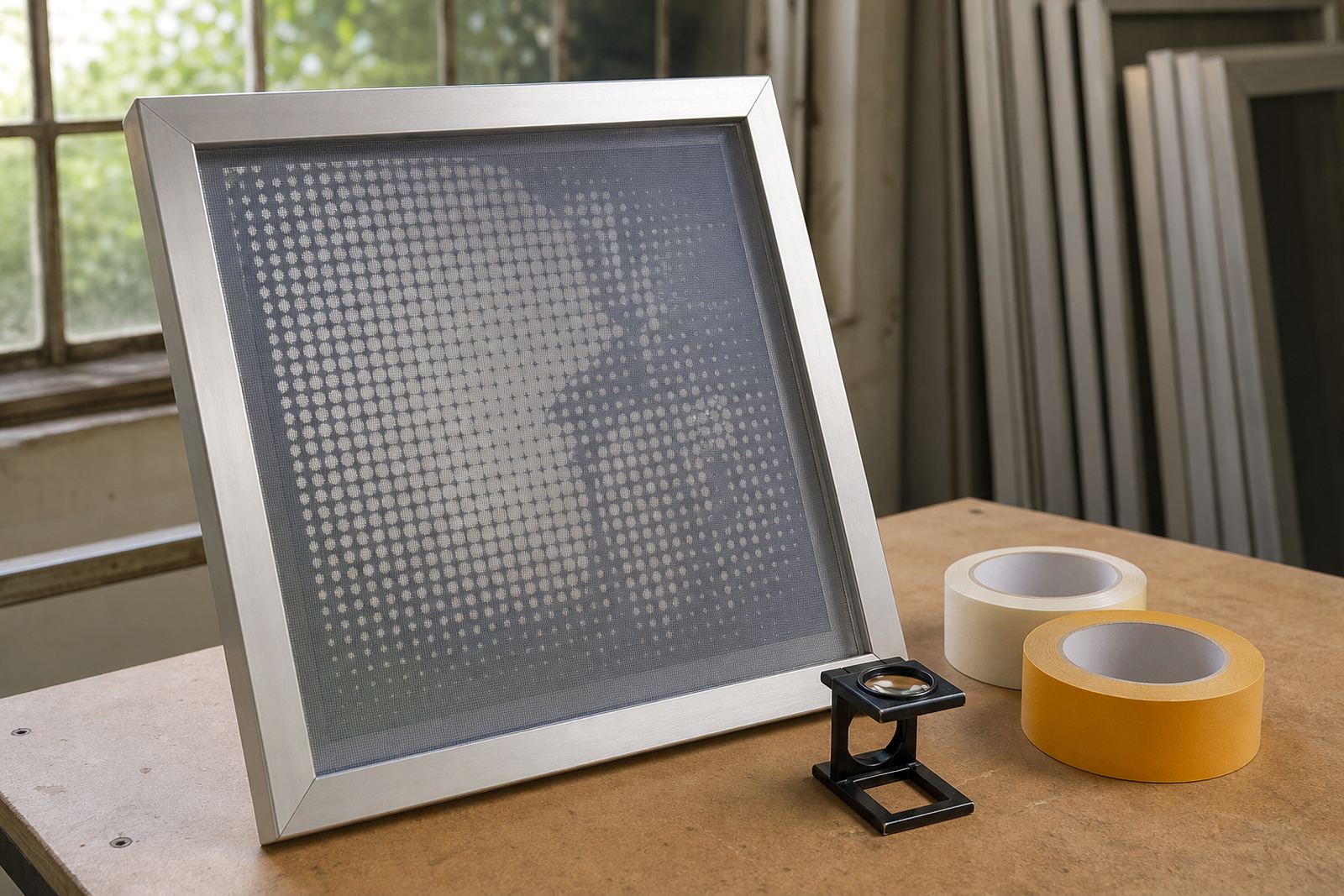
We also help with restretching existing frames, mesh removal, adhesive application, frame cleaning and tension checks. That matters when a frame has been in use for a while and the mesh starts to loosen or the adhesive begins to fail. Regular servicing helps extend the working life of the frame and keeps the print quality steadier. It also cuts down on avoidable waste, which is a help when workshops are trying to manage costs and keep production moving during power interruptions.
- No power or gas connection needed for normal use
- Manual handling and proper storage are important
- Service options include cleaning, restretching and tension checks
- Useful for workshops wanting to reduce downtime and waste
Care, storage and day to day handling
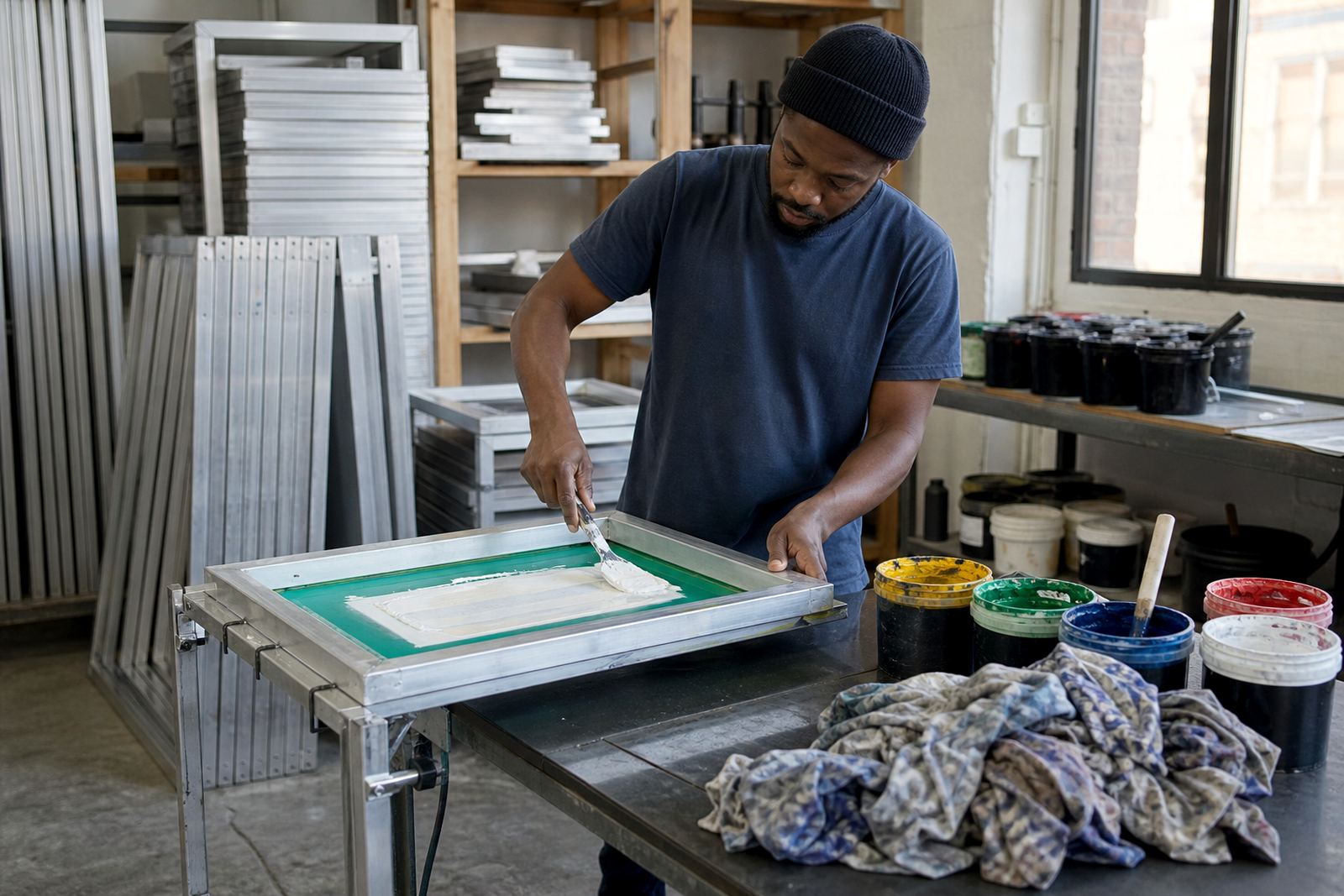
Aluminium frames are made for regular use, but they still need sensible care. Keep them clean after printing, avoid leaving ink build-up on corners and edges, and store them where they will not bow or pick up knocks. In a coastal city like Cape Town, it is worth checking frames after washup so moisture does not sit around the adhesive line for too long. If a frame is handled roughly, the mesh and tension can suffer even when the aluminium itself is still fine.
Good storage also helps if you carry stock between branches or keep frames in a delivery route. Stack them evenly, do not overload them and keep them away from heavy items that can twist the frame. A little routine care goes a long way, and it means the screen is ready when the next job lands on the table, not held back by damage that could have been avoided.
- Clean after use and keep adhesive areas free of residue
- Store flat and evenly supported
- Avoid knocks to corners and frame edges
- Check tension and mesh condition before repeat jobs
Key facts
| Product type | Custom size aluminium screen-printing frame |
|---|---|
| Use | Garment decoration and screen printing |
| Size range | Made to your supplied dimensions |
| Material | Aluminium frame construction |
| Services available | Stretching, restretching, cleaning, adhesive application and tension checks |
| Base area | Maitland, Cape Town with supply and delivery routes across South Africa |