
What the A5 Test Frame is used for
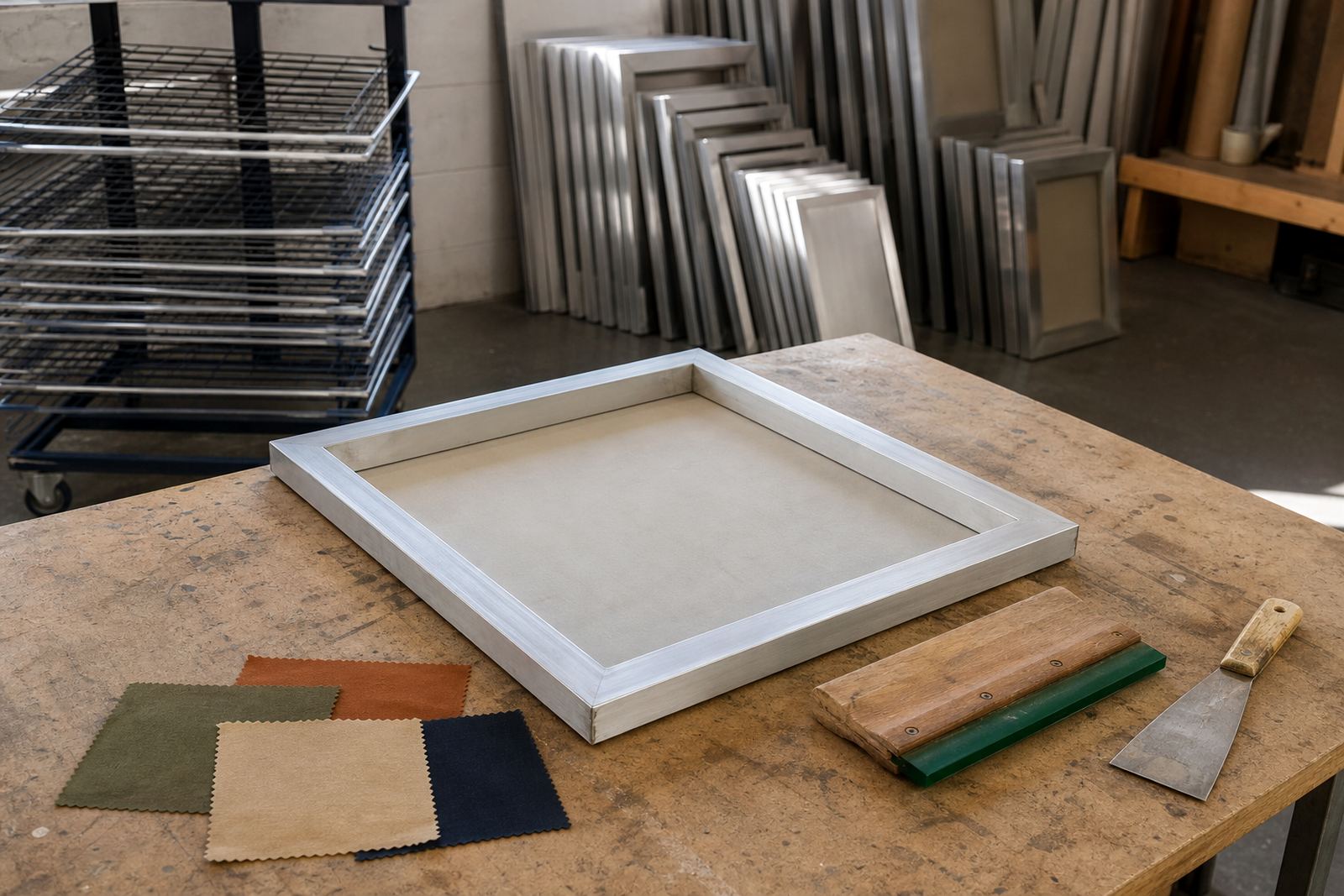
The A5 Test Frame is a small aluminium screen-printing frame made for quick checks before a full production run. It suits strike-offs, ink trials, artwork approval, and short sample prints on tees, bags, sleeves, labels, and small branding areas. Because the print area is compact, it helps reduce waste when you are testing colour, mesh count, stencil detail or print feel.
For garment printers in Cape Town, Johannesburg, Durban, Pretoria and Gqeberha, this kind of frame is handy when you need to confirm placement on a rush job or check that a screen is holding tension before a larger order. It is also a useful workshop tool for hobbyists who want cleaner test results without using a full-size frame for every sample.
- Strike-offs for customer approval
- Ink and opacity tests
- Short-run sampling
- Artwork placement checks
- Mesh and tension verification
Frame size, mesh options and build details
Our A5 Test Frame is made from aluminium for light handling and good resistance to workshop wear. Aluminium keeps the frame straight under normal use and it is less likely to twist than soft timber frames when stored properly. The compact format also makes it easier to move between coating, drying and printing areas in a small workshop.
Typical options are selected to suit the kind of garment work you do and the ink system you use. Mesh choice affects detail, ink deposit and drying behaviour, so it is worth matching the screen to the job rather than using one setup for everything. If you are running solvent, water-based or plastisol-type work, the mesh should be chosen with the ink and artwork in mind.
- A5 print area for small-format tests
- Aluminium construction for steady handling
- Mesh counts available for fine detail or heavier ink laydown
- Suitable for manual and workshop-based screen use
- Custom stretching available for specific job needs
Where this compact frame works best
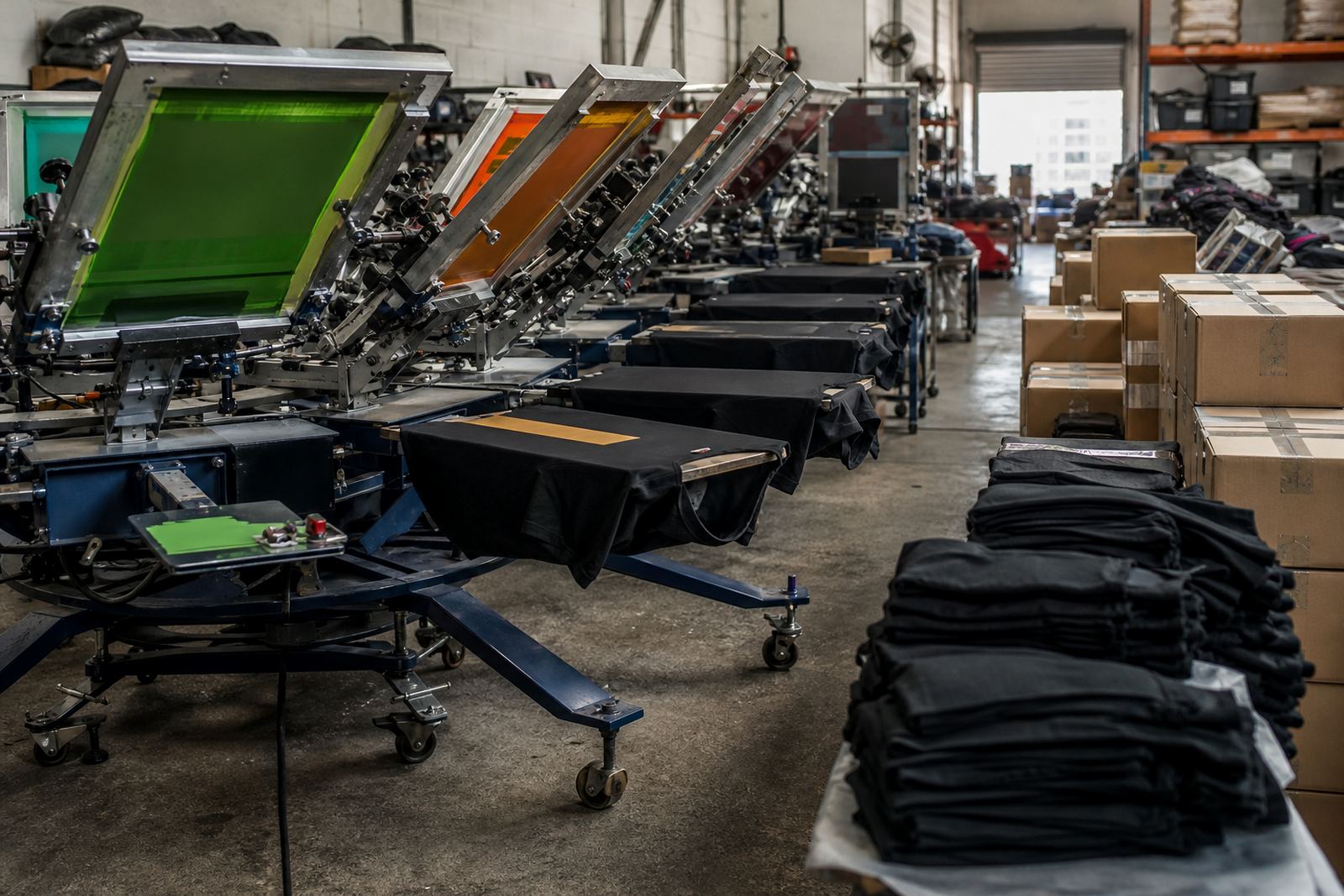
This frame suits small garment decoration jobs where speed and accuracy matter more than scale. It is often used for a first sample before a client signs off a bigger order, or when you need to check whether a design will hold up on textured fabric, zip areas, seams or narrow print zones. In busy shops, it also helps keep test work separate from production screens, which cuts confusion.
For printers working near the coast, especially in Durban and Gqeberha, having a properly stretched and inspected frame helps when humidity is high and screens can behave differently from one day to the next. In inland areas such as Pretoria and Johannesburg, the same frame is useful for quick line checks and clean repeat tests without taking up much bench space.
- Garment strike-offs and approvals
- Small logos, marks and placements
- Workshop sample printing
- Training and practice jobs
- Short production runs where a full screen is unnecessary
Installation, handling and power needs
The A5 Test Frame does not need power or gas to use. It is a manual screen frame, so it fits into an ordinary screen-printing setup with a coating area, drying rack, press or hand printing station. If you are using it with a vacuum table or a small manual press, the frame should sit flat and square so the stencil lines up properly.
Installation is simple but it still needs care. Check that the frame sits flush in your setup, that the mesh is tensioned correctly and that the corners are clean before coating. A loose setup can cause movement during printing, which leads to blurred edges or uneven ink deposit. If you are stretching your own screens, it helps to test alignment before you coat the screen for the first time.
- No power connection needed
- No gas, compressor or heating system required
- Works with manual print benches and small presses
- Best used on a level, clean surface
- Keep away from sharp edges and heavy stacked stock
Care, cleaning and screen servicing
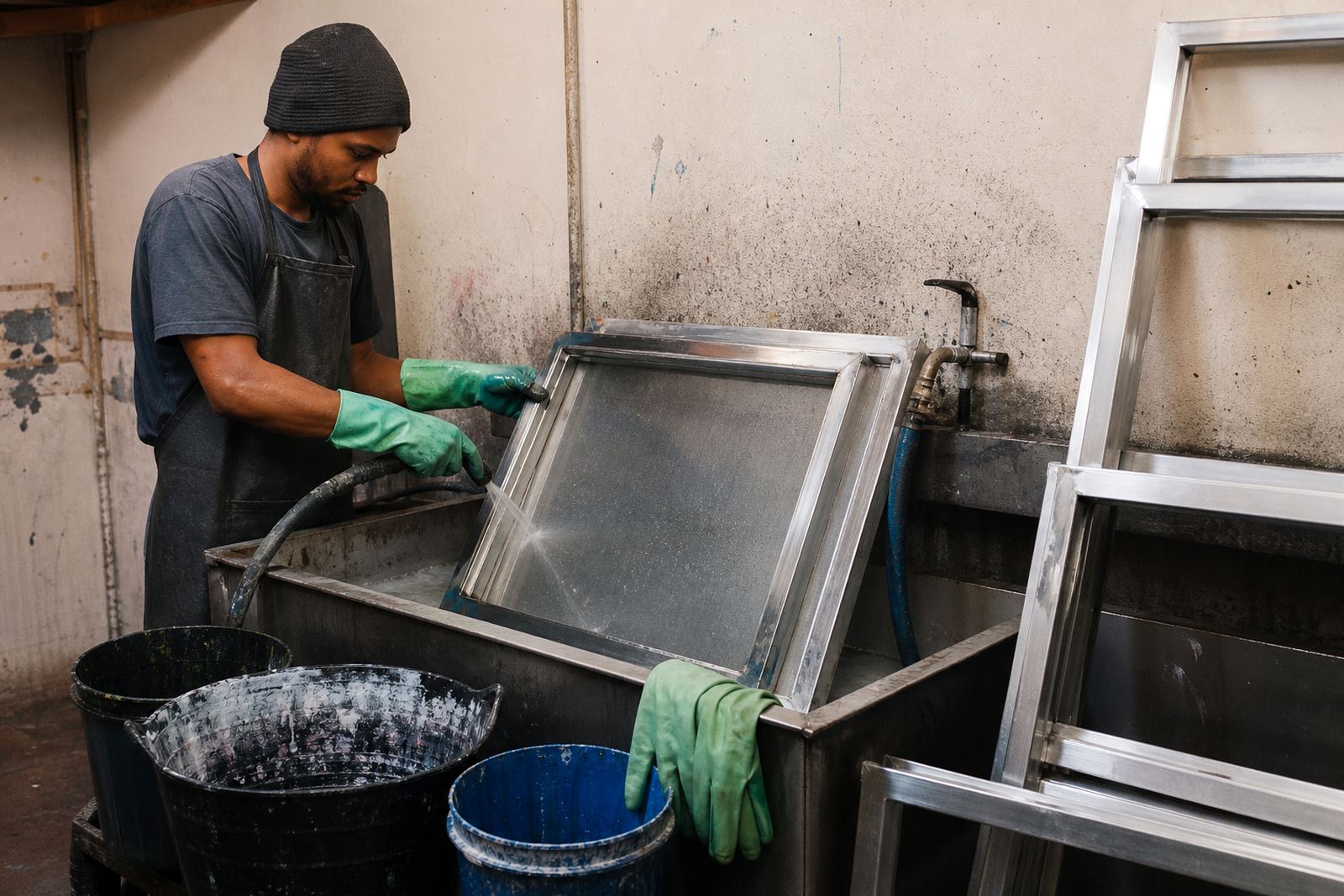
Good care keeps a test frame working properly for longer. After printing, remove ink residue as soon as practical, then clean the frame and mesh with the correct screen cleaning method for your ink type. Do not leave dried ink on the mesh for long periods, because it becomes harder to remove and can affect detail on the next test. In workshop conditions, that extra build-up can sneak up on you.
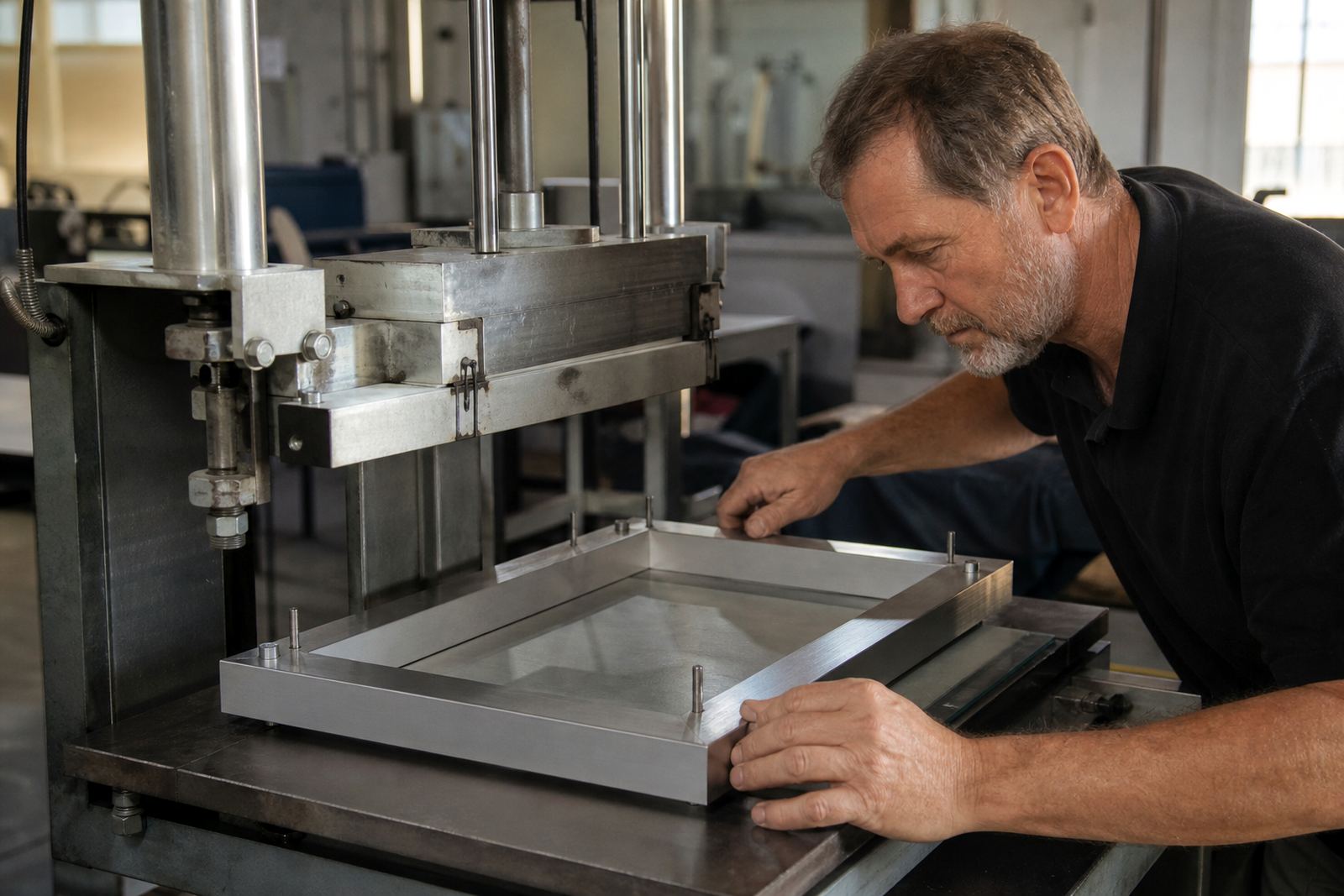
We also recommend checking tension regularly, especially if the screen is used often or stored in warm conditions. If the mesh starts to sag, the frame can be restretched or inspected before it affects print quality. Our service options include mesh removal, frame cleaning, adhesive application, tension checks and restretching for existing frames.
- Clean ink off after each session
- Store flat or upright without twisting the frame
- Keep screens dry and out of direct sunlight
- Check for loose corners and loss of tension
- Book restretching when print quality drops
What to check before you order
Before placing an order, it helps to confirm the size of the print area, the mesh count you need and whether the frame will be used for water-based, solvent or heavier body inks. Also think about how much space you have on your press or bench, because a compact frame still needs enough room for proper loading and alignment. If you are working from a small studio or shared workshop, this matters more than people expect.
If you need more than one screen, ask about bulk screen orders or custom size stretching. We supply printers across South Africa from Maitland, with collections and deliveries reaching Bellville, Paarl, Johannesburg, Durban, Pretoria and Gqeberha. If your order is urgent, we can discuss turnaround timing and pickup and return options where needed.
- Required print area and artwork size
- Mesh count and ink type
- Quantity needed for sample or production work
- Whether you need new stretching or a restretch
- Collection, delivery or pickup and return preference
Key facts
| Product type | Compact aluminium screen-printing test frame |
|---|---|
| Format | A5 size for strike-offs and small sample prints |
| Material | Aluminium frame with stretched screen mesh |
| Best for | Ink tests, approvals and short-run garment sampling |
| Power or gas | Not required |
| Service support | New stretching, restretching, cleaning and tension checks |