
Built for water based printing and regular washing
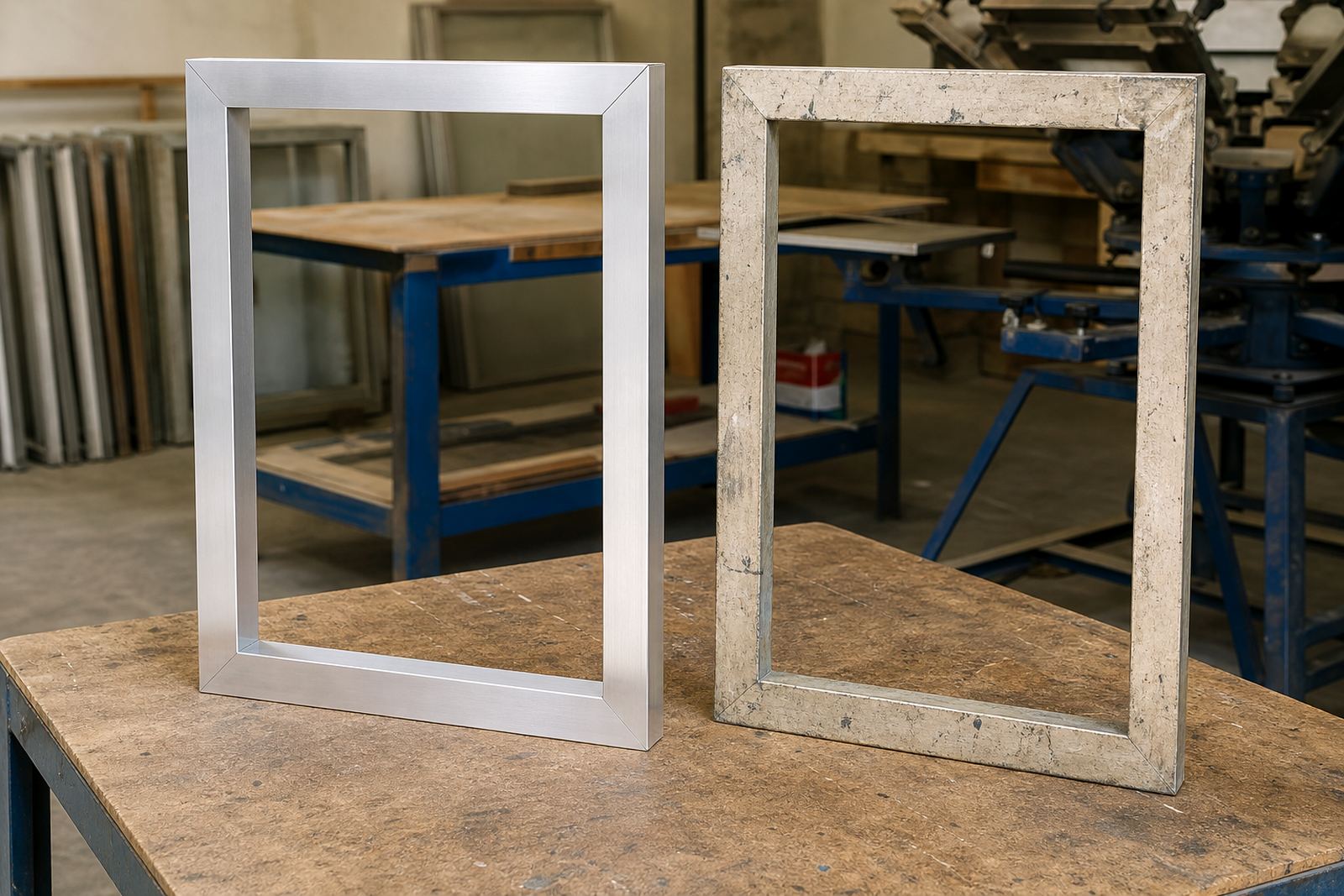
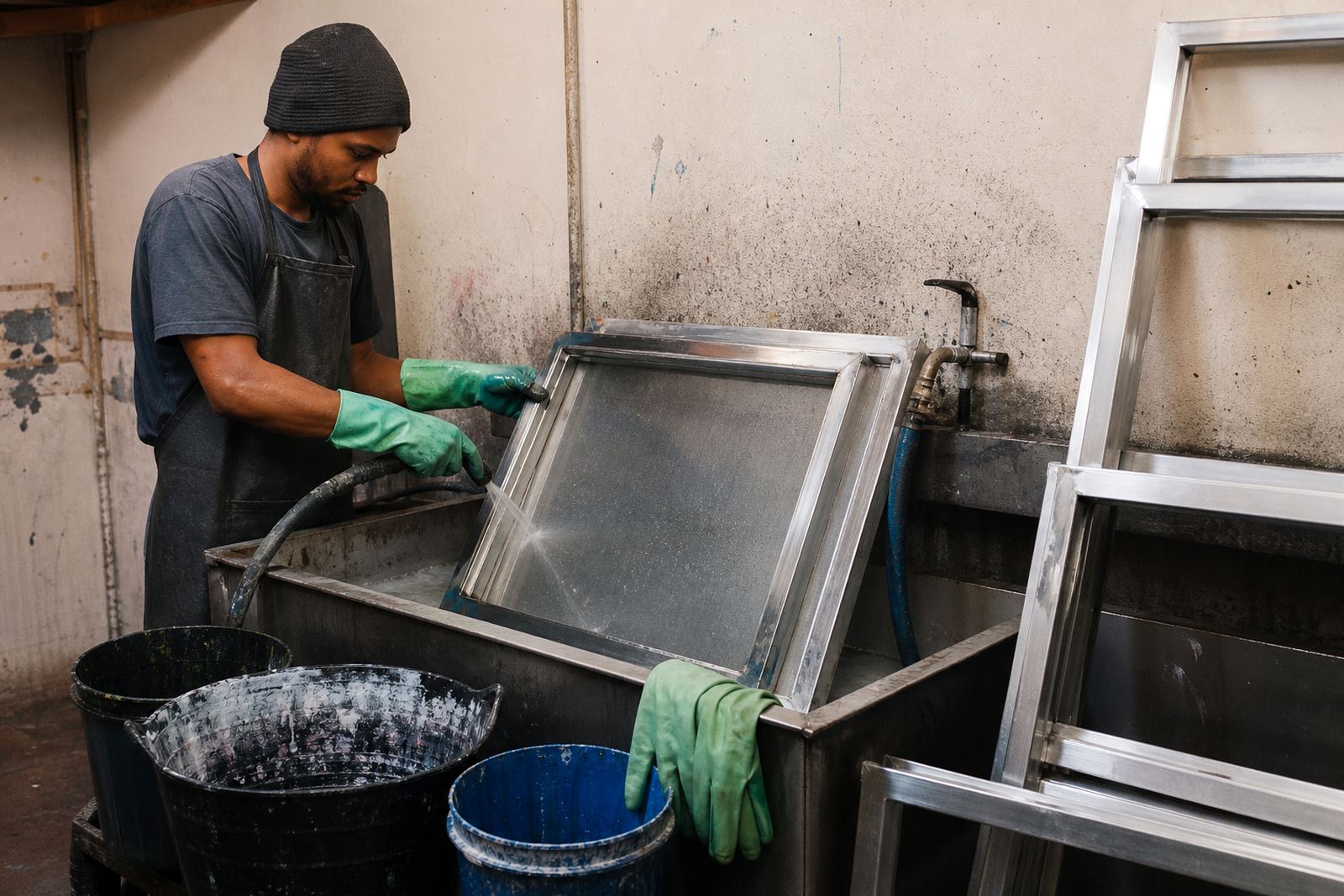
A water based frame needs to cope with repeated wet cleaning, squeegee pressure and the extra handling that comes with frequent colour changes. Our aluminium frames are made for that kind of work, with a rigid profile that helps keep mesh flat and ready for another cycle after cleaning. For printers in Cape Town, Johannesburg, Durban, Pretoria and Gqeberha, that matters when you are running daily production and cannot afford warped corners or loose mesh.
The frame is suited to garment decoration shops using water based inks on cotton tees, hoodies, tote bags and workwear. Because water based printing usually means more cleaning and faster turnaround between jobs, the frame needs to stay straight and hold tension through many wash cycles. In coastal areas like Durban and Gqeberha, aluminium is also a practical choice because it handles humidity better than untreated mild steel, with less risk of rust staining the mesh or frame edges.
- Aluminium construction for repeated wash-downs
- Stable corners for consistent print registration
- Suitable for manual and semi-automatic screen printing setups
- Useful for shops that use water based inks day after day
Sizes, mesh options and custom build choices
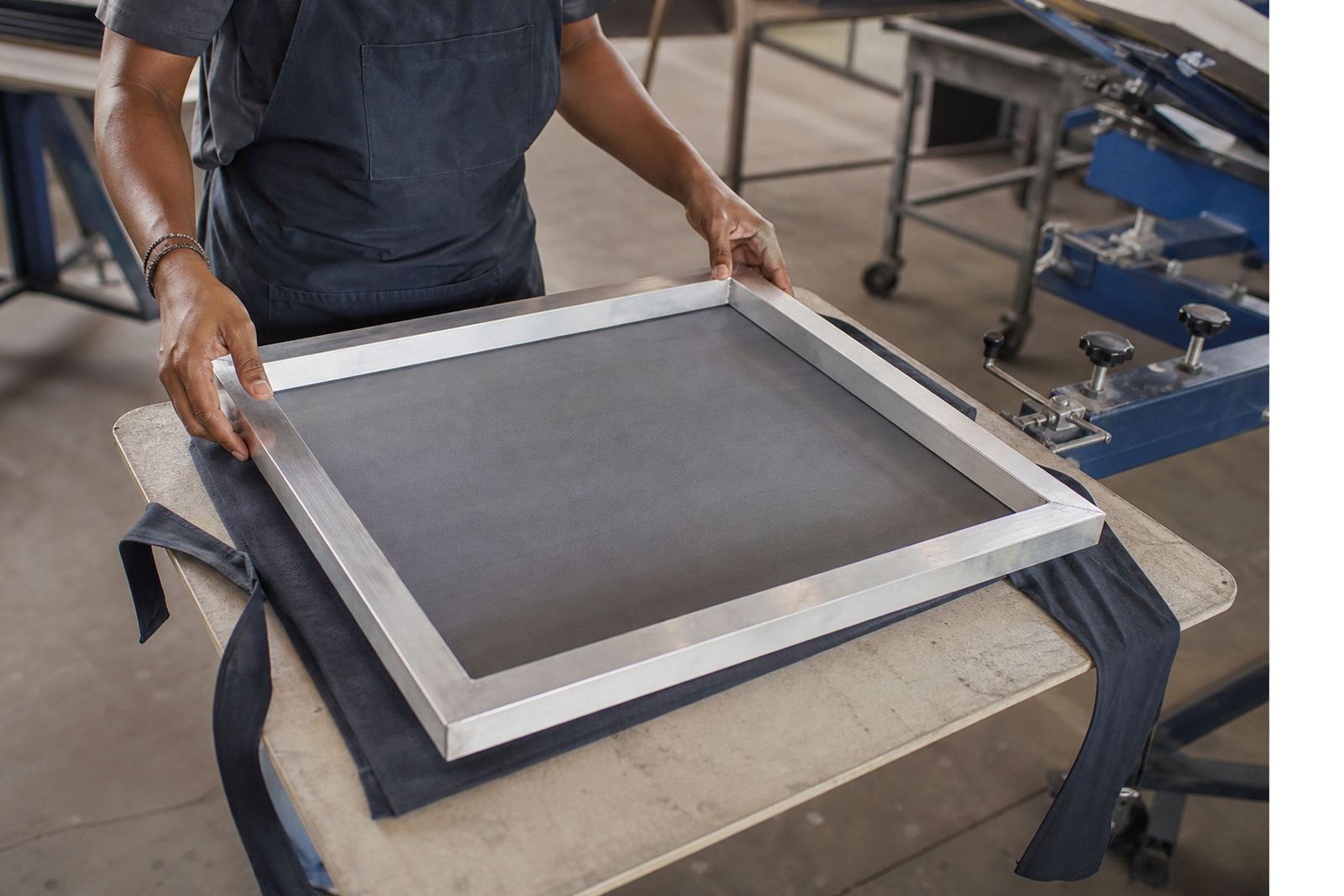
Water based work is rarely one-size-fits-all, so we supply custom screen sizes to match your platen size, artwork format and press setup. Whether you need compact frames for short runs or larger screens for full chest prints and repeat artwork, the frame can be made to suit the job. If you already have a preferred mesh count for fine detail or heavier deposits, we can stretch to your chosen spec.
For garment printers, the main choice is not just the outer frame size but also the inside opening, mesh count and the tension level required for the ink and artwork. Fine detail jobs often need a tighter mesh and better tension control, while blocky prints and underbases may call for a different spec. If you are unsure, we can advise on what will work best for your print method and drying setup.
- Custom sizes for standard and oversized garment prints
- Mesh selection for detail work, general print runs and heavier ink deposits
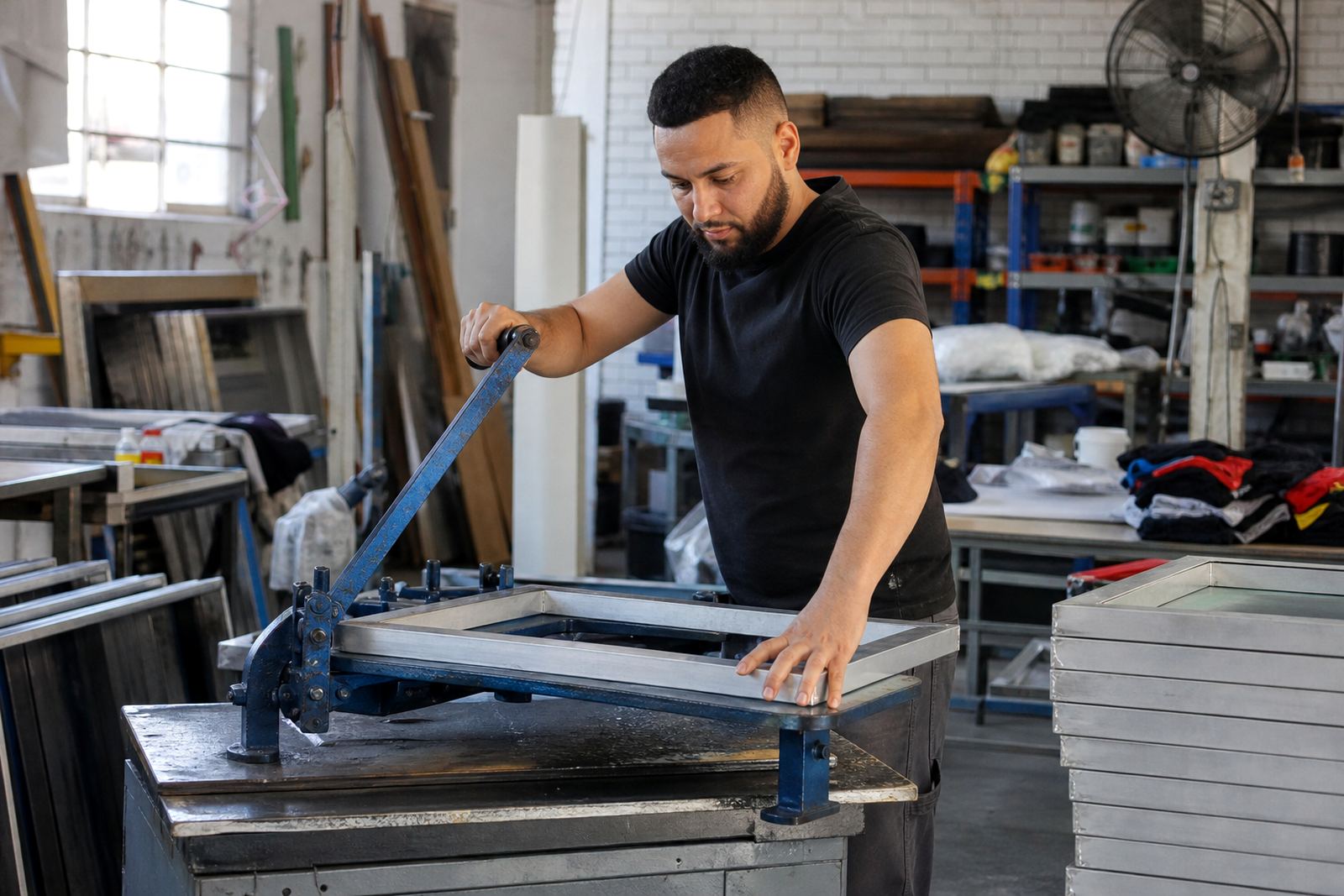
- Options for new stretching or restretching existing frames
- Bulk orders available for production shops and contract printers
Where this frame fits best in your workshop
This product suits print rooms that move quickly between designs and wash screens regularly during the week. It is a good fit for businesses printing schoolwear, branded merchandise, fashion ranges and work uniforms, especially where water based inks are preferred for a softer feel and cleaner finish. Because the frame is light enough to handle but still rigid, it works well in smaller Maitland workshops as well as larger production floors in Gauteng and KwaZulu-Natal.
If your shop deals with frequent mesh removals, adhesive application and re-stretching, the frame is designed to fit into that routine without unnecessary fuss. It also suits hobby printers who want cleaner results and fewer issues with sagging mesh. In busy shops, the difference shows up in easier registration, faster screen prep and fewer rework jobs after wash-up.
- Good for water based garment printing
- Useful in small studios and high-volume production shops
- Fits frequent clean-and-reuse workflows
- Suitable for local collections and national deliveries
Installation, setup and power requirements
This is a screen frame product, so there is no power or gas requirement for the frame itself. You do not need a three-phase supply, burners or workshop gas to use it. What you do need is a proper stretching and curing setup, plus a clean area for handling adhesive, mesh, clamps and drying time. In a hot Cape Town workshop or a more humid Durban unit, clean storage and good airflow help keep the screen in better condition after stretching.
When fitting the frame into your process, make sure the screen is set up for the press you use and the type of ink you run. If the frame is part of a new order, check the platen size, clamp spacing and the amount of clearance you need around the artwork. For existing frames, confirm whether you want mesh removal first, then restretching, or a fresh frame with a different opening size. That avoids costly changes later on.
- No electricity or gas needed for the frame itself
- Best used with a proper stretching, cleaning and drying area
- Check press clamp spacing before ordering
- Allow for drying time after adhesive application and mesh fitting
Care, wash cycles and service support
Water based work means more washing, so care is part of the value of the frame. After printing, screens should be cleaned properly and stored flat or racked in a way that avoids knocks on the corners. If the frame is used in a humid area or near the coast, drying the screen fully before storage helps prevent mould, odour and residue build-up on the mesh. Regular tension checks are worth doing, especially on frames that are used for repeat production runs.
ScreenFrame also supports the kind of servicing that keeps production moving. If an old screen still has a usable frame, we can restretch it, remove old mesh, clean the frame and apply adhesive again where needed. For shops that run urgent jobs or bulk screen orders, this is often the simplest way to keep up with demand without replacing everything at once. A quick inspection before the next run can save a lot of trouble on press day, especially when load-shedding or last minute orders have already shifted your schedule.
- Check tension after repeated wash cycles
- Dry screens fully before stacking or storage
- Inspect corners, glue lines and frame alignment regularly
- Use servicing to extend the life of usable frames
What to check before you place an order
Before ordering, measure the outer size, the internal opening and the space you have on your press. If you are using a set workflow, confirm the mesh count, frame depth and whether the screen must suit a standard garment platen or a larger print area. It also helps to know if the job needs a new stretch or if you want to work with an existing frame that only needs mesh removal and re-stretching.
For South African print shops, lead time matters too. If you are working on a tight turnaround in Pretoria or need a pickup and return arrangement from Bellville, tell us early so the order can be planned properly. Our team at Maitland handles enquiries through the contact page form, and we can help with custom size stretching, batch orders and delivery planning across Cape Town, Johannesburg, Durban and Gqeberha.
- Outer frame size and internal opening
- Required mesh count and print detail level
- Press clamp spacing and platen clearance
- New frame or restretch existing frame
- Delivery, collection or pickup and return needs
Key facts
| Frame material | Aluminium |
|---|---|
| Use case | Water based garment printing |
| Service options | New stretching, restretching, cleaning, inspections |
| Size range | Custom sizes on request |
| Location | Maitland, Cape Town |
| Supply areas | Cape Town, Johannesburg, Durban, Pretoria, Gqeberha |