
A faster sample room for Somerset West
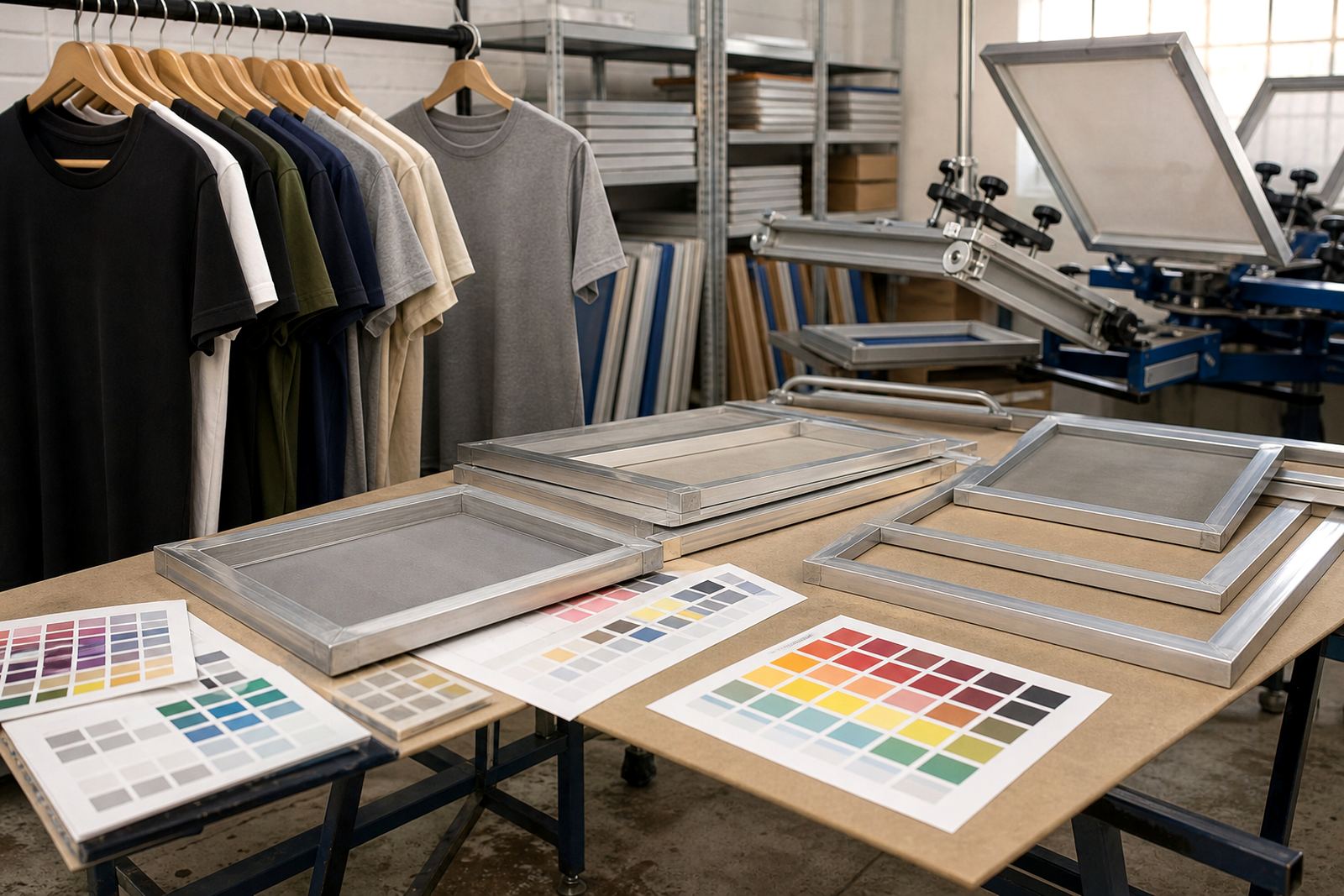
The brief came from a fashion sample room in Somerset West that handles short runs, fit samples and last minute changes before production. They needed smaller screen-printing frames that were easy to handle on a busy table, light enough for one person to move, and consistent enough to keep repeat prints aligned when a designer asked for another round of changes.
The team told us the current setup was slowing approvals. Larger frames were taking up too much space, the screens were awkward on a compact workbench, and a few of the older frames had uneven tension. In a sample room, that means more test prints, more wipe downs, and more time lost before the customer signs off. We kept the solution practical and made sure the frame sizes matched the way they actually work day to day.
Because the work was for garment decoration samples, the frames also had to hold detail well on fine mesh and stay steady under repeated squeegee passes. Coastal humidity in the Cape can be hard on materials, so the client wanted aluminium frames that would not warp easily and would hold up through regular cleaning and storage.
What the client needed from the frames
The order focused on smaller precision frames for sample production, not general bulk printing. The aim was to cut prep time and make client approvals happen faster, especially when the same design had to be reprinted in a slightly different colour or placement.
- Smaller aluminium frames for sample runs and approvals
- Consistent screen tension for fine detail work
- Easy handling on compact benches
- Frames suitable for repeated cleaning and reuse
- Sizes that suited garment sample artwork rather than large production layouts
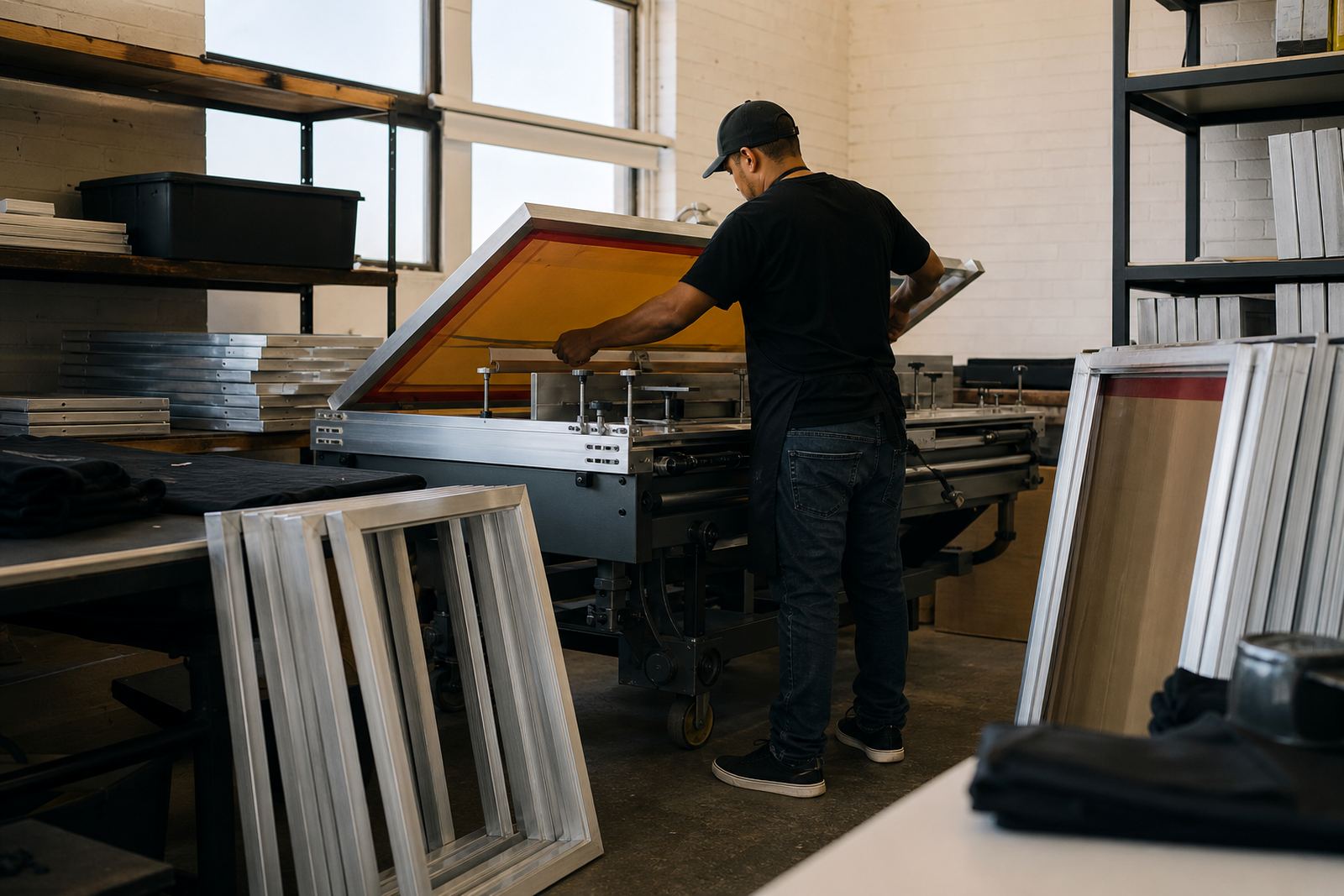
We also discussed how the frames would be stored during load-shedding and after hours. A sample room cannot afford screens bending in a tight storage corner or being damaged by stacked jobs. So we recommended a layout that kept the lighter frames separate from heavier production stock and made it easier to rotate screens by job number.
Our workshop approach and build details
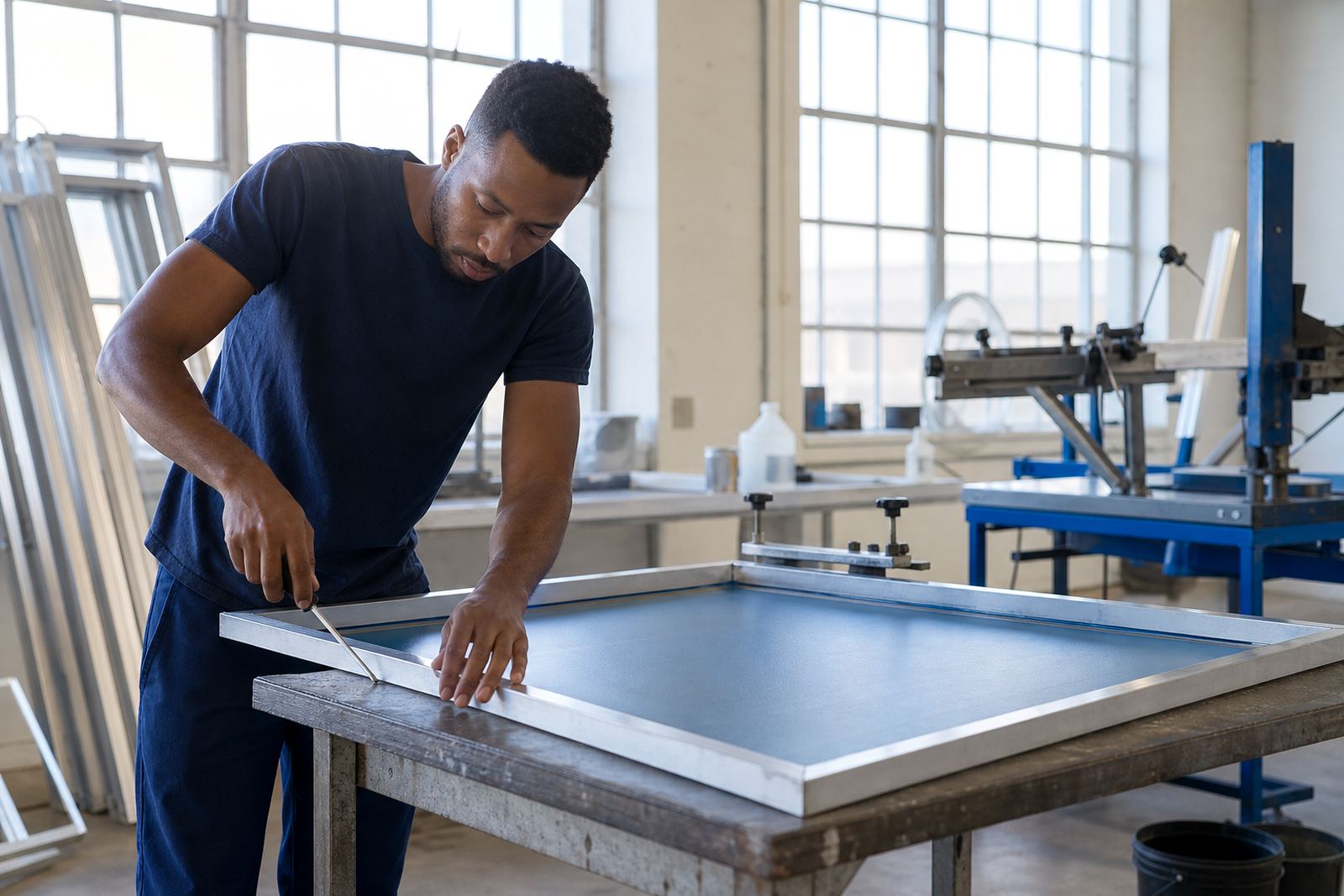
We stretched and finished the screens in Maitland, Cape Town, then checked each one before release. The customer wanted a neat, dependable batch with no surprises, so we worked to a clear sequence: frame cleaning, adhesive application, mesh stretching, tension checks and final inspection. That kept the finish even and reduced the chance of a frame coming back for adjustment.
For this project we supplied custom size aluminium frames in smaller formats suited to sample room work. The frames were selected for light handling and practical use, with enough rigidity to keep the mesh stable during repeated pull tests. We also made sure the edges were clean and ready for use with standard garment printing setup, so the team could move from approval print to washout with less delay.
- Custom size stretching for sample room jobs
- Frame cleaning before stretching
- Adhesive application for secure mesh bonding
- Tension checks on each screen before dispatch
- Inspection for square corners, finish and handling ease
Timeline from order to delivery
The work took two weeks from confirmation to completion. Week one covered measurements, job planning and the first stretch cycle. Week two covered finishing, inspection and handover. Because the customer was working to a fashion schedule, we kept the process tight and avoided unnecessary back and forth.
There were a few constraints to work around. The sample room needed the screens before a set of client meetings, and the job had to fit around other production work in their calendar. On our side, the biggest focus was accuracy. A screen that is a few millimetres off may still look fine on a bench, but in a sample room it can throw off registration and create extra revisions. We checked sizes carefully and kept the batch consistent from start to finish.
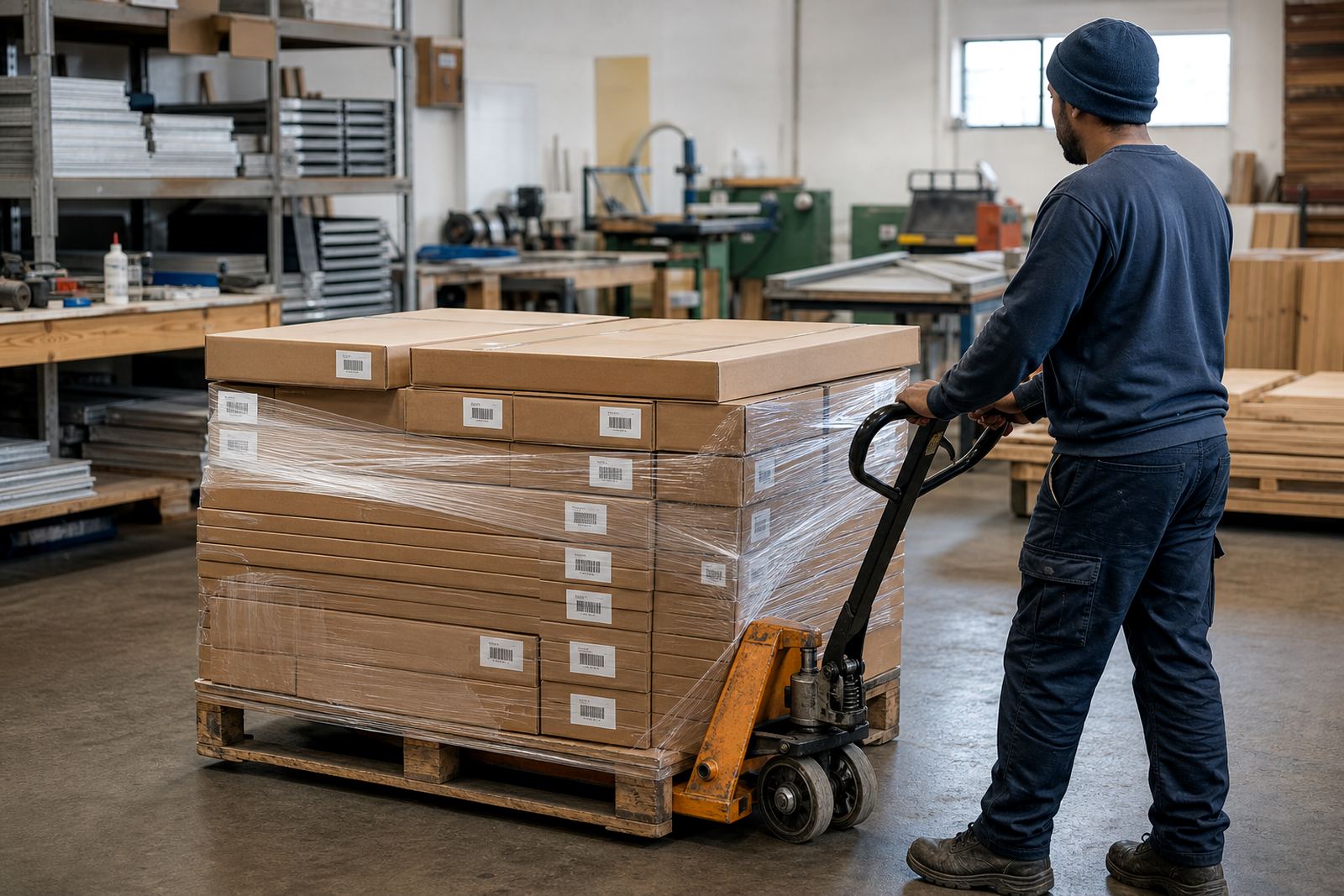
We arranged collection and return support through our Cape Town operations, which suited the client because they could keep the room running while the screens were being prepared. For teams in Somerset West, that sort of pickup and return support saves a trip into the city and cuts down on workshop downtime.
Results in the sample room
The main result was speed. Once the new frames were in place, the team could move through approval prints more quickly and with less handling fuss. Smaller frames were easier to position, especially when they were testing different garment placements or checking a revised logo size on a sample tee or hoodie.
They also reported cleaner workflow between jobs. Because the screens were sized to the way the sample room actually prints, there was less clutter around the bench and fewer awkward lifts. The tighter, more even tension helped the ink pass more cleanly too, so the staff spent less time correcting print issues and more time on the actual sampling work.
- Faster client approvals on small batches
- Less handling strain for one person setup
- Cleaner registration on repeated sample prints
- Better use of bench space in a compact room
For a fashion business, those gains matter. A sample room runs on quick decisions. If the frames slow the team down, then the whole approval chain slows down with it. This project gave them a setup that matched the pace of their work and held up well under daily use.
What we would do again for a similar job
If we were doing this project again for another Somerset West sample room, we would take the same approach: measure the workflow first, then match the frame sizes to the actual table space and print sizes being used. That avoids overspecifying the job and keeps the setup practical for short runs and repeat approvals.
We would also recommend the same maintenance routine. Simple screen care goes a long way in the Western Cape, especially with moisture in the air and the stop start nature of sample work. A quick clean after use, proper drying, and sensible storage during power cuts all help keep the frames in good condition for longer.
For clients who handle multiple revisions each week, we would continue to suggest a mixed set of frame sizes rather than one large standard batch. That gives the team more flexibility when a designer changes the artwork at the last minute. It also makes it easier to separate approval screens from production screens, which keeps the room organised and saves time when orders start stacking up.
Key facts
| Client type | Fashion sample room |
|---|---|
| Town | Somerset West |
| Project duration | 2 weeks |
| Product supplied | Custom aluminium screen-printing frames |
| Frame format | Smaller precision sizes for garment samples |
| Service scope | New screen stretching, cleaning, adhesive application, tension checks and inspection |