
A Cape Town brief with a tight school-season deadline
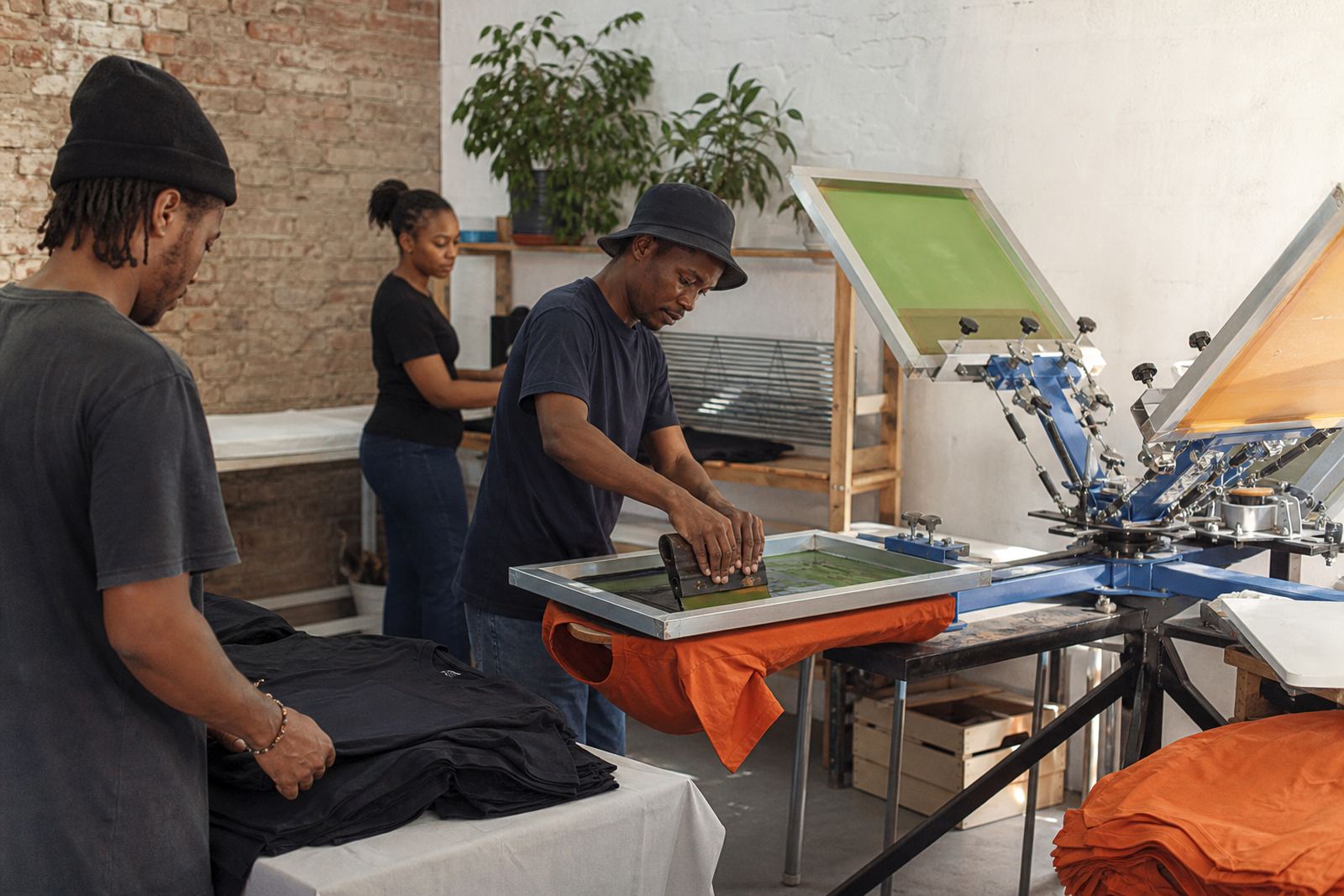
The client was a garment printer based in Salt River, Cape Town, handling school uniform orders for the start of term. Their existing screens were still serviceable but the mesh had lost tension in a few sizes and some frames were showing the usual wear that comes from repeated use, cleaning and storage in a busy print room. They needed the screens checked, restored and returned before the order book filled up.
The brief was straightforward: improve print consistency, keep costs sensible, and avoid any delay that could push the workshop into backlogs. Because the work was tied to a seasonal rush, we treated it as a priority job and planned the whole run around collection, inspection, stretching and return. In Cape Town, and especially near the coast, aluminium frames and mesh can be affected by humidity if they are not stored and handled properly, so the client wanted screens they could trust straight out of the box.
- Client type: trade printer serving school uniform work
- Location: Salt River, Cape Town
- Need: restore worn screens before peak season
- Main concern: tension loss and frame wear
What was holding the screens back
When screens start drifting out of spec, the signs show up quickly on press. Ink deposit becomes uneven, fine detail starts breaking down and repeat jobs need more adjustment than they should. In this case, some frames had old adhesive residue, a few screens were under-tensioned and several units needed a proper clean before any new mesh could be fitted. That kind of build-up is common where teams are pushing volume and doing quick turnarounds day after day.
We also had to work within practical workshop limits. The client could not spare much floor space for dead stock, and they needed a delivery plan that matched their production schedule. Because the job involved different frame sizes, we checked each unit individually rather than treating the whole batch the same. That let us separate the screens that only needed cleaning from the ones that needed full restretching.
- Old adhesive and mesh residue needed removal
- Several frames had lost even tension across the print area
- Sizes were mixed, so each screen had to be assessed on its own
- The client needed minimum downtime during a busy period
The stretch and clean process we used
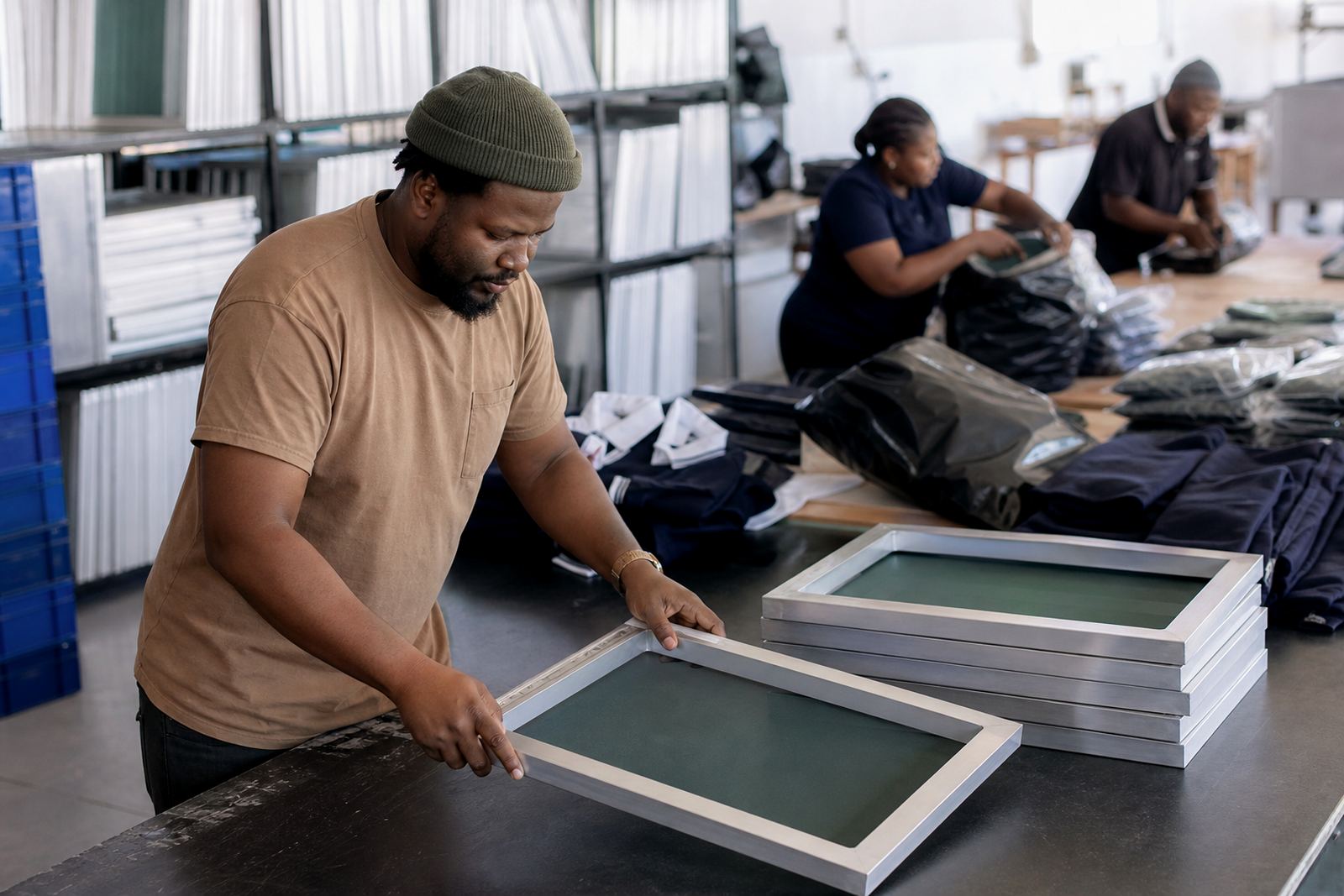
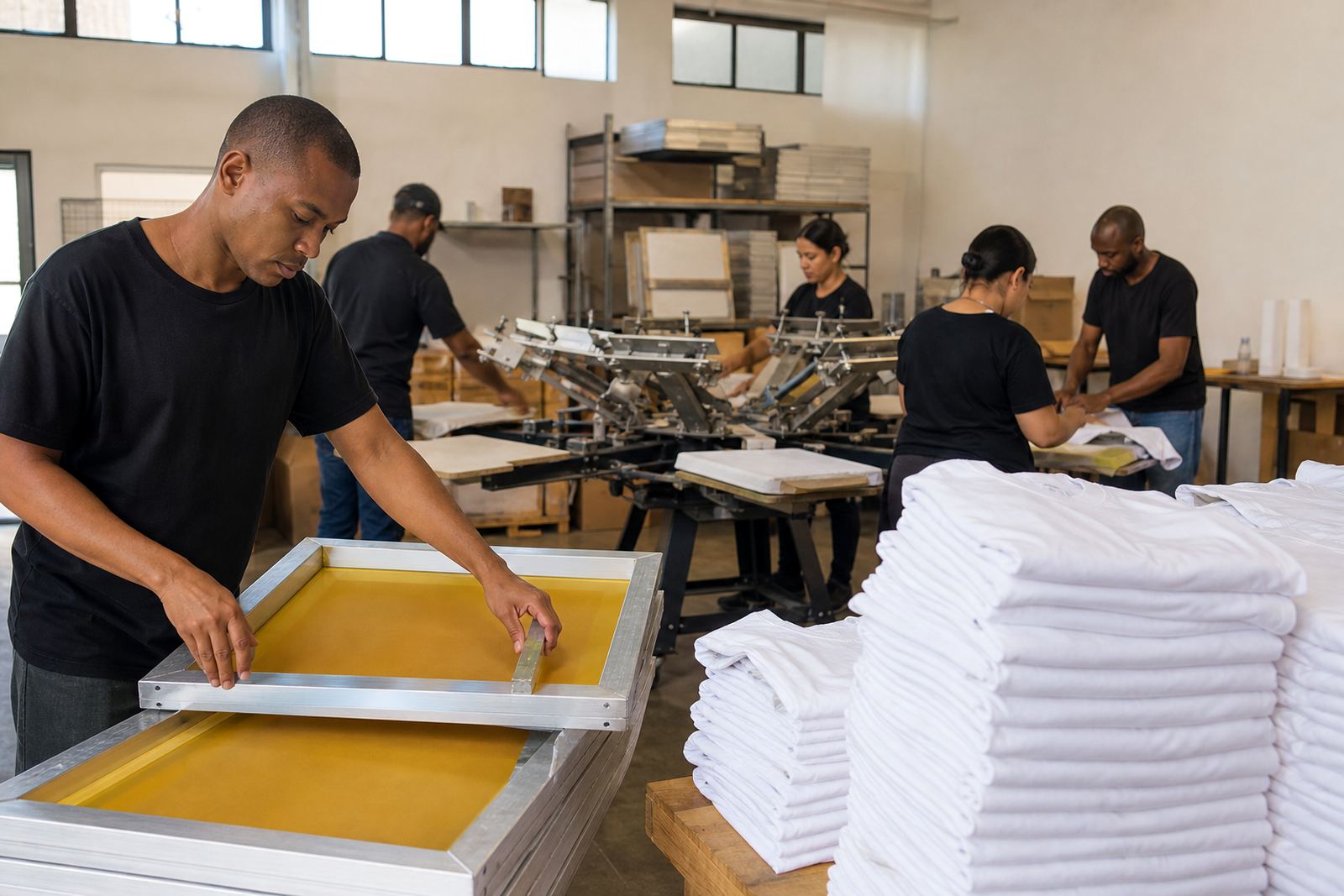
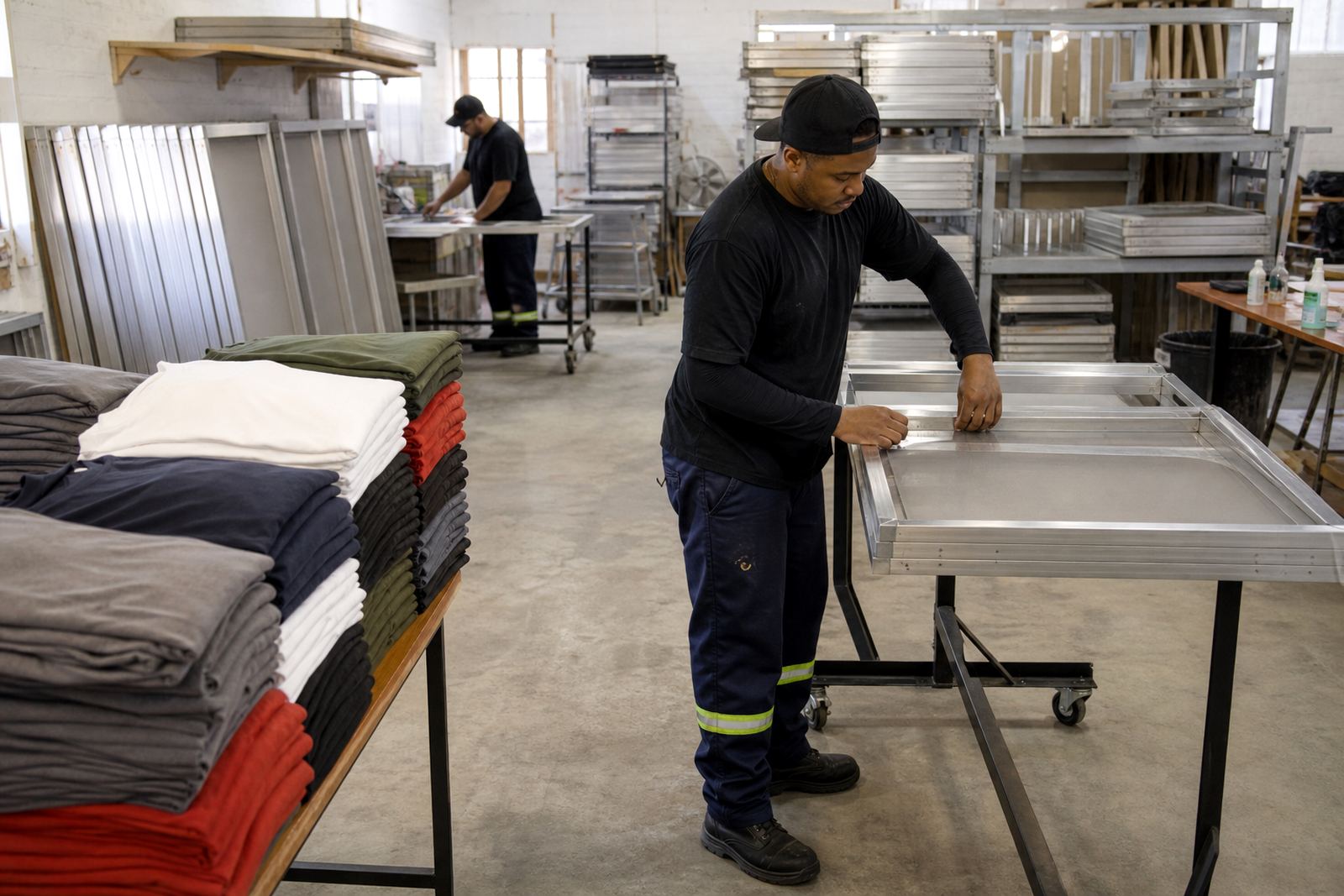
We started with mesh removal on the worn screens and carried out frame cleaning so each aluminium frame could be prepared properly for the next stage. Where needed, we applied fresh adhesive and then stretched new mesh to the required tension. After that, every screen went through tension checks and a final inspection before sign-off. It is simple work in principle, but getting the result right takes care at each step, especially when the screens have to hold up over a full run of school garments.
The batch included standard garment-printing frame sizes plus a few custom dimensions used for repeat uniform jobs. We kept the finish consistent across the lot so the printer would not need to compensate from screen to screen. One of the practical details that makes a big difference is edge preparation, because a clean frame bond helps reduce lifting later on. We also checked for small nicks, warping or surface damage that could affect the fit.
- New screen stretching for worn units
- Restretch existing frames where the aluminium was still sound
- Mesh removal and frame cleaning before rebonding
- Adhesive application and tension checks on each screen
Timeline, turnaround and delivery plan
The job was completed over two weeks from collection to return. In week one we assessed the condition of the screens, removed the tired mesh, cleaned the frames and prepared the batch for stretching. In week two we completed the restretch work, carried out inspections and arranged return delivery so the printer could get back onto the press without losing a full production cycle. The timing worked well because the client had warned us about the uniform season rush early enough to slot the work in before volumes climbed.
For this project, logistics mattered almost as much as workshop work. We planned collection and return around the client's available receiving times and made sure the batch stayed together from start to finish. That kept the order neat, reduced handling damage and saved the team from chasing individual screens around the workshop. The client also had confidence that the restored screens would arrive ready to use, not needing last minute fixes or re-tensioning.
- Week 1: collection, inspection, mesh removal and frame cleaning
- Week 2: adhesive application, stretching, tension checks and return
- Turnaround: 2 weeks total
- Delivery: coordinated to suit the client’s production schedule
What changed once the screens went back into production
Once the refreshed screens were back on press, the client reported steadier print results and less time spent adjusting for inconsistency. For school uniform work, that matters because orders often repeat in batches and the print room needs dependable screens that behave the same way shift after shift. Better tension also helps reduce reject work, which saves both ink and labour over the course of a season.
The job also gave the workshop a clearer baseline for future maintenance. Instead of letting worn screens drift until they became a problem, the client now had a cleaner set of working frames and a better idea of which ones should be rotated, stored or inspected first. That kind of practical housekeeping can make a proper difference when load-shedding, deadlines and school term pressure all hit at the same time. The team could focus on printing, not fixing avoidable screen faults.
It was a good outcome for a mid-size trade printer because the work supported throughput without forcing a big capital spend. The frames were restored for continued use, and the client avoided replacing more screens than necessary.
What we would do again for the next rush
If we were handling the same type of job again, we would still recommend an early inspection before the season starts. That gives enough time to identify screens that only need cleaning, screens that need full restretching and any frames that should be retired. For busy uniform printers, the best results usually come from sorting the batch before the panic starts, not after the queue has already built up.
We would also keep the same approach to mixed sizes and custom frames. By checking each unit properly and matching the work to the condition of the frame, the workshop gets better control over cost and turnaround. It is a practical way to support printers in Cape Town and further afield when they need screens that are ready for volume work, not just a quick patch-up.
- Book screen checks before peak season
- Separate reusable frames from worn-out ones early
- Keep replacement mesh and adhesive matched to the job
- Plan collection and return around press schedules
Key facts
| Project type | Screen restoration for a garment printer |
|---|---|
| Town | Salt River, Cape Town |
| Timeline | 2 weeks |
| Work completed | New stretching, restretching, cleaning, adhesive application |
| Screen sizes | Mixed standard and custom frame sizes |
| Outcome | Improved tension consistency and ready-for-season screens |