
The Paarl brief: bigger back prints, fewer stoppages
This client works from the Winelands and handles mixed garment orders for local schools, clubs and trade customers. By late autumn the back prints on hoodies were getting larger and the existing frames were taking too much time to prep between runs. The printer needed aluminium screen-printing frames sized for fuller back artwork, with cleaner tension and less flex during repeated pulls.
The job was not just about size. The workshop had to manage short lead times, changing artwork widths, and the usual winter pressure of moving thick hoodies through the press. They needed frames that would hold mesh squarely, stay stable in a busy production room, and make it easier for staff to keep registration right when the garments were bulky and warm from drying racks.
What made the order tricky in winter
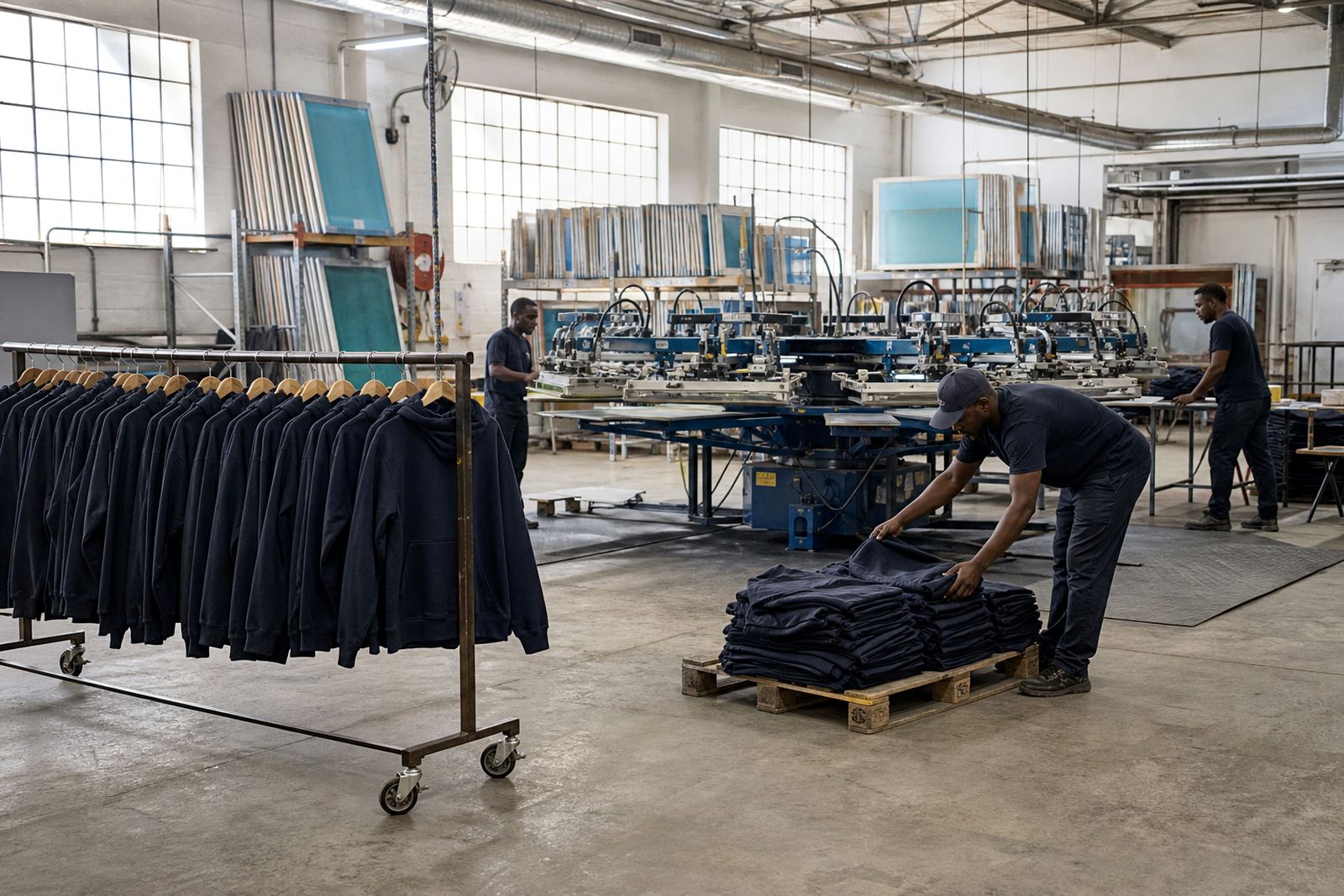
Hoodie production brings a few problems that do not always show up on lighter tees. Thick seams can lift the garment, moisture from the Cape winter can affect drying, and larger back images need more even tension across the full screen. The client also wanted frames that could be cleaned properly and reused without frame twist, because the order mix was changing week by week.
- Back print areas needed to suit oversized hoodie artwork without crowding the seam line.
- The workshop needed consistent tension for repeated runs across several sizes.
- Frames had to stand up to regular cleaning and adhesive use in a humid coastal climate.
- The client wanted a setup that could be restretched later if mesh wear set in.
They were also working around delivery timing in Paarl, so the flow from workshop to site had to stay tidy. No one wanted a pile-up of frames waiting for tension checks while the print schedule was already moving. That kind of delay can throw off a full week, and it usually does not forgive itself.
What we supplied and how we set it up
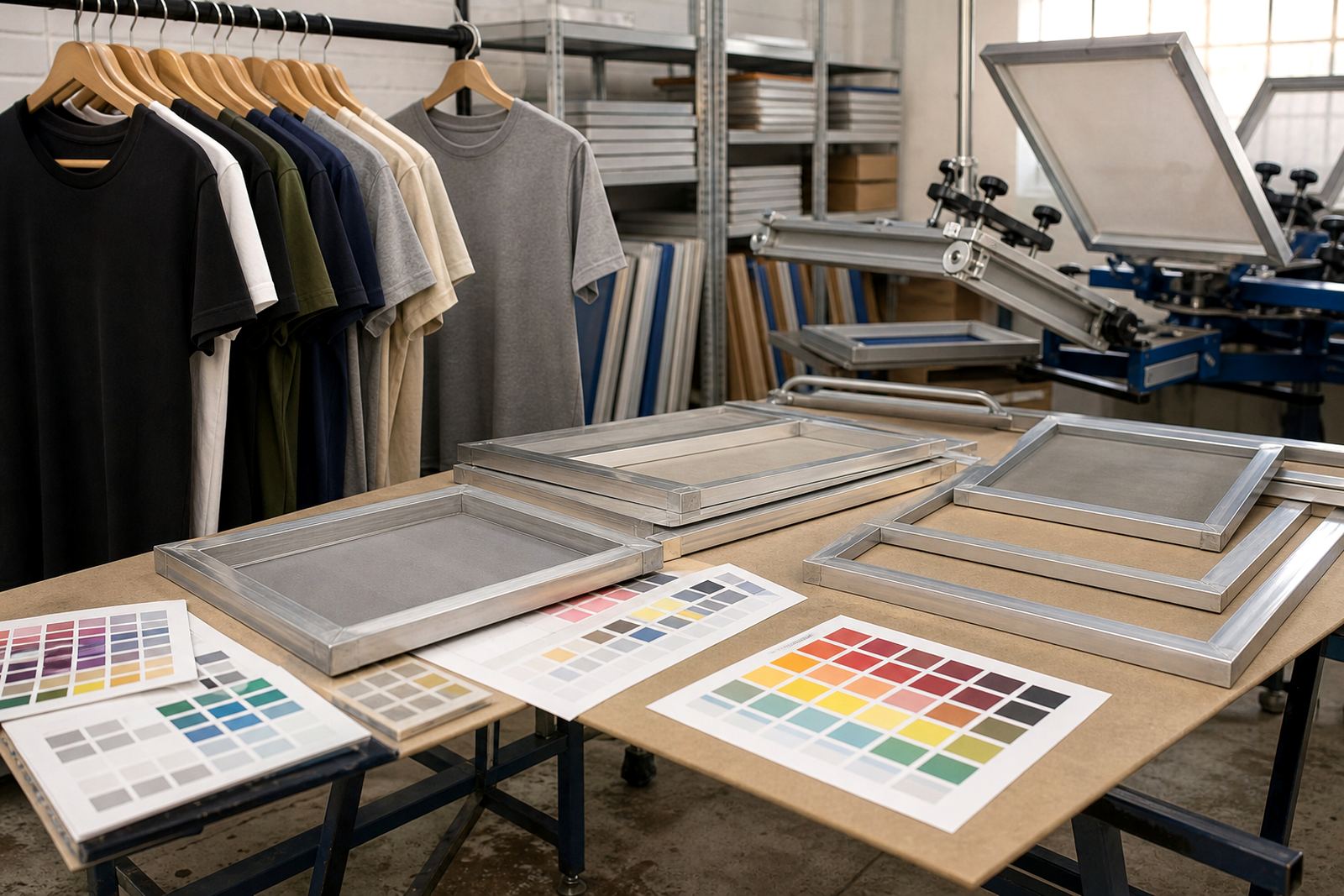
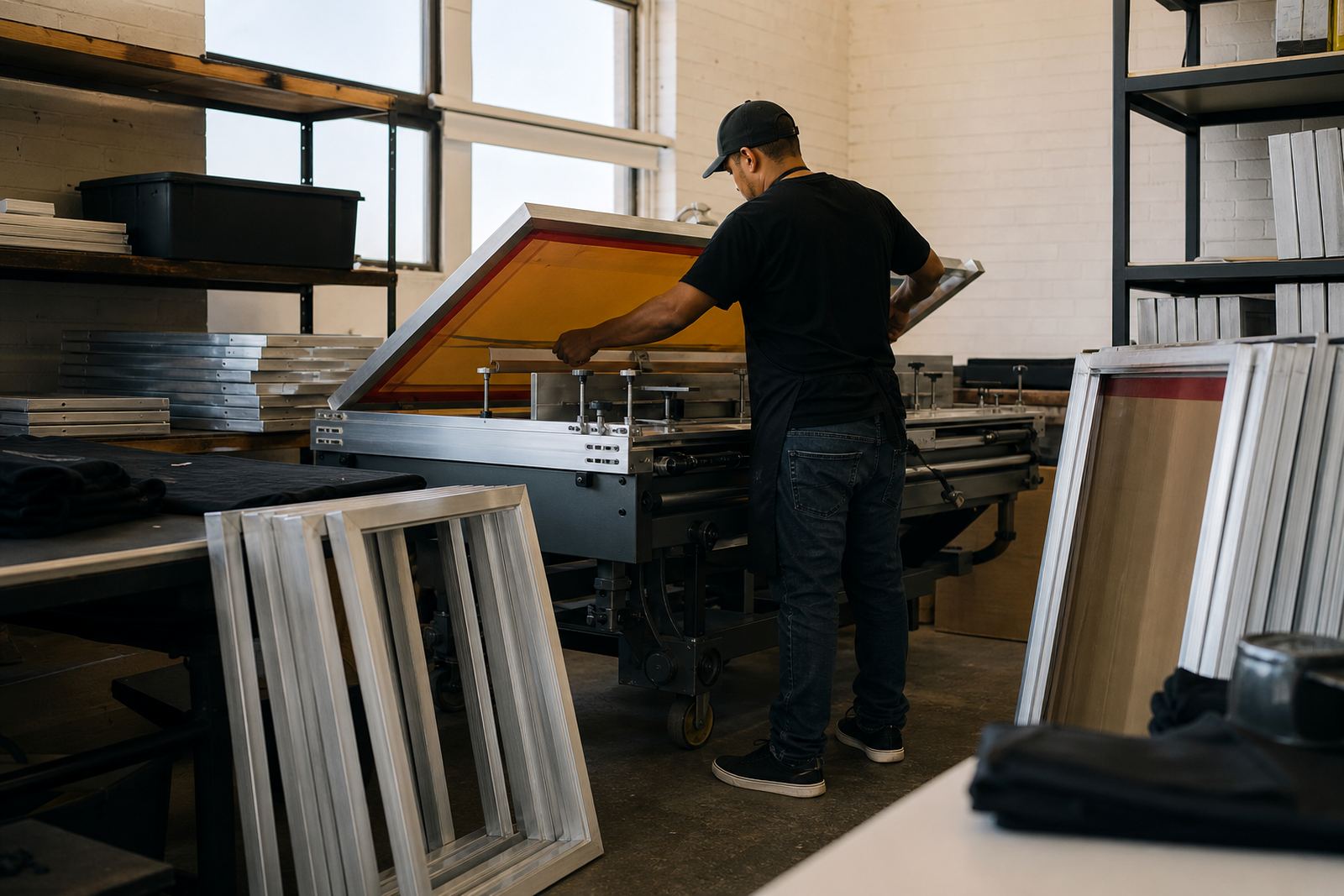
We supplied aluminium screen-printing frames sized for larger hoodie back artwork, then handled the stretching and prep in our Maitland workshop. Each frame was checked for square, cleaned, and fitted for the mesh spec requested by the client. Where needed, we removed old mesh, applied adhesive evenly, and checked tension before release.
The set included a mix of custom sizes so the printer could handle both standard winter backs and larger feature prints without swapping too often. We also checked that the frames sat well with the client’s existing production flow. A frame that looks fine on paper can still be awkward on press if the dimensions are not right, so we measured carefully and left a little allowance for handling and trimming.
- Custom size stretching for larger hoodie back artwork.
- Mesh removal and re-prep on selected existing frames.
- Tension checks for even pull across the print area.
- Frame cleaning before dispatch so the screens arrived ready for use.
Timeline from first enquiry to delivery
The project ran over two weeks from the first enquiry to final handover. In week one we confirmed the artwork size, checked the current frame stock, and agreed the mix of new frames versus restretched units. We then prepared the frames and completed the first round of stretching at our workshop in Maitland.
In week two we carried out final inspections, confirmed tension, and arranged collection and return through the Paarl supply route. The client needed the order turned around before the next winter batch of hoodies came in, so we kept the job moving in a tight window. That timing mattered because any hold-up would have left the print team waiting on screens instead of printing garments.
Because the order was planned properly, the client did not have to stop production to manage frame issues. The screens arrived in sequence, and the workshop team could start with the larger back prints first, then move onto the smaller reprints. It saved time at the press and reduced the back-and-forth that often happens when frames are a bit off spec.
Results on the print floor
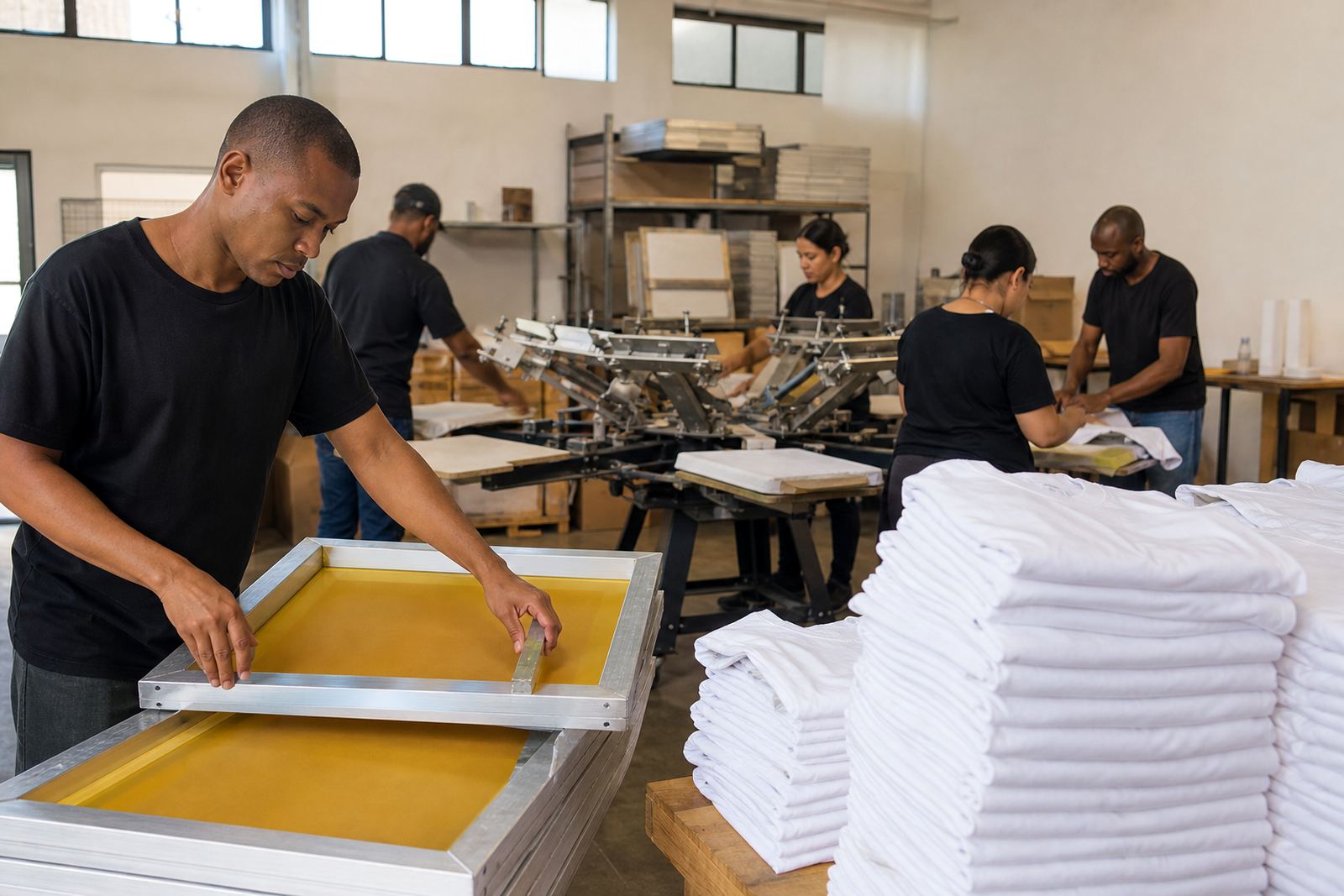
The client saw cleaner screen contact across the bigger back areas and fewer interruptions during production. With better tension and properly sized frames, the hoodie backs printed more evenly, especially where the artwork crossed wider spans on heavy winter garments. That helped keep the print room moving and cut down on rework from poor registration or patchy coverage.
The frames also made cleaning easier at the end of a run, which matters when a workshop is changing colours or styles several times in a day. In a small production room, that kind of saving shows up quickly. Less time spent fighting the screen means more time on actual printing, and that is where the value sits.
- More even print results on larger hoodie backs.
- Less flex during repeated squeegee passes.
- Faster changeover between winter jobs.
- Better reuse of existing frames that still had life left in them.
What we would repeat for the next Paarl run
If we were doing this same project again, we would keep the same order method: confirm artwork size first, then match the frame spec to the press routine and the garment weight. That approach works well for Winelands printers who need practical frames, not guesswork. We would also keep the split between new frames and restretched units, because it helps manage cost without sacrificing print quality.
For a future run, we would still recommend a short inspection before every winter batch, especially if the frames have been stored in a warm room or moved between sites. Aluminium is a good fit for this kind of work, but it still needs proper checking after heavy use. The key lesson from this job was simple, the right frame size and tension make hoodie printing easier from the first pull to the last.
ScreenFrame handles screen stretching and frame prep from Maitland, with delivery and collection support across Cape Town, Johannesburg, Durban, Pretoria and Gqeberha. For Paarl printers, the supply route gives local access without the faff of trying to patch a poor frame setup at the last minute.
Key facts
| Project | Paarl Hoodie Backs |
|---|---|
| Client type | Garment decorator serving winter clothing orders |
| Town | Paarl |
| Timeline | 2 weeks |
| Work completed | Custom aluminium frame supply and screen stretching |
| Key outcome | Cleaner large back prints with fewer stoppages |