
What the Bellville workshop needed
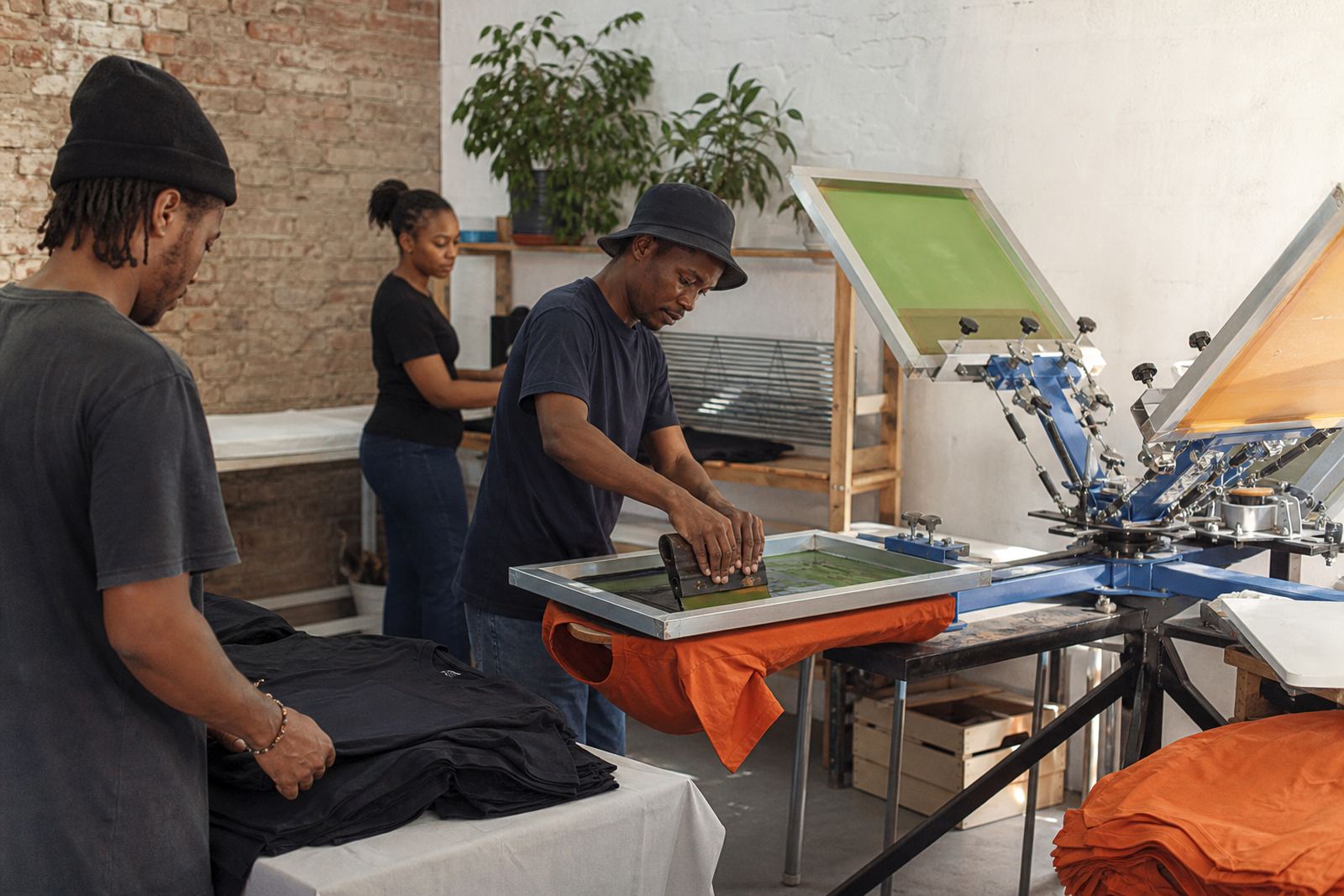
The client was a workwear printer in Bellville serving schools, factories, transport teams and small contractors across Cape Town. Their main frames handled standard chest prints well, but sleeve work was getting lost because the existing screen sizes were too wide and awkward to register on narrow areas. They wanted a practical way to add sleeve branding without slowing the rest of the job flow.
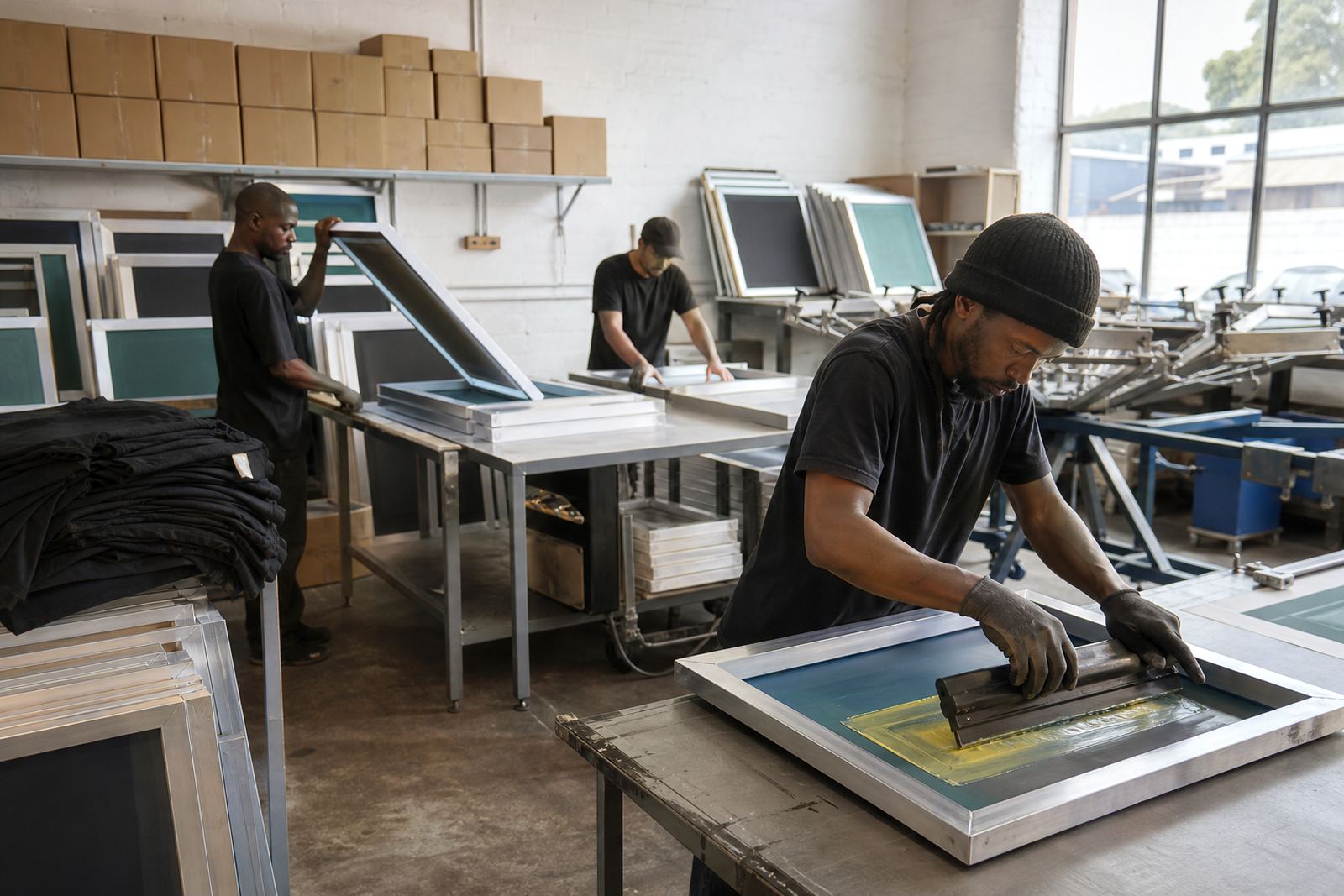
The brief was clear: supply a set of narrow sleeve frames that would sit properly on their press, keep mesh tension stable through repeated runs, and be simple for operators to handle during busy production days. They also needed frames that would hold up in a workshop where screens are moved often, cleaned often and used on mixed garment loads.
- Narrow frames for sleeve prints on polos, jackets and work shirts
- Consistent tension for repeat artwork and small batch reorders
- Fast handling for a Bellville production team working in tight space
- Durable aluminium construction for daily use and wash-downs
Constraints on the shop floor
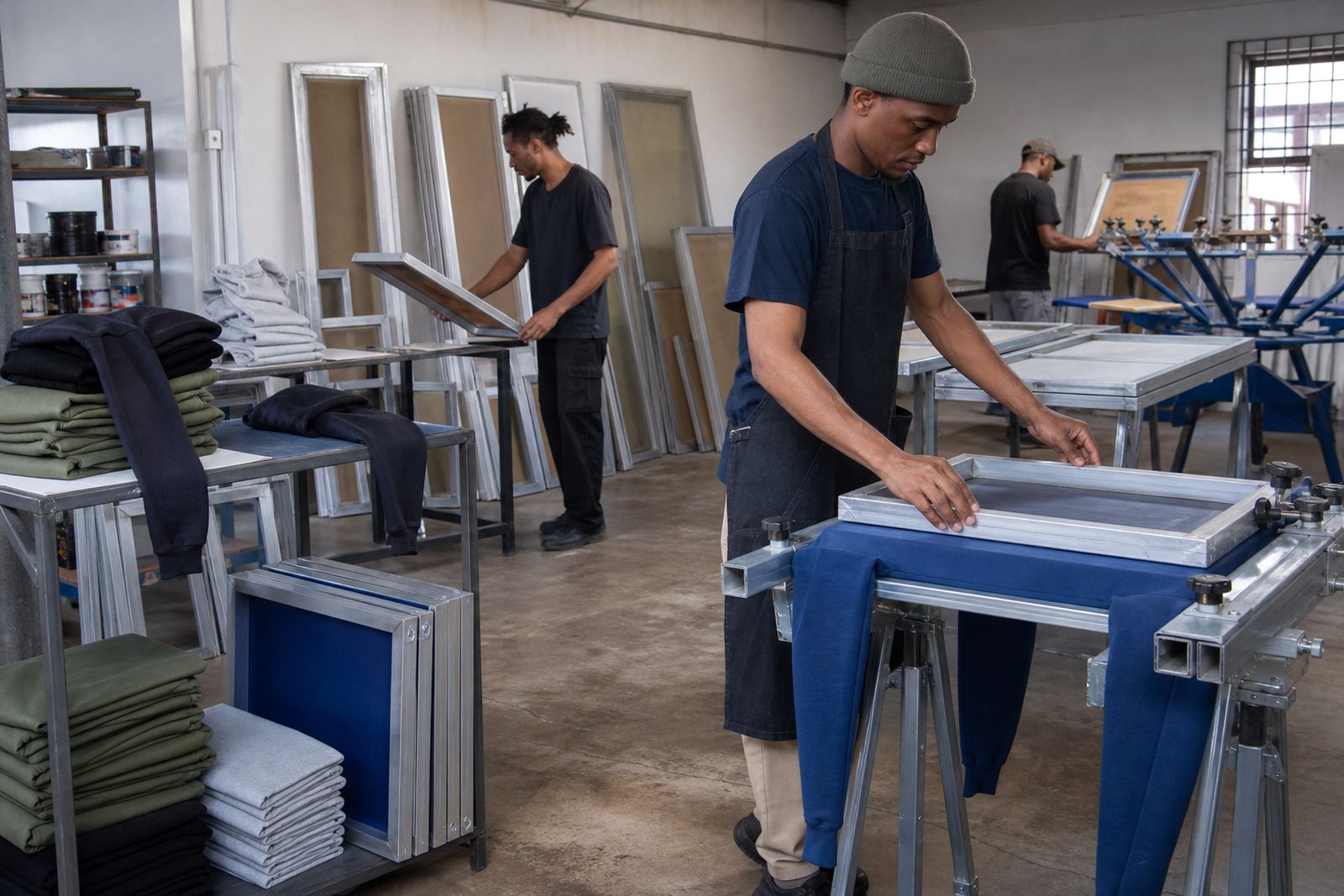
Space was the biggest issue. The team had room for their current press setup, but not for oversized frames that needed extra clearance at loading and storage points. They also wanted a frame size that would suit the smaller print area without forcing operators to fight the garment for placement. On sleeve jobs, small errors show quickly, so the frame had to be accurate from the start.
Another factor was production timing. The printer could not take machines out of service for long, and they needed the sleeve frames ready before a run of winter workwear orders. Bellville traffic, delivery timing and the normal pressure of month-end work meant the schedule had to be tight. The frames also needed to cope with the usual Cape Town conditions, where workshop humidity and dust can affect storage and screen life if you do not keep control of it.
- Limited workshop space and narrow press clearance
- Short lead time before a scheduled workwear batch
- Need for repeatable alignment on narrow print areas
- Storage conditions that could affect mesh if handled poorly
What we supplied and stretched
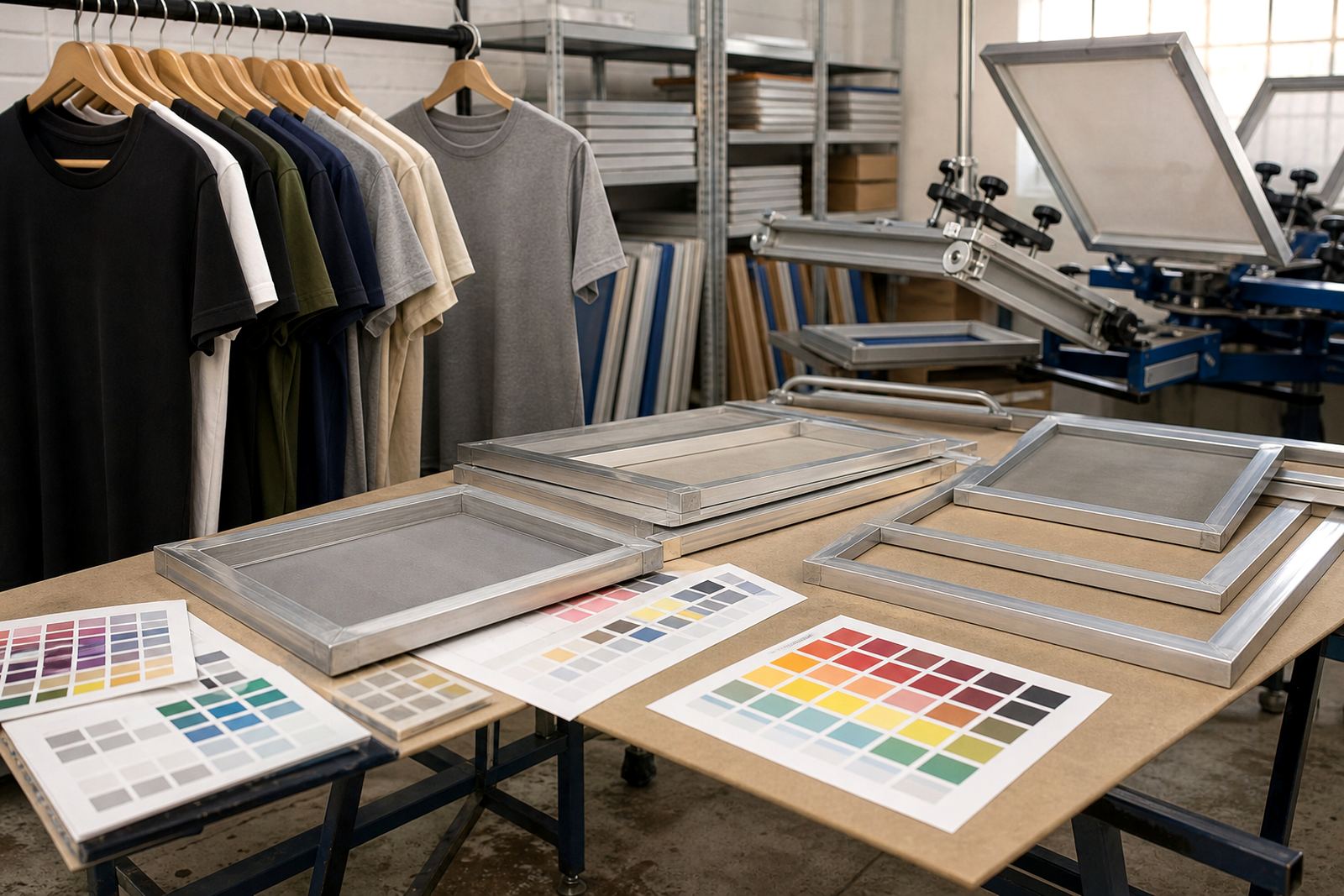
We supplied aluminium sleeve frames sized for narrow-format garment printing and stretched them for reliable use on the client’s press. The frames were built for long service, with a clean edge finish and enough stiffness to stay true under repeated pulling and reclaiming. We also carried out mesh preparation, adhesive application and tension checks before release, so the client received frames ready for work rather than rough stock that still needed fixing.
The team asked for a practical size set that would cover most sleeve branding without wasting ink or forcing excess setup changes. We matched the frame build to their garment range and kept the dimensions consistent across the batch so the printer could swap screens with less adjustment. For added value, we checked frame alignment and gave basic care advice on cleaning, drying and storage between jobs, which helps stretch screen life when the season gets busy.
- Custom narrow aluminium sleeve frames
- Mesh removal and frame cleaning where required
- Adhesive application and tension checks before dispatch
- Size consistency for faster changeovers on press
Timeline from order to handover
The project ran over two weeks from first enquiry to handover. During week one we confirmed the frame sizes, the type of garments they were printing and the available press area in the Bellville workshop. That let us settle the frame dimensions and production order without delays. In week two we completed stretching, inspection and final checks before the pickup was arranged. The client wanted a quick turnaround and we kept to that window.
Because the order was tied to live production, communication had to stay straight forward. The team knew when the frames were in process, when checks were done and when they were ready for collection. That meant they could line up the sleeve job, prep artwork and avoid losing time between approvals and print day.
For a workshop that runs local garment work day in, day out, a two week turnaround was a useful balance between speed and proper preparation. It gave enough time for careful tensioning while still keeping the printer on schedule.
Results on the printing line
Once the sleeve frames were in use, the printer could offer a wider service without changing their whole production setup. The narrow frames made it easier to print smaller placements cleanly, and the team reported better control when registering left and right sleeve positions. That reduced waste on test pulls and made the final output more consistent across repeat orders.
The biggest benefit was commercial. Sleeve branding opened the door to extra value on standard workwear jobs, especially for clients wanting names, department marks or small back logos. The printer could now quote more confidently for add-on decoration instead of turning those requests away or sending them elsewhere. In practical terms, that meant more use from the same press space and a better return on each order.
- Cleaner sleeve placement and easier registration
- Less waste from trial pulls and missed alignment
- More print options for repeat clients and new enquiries
- Better use of existing press space without major changes
What we would do again for the next order
If we were repeating this job, we would keep the same approach: confirm press space first, match the frame size to the garments, and build the batch with consistent measurements from the start. That saves time later and keeps operators confident when the screens move from storage to press. For sleeve work especially, the detail matters more than the volume.
We would also recommend a simple maintenance cycle for any workshop taking on more small-format garment printing. Regular frame inspections, careful mesh storage and basic cleaning after each reclaim help preserve tension and avoid surprises on busy days. For Bellville and the wider Cape Town area, where workshops may deal with humidity, dust and load-shedding interruptions, that kind of routine pays off quickly.
This project was a good fit for a printer looking to grow without overcomplicating the shop floor. The sleeve frames gave them a practical, repeatable way to add value, and that is usually what matters most on workwear jobs.
Key facts
| Client type | Workwear printer |
|---|---|
| Location | Bellville, Cape Town |
| Project scope | Narrow sleeve frames for garment decoration |
| Timeline | 2 weeks |
| Materials | Aluminium frames with stretched mesh |
| Key services | New Screen Stretching, Tension Checks, Pickup and Return |