
1. Check Whether the Frame Is Worth Restretching
We start by looking at the frame itself, not only the mesh. A good aluminium frame can often be used again if it is straight, clean and free from major damage. This is common for garment printers in Cape Town and inland workshops alike, where keeping solid frames in service helps manage costs.
Before work begins, the frame is inspected for dents, warped corners, old adhesive and any signs of cracking. If the frame is not suitable for restretching, we will say so before anything is done. That way you do not spend money on a frame that will not hold tension properly.
- Check for bent sides and damaged welds
- Look at corner alignment and frame shape
- Assess old glue, mesh remnants and residue
- Confirm the frame size and condition for reuse
2. Remove the Old Mesh and Clean the Frame Properly
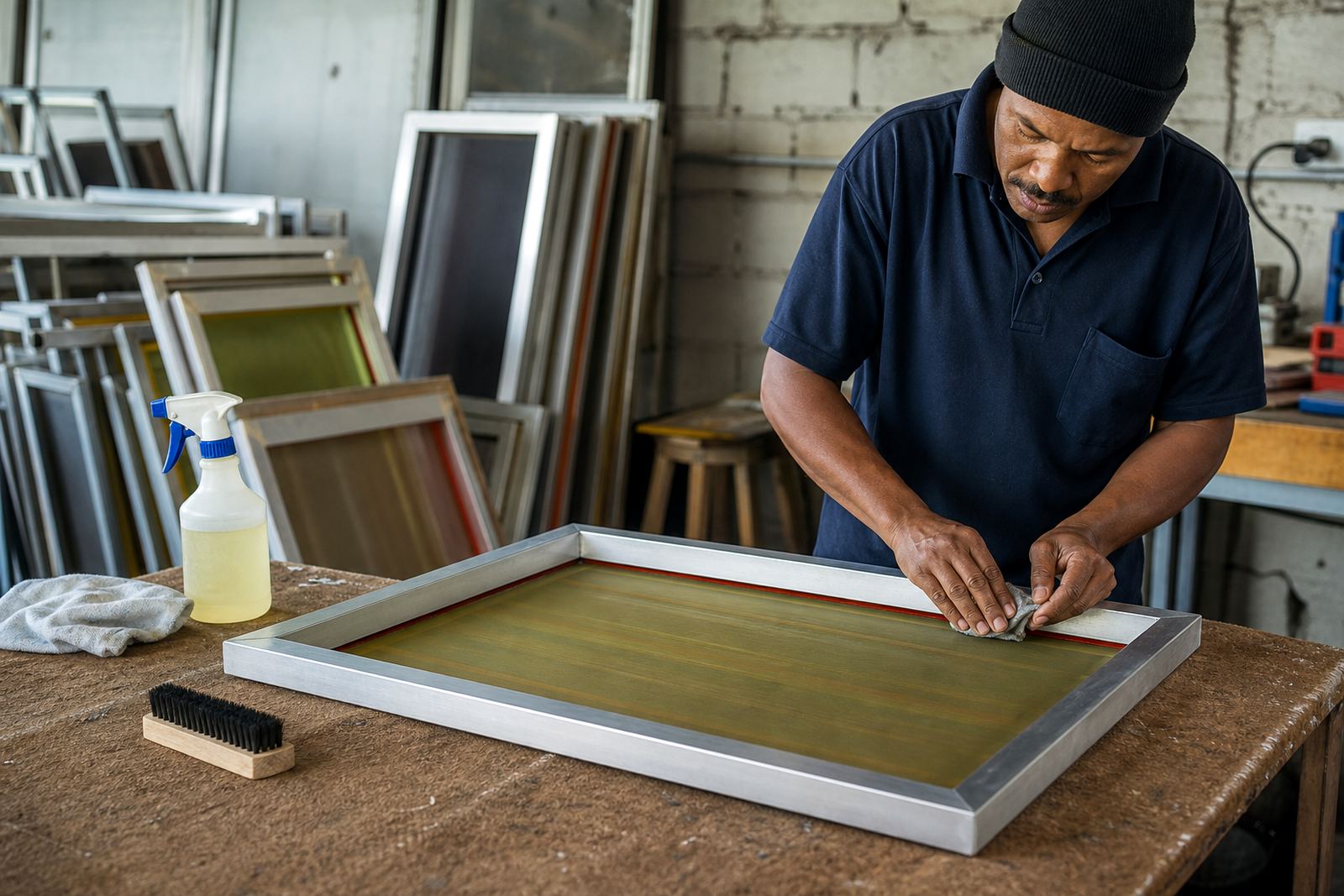
Once the frame is approved for reuse, the old mesh is removed. Any remaining adhesive is then cleared off so the new mesh can bond properly. This step matters because poor cleaning can lead to lifting edges, weak corners and uneven tension later on.
Frames that come in from coastal areas such as Durban may carry extra moisture or corrosion marks, while workshop stock from dusty industrial areas often has fine residue on the surface. We clean each frame to suit the condition it arrives in, then prepare it for the next stage.
- Strip the worn mesh from the frame
- Remove old adhesive and loose particles
- Clean contact areas for a secure bond
- Prepare the frame for fresh mesh application
3. Apply the New Mesh and Set the Tension
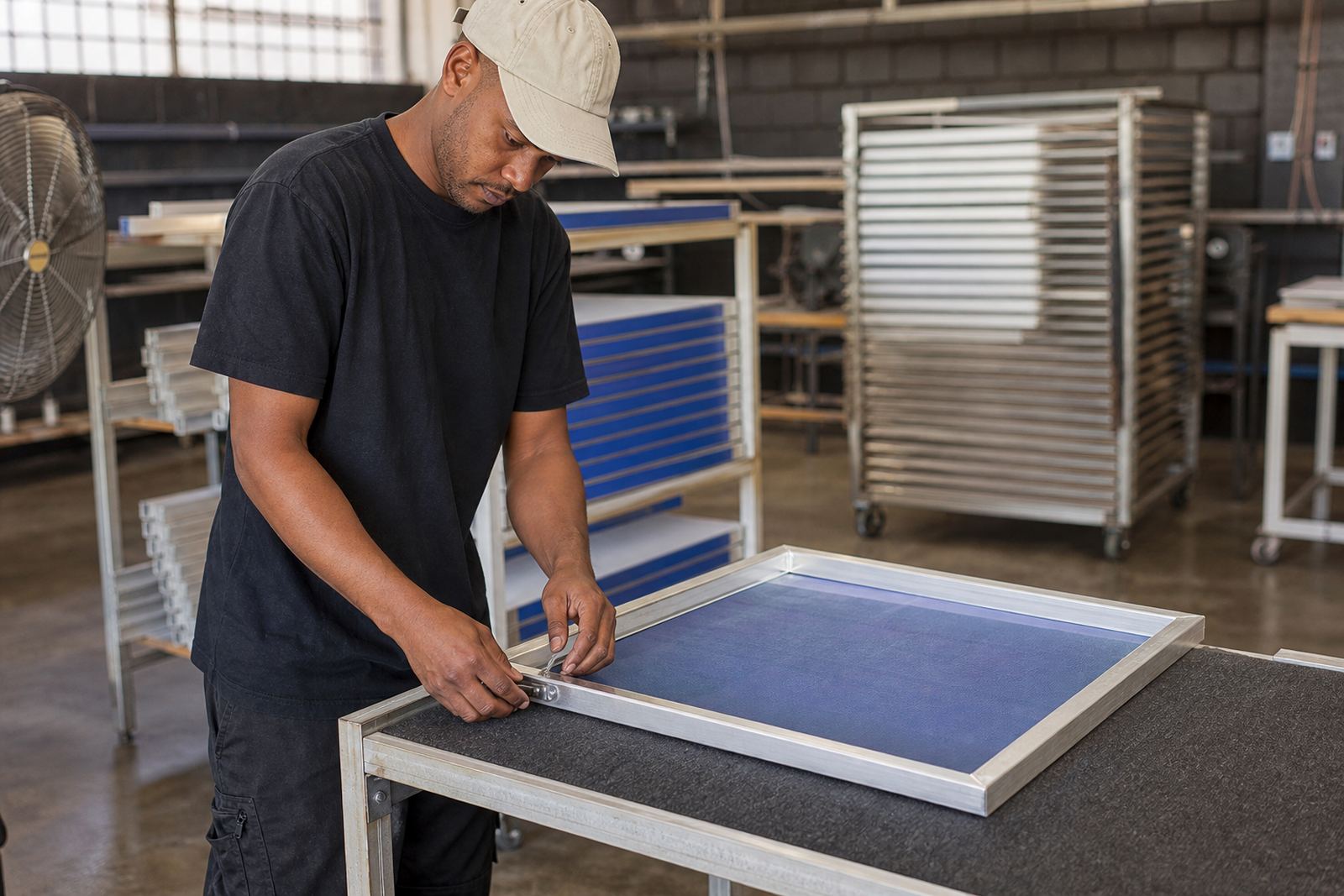
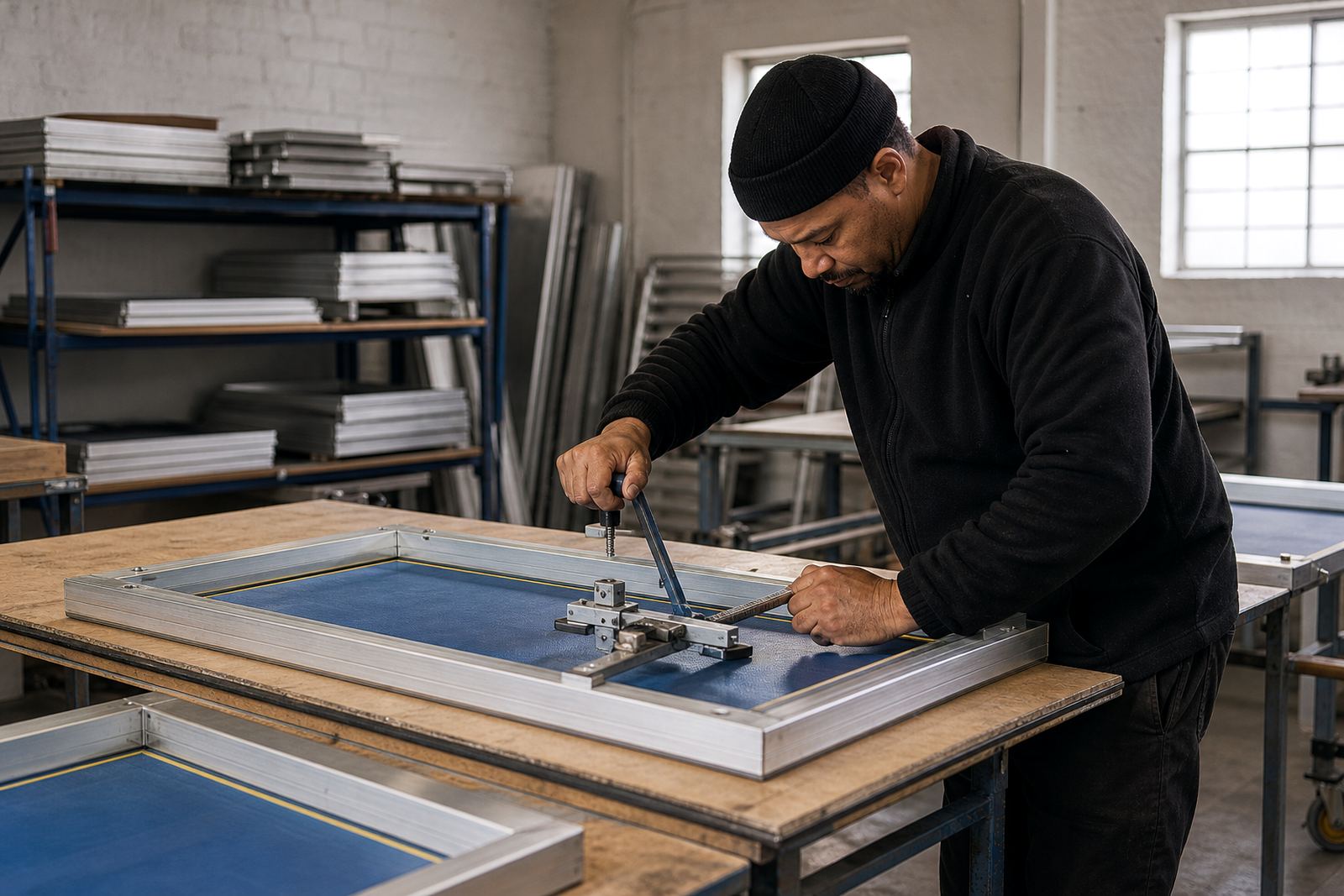
The replacement mesh is selected for the printing work the frame will be used for. After that, it is stretched evenly and fixed to the frame so the surface is consistent across the full print area. Good tension helps with cleaner print edges, better ink release and fewer setup problems on press.
For garment decoration work, a frame that is stretched too loosely can cause smudging or poor registration. Too much tension can shorten the life of the mesh or stress the frame. The balance has to be right, especially when the screens are going to be used daily in busy print shops in Johannesburg, Pretoria or Gqeberha.
- Choose mesh suited to the job and artwork detail
- Stretch evenly across all sides
- Fix the mesh securely to prevent slipping
- Check the surface for uniform pull and flatness
4. Inspect the Frame for Print-Ready Quality
After stretching, the frame is checked again. This stage is about making sure the screen is ready for production and not just tight on the bench. We look at alignment, bond quality, frame stability and the overall finish before the screen leaves the workshop.
If there is a small issue, it is corrected before the frame is sent back. That saves time for your press crew and reduces the chance of problems when you are working under tight deadlines or dealing with load-shedding interruptions that already disrupt production time.
- Confirm mesh is centred and even
- Check for lifts, bubbles or weak corners
- Inspect frame edges and handling points
- Make sure the screen is ready for use
5. Collection, Delivery and Turnaround for South African Print Shops
Once the restretching work is complete, you can collect from the relevant area or arrange delivery where available. We handle orders for Maitland, Bellville and Paarl, as well as deliveries to Johannesburg, Durban, Pretoria and Gqeberha. If the job is urgent, tell us upfront so we can plan the work around your production schedule.
Bulk screen orders are also handled for print shops that need several frames done at once. That is often the easiest option for growing businesses that want all screens aligned and ready together rather than sending them in one by one.
- Pickup and return can be arranged where required
- Urgent turnarounds are available on request
- Bulk orders can be grouped for efficiency
- Delivery routes cover major centres and selected local areas
6. How to Keep Restretched Screens in Better Condition
Good screen care starts after the screens come back from restretching. Avoid stacking heavy items on top of them, and keep them dry if they will be stored in humid or coastal conditions. In South Africa, heat, dust and moisture can all affect screen life if the frames are not handled well.
If a screen begins to lose tension or shows signs of damage, send it in early rather than waiting until it fails on press. A quick inspection now can save a print run later. We also give practical care advice if you want help deciding when to clean, restretch or replace a frame.
- Store screens flat and out of direct moisture
- Avoid rough handling around corners and edges
- Wipe down frames after use where needed
- Book inspections before tension loss becomes a press problem