
Start With a Clean Frame After Every Run
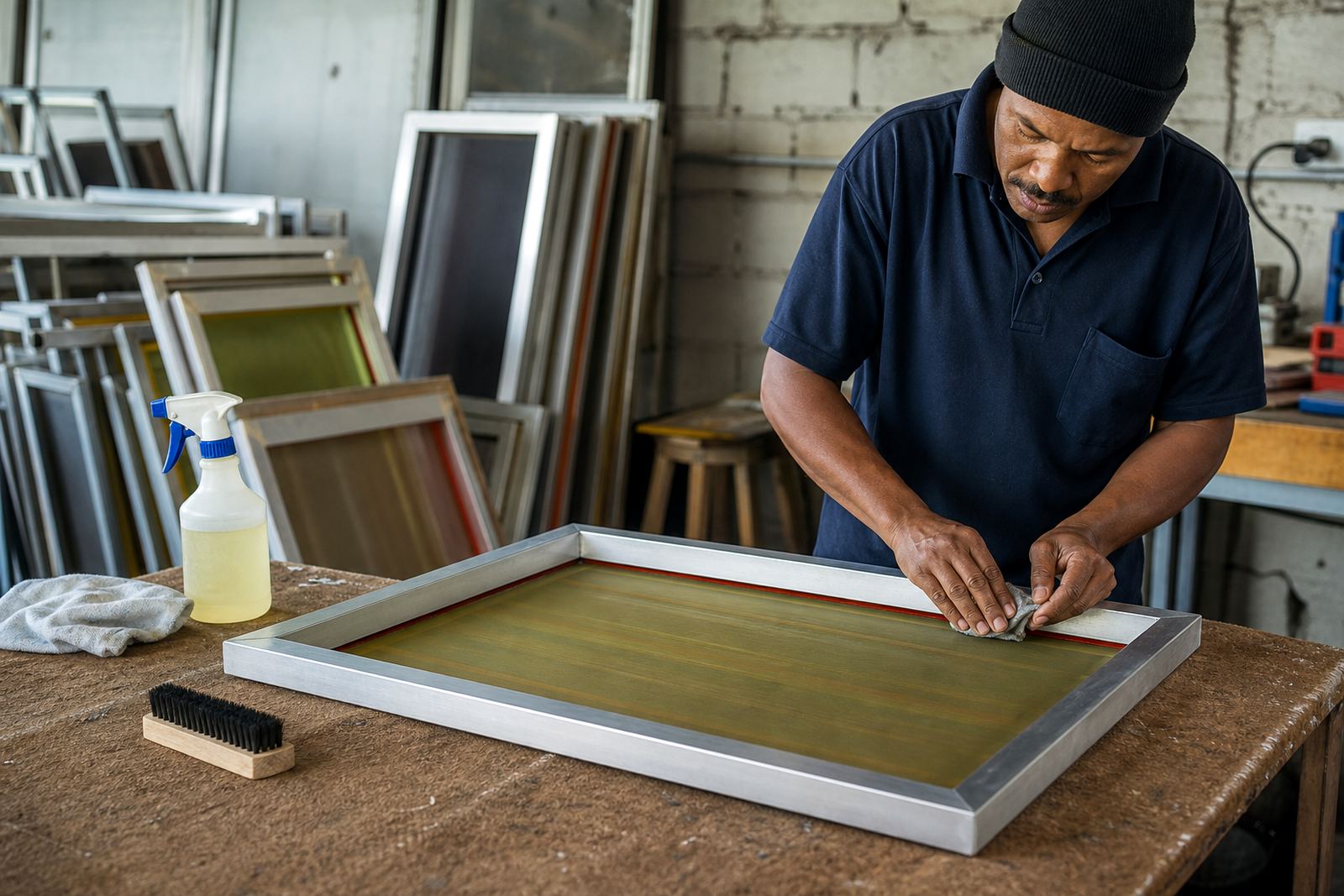
Once a print run is done, do not leave ink to dry on the frame, mesh, or corners. Dried ink hardens quickly and makes the next clean-up tougher, especially if the job sat overnight during load-shedding or over a humid coastal weekend. Wipe the frame down as soon as the screens come off the press, then move straight to proper washing.
Use a soft cloth, lukewarm water, and a cleaning agent that suits your ink type. Keep scrapers light handed so you do not nick the mesh or lift the adhesive at the edges. If you work with multiple colours, clean each screen before storage, not only at the end of the shift.
- Remove loose ink before it dries.
- Wipe both sides of the frame and the corners.
- Check for ink build-up around the mesh edge and handle areas.
- Dry the frame fully before stacking or storing.
Keep Mesh Tension Even and Watch for Sagging
Good tension is what gives you consistent registration and cleaner detail. If a screen starts sagging, it can still print for a while, but you will notice heavier ink deposit, blurred edges, and more pressure needed at the squeegee. That means more wear on the frame and more waste in the workshop.
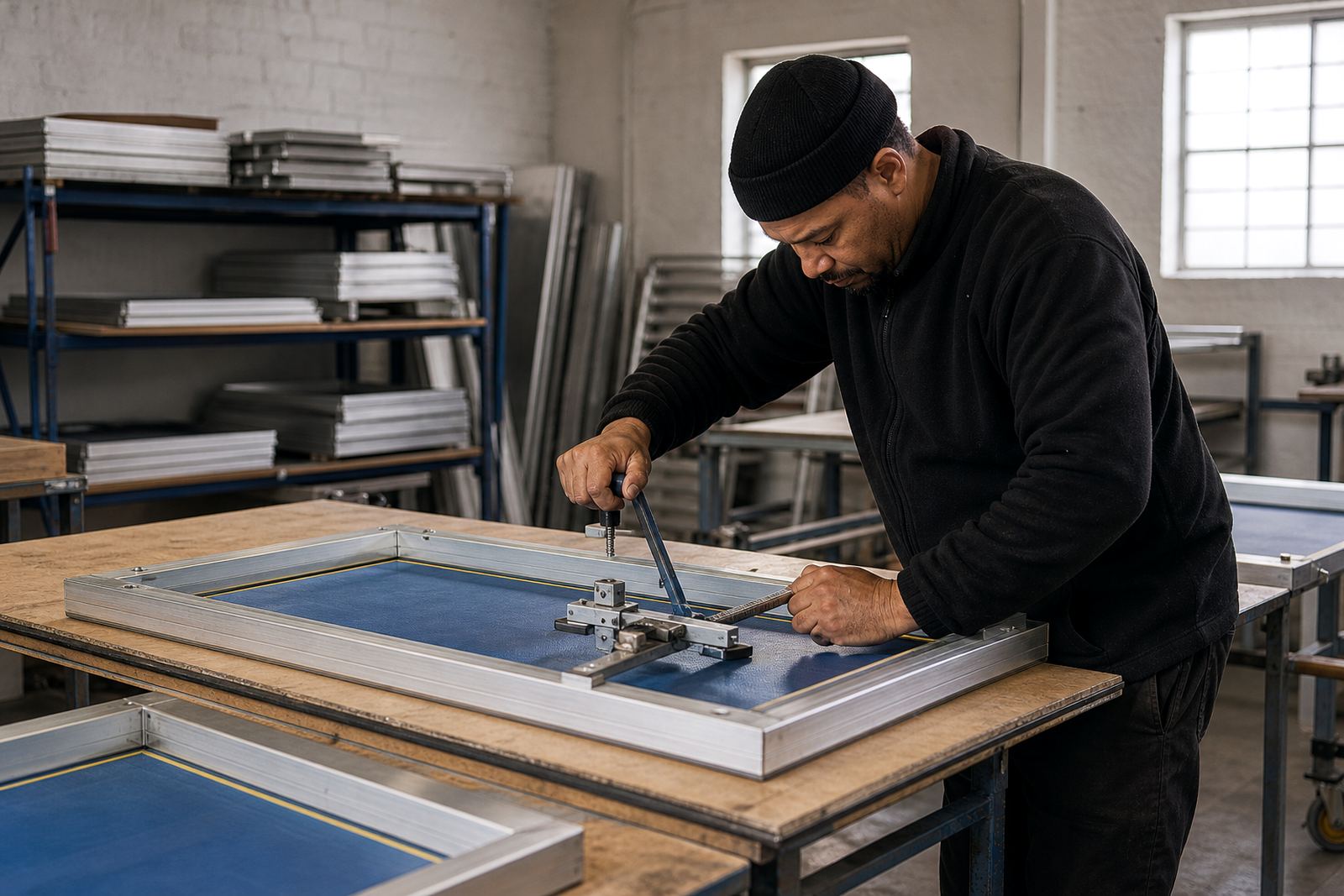
Make a habit of checking tension before every production run. Look for soft spots in the centre, loose corners, and any movement where the mesh meets the adhesive line. If the tension has dropped, restretching is usually better than trying to push a tired screen through another week of work.
- Check each screen before mounting it.
- Compare tension across the full print area, not just the centre.
- Set aside screens that show uneven stretch.
- Keep a note of which sizes drop tension fastest.
Store Frames Flat, Dry, and Out of Heat
Storage matters more than many printers think. Aluminium frames can handle a lot, but stacked badly or left near heat sources they can twist slightly over time. That small change can throw off print alignment, especially on multi-colour jobs and smaller garment items where placement has to be exact.
Store screens flat on even supports. Avoid leaning them against a wall for long periods, and do not place heavy stock on top of stretched frames. In Durban or Gqeberha, where moisture in the air can stay high, make sure the storage area is dry and ventilated. In inland workshops, keep them away from direct sun through open doors and windows.
- Use level shelving or racks.
- Keep screens off damp floors and concrete.
- Separate damaged frames from ready-to-use stock.
- Avoid heat sources, weld sparks, and solvent spill areas.
Inspect the Corners and Aluminium for Wear
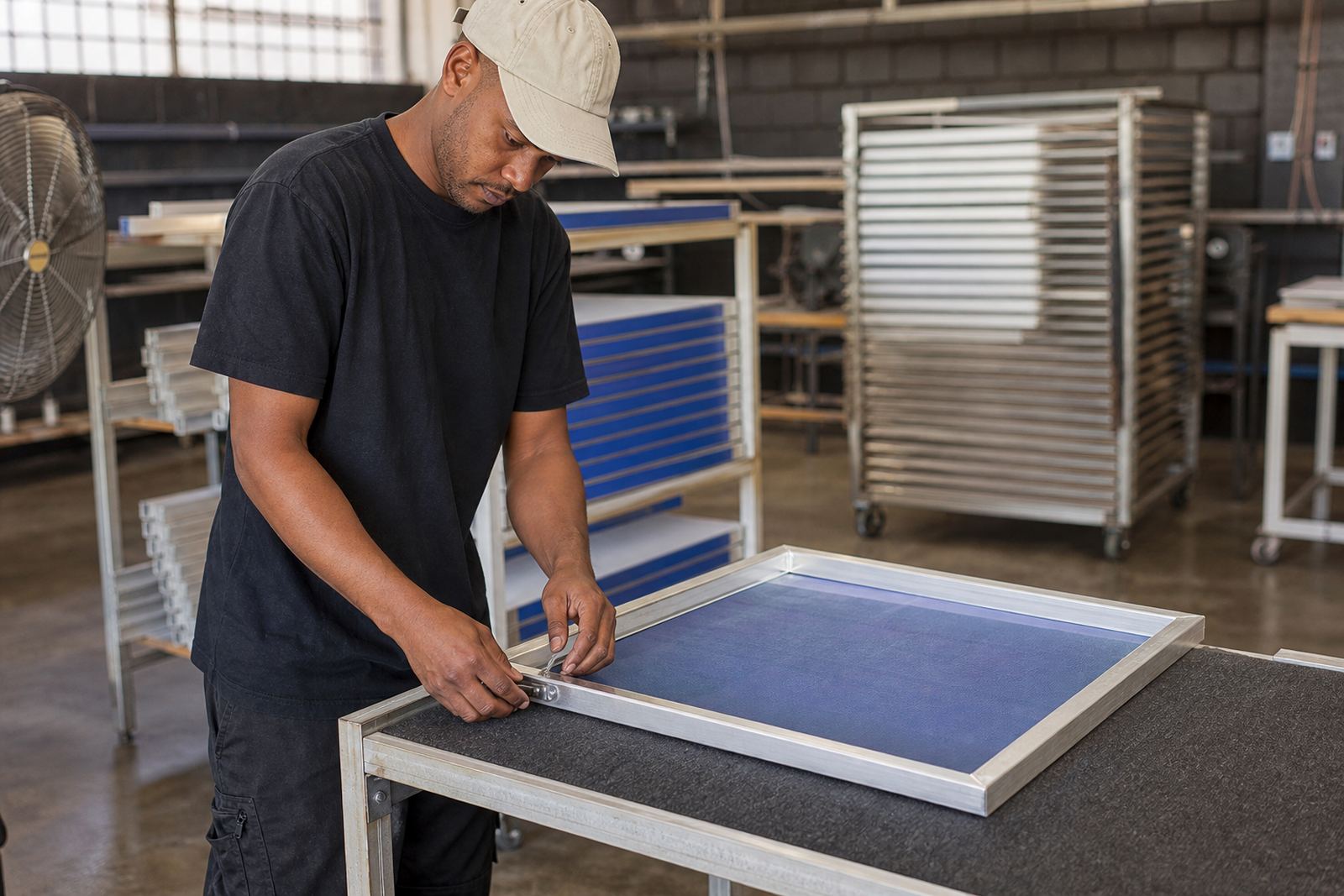
Frames often fail at the corners first. A tiny bend, a cracked weld, or a loose joint can become a bigger problem once the screen is under tension again. Regular inspections save time and stop you from discovering a fault halfway through a production run.
Look closely at the full perimeter, the joints, and any area that gets handled often. Check for sharp edges, dents, and frame distortion. If you spot residue that will not wash off, or old adhesive that has started to lift, deal with it before the next stretch. Clean edges give a better bond and help the mesh sit properly.
- Look for bends or twist in the aluminium.
- Check for sharp edges that could damage mesh or hands.
- Inspect corner joins after transport.
- Remove old adhesive and loose residue before restretching.
Use the Right Handling Habits During Production
A screen can lose life quickly if it is dragged, dropped, or slammed into a pile of jobs. Handling is part of frame care. Train everyone in the shop to lift screens by the frame, not the mesh, and to move them one at a time when the workshop is busy. That simple habit cuts down on accidental damage.
When using stronger cleaning agents, rinse properly and do not leave chemicals sitting on the aluminium. If a screen is going into long storage, make sure it is fully dry first. Moisture trapped at the edge can weaken the adhesive over time and make the next stretch job less reliable.
- Lift frames by the sides, not the mesh.
- Do not stack wet screens.
- Rinse cleaning chemicals off fully.
- Keep screens away from sharp tools and loose fittings.
Know When to Restretch Instead of Replacing
Not every tired screen needs a new frame. If the aluminium is still square, the corners are sound, and the frame surface is clean, restretching can bring it back into service for garment printing. This is often the better choice for busy printers in Johannesburg, Pretoria, and the Cape who want to control costs without sacrificing print quality.
If the frame is bent, badly corroded, or no longer holding tension evenly, replacement may be the safer option. A quick inspection will tell you which route makes sense. ScreenFrame handles new screen stretching, restretch existing frames, mesh removal, frame cleaning, adhesive application, tension checks, and urgent turnarounds when jobs are tight.
- Restretch if the frame is square and sound.
- Replace if the frame is bent or structurally weak.
- Book a check before a large reprint run.
- Keep a few spare screens ready for busy periods.
A Simple Monthly Care Routine for Better Screen Life
If you want a practical routine, keep it consistent. Small checks done monthly save more time than big repairs later. This is useful for both high-volume garment printers and smaller workshops doing custom orders, schoolwear, or short runs.
Set aside time to wash, inspect, measure, and sort your screens. Mark out any frames that need restretching, cleaning, or repair. A tidy screen stockroom makes production smoother and helps your team grab the right frame size first time. It also cuts down on rushed decisions when orders stack up.
- Wash and dry all active screens.
- Check tension and frame condition.
- Sort ready, repair, and scrap screens separately.
- Record which sizes are used most often.